Parts of Stoves and Ranges
CN → US| HS Code | Tariff Rate | Origin | Destination | Doc |
|---|---|---|---|---|
| 8417900000 | 38.9% | CN | US | Official Doc |
| 8516905500 | 35.0% | CN | US | Official Doc |
| 8516908010 | 35.0% | CN | US | Official Doc |
| 7323999080 | 88.4% | CN | US | Official Doc |
| 8417800000 | 38.9% | CN | US | Official Doc |
Product Images
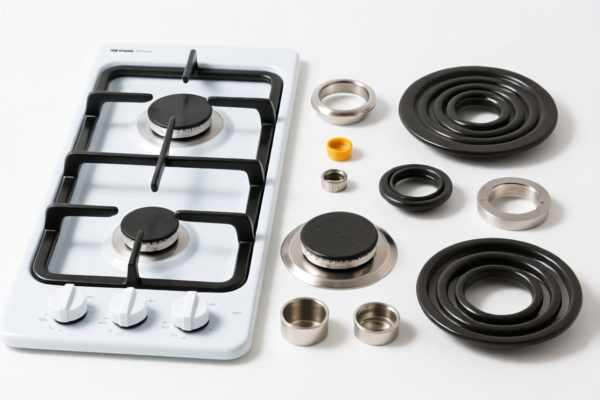
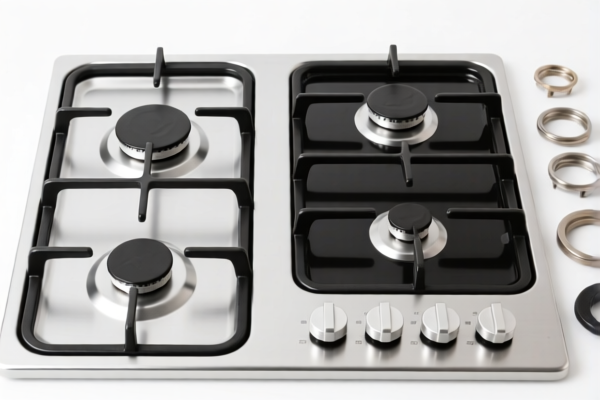
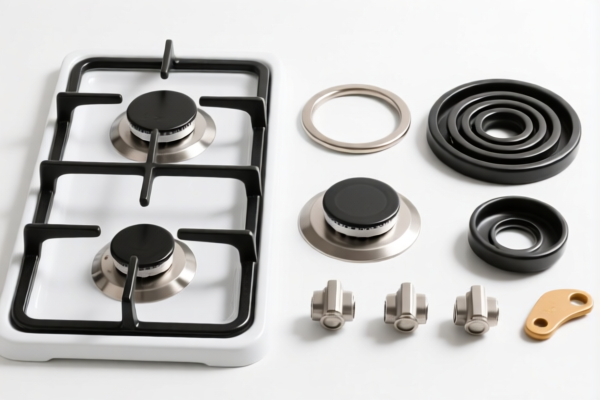
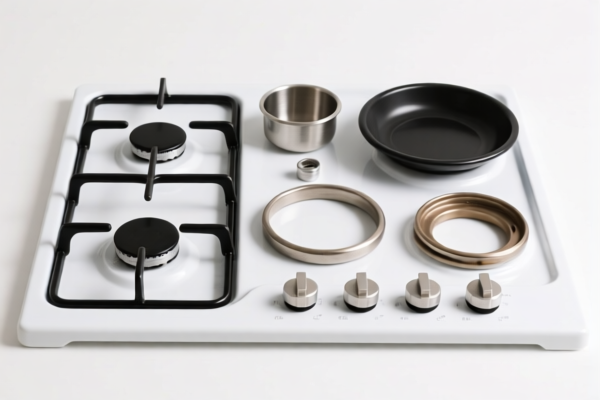
AI Analysis
🔥 Parts of Stoves and Ranges (炉灶零件)
🌐 HS Code Reference & Clearance Guide | 2026 Latest Tariff Analysis | Professional Clearance Strategy
📌 I. Product Definition: What Exactly Are "Parts of Stoves and Ranges"?
"Parts of Stoves and Ranges" refer to the specific components, accessories, and sub-assemblies that constitute or support the operation of cooking appliances. In international trade, these parts are not a single entity but are classified based on their function, material, and whether the stove is electric or non-electric.
Key Distinctions: * Electric Stove Parts (Chapter 85): Components like heating elements, thermostats, control panels, and motors for electric ovens/ranges. * Non-Electric Stove Parts (Chapter 84): Components for gas, industrial, or laboratory ovens (e.g., burners, flues, doors, insulation panels). * General Household Metal Parts (Chapter 73): Simple metal fixtures, handles, or frames that don’t fit specific electrical or mechanical appliance categories.
⚠️ Critical Classification Point:
- If the part is electrical (heating, control, motor-driven) → Look to Chapter 85.
- If the part is for gas/industrial/non-electric ovens → Look to Chapter 84.
- If it’s a generic metal accessory without specific appliance function → Look to Chapter 73.
📦 II. HS Code Classification Details (2026 Latest Tariff Authority Comparison)
| HS Code | Product Description | Applicable Scenario | Material/Function |
|---|---|---|---|
8417.90.00.00 |
Parts of non-electric furnaces, ovens, and incinerators | Parts for industrial gas ovens, laboratory furnaces, non-electric cooking units | ✅ Non-electric, Industrial/Lab |
8516.90.55.00 |
Parts of electric cooking ranges and stoves | Parts matching electric cooking stoves, ovens, hobs | ✅ Electric, Specific to Cooking |
8516.90.80.10 |
Parts of other electric heaters and cooking appliances | General electric heater parts, inferred from "parts" category | ✅ Electric, General Heater Category |
7323.99.90.80 |
Other iron or steel table, kitchen, or other household articles | Metal parts (handles, racks, frames) inferred as steel/iron kitchenware parts | ✅ Steel/Iron, Generic Kitchenware |
8417.80.00.00 |
Parts of furnaces, ovens, and incinerators (general) | General equipment parts for non-electric heating devices | ✅ Non-electric, General Equipment |
🔍 Key Reminder:
- Electric components generally fall under 8516 (Electric Instantaneous Water Heaters, Space Heating Equipment, and Electric Cooking Appliances).
- Non-electric/Industrial components fall under 8417 (Furnaces, Ovens, and Incinerators).
- Generic metal parts (like handles or simple racks) may fall under 7323 (Articles of Iron or Steel), but this attracts the highest tariff due to specific "122 Section" rules.
💰 III. 2026 Latest Tariff Rate Breakdown (Including Surcharges, Policy Add-ons)
✅ Applicable Country: USA (US)
✅ Country of Origin: China (CN)
✅ Effective Date: 2025 Nov 10 onwards (for subsequent imports)
🎯 1. 8417.90.00.00 & 8417.80.00.00 —— Parts of Non-Electric Furnaces/Ovens
| Item | Details |
|---|---|
| Base Tariff | 3.9% (ad valorem) |
| Section 301 Surcharge | +25.0% (USITC Footnote regarding Chinese imports) |
| Section 122 Surcharge | +10.0% (Specific surcharge for certain goods) |
| Total Tariff | 38.9% |
| Calculation | CIF Value × 38.9% |
| De Minimis Exemption | ❌ Not Applicable (deny_de_minimis) |
| Legal Path | 301:8417.90.00.00 → 122:8417 → USITC:38.9% |
📌 Explanation:
- The 3.9% is the standard Most Favored Nation (MFN) rate.
- The +25% is the Section 301 tariff applied to most Chinese-origin goods.
- The +10% is an additional Section 122 surcharge.
- Total: 38.9%. This is a moderate-to-high tariff, typical for industrial equipment parts.
🎯 2. 8516.90.55.00 & 8516.90.80.10 —— Parts of Electric Cooking Appliances
| Item | Details |
|---|---|
| Base Tariff | 0.0% (ad valorem) |
| Section 301 Surcharge | +25.0% |
| Section 122 Surcharge | +10.0% |
| Total Tariff | 35.0% |
| Calculation | CIF Value × 35.0% |
| De Minimis Exemption | ❌ Not Applicable (deny_de_minimis) |
| Legal Path | 301:8516.90 → 122:8516 → USITC:35.0% |
📌 Explanation:
- The 0% base rate is favorable for electric appliance parts.
- However, the 25% Section 301 and 10% Section 122 still apply, bringing the total to 35.0%.
- This is 3.9% lower than the non-electric equivalent due to the 0% base rate.
🎯 3. 7323.99.90.80 —— Iron/Steel Kitchenware Parts (Generic)
| Item | Details |
|---|---|
| Base Tariff | 3.4% (ad valorem) |
| Section 301 Surcharge | +25.0% |
| Section 122 Surcharge | +10.0% |
| Steel/Aluminum/Copper Surcharge | +50.0% (Specific to Section 232/Other Steel Rules) |
| Total Tariff | 88.4% |
| Calculation | CIF Value × 88.4% |
| De Minimis Exemption | ❌ Not Applicable (deny_de_minimis) |
| Legal Path | 301:7323 → 122:7323 → Steel Rule:50% → USITC:88.4% |
📌 WARNING:
- This is the highest tariff category.
- The +50% is due to specific regulations on steel/aluminum/copper products (Section 232 or similar).
- Total: 88.4%. This effectively kills the profit margin for generic steel parts unless they are clearly distinguished as "appliance-specific" rather than "generic kitchenware."
🛠️ IV. Clearance Operational Advice (Practical Pitfall Avoidance Guide)
✅ 1. Documentation Checklist (Essential)
| Document | Required | Notes |
|---|---|---|
| ✅ Product Specification Sheet | ✔️ | Must detail if the part is Electric or Non-Electric. |
| ✅ Electrical Schematic/Circuit Diagram | ✔️ | For 8516 codes, prove it’s an electrical component. |
| ✅ Mechanical Drawings | ✔️ | For 8417 codes, prove it fits non-electric ovens/furnaces. |
| ✅ Material Certificate | ✔️ | Critical for 7323 to prove steel content and avoid misclassification. |
| ✅ Commercial Invoice | ✔️ | Must explicitly state "Part for Electric/Non-Electric Stove." |
| ✅ Packing List | ✔️ | Show relationship between parts and main appliance (if shipped together). |
✅ 2. Classification Strategy (Key Mantra)
🔥 "Electric is 35%, Non-Electric is 39%, Generic Steel is 88%! Don't guess, Prove It!"
| Scenario | Correct HS Code | Wrong Classification Consequence |
|---|---|---|
| Heating Element for Electric Oven | 8516.90.55.00 |
If miscoded as 7323 → 88.4% Tariff! |
| Gas Burner for Industrial Oven | 8417.90.00.00 |
If miscoded as 8516 → Customs Rejection/Investigation |
| Metal Handle/Rack (Generic) | 7323.99.90.80 |
If miscoded as 8516 → False Declaration Risk |
| Control Panel (Electric) | 8516.90.80.10 |
If sold with non-electric unit → Customs Questioning |
✅ 3. Special Cases Handling
| Case | Handling Advice |
|---|---|
| Hybrid Parts (Electric + Metal) | Classify as Electric Part (8516) to save 3.5%. Provide electrical specs. |
| Parts Shipped with Main Appliance | Declare as Accessory of the main appliance if possible, or separate if value is high. |
| OEM Custom Parts | Provide client design drawings to prove specific function (e.g., "Part for Brand X Electric Stove Model Y"). |
| Generic Steel Racks | If they are not specific to one stove model, they likely fall under 7323. Accept the 88.4% or redesign. |
🌍 V. Global Market Clearance Comparison (2026 Latest)
| Country/Region | Recommended HS Code | Tariff Rate | Certification Required | Notes |
|---|---|---|---|---|
| 🇺🇸 USA | 8516.90.55.00 |
35.0% | FCC (if electrical) | High tariffs due to Section 301 + 122 |
| 🇪🇺 EU | 8516.90 |
0% - 2% | CE, RoHS | No major trade war tariffs |
| 🇨🇳 China | 8516.90 |
0% (Import Duty) | CCC (if applicable) | Low import duty, but export taxes may apply |
| 🇦🇺 Australia | 8516.90 |
5% | RCM | Moderate tariff |
| 🇯🇵 Japan | 8516.90 |
0% - 3% | PSE | Low tariff, high quality standards |
📌 Conclusion:
- USA is the most expensive market due to Section 301 and Section 122 tariffs.
- Electric parts (8516) are slightly cheaper than non-electric (8417) in the US.
- Generic steel parts (7323) are prohibitively expensive in the US (88.4%). Always try to classify as appliance-specific parts.
📌 VI. Common Errors & Pitfalls (Lessons Learned)
❌ Error 1: Declaring an electric heating element as a "Steel Part" (7323)
👉 Consequence: Tariff jumps from 35% to 88.4%! Loss of profit.
❌ Error 2: Declaring a gas oven burner as an "Electric Part" (8516)
👉 Consequence: Customs seizure or fine for false declaration. Non-electric parts cannot be misclassified as electrical.
❌ Error 3: Not providing electrical schematics for 8516 items
👉 Consequence: Customs cannot verify the function, leading to delays or reclassification to higher-tariff general goods.
❌ Error 4: Using vague descriptions like "Kitchen Accessory"
👉 Consequence: Customs assigns arbitrary HS codes, likely landing on 7323 (88.4%) or 8417 (38.9%).
✅ Correct Approach:
"Electric Heating Element, Part for Range Model XYZ, 240V, 2000W, Certified UL"
"Gas Burner Assembly, Part for Industrial Oven Model ABC, Stainless Steel"
🎯 VII. Conclusion: Precise Classification, Maximize Profit!
🎯 Remember the Mantra:
🔹 "Electric is 35%, Non-Electric is 39%, Steel is 88%!"
🔹 "Prove the Function, Not Just the Material!"
🔹 "Avoid7323at All Costs for Appliance Parts!"
📌 Pro Tip:
If your parts are electric, ensure you have FCC/UL certification ready.
If your parts are non-electric, ensure you have mechanical drawings ready.
For USA imports, consider Advance Rulings to lock in the 35% or 38.9% rate and avoid 88.4% surprises.
📣 Immediate Action:
📞 Contact a licensed customs broker.
📄 Submit product specs + electrical/mechanical diagrams.
🚀 Pre-classify to ensure you pay 35% or 38.9%, not 88.4%.
✨ Professional Clearance Starts with Accurate Classification!
💼 Your Cost Per Unit is Calculated in HS Codes!
Customer Reviews
About HS Code Classification
The Harmonized System (HS) is an internationally standardized nomenclature developed by the World Customs Organization (WCO) to classify traded products. Over 200 countries use the HS system as the basis for customs tariffs, trade statistics, and import/export regulations.
Each HS code follows a hierarchical structure:
- Chapter (2 digits) — Broad category of goods (e.g., Chapter 84: Machinery and Mechanical Appliances)
- Heading (4 digits) — More specific grouping within the chapter
- Subheading (6 digits) — Internationally standardized breakdown, used by all WCO member countries
- National subdivisions (8-10 digits) — Country-specific extensions for further classification, such as US HTSUS 10-digit codes
Correct HS code classification is essential for smooth customs clearance, accurate duty payment, and compliance with trade regulations. Misclassification can lead to customs delays, overpayment of duties, or penalties.
When importing from CN to US, the applicable tariff rates may include:
- Most-Favored-Nation (MFN) rate — The standard duty rate applied to WTO members
- General rate — Applied to countries without trade agreements
- Trade remedy duties — Additional tariffs such as Section 301 (anti-dumping), Section 232 (national security), or countervailing duties
The information provided on this page is for reference purposes only. For official classification, please consult with your local customs authority or a licensed customs broker.