Party Handbag
CN → US| HS Code | Tariff Rate | Origin | Destination | Doc |
|---|---|---|---|---|
| 4203403000 | 39.9% | CN | US | Official Doc |
| 4203406000 | 35.0% | CN | US | Official Doc |
| 4202221500 | 51.0% | CN | US | Official Doc |
| 4202228100 | 52.6% | CN | US | Official Doc |
Product Images
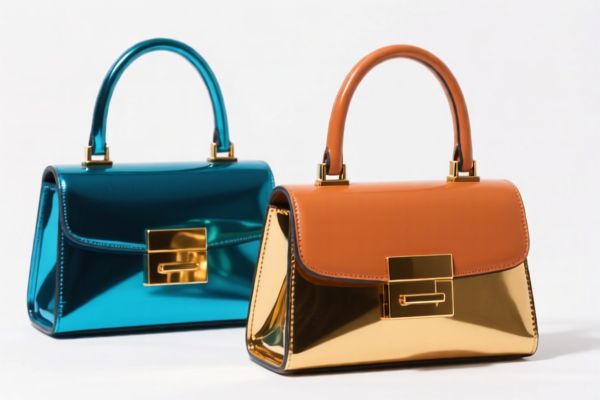
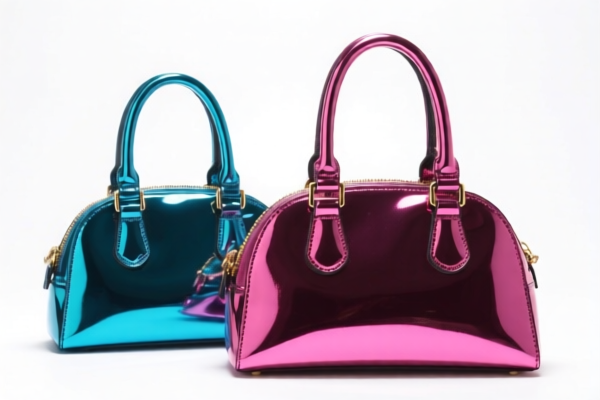
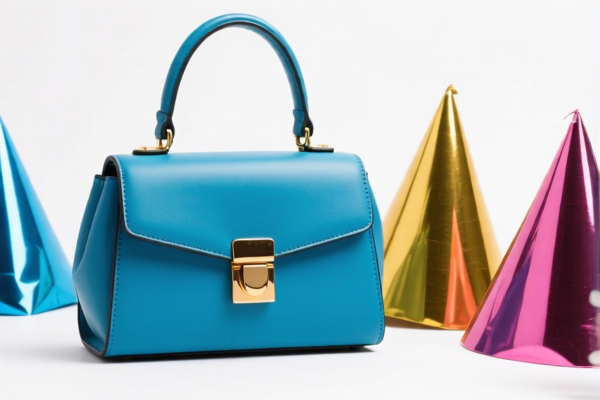
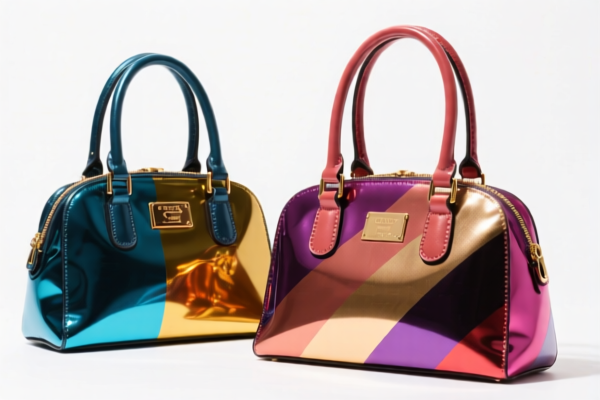
AI Analysis
👜 Party Handbag (Fashion Accessories & Bags)
🌐 HS Code Reference & Customs Clearance Guide | 2026 Latest Tariff Analysis | Professional Clearance Strategy
📌 I. Product Definition & Classification: What Exactly is a "Party Handbag"?
A Party Handbag is a small, decorative bag designed for carrying personal items during social events, parties, or evening gatherings. In international trade, it is primarily classified under Chapter 42 (Articles of Leather; Saddle and Harness Goods; Travel Goods, Handbags, etc.). The critical distinction lies in the material of the outer surface and the specific shape/use case.
⚠️ Key Classification Distinction:
- Leather/Composite Leather Bags: Typically fall under heading 4203.40 (Articles of apparel clothing accessories, of leather or composition leather).
- Plastic/Textile Bags: Typically fall under heading 4202 (Trunks, suitcases, handbags, etc., with outer surface of plastics, textile materials, etc.).
📦 II. HS Code Classification Details (2026 Latest Tariff Authority Comparison)
| HS Code | Product Description | Applicable Scenario | Outer Material |
|---|---|---|---|
4203.40.30.00 |
Other articles of leather or composition leather; Clothing accessories | Fallback category for leather-like party bags | Leather / Composition Leather |
4203.40.60.00 |
Articles of leather or composition leather; Clothing accessories (Specific to certain types) | Party handbags made of leather or synthetic leather | Leather / Synthetic Leather |
4202.22.15.00 |
Handbags with outer surface of plastic sheeting or of textile materials | Handbags with shiny, plastic-like, or textile outer surfaces | Plastic / Textile |
4202.22.81.00 |
Handbags with outer surface of textile materials; Other fallback | Handbags made of fabric, canvas, or other textiles | Textile |
🔍 Important Reminder:
- Leather bags (including synthetic leather) are generally classified under 4203.40.
- Non-leather bags (plastic, fabric, rubber, etc.) are classified under 4202.22.
- Material verification is crucial: Misdeclaring a textile bag as leather can lead to severe penalties due to different tariff rates.
💰 III. 2026 Latest Tariff Rate Details (Including Surcharges & Policy Add-ons)
✅ Applicable Country: United States (US)
✅ Country of Origin: China (CN)
✅ Effective Date: From November 10, 2025 (and subsequent imports)
🎯 1. 4203.40.30.00 —— Other Articles of Leather/Composition Leather (Fallback)
| Item | Details |
|---|---|
| Base Tariff | 4.9% (ad valorem) |
| Section 301 Surcharge | +25.0% |
| Section 122 Tariff | +10.0% |
| Total Tax Rate | 39.9% |
| Tax Calculation | CIF Value × 39.9% |
| De Minimis Exemption | ❌ Not Available (deny_de_minimis) |
| Legal Basis | USITC:4203.40.30.00 → USITC:Footnote:301_25 → IEEPA:Section122_10 |
📌 Explanation:
- Base Tariff: Standard MFN rate for leather accessories.
- Section 301: The standard 25% additional duty on Chinese goods.
- Section 122: An additional 10% surcharge imposed by US Customs under specific trade provisions.
- Total: 39.9%. This is a high-cost classification for leather-like party bags.
🎯 2. 4203.40.60.00 —— Articles of Leather/Composition Leather (Specific Type)
| Item | Details |
|---|---|
| Base Tariff | 0.0% |
| Section 301 Surcharge | +25.0% |
| Section 122 Tariff | +10.0% |
| Total Tax Rate | 35.0% |
| Tax Calculation | CIF Value × 35.0% |
| De Minimis Exemption | ❌ Not Available (deny_de_minimis) |
| Legal Basis | USITC:4203.40.60.00 → USITC:Footnote:301_25 → IEEPA:Section122_10 |
📌 Note:
- This code has a 0% base tariff, which makes it slightly more favorable than4203.40.30.00.
- However, it still incurs the full 25% Section 301 and 10% Section 122 surcharges.
- Total: 35.0%. Still a significant cost, but 4.9% lower than the fallback leather category.
🎯 3. 4202.22.15.00 —— Handbags with Plastic/Textile Outer Surface (Plastic Sheet)
| Item | Details |
|---|---|
| Base Tariff | 16.0% |
| Section 301 Surcharge | +25.0% |
| Section 122 Tariff | +10.0% |
| Total Tax Rate | 51.0% |
| Tax Calculation | CIF Value × 51.0% |
| De Minimis Exemption | ❌ Not Available (deny_de_minimis) |
| Legal Basis | USITC:4202.22.15.00 → USITC:Footnote:301_25 → IEEPA:Section122_10 |
📌 Warning:
- This is the highest tariff bracket among the options.
- Even with a moderate base rate, the surcharges push the total to 51.0%.
- Common for shiny, PVC, or hard-shell party clutches.
🎯 4. 4202.22.81.00 —— Handbags with Textile Outer Surface (Fallback)
| Item | Details |
|---|---|
| Base Tariff | 17.6% |
| Section 301 Surcharge | +25.0% |
| Section 122 Tariff | +10.0% |
| Total Tax Rate | 52.6% |
| Tax Calculation | CIF Value × 52.6% |
| De Minimis Exemption | ❌ Not Available (deny_de_minimis) |
| Legal Basis | USITC:4202.22.81.00 → USITC:Footnote:301_25 → IEEPA:Section122_10 |
📌 Warning:
- This is the most expensive classification.
- Fabric, canvas, or non-leather party bags face a total tax of 52.6%.
- Recommendation: If possible, avoid this classification for high-value items due to cost inefficiency.
🛠️ IV. Customs Clearance Practical Advice (Real-World Pitfall Avoidance Guide)
✅ 1. Documentation Checklist (All Required)
| Document | Required | Description |
|---|---|---|
| ✅ Product Spec Sheet | ✔️ | Details material (leather/textile/plastic), dimensions, lining |
| ✅ Material Certificate | ✔️ | Proves outer material composition (critical for HS Code) |
| ✅ Product Photos (Clear) | ✔️ | Must show outer surface texture, labels, and overall shape |
| ✅ Commercial Invoice | ✔️ | Must accurately describe as "Leather Handbag" or "Textile Handbag" |
| ✅ Packing List | ✔️ | Item count, weight, and dimensions |
| ✅ Origin Certificate | ✔️ | If applicable for any potential future exemptions (though none currently apply for China origin) |
✅ 2. Declaration Tips (Key Mantra)
🔥 "Material Dictates Code, Code Dictates Cost! Don't Guess, Verify!"
| Scenario | Correct Declaration | Wrong Practice |
|---|---|---|
| Synthetic Leather Bag | 4203.40.60.00 (Base 0%) |
Misdeclare as 4202 → 52.6% |
| Fabric/Canvas Bag | 4202.22.81.00 (Base 17.6%) |
Misdeclare as Leather → Penalty + Back Taxes |
| PVC/Plastic Clutch | 4202.22.15.00 (Base 16.0%) |
Misdeclare as Textile → Penalty + Back Taxes |
| Unidentified "Party Bag" | Provide material sample | Vague description → Customs Detention & Inspection |
✅ 3. Special Handling Cases
| Scenario | Handling Advice |
|---|---|
| Mixed Material Bag | Use the principal outer material for classification. If leather is dominant, use 4203. If textile is dominant, use 4202. |
| OEM Custom Bag | Provide design files and material specs to avoid disputes over "artistic" classification. |
| Sample vs. Bulk | Even for samples, if value is high, declare accurately. Low-value samples may still face scrutiny if declared incorrectly. |
| Seasonal Party Bags | No special tariff treatment. Standard rates apply year-round. |
🌍 V. Global Market Comparison for Party Handbags (2026 Latest)
| Country/Region | Recommended HS Code | Tariff (China Origin) | Certification | Remarks |
|---|---|---|---|---|
| 🇺🇸 USA | 4203.40.60.00 (Best for Leather) |
35.0% | None Specific | Highest tariff among options is 52.6% for textiles |
| 🇨🇳 China | 4203.40.60.00 |
0% | CCC (if applicable) | No additional surcharges |
| 🇪🇺 EU | 4203.40.60.00 |
0% | CE (if chemical compliance needed) | No Section 301/122 equivalent |
| 🇬🇧 UK | 4203.40.60.00 |
0% | UKCA | Post-Brexit rules, no US-style surcharges |
| 🇦🇺 Australia | 4203.40.60.00 |
5% | N/A | Low tariff, no surcharges |
📌 Conclusion:
- USA is the most challenging market due to Section 301 (25%) and Section 122 (10%) surcharges.
- Leather/Synthetic Leather (4203.40.60.00) is the most cost-effective classification for party handbags from China, totaling 35.0%.
- Textile/Plastic bags face 51.0%–52.6%, making them significantly less profitable.
📌 VI. Common Mistakes & Pitfall Guide (Lessons Learned)
❌ Mistake 1: Declaring a Synthetic Leather bag as Textile
👉 Consequence: Tariff jumps from 35.0% to 52.6% → Lost Profit Margin!
❌ Mistake 2: Declaring a Fabric bag as Leather
👉 Consequence: Customs rejection, penalty, and forced re-classification → Delays & Fines!
❌ Mistake 3: Ignoring the Section 122 Tariff
👉 Consequence: Underestimating total cost by 10% → Budget Overrun!
❌ Mistake 4: Using vague descriptions like "Fashion Bag"
👉 Consequence: Customs assigns a default high-rate code → Maximum Tax Rate!
✅ Correct Approach:
"Women's Party Handbag, Outer Surface: Synthetic Leather, Lining: Polyester, Model: ABC, Brand: XYZ"
🎯 VII. Conclusion: Precision in Classification, Efficiency in Clearance!
🎯 Remember the Mantra:
🔹 "Leather is 35%, Fabric is 52.6%, Plastic is 51%!"
🔹 "Base Tariff + 301 + 122 = Total Cost. Know Your Material!"
📌 Pro Tip:
- If your product is not made in China, you may be exempt from Section 301 and Section 122 tariffs.
- E.g., Made in Vietnam, Italy, or Mexico → Base Tariff Only (0%–17.6%).
- Always verify the outer material before shipping.
- Consider Advance Rulings if your product has mixed materials or ambiguous characteristics.
📣 Take Action Now:
📞 Contact a Licensed Customs Broker
📤 Provide Material Samples & Detailed Specs
🚀 Optimize Your Supply Chain for Cost Efficiency
✨ Professional Clearance Starts with Accurate Classification!
💼 Every Dollar Saved is Profit Gained!
Customer Reviews
About HS Code Classification
The Harmonized System (HS) is an internationally standardized nomenclature developed by the World Customs Organization (WCO) to classify traded products. Over 200 countries use the HS system as the basis for customs tariffs, trade statistics, and import/export regulations.
Each HS code follows a hierarchical structure:
- Chapter (2 digits) — Broad category of goods (e.g., Chapter 84: Machinery and Mechanical Appliances)
- Heading (4 digits) — More specific grouping within the chapter
- Subheading (6 digits) — Internationally standardized breakdown, used by all WCO member countries
- National subdivisions (8-10 digits) — Country-specific extensions for further classification, such as US HTSUS 10-digit codes
Correct HS code classification is essential for smooth customs clearance, accurate duty payment, and compliance with trade regulations. Misclassification can lead to customs delays, overpayment of duties, or penalties.
When importing from CN to US, the applicable tariff rates may include:
- Most-Favored-Nation (MFN) rate — The standard duty rate applied to WTO members
- General rate — Applied to countries without trade agreements
- Trade remedy duties — Additional tariffs such as Section 301 (anti-dumping), Section 232 (national security), or countervailing duties
The information provided on this page is for reference purposes only. For official classification, please consult with your local customs authority or a licensed customs broker.