Party Handbags
CN → US| HS Code | Tariff Rate | Origin | Destination | Doc |
|---|---|---|---|---|
| 4203403000 | 39.9% | CN | US | Official Doc |
| 4203406000 | 35.0% | CN | US | Official Doc |
| 4202221500 | 26.0% | CN | US | Official Doc |
| 4202228100 | 52.6% | CN | US | Official Doc |
Product Images
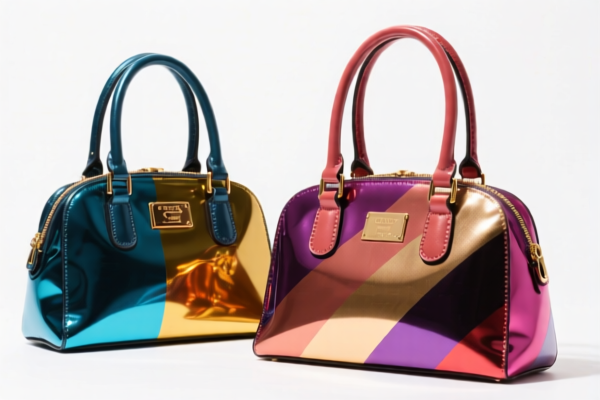


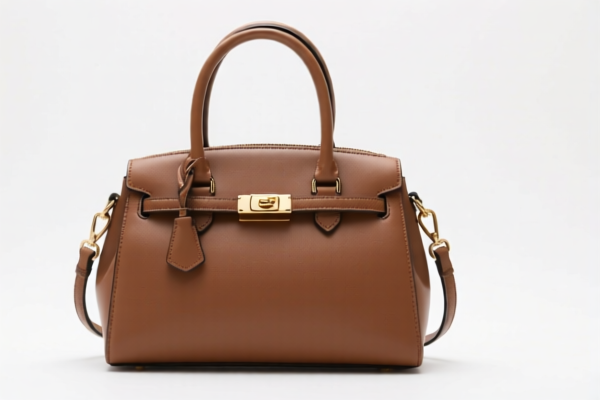
AI Analysis
🎉 Party Handbags: The Ultimate Guide to HS Classification & US Import Strategy (2026)
🌐 HS Code Reference & Clearance Strategy | Latest 2026 Tariff Analysis | Professional Import Compliance
📌 I. Product Definition & Classification: What Exactly Are "Party Handbags"?
Party Handbags are fashion accessories designed for social events, weddings, galas, and evening wear. In international trade, they fall primarily under Chapter 42 (Articles of Leather; Saddle and Harness; Travel Goods, Handbags, etc.), with specific subcategories depending on material composition and usage.
They are generally categorized into two main types:
- Leather or Synthetic Leather Handbags: High-end, premium materials used for luxury or formal occasions.
- Textile or Plastic-Coated Handbags: Casual or decorative party bags, often made of fabric, plastic, or mixed materials.
⚠️ Key Classification Point:
- If made of leather or synthetic leather → Likely 4203.40.60.00 (35% total tax)
- If made of plastic, textile, or mixed materials → Likely 4202.22.15.00 or 4202.22.81.00 (26% or 52.6% total tax)
- If classified under clothing accessories (non-specific material) → 4203.40.30.00 (39.9% total tax)
📦 II. HS Code Breakdown (2026 Tariff Schedule – US Market)
| HS Code | Product Description | Material Basis | Tax Rate (Total) | Tax Components |
|---|---|---|---|---|
4203.40.30.00 |
Handbag as clothing accessory; no material conflict | General (any material) | 39.9% | Base: 4.9%, Additional: 25%, Section 301: 10% |
4203.40.60.00 |
Handbag made of leather or synthetic leather | Leather/Synthetic | 35.0% | Base: 0%, Additional: 25%, Section 301: 10% |
4202.22.15.00 |
Handbag with plastic or textile exterior | Plastic/Fabric | 26.0% | Base: 16%, Additional: 0%, Section 301: 10% |
4202.22.81.00 |
Handbag with textile exterior (generic/other) | Textile (miscellaneous) | 52.6% | Base: 17.6%, Additional: 25%, Section 301: 10% |
🔍 Critical Insight:
- Leather-based bags (4203.40.60.00) offer the lowest total tax at 35%, despite a 0% base rate, due to high Section 301 + 25% additional tariffs.
- Textile/Plastic bags (4202.22.81.00) suffer from the highest total tax at 52.6%, due to both high base and additional rates.
- General accessories (4203.40.30.00) fall in between at 39.9%, suitable if material is not clearly defined.
💰 III. 2026 US Tariff Rates Explained (China-Origin Products)
✅ Applicable Country: United States
✅ Origin: China (CN)
✅ Effective From: 2025–2026 (including Section 301 and IEEPA measures)
🎯 1. 4203.40.30.00 – General Party Handbag (Clothing Accessory)
| Item | Value |
|---|---|
| Base Tariff | 4.9% |
| Additional Tariff (Section 301) | 25.0% |
| Section 122 Tariff | 10.0% |
| Total Effective Rate | 39.9% |
| Tax Calculation | CIF × 39.9% |
| De Minimis Exemption | ❌ Not applicable |
| Legal Pathway | Section 301 → Section 122 → HTSUS 4203.40.30.00 |
📌 Explanation:
- This code applies when the handbag is considered a general clothing accessory without specific material focus.
- Total 39.9% includes base + 25% Section 301 + 10% Section 122.
- No de minimis exemption for small-value shipments.
🎯 2. 4203.40.60.00 – Leather/Synthetic Leather Party Handbag
| Item | Value |
|---|---|
| Base Tariff | 0.0% |
| Additional Tariff (Section 301) | 25.0% |
| Section 122 Tariff | 10.0% |
| Total Effective Rate | 35.0% |
| Tax Calculation | CIF × 35.0% |
| De Minimis Exemption | ❌ Not applicable |
| Legal Pathway | Section 301 → Section 122 → HTSUS 4203.40.60.00 |
📌 Explanation:
- Best option for leather or synthetic leather bags.
- Zero base tariff, but still subject to full Section 301 and 122 tariffs.
- Ideal for high-end party bags aiming for lowest total tax.
🎯 3. 4202.22.15.00 – Plastic/Textile Party Handbag
| Item | Value |
|---|---|
| Base Tariff | 16.0% |
| Additional Tariff (Section 301) | 0.0% |
| Section 122 Tariff | 10.0% |
| Total Effective Rate | 26.0% |
| Tax Calculation | CIF × 26.0% |
| De Minimis Exemption | ❌ Not applicable |
| Legal Pathway | Section 122 → HTSUS 4202.22.15.00 |
📌 Explanation:
- Suitable for plastic-coated or fabric bags without leather.
- Lowest total tax at 26%, but base tariff is 16%.
- No Section 301 tariff, which makes this a cost-effective choice for textile-based bags.
🎯 4. 4202.22.81.00 – General Textile Party Handbag (Catch-all)
| Item | Value |
|---|---|
| Base Tariff | 17.6% |
| Additional Tariff (Section 301) | 25.0% |
| Section 122 Tariff | 10.0% |
| Total Effective Rate | 52.6% |
| Tax Calculation | CIF × 52.6% |
| De Minimis Exemption | ❌ Not applicable |
| Legal Pathway | Section 301 → Section 122 → HTSUS 4202.22.81.00 |
📌 Explanation:
- Used when textile material is not clearly defined or falls into a generic category.
- Highest total tax at 52.6% due to high base + 25% Section 301.
- Avoid this classification if possible by identifying exact material.
🛠️ IV. Customs Clearance Tips (Practical Strategy)
✅ 1. Documentation Checklist (Mandatory)
| Document | Required? | Notes |
|---|---|---|
| ✅ Commercial Invoice | ✔️ | Must specify material (leather, plastic, textile) |
| ✅ Packing List | ✔️ | Clearly list contents and quantities |
| ✅ Product Photos (with label) | ✔️ | Show material texture and structure |
| ✅ Material Test Report | ✔️ | For leather, synthetic, or textile classification |
| ✅ Origin Certificate (CO) | ✔️ | Essential for China-origin products |
| ✅ Brand & Model Info | ✔️ | Include brand name, model number, size |
✅ 2. Classification Strategy (Do's & Don'ts)
🔥 “Know Your Material, Choose the Right Code, Avoid 52.6% Trap!”
| Scenario | Correct HS Code | Incorrect Code | Risk |
|---|---|---|---|
| Leather handbag | 4203.40.60.00 |
4202.22.81.00 |
Overpay by 17.6% |
| Plastic-coated bag | 4202.22.15.00 |
4202.22.81.00 |
Overpay by 26.6% |
| Textile bag with unclear material | 4202.22.15.00 or 4202.22.81.00 |
4203.40.30.00 |
Risk of audits |
| Mixed material bag | 4203.40.30.00 |
4202.22.81.00 |
Risk of reclassification + penalty |
✅ 3. Special Cases
| Situation | Advice |
|---|---|
| Luxury leather handbag | Use 4203.40.60.00 to get 35% total tax |
| Costume/fabric handbag | Use 4202.22.15.00 for 26% total tax |
| Unclear material | Submit material test report to avoid misclassification |
| Sample shipment | Still subject to full tariffs; no de minimis exemption |
| OEM or private label | Provide client order + design specs to avoid "non-standard" classification |
🌍 V. Global Market Comparison (2026)
| Country/Region | Recommended HS Code | Tariff | Certifications | Notes |
|---|---|---|---|---|
| 🇺🇸 USA | 4203.40.60.00 |
35% (China) | N/A | Section 301 + 122 apply |
| 🇪🇺 EU | 4203.40.60.00 |
12–16% | CE + REACH | No Section 301 |
| 🇨🇦 Canada | 4203.40.60.00 |
10–14% | CE + RoHS | Lower base tariffs |
| 🇦🇺 Australia | 4202.22.15.00 |
5–8% | RCM | Lower total tax |
| 🇯🇵 Japan | 4203.40.60.00 |
0–6% | PSE | No Section 301 |
📌 Conclusion:
- USA is the most expensive market for party handbags due to Section 301 + 122 tariffs.
- EU and Canada offer lower base rates and no Section 301.
- Japan and Australia are most cost-effective for textile bags.
📌 VI. Common Mistakes & How to Avoid Them
❌ Mistake 1: Classifying leather bags as textile (4202.22.81.00)
👉 Result: Paying 52.6% instead of 35% → 17.6% extra cost
❌ Mistake 2: Using generic description "handbag" without material detail
👉 Result: Customs audit, delays, fines
❌ Mistake 3: Assuming small shipments get de minimis exemption
👉 Result: Full tariffs applied regardless of value
✅ Best Practice:
"Party Handbag, 100% Genuine Leather, 30cm, with Gold Hardware, Model XYZ, No Wood Components"
🎯 VII. Final Thoughts: Smart Classification = Big Savings
🎯 Remember:
🔹 “Leather = 35%, Plastic = 26%, Textile = 52.6%, Wrong Code = Overpay + Audit”
🔹 “Material matters more than shape – know your bag’s composition!”
📌 Pro Tip:
If your handbags are produced in Vietnam, Thailand, or Malaysia, you may qualify for Section 301 exemptions or lower tariffs.
Consider pre-classification rulings from U.S. Customs before shipping.
📣 Act Now:
📞 Contact a certified customs broker + Submit product specs + Request HTS pre-ruling
🚀 Ensure your party handbags clear customs smoothly, minimize tax, and maximize profit!
✨ Precise classification starts here!
💼 Every dollar saved on tax is a dollar added to your bottom line!
Customer Reviews
About HS Code Classification
The Harmonized System (HS) is an internationally standardized nomenclature developed by the World Customs Organization (WCO) to classify traded products. Over 200 countries use the HS system as the basis for customs tariffs, trade statistics, and import/export regulations.
Each HS code follows a hierarchical structure:
- Chapter (2 digits) — Broad category of goods (e.g., Chapter 84: Machinery and Mechanical Appliances)
- Heading (4 digits) — More specific grouping within the chapter
- Subheading (6 digits) — Internationally standardized breakdown, used by all WCO member countries
- National subdivisions (8-10 digits) — Country-specific extensions for further classification, such as US HTSUS 10-digit codes
Correct HS code classification is essential for smooth customs clearance, accurate duty payment, and compliance with trade regulations. Misclassification can lead to customs delays, overpayment of duties, or penalties.
When importing from CN to US, the applicable tariff rates may include:
- Most-Favored-Nation (MFN) rate — The standard duty rate applied to WTO members
- General rate — Applied to countries without trade agreements
- Trade remedy duties — Additional tariffs such as Section 301 (anti-dumping), Section 232 (national security), or countervailing duties
The information provided on this page is for reference purposes only. For official classification, please consult with your local customs authority or a licensed customs broker.