Party Tablecloth
CN → US| HS Code | Tariff Rate | Origin | Destination | Doc |
|---|---|---|---|---|
| 6304910170 | 23.3% | CN | US | Official Doc |
| 3924901010 | 13.3% | CN | US | Official Doc |
| 3924901050 | 13.3% | CN | US | Official Doc |
| 6304996040 | 20.7% | CN | US | Official Doc |
Product Images
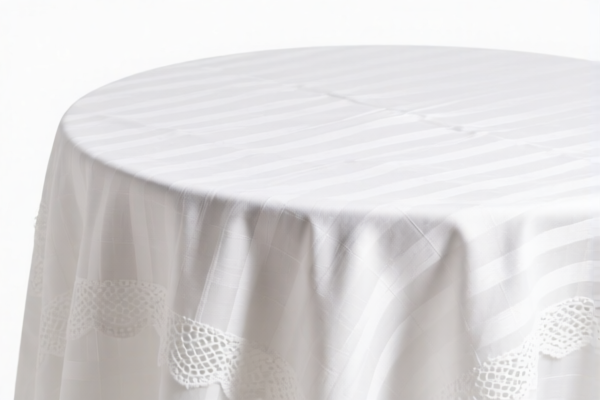
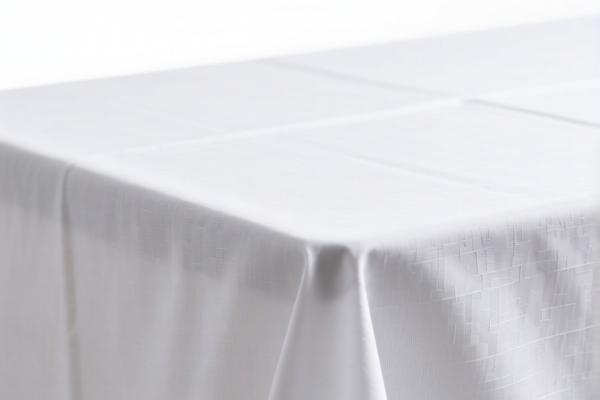
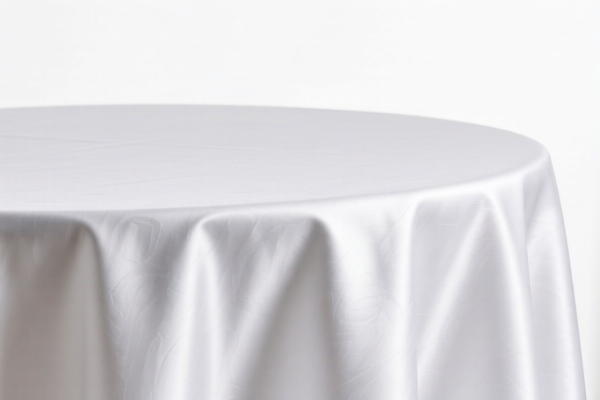
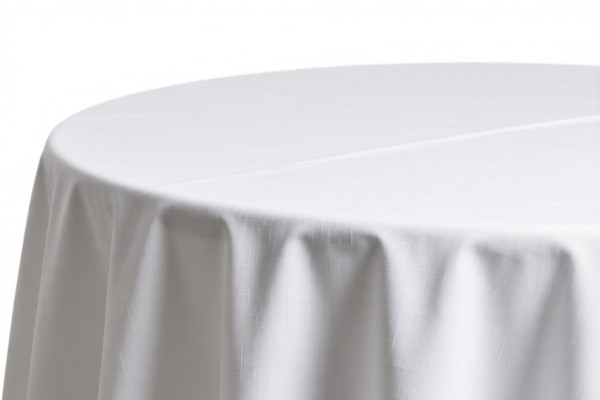
AI Analysis
🎉 Party Tablecloth (派对桌布)
🌐 HS Code Reference & Customs Clearance Guide | 2026 Latest Tariff Analysis | Professional Entry Strategy
📌 I. Product Definition & Classification: Do You Really Know "Party Tablecloths"?
Party tablecloths are essential items for events, ranging from casual birthday parties to formal corporate gatherings. In international trade, their classification depends entirely on Material and Construction Method. Misclassification can lead to significant duty differences, ranging from 13.3% to 38.3%.
There are two main categories:
1. Plastic/Vinyl Tablecloths (Non-Woven/Synthetic): Made from polyethylene (PE), PVC, or other plastics. These are single-use or durable synthetic sheets. 2. Textile Tablecloths (Fabric): Made from woven, knitted, or non-knitted fabrics (cotton, polyester, linen, etc.).
⚠️ Critical Distinction:
- If the material is Plastic/PE/PVC → It falls under Chapter 39 (Plastics).
- If the material is Textile (Cotton/Polyester) → It falls under Chapter 63 (Other Made-Up Textile Articles).
- Note: Ceramic/Paper are rare for standard party tablecloths but possible for specific "party supplies" categorizations.
📦 II. HS Code Classification Details (2026 Latest Tariff Authority Comparison)
Based on the provided data, here are the precise HS codes and their corresponding logic:
| HS Code | Product Description | Material Inference | Classification Logic |
|---|---|---|---|
| 3924.90.10.10 | Party Tablecloth | Plastic / Polyethylene (PE) | Classified as plastic tableware/table linen. Specific sub-category for plastic tablecloths. |
| 3924.90.10.50 | Party Tablecloth | Plastic (Other) | Classified as "Other" plastic tableware/table linen. Shape matches table covering. |
| 6304.99.60.40 | Party Tablecloth | Textile (Non-Knitted/Non-Crocheted) | Classified as other furnishing articles. Material inferred as non-knitted textile (e.g., woven polyester). |
| 6304.91.01.70 | Party Tablecloth | Textile (Knitted/Crocheted) | Classified as furnishing articles. Material inferred as knitted or crocheted fabric. |
| 6911.10.80.10 | Party Tablecloth | Ceramic / Paper (Rare) | Classified as tableware/kitchen utensils. Inferred as ceramic or paper-based party supplies based on common sense for specific disposable items. |
🔍 Key Reminder:
- Plastic vs. Textile is the biggest risk factor. A "plastic-looking" tablecloth is NOT textile.
- Knitted vs. Woven affects the textile code. Most standard party tablecloths are non-knitted (woven or non-woven), but some cheap disposable ones might be knitted.
- Ceramic/Paper codes are outliers but included in the dataset for comprehensive coverage of "party table linen" definitions.
💰 III. 2026 Latest Tariff Rate Breakdown (Including Surcharges & Policy Add-ons)
✅ Applicable Country: United States (US)
✅ Origin: China (CN)
✅ Effective Date: From November 10, 2025 (and subsequent imports)
🎯 1. 3924.90.10.10 & 3924.90.10.50 —— Plastic Party Tablecloths
| Item | Content |
|---|---|
| Base Duty Rate | 3.3% (Ad Valorem) |
| Section 301 Surcharge | +10% (122 Clause / IEEPA) |
| Additional Surcharges | 0.0% |
| Total Duty Rate | 13.3% |
| Tax Calculation | CIF Value × 13.3% |
| De Minimis Eligibility | ❌ No (Subject to full duty calculation) |
| Legal Basis Path | Base: 3.3% → 122 Clause: 10% → Total: 13.3% |
📌 Explanation:
- Plastic tablecloths face a 13.3% total duty.
- The 10% is specifically from the 122 Clause (IEEPA), which applies to many Chinese-origin plastic goods.
- No additional 25% Section 301 tariff applies to this specific sub-category in the provided data, making it the most cost-effective option among plastic tablecloths.
🎯 2. 6304.99.60.40 —— Textile Tablecloths (Non-Knitted)
| Item | Content |
|---|---|
| Base Duty Rate | 3.2% (Ad Valorem) |
| Section 301 Surcharge | +7.5% |
| 122 Clause Surcharge | +10% |
| Total Duty Rate | 20.7% |
| Tax Calculation | CIF Value × 20.7% |
| De Minimis Eligibility | ❌ No |
| Legal Basis Path | Base: 3.2% → 301: 7.5% → 122: 10% → Total: 20.7% |
📌 Explanation:
- Non-knitted textile tablecloths are taxed at 20.7%.
- The 7.5% is a Section 301 surcharge, and the 10% is the 122 Clause.
- Higher than plastic due to the additional Section 301 component.
🎯 3. 6304.91.01.70 —— Textile Tablecloths (Knitted/Crocheted)
| Item | Content |
|---|---|
| Base Duty Rate | 5.8% (Ad Valorem) |
| Section 301 Surcharge | +7.5% |
| 122 Clause Surcharge | +10% |
| Total Duty Rate | 23.3% |
| Tax Calculation | CIF Value × 23.3% |
| De Minimis Eligibility | ❌ No |
| Legal Basis Path | Base: 5.8% → 301: 7.5% → 122: 10% → Total: 23.3% |
📌 Explanation:
- Knitted/crocheted textile tablecloths have a higher base rate (5.8%) compared to non-knitted (3.2%).
- Total duty is 23.3%, the highest among textile options.
- Verify material carefully: If you declare "knitted" but it's "woven," you risk penalty.
🎯 4. 6911.10.80.10 —— Ceramic/Paper Party Tablecloths (Rare)
| Item | Content |
|---|---|
| Base Duty Rate | 20.8% (Ad Valorem) |
| Section 301 Surcharge | +7.5% |
| 122 Clause Surcharge | +10% |
| Total Duty Rate | 38.3% |
| Tax Calculation | CIF Value × 38.3% |
| De Minimis Eligibility | ❌ No |
| Legal Basis Path | Base: 20.8% → 301: 7.5% → 122: 10% → Total: 38.3% |
📌 Explanation:
- This code is for ceramic or paper items classified under tableware.
- Highest duty rate (38.3%).
- Only applicable if the product is explicitly ceramic plates with tablecloth designs or disposable paper table linings that fit this specific sub-category.
- Avoid unless certain: Most "party tablecloths" are not ceramic. Misclassification here leads to massive overpayment or underpayment penalties.
🛠️ IV. Customs Clearance Practical Advice (Pitfall Avoidance Guide)
✅ 1. Required Documentation Checklist
| Document | Mandatory? | Notes |
|---|---|---|
| ✅ Product Specification Sheet | ✔️ | Must specify material (PE, PVC, Cotton, Polyester) and construction (woven, knitted, non-woven). |
| ✅ Product Photos | ✔️ | Clear images showing texture and edges to distinguish plastic vs. fabric. |
| ✅ Commercial Invoice | ✔️ | Description must match HS code logic (e.g., "Polyethylene Tablecloth" vs. "Cotton Tablecloth"). |
| ✅ Packing List | ✔️ | Weight and dimensions for duty calculation. |
| ✅ Origin Certificate | ✔️ | Crucial for confirming China origin and applying correct surcharges. |
✅ 2. Declaration Tips (Key Mantra)
🔥 "Material First, Construction Second, Name Specific, Duty Accurate!"
| Scenario | Correct Declaration | Wrong Action |
|---|---|---|
| Plastic Tablecloth | 3924.90.10.10 or .50 |
Declare as "Textile" → 20.7%+ |
| Fabric Tablecloth (Woven) | 6304.99.60.40 |
Declare as "Plastic" → 13.3% (Risk of penalty) |
| Fabric Tablecloth (Knitted) | 6304.91.01.70 |
Declare as "Non-Knitted" → 20.7% (Incorrect Base Rate) |
| Disposable Paper Mat | Verify if 6911.10.80.10 or Paper Chapter |
Misclassify as Plastic → 13.3% (May be incorrect) |
✅ 3. Special Considerations
| Scenario | Handling Advice |
|---|---|
| Mixed Materials | If tablecloth has plastic backing and fabric top, classify based on essential character (usually the top layer). |
| OEM Custom Prints | Printing does not change HS code. Focus on base material. |
| Small Packages (De Minimis) | ❌ Do NOT rely on De Minimis. The data indicates these items are subject to full duty + surcharges. Plan for 13.3%-38.3% cost. |
| Seasonal Imports | Ensure documentation is ready early. Peak party seasons (Summer/Christmas) lead to customs backlog. |
🌍 V. Global Market Comparison (2026 Latest)
| Country/Region | Recommended HS Code | Duty (China Origin) | Key Certifications | Notes |
|---|---|---|---|---|
| 🇺🇸 USA | 3924.90.10.10 (Plastic) |
13.3% | None specific | Lowest duty for plastic. |
| 🇺🇸 USA | 6304.99.60.40 (Fabric) |
20.7% | None specific | Higher due to 301 tariff. |
| 🇪🇺 EU | 3924.90.10 (Plastic) |
~6.5% | None | No Section 301/122 equivalent. |
| 🇬🇧 UK | 3924.90.10 (Plastic) |
~6.5% | None | Post-Brexit tariffs. |
| 🇨🇦 Canada | 3924.90.10 (Plastic) |
~5% | None | Lower duty than US. |
| 🇦🇺 Australia | 3924.90.10 (Plastic) |
~5% | None | Lower duty than US. |
📌 Conclusion:
- USA is the most expensive market for Chinese-made party tablecloths due to Section 301 and 122 Clause tariffs.
- Plastic tablecloths (13.3%) are significantly cheaper than textile ones (20.7%-23.3%) in the US market.
- Consider sourcing from Vietnam or Mexico to avoid US surcharges if volume is high.
📌 VI. Common Mistakes & Pitfall Guide (Lessons Learned)
❌ Mistake 1: Declaring all tablecloths as "Textile" (6304)
👉 Result: If it's plastic, you pay 20.7% instead of 13.3%. Overpayment of ~5.5%.
👉 Risk: If declared as textile but customs finds plastic, they may impose penalties for misdeclaration.
❌ Mistake 2: Not specifying "Knitted" vs. "Non-Knitted" for textiles
👉 Result: Customs may choose the higher base rate (5.8% vs 3.2%).
👉 Risk: Delay in clearance due to request for more info.
❌ Mistake 3: Assuming "De Minimis" applies to small packages
👉 Result: Goods worth <$800 may still be subject to duty if they fall under specific trade remedy cases.
👉 Risk: Surprise bills at delivery.
❌ Mistake 4: Using vague descriptions like "Party Supplies"
👉 Result: Customs cannot determine HS code.
👉 Risk: Held in customs until detailed breakdown is provided.
✅ Correct Practice:
"Party Tablecloth, 1.5m x 2m, 100% Polyethylene (PE), Non-Woven, Transparent, Blue Trim, Model PT-001"
🎯 VII. Conclusion: Professional Declaration, Cost Savings, Efficiency!
🎯 Remember the Mantra:
🔹 "Plastic is King (13.3%), Fabric is Queen (20.7-23.3%), Ceramic is Noble (38.3%)."
🔹 "Material defines Code, Code defines Duty, Duty defines Profit!"
📌 Pro Tip:
If you are importing large volumes, consider:
1. Pre-Ruling: Apply for an Advance Ruling from CBP to confirm the HS code.
2. Supply Chain Shift: Source plastic tablecloths from Vietnam to avoid the 10% 122 Clause surcharge.
3. Material Optimization: Use Plastic instead of Textile for US market if cost is the primary driver, as it has a lower total duty rate (13.3% vs 20.7%).
📣 Immediate Action:
📞 Contact your customs broker with material specifications.
🚀 Declare accurately, pay correctly, and maximize your profit margin!
✨ Professional Customs Clearance Starts with Accurate Classification!
💼 Every cent saved is a cent earned!
Customer Reviews
About HS Code Classification
The Harmonized System (HS) is an internationally standardized nomenclature developed by the World Customs Organization (WCO) to classify traded products. Over 200 countries use the HS system as the basis for customs tariffs, trade statistics, and import/export regulations.
Each HS code follows a hierarchical structure:
- Chapter (2 digits) — Broad category of goods (e.g., Chapter 84: Machinery and Mechanical Appliances)
- Heading (4 digits) — More specific grouping within the chapter
- Subheading (6 digits) — Internationally standardized breakdown, used by all WCO member countries
- National subdivisions (8-10 digits) — Country-specific extensions for further classification, such as US HTSUS 10-digit codes
Correct HS code classification is essential for smooth customs clearance, accurate duty payment, and compliance with trade regulations. Misclassification can lead to customs delays, overpayment of duties, or penalties.
When importing from CN to US, the applicable tariff rates may include:
- Most-Favored-Nation (MFN) rate — The standard duty rate applied to WTO members
- General rate — Applied to countries without trade agreements
- Trade remedy duties — Additional tariffs such as Section 301 (anti-dumping), Section 232 (national security), or countervailing duties
The information provided on this page is for reference purposes only. For official classification, please consult with your local customs authority or a licensed customs broker.