Passenger Car
CN → US| HS Code | Tariff Rate | Origin | Destination | Doc |
|---|---|---|---|---|
| 8703900100 | 112.5% | CN | US | Official Doc |
| 8703230140 | 37.5% | CN | US | Official Doc |
| 8703800060 | 112.5% | CN | US | Official Doc |
Product Images
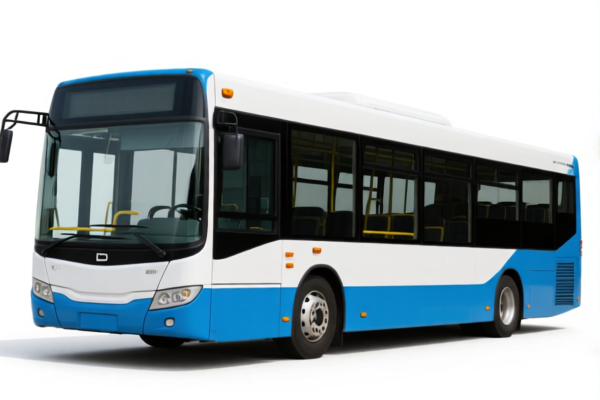



AI Analysis
🚗 Passenger Cars (Passenger Vehicles)
🌐 HS Code Reference & Customs Clearance Guide | 2026 Tariff Analysis for US Imports | Professional Clearance Strategy
📌 I. Product Definition & Classification: Understanding "Passenger Cars"
In international trade, "Passenger Cars" generally refer to motor vehicles primarily designed for the transport of persons. However, under the US Harmonized Tariff Schedule (HTSUS), the classification varies significantly based on drive mechanism, engine type, and specific subheading definitions. The data provided highlights three distinct classification paths, each carrying vastly different tariff implications due to US trade policies (Section 301 and Section 232).
⚠️ Critical Distinction:
- HS 8703.23.01.40: Typically refers to specific gasoline/diesel passenger vehicles (often older or specific engine capacity brackets).
- HS 8703.90.01.00 & 8703.80.00.60: These are "catch-all" or specific subheadings for passenger vehicles that do not fit the primary criteria of 8703.10–8703.90 exact matches, or are used when drive type/range is unspecified. The data indicates these are treated as standard passenger cars but attract higher punitive tariffs.
📦 II. HS Code Classification Details (Based on Provided Data)
| HS Code | Product Description | Usage Definition | Tax Status |
|---|---|---|---|
8703.23.01.40 |
Passenger Vehicles (Specific Category) | "Used for carrying persons (excluding vehicles of Heading 87.02)" + Vehicle Form Assumed. | Lower Base Tariff |
8703.90.01.00 |
Passenger Vehicles (General/Catch-all) | Matches definition: "Motor vehicles principally designed for the transport of persons." | High Punitive Tariff |
8703.80.00.60 |
Passenger Vehicles (Fallback Category) | "Used for carrying persons." Applied as a "Fallback Category" when drive mode/range is unspecified, provided no material/form conflict exists. | High Punitive Tariff |
🔍 Key Insight:
- The system matches "Passenger Car" to multiple codes based on specificity and missing information (like drive type).
-8703.23.01.40offers a significantly lower tax rate (37.5%) compared to the other two options (112.5%).
- The 112.5% rate applies to8703.90.01.00and8703.80.00.60, indicating a "default" or "unspecified" classification path that triggers maximum US trade sanctions.
💰 III. 2026 Latest Tariff Rate Breakdown (Including Additional Duties)
✅ Applicable Country: United States (US)
✅ Origin: China (CN) (Inferred from "122" and "Section 301" references common in US-China trade data)
✅ Effective Date: Current applicable rates under US Trade Law
🎯 1. 8703.23.01.40 —— Passenger Vehicles (Specific Subheading)
| Item | Content |
|---|---|
| Base Duty Rate | 2.5% (Ad Valorem) |
| Section 301 Additional Duty | +25.0% |
| Section 232 Duty (Auto/Steel) | +10.0% (Often referenced as "122 Clause" in some systems) |
| Total Effective Tax Rate | 37.5% |
| Tax Calculation | CIF Value × 37.5% |
| De Minimis Eligibility | ❌ No (Declarative goods > $800 may be exempt, but commercial auto imports are scrutinized heavily) |
| Legal Basis Path | USITC:8703.23.01.40 → Section 301: Footnote 9903.88.03 → Section 232 |
📌 Explanation:
- This is the most favorable classification among the three provided.
- The 2.5% base duty is standard for passenger cars.
- The 25% Section 301 tariff is the primary punitive measure.
- The 10% Section 232 tariff may apply to autos/steel/aluminum, depending on the specific vehicle type and origin rules.
🎯 2. 8703.90.01.00 —— Passenger Vehicles (General/Unspecified)
| Item | Content |
|---|---|
| Base Duty Rate | 2.5% (Ad Valorem) |
| Section 301 Additional Duty | +100.0% |
| Section 232 Duty (Auto/Steel) | +10.0% |
| Total Effective Tax Rate | 112.5% |
| Tax Calculation | CIF Value × 112.5% |
| De Minimis Eligibility | ❌ No |
| Legal Basis Path | USITC:8703.90.01.00 → Section 301: Footnote 9903.88.03 → Section 232 |
📌 Explanation:
- This code triggers the maximum Section 301 tariff rate (100%), likely because it falls under a broader or less favored subheading for Chinese-origin goods.
- This rate is prohibitive and usually indicates that the product does not qualify for the specific engine/carriage conditions of 8703.23.
- Cost Impact: For every $10,000 CIF value, the duty alone is $11,250.
🎯 3. 8703.80.00.60 —— Passenger Vehicles (Fallback Category)
| Item | Content |
|---|---|
| Base Duty Rate | 2.5% (Ad Valorem) |
| Section 301 Additional Duty | +100.0% |
| Section 232 Duty (Auto/Steel) | +10.0% |
| Total Effective Tax Rate | 112.5% |
| Tax Calculation | CIF Value × 112.5% |
| De Minimis Eligibility | ❌ No |
| Legal Basis Path | USITC:8703.80.00.60 → Section 301: Footnote 9903.88.03 → Section 232 |
📌 Explanation:
- This is a "fallback" classification when drive mode (e.g., EV, Hybrid) and range are not specified.
- Customs may assign this code if the importer fails to provide sufficient technical details to justify a lower Section 301 rate (like 25%).
- The tax burden is identical to8703.90.01.00(112.5%), making it financially unviable for commercial importation without precise product specification.
🛠️ IV. Customs Clearance Practical Advice (Pitfall Avoidance Guide)
✅ 1. Documentation Checklist (Mandatory)
| Document | Required? | Notes |
|---|---|---|
| ✅ Commercial Invoice | ✔️ | Must clearly state "Passenger Car" and detailed specs. |
| ✅ Packing List | ✔️ | Itemize all parts, fluids, and accessories. |
| ✅ Vehicle Identification Number (VIN) | ✔️ | Essential for US DOT/EPA compliance. |
| ✅ EPA Form 3520-1 | ✔️ | Mandatory for emissions compliance. |
| ✅ DOT Form HS-7 | ✔️ | Mandatory for safety standards compliance. |
| ✅ Certificate of Origin | ✔️ | To prove origin (critical for Section 301/232 applicability). |
| ✅ Technical Specification Sheet | ✔️ | Crucial: Must detail engine type, drive mode, and range to avoid "Fallback" classification. |
📌 Warning:
- Failure to provide Technical Specs leads to "Fallback" classification (8703.80.00.60), resulting in 112.5% tax instead of 37.5%.
- VIN Verification: US Customs will verify the VIN against NHTSA databases. Mismatches cause delays and seizures.
✅ 2. Classification Strategy (Key Takeaways)
| Scenario | Recommended HS Code | Tax Rate | Action |
|---|---|---|---|
| Standard Gasoline/Diesel Passenger Car | 8703.23.01.40 |
37.5% | ✅ Provide clear engine/cylinder specs to qualify for this subheading. |
| EV/Hybrid/Unspecified Drive | 8703.90.01.00 / 8703.80.00.60 |
112.5% | ❌ Avoid if possible. If EV, ensure it qualifies for any potential exemptions (very rare for China). |
| Incomplete Vehicle | Varies | Varies | Ensure all major components are declared to avoid "Incomplete Vehicle" penalties. |
🔥 "Specs Dictate Tax: Vague Specs = 112.5% Tax, Clear Specs = 37.5% Tax!"
✅ 3. Special Cases & Compliance
| Case | Handling Advice |
|---|---|
| New Energy Vehicles (EVs) | EVs often fall under 8703.80 or 8703.90. Check if any specific EV exemptions exist (currently minimal for China origin). Ensure battery specs are declared to avoid "unspecified" classification. |
| Used Cars | Must comply with EPA "Non-Conforming Vehicle" rules. Additional fees and inspections apply. |
| Pre-1994 Model Cars | Exempt from 35% "Chicken Tax" under certain conditions, but still subject to Section 301/232. Verify eligibility. |
| Components vs. Complete Vehicles | Do not ship "KD" (Knock-Down) kits as parts if intended as a complete vehicle. Customs may reclassify as CBU (Complete Built-Up) and apply higher duties. |
🌍 V. Global Market Comparison (2026 Latest)
| Country/Region | Recommended HS Code | Tariff | Certification | Notes |
|---|---|---|---|---|
| 🇺🇸 USA | 8703.23.01.40 |
37.5% | DOT + EPA | Highest Punitive Tariffs. 112.5% for fallback codes. |
| 🇨🇳 China | 8703.23.01.40 |
15% | CCC | Domestic market access. |
| 🇪🇺 EU | 8703.23 |
10% | Type Approval | No Section 301/232 equivalents. |
| 🇨🇦 Canada | 8703.23 |
6.1% | CMVSS | Lower duties than US. |
| 🇲🇽 Mexico | 8703.23 |
0-5% | NOM | Beneficiary under USMCA if local content met. |
📌 Conclusion:
- The USA is the most challenging market for Chinese-origin passenger cars due to the 100% Section 301 additional duty on certain subheadings.
- Strategy: Aim for8703.23.01.40by ensuring your vehicle specs (engine, type) align with its definition. Avoid "unspecified" classifications at all costs.
📌 VI. Common Errors & Pitfalls (Blood & Tears Lessons)
❌ Error 1: Listing only "Passenger Car" on the invoice without engine/drive specs.
👉 Consequence: Customs applies "Fallback" classification (8703.80.00.60) → 112.5% Tax.
👉 Fix: Provide detailed spec sheet including engine cc, fuel type, and drive mode.
❌ Error 2: Misclassifying an EV as a standard gasoline car to avoid Section 301.
👉 Consequence: Customs inspection reveals battery/EV nature → Back taxes + Penalties + Seizure.
👉 Fix: Declare accurately. EVs from China currently face high tariffs, but honesty avoids fraud penalties.
❌ Error 3: Ignoring DOT/EPA compliance.
👉 Consequence: Goods held at port indefinitely. Cannot clear customs without EPA Form 3520-1 and DOT HS-7.
👉 Fix: Ensure vehicle is EPA/DOT compliant or modify to meet standards before shipment.
❌ Error 4: Assuming "De Minimis" ($800) applies to cars.
👉 Consequence: Cars are never eligible for de minimis entry in commercial contexts.
👉 Fix: Prepare full formal entry documentation.
✅ Correct Declaration Example:
"Passenger Car, 4-Door Sedan, Gasoline, 2.0L Engine, VIN: 1HGCM82633A000000, EPA Compliant, DOT Compliant, Model XYZ."
🎯 VII. Conclusion: Precision in Classification Saves Millions!
🎯 Remember the Mantra:
🔹 "Vague Specs = 112.5% Tax, Precise Specs = 37.5% Tax."
🔹 "DOT & EPA are Non-Negotiable. Without them, Your Car Stays on the Dock."
🔹 "Section 301 Hits Hardest on Unspecified Categories. Define Your Product to Defend Your Margin."
📌 Pro Tip:
If your vehicle originates from Vietnam, Thailand, or Malaysia and meets USMCA/FTA Rules of Origin, you may avoid Section 301 tariffs.
Recommend Advance Ruling from US Customs and Border Protection (CBP) before shipment to lock in the 37.5% rate for 8703.23.01.40.
📣 Immediate Action:
📞 Consult a Licensed Customs Broker
📄 Provide Detailed Technical Specifications (Engine, Drive, Range)
🚀 Ensure Smooth Clearance, Avoid 112.5% Pitfall, Protect Your Profit!
✨ Professional Clearance Starts with Accurate Classification!
💼 Every Dollar Saved in Tariffs is Pure Profit!
Customer Reviews
About HS Code Classification
The Harmonized System (HS) is an internationally standardized nomenclature developed by the World Customs Organization (WCO) to classify traded products. Over 200 countries use the HS system as the basis for customs tariffs, trade statistics, and import/export regulations.
Each HS code follows a hierarchical structure:
- Chapter (2 digits) — Broad category of goods (e.g., Chapter 84: Machinery and Mechanical Appliances)
- Heading (4 digits) — More specific grouping within the chapter
- Subheading (6 digits) — Internationally standardized breakdown, used by all WCO member countries
- National subdivisions (8-10 digits) — Country-specific extensions for further classification, such as US HTSUS 10-digit codes
Correct HS code classification is essential for smooth customs clearance, accurate duty payment, and compliance with trade regulations. Misclassification can lead to customs delays, overpayment of duties, or penalties.
When importing from CN to US, the applicable tariff rates may include:
- Most-Favored-Nation (MFN) rate — The standard duty rate applied to WTO members
- General rate — Applied to countries without trade agreements
- Trade remedy duties — Additional tariffs such as Section 301 (anti-dumping), Section 232 (national security), or countervailing duties
The information provided on this page is for reference purposes only. For official classification, please consult with your local customs authority or a licensed customs broker.