Passenger Car Inner Tube
CN → US| HS Code | Tariff Rate | Origin | Destination | Doc |
|---|---|---|---|---|
| 8708998180 | 12.5% | CN | US | Official Doc |
| 8708706060 | 37.5% | CN | US | Official Doc |
| 4011105000 | 38.4% | CN | US | Official Doc |
| 4013100010 | 38.7% | CN | US | Official Doc |
| 8708998180 | 12.5% | CN | US | Official Doc |
Product Images
AI Analysis
🚗 Passenger Car Inner Tube (Inner Tubes for Automobiles)
🌐 HS Code Reference & Customs Clearance Guide | 2026 Latest Tariff Analysis | Professional Entry Strategies
📌 I. Product Definition & Classification: Do You Really Understand "Inner Tubes"?
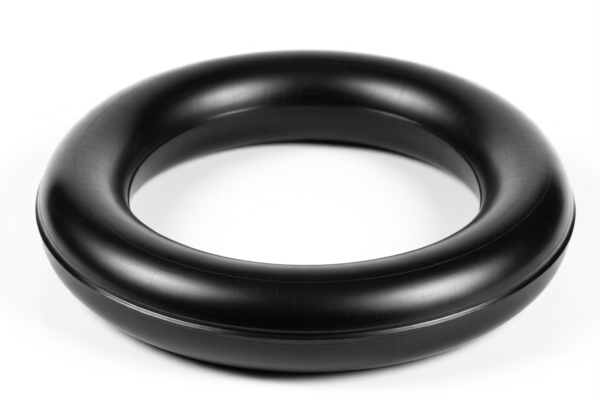
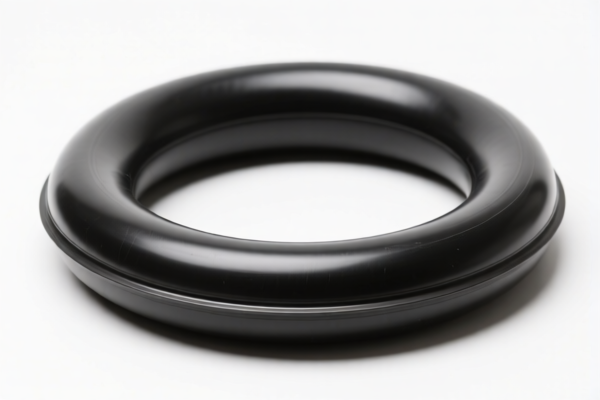
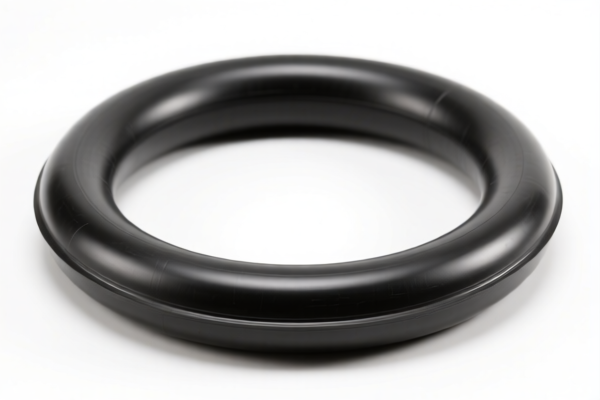
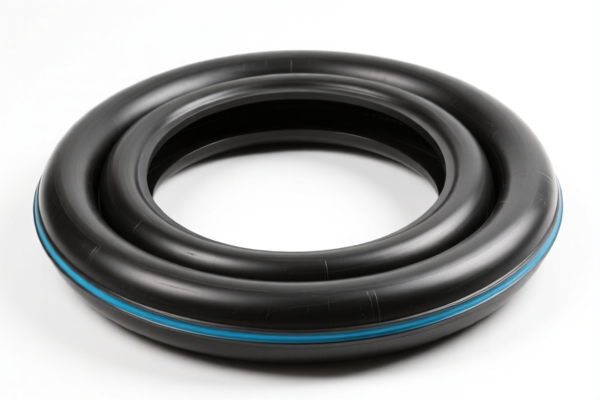
Passenger car inner tubes are critical safety components of pneumatic tire systems. They are flexible rubber bladders inserted inside the tire casing to retain air pressure. In international trade, their classification is highly controversial because they can be viewed as rubber products or automotive parts.
Key Classification Dilemma:
Rubber Product View: Classified under Chapter 40 as "Rubber Pneumatic Tires" or "Inner Tubes of Rubber."
Automotive Part View: Classified under Chapter 87 as "Parts and Accessories of Motor Vehicles."
⚠️ Critical Distinction:
- If classified as a Rubber Product (Ch 40): It falls under specific subheadings for tires/tubes, often triggering high additional tariffs (Section 301 + IEEPA).
- If classified as an Auto Part (Ch 87): It may qualify for lower base tariffs and potentially zero Section 301 tariffs, resulting in significant savings.
📦 II. HS Code Classification Details (2026 Latest Tariff Authoritative Comparison)
Based on the provided data, there are four distinct HS Code options with significantly different tax implications. Here is the detailed breakdown:
| HS Code | Summary/Justification | Total Tax Rate | Tax Detail Breakdown |
|---|---|---|---|
| 8708.99.81.80 | Categorized as Auto Parts/Accessories. Material inferred as rubber. Fits definition of "Other parts and accessories." | 12.5% | Base: 2.5% + Section 301: 0.0% + IEEPA (Sec 122): 10% |
| 8708.70.60.60 | Categorized as Wheel Components. Fits "Other parts and accessories" for road wheels. Material: Rubber. | 37.5% | Base: 2.5% + Section 301: 25.0% + IEEPA (Sec 122): 10% |
| 4011.10.50.00 | Categorized as Rubber Pneumatic Tires. Fits "New rubber pneumatic tires." Inner tube considered part of tire system. | 38.4% | Base: 3.4% + Section 301: 25.0% + IEEPA (Sec 122): 10% |
| 4013.10.00.10 | Categorized as Rubber Inner Tubes. Specifically matches "Inner tubes of rubber" for passenger cars. | 38.7% | Base: 3.7% + Section 301: 25.0% + IEEPA (Sec 122): 10% |
🔍 Key Insight:
- HS 8708.99.81.80 is the most cost-effective option due to 0% Section 301 tariff.
- HS 4013.10.00.10 and 4011.10.50.00 are most expensive due to full 25% Section 301 tariff.
- HS 8708.70.60.60 is a middle-ground risk: classified as auto part but still subject to 25% Section 301.
💰 III. 2026 Latest Tariff Rate Details (Including Additional Taxes & Policies)
✅ Applicable Country: United States (US)
✅ Origin: China (CN)
✅ Effective Time: Current trade policies apply (Section 301 + IEEPA Sec 122)
🎯 1. 8708.99.81.80 —— Auto Parts & Accessories (Best Case Scenario)
| Item | Content |
|---|---|
| Base Tariff | 2.5% (ad valorem) |
| Section 301 Tariff | 0.0% (Exempted or not applicable for this specific subheading) |
| IEEPA Sec 122 Tariff | +10% (Targeted Chinese import tariff) |
| Total Tariff | 12.5% |
| Tax Calculation | CIF Value × 12.5% |
| De Minimis Exemption | ❌ Not Eligible (Value likely exceeds $800 threshold for de minimis) |
| Legal Basis Path | USITC:8708.99.81.80 → IEEPA:Sec122 |
📌 Explanation:
- This classification treats the inner tube as a generic auto part.
- Crucially, it avoids the 25% Section 301 tariff, saving 25% compared to rubber product classifications.
- Recommendation: Prioritize this classification if product description and documentation support "Auto Part" usage.
🎯 2. 8708.70.60.60 —— Wheel Parts (High Risk)
| Item | Content |
|---|---|
| Base Tariff | 2.5% |
| Section 301 Tariff | +25.0% (Applicable to this specific wheel part subheading) |
| IEEPA Sec 122 Tariff | +10% |
| Total Tariff | 37.5% |
| Tax Calculation | CIF Value × 37.5% |
| De Minimis Exemption | ❌ Not Eligible |
| Legal Basis Path | USITC:8708.70.60.60 → Section301 → IEEPA:Sec122 |
📌 Note:
- Even though it's an auto part, this specific subheading for wheel components is not exempt from Section 301.
- High risk of audit if declared as such without clear documentation linking to wheel assemblies.
🎯 3. 4011.10.50.00 —— Rubber Pneumatic Tires (Most Expensive)
| Item | Content |
|---|---|
| Base Tariff | 3.4% |
| Section 301 Tariff | +25.0% |
| IEEPA Sec 122 Tariff | +10% |
| Total Tariff | 38.4% |
| Tax Calculation | CIF Value × 38.4% |
| De Minimis Exemption | ❌ Not Eligible |
| Legal Basis Path | USITC:4011.10.50.00 → Section301 → IEEPA:Sec122 |
📌 Warning:
- Classifying inner tubes as "tires" is often challenged by customs because tubes are not tires.
- Highest cost option. Only use if explicitly required by specific trade agreements or product specs.
🎯 4. 4013.10.00.10 —— Rubber Inner Tubes (Most Expensive)
| Item | Content |
|---|---|
| Base Tariff | 3.7% |
| Section 301 Tariff | +25.0% |
| IEEPA Sec 122 Tariff | +10% |
| Total Tariff | 38.7% |
| Tax Calculation | CIF Value × 38.7% |
| De Minimis Exemption | ❌ Not Eligible |
| Legal Basis Path | USITC:4013.10.00.10 → Section301 → IEEPA:Sec122 |
📌 Note:
- This is the most "technically accurate" classification for inner tubes under rubber products.
- However, it carries the highest financial risk due to full Section 301 liability.
🛠️ IV. Customs Clearance Practical Advice (Real-World Pitfall Guide)
✅ 1. Preparation Checklist (Essential Documents)
| Document | Must Provide | Description |
|---|---|---|
| ✅ Product Specification Sheet | ✔️ | Material composition (e.g., butyl rubber, natural rubber), dimensions, pressure rating. |
| ✅ Product Photos | ✔️ | Clear images showing inner tube shape, valve stem, and packaging. |
| ✅ Commercial Invoice | ✔️ | Explicitly state "Inner Tube for Passenger Car" or "Auto Part." Avoid vague terms like "Rubber Product." |
| ✅ Packing List | ✔️ | Itemize quantity and weight. |
| ✅ Origin Certificate (CO) | ✔️ | If applicable, to prove origin for trade agreements (though Section 301 still applies). |
✅ 2. Declaration Tips (Key Mantra)
🔥 “Auto Part Status Saves 25%! Document Everything!”
| Scenario | Correct Declaration | Incorrect Declaration |
|---|---|---|
| Inner Tube as Auto Part | HS 8708.99.81.80 |
HS 4013.10.00.10 → Saves 26.2%! |
| Inner Tube as Wheel Part | HS 8708.70.60.60 |
Not recommended unless specific to wheel assembly. |
| Inner Tube as Rubber Product | HS 4013.10.00.10 |
Acceptable but expensive. |
| Vague Description | "Inner Tube" | "Rubber Bladder" → May trigger audit. |
✅ 3. Special Situation Handling
| Situation | Handling Advice |
|---|---|
| OEM Inner Tubes | Provide buyer contract showing use in auto manufacturing. Supports 8708 classification. |
| Aftermarket Inner Tubes | Still qualifies as auto part if intended for passenger cars. |
| Mixed Shipment | If shipping inner tubes + tires, declare separately. Do not mix under one HS code. |
| Customs Audit | If audited, provide engineering drawings showing inner tube fits within tire casing, supporting "auto part" function. |
🌍 V. Global Main Market Clearance Comparison (2026 Latest)
| Country/Region | Recommended HS Code | Tariff | Certification | Notes |
|---|---|---|---|---|
| 🇺🇸 United States | 8708.99.81.80 |
12.5% | None Specific | Best option: Avoids 25% Section 301. |
| 🇨🇳 China | 4013.10.00.10 |
5% | CCC (if applicable) | No Section 301. |
| 🇪🇺 EU | 4013.10.00.10 |
0-5% | CE/RoHS | No Section 301. |
| 🇦🇺 Australia | 4013.10.00.10 |
5% | RCM | No Section 301. |
| 🇯🇵 Japan | 4013.10.00.10 |
0% | PSE | No Section 301. |
📌 Conclusion:
- US is the only market with significant Section 301 tariffs on these goods.
- HS 8708.99.81.80 is the optimal choice for US imports to minimize costs.
- Other markets typically classify under Chapter 40 (Rubber Products) with lower or no additional tariffs.
📌 VI. Common Mistakes & Pitfall Guide (Lessons Learned)
❌ Mistake 1: Declaring inner tubes as "Rubber Products" in the US
👉 Consequence: 38.7% tariff → Loss of profit margin!
👉 Fix: Use "Auto Part" classification if justified.
❌ Mistake 2: Mixing inner tubes with tire casings in one shipment
👉 Consequence: Customs may audit entire shipment, leading to delays.
👉 Fix: Declare separately with distinct HS codes.
❌ Mistake 3: Using vague descriptions like "Rubber Bladder"
👉 Consequence: High risk of misclassification.
👉 Fix: Use precise terms: "Passenger Car Inner Tube."
❌ Mistake 4: Assuming all auto parts are exempt from Section 301
👉 Consequence: Some auto parts (like wheel parts 8708.70) are not exempt.
👉 Fix: Verify specific subheading exemptions carefully.
✅ Correct Action:
"Inner Tube, Butyl Rubber, for Passenger Cars, Model XYZ, HS 8708.99.81.80"
🎯 VII. Conclusion: Professional Declaration, Cost Savings, Efficiency!
🎯 Remember the Mantra:
🔹 "Auto Part = 12.5%, Rubber = 38.7%! Choose Wisely!"
🔹 "HS Code Determines Tax, Classification Saves Money!"
📌 Pro Tip:
If your inner tubes are shipped with tires, consider declaring them as part of the tire assembly under 8708.99.81.80 to leverage the lower tariff.
Recommendation: Seek Advance Ruling from US Customs for high-volume shipments.
📣 Immediate Action:
📞 Contact professional customs broker + Provide product specs + Apply for HS Code pre-ruling
🚀 Ensure your inner tubes pass smoothly, reduce costs, and boost profits!
✨ Professional clearance starts with accurate classification!
💼 Every cent of cost deserves precise calculation!
Customer Reviews
About HS Code Classification
The Harmonized System (HS) is an internationally standardized nomenclature developed by the World Customs Organization (WCO) to classify traded products. Over 200 countries use the HS system as the basis for customs tariffs, trade statistics, and import/export regulations.
Each HS code follows a hierarchical structure:
- Chapter (2 digits) — Broad category of goods (e.g., Chapter 84: Machinery and Mechanical Appliances)
- Heading (4 digits) — More specific grouping within the chapter
- Subheading (6 digits) — Internationally standardized breakdown, used by all WCO member countries
- National subdivisions (8-10 digits) — Country-specific extensions for further classification, such as US HTSUS 10-digit codes
Correct HS code classification is essential for smooth customs clearance, accurate duty payment, and compliance with trade regulations. Misclassification can lead to customs delays, overpayment of duties, or penalties.
When importing from CN to US, the applicable tariff rates may include:
- Most-Favored-Nation (MFN) rate — The standard duty rate applied to WTO members
- General rate — Applied to countries without trade agreements
- Trade remedy duties — Additional tariffs such as Section 301 (anti-dumping), Section 232 (national security), or countervailing duties
The information provided on this page is for reference purposes only. For official classification, please consult with your local customs authority or a licensed customs broker.