Passenger Car Radial Tires (17 18 Inch)
CN → US| HS Code | Tariff Rate | Origin | Destination | Doc |
|---|---|---|---|---|
| 4013100010 | 38.7% | CN | US | Official Doc |
| 4013905050 | 38.7% | CN | US | Official Doc |
| 4011101050 | 39.0% | CN | US | Official Doc |
| 4012114000 | 39.0% | CN | US | Official Doc |
| 4011101060 | 39.0% | CN | US | Official Doc |
Product Images
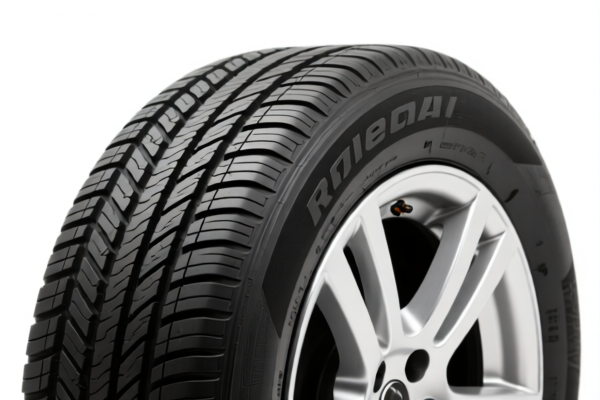
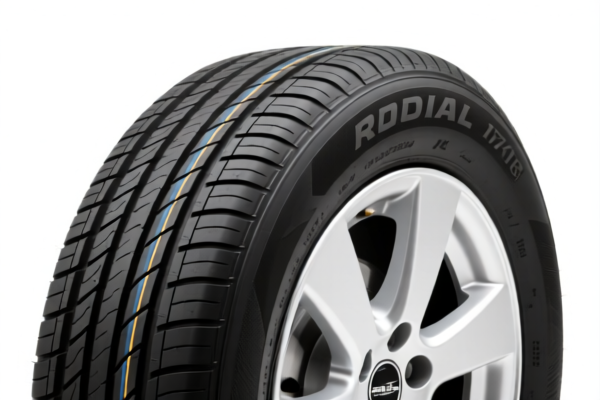
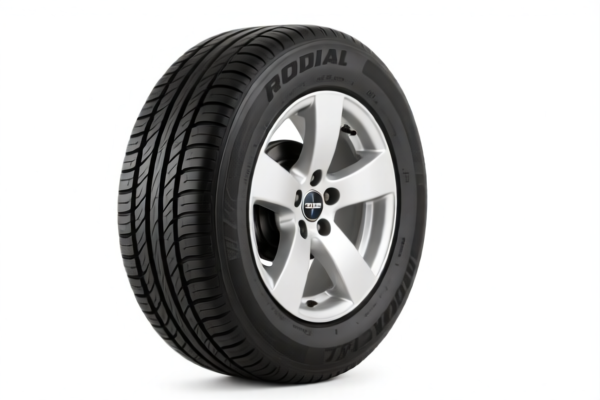
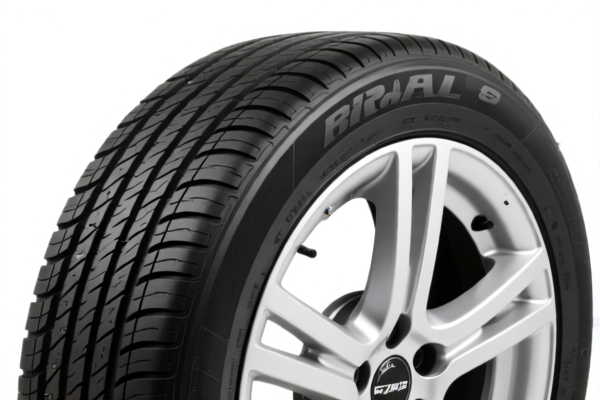
AI Analysis
🚗 Passenger Car Radial Tires (17-18 Inch)
🌐 HS Code Reference & Customs Clearance Guide | 2026 Latest Tariff Analysis | Professional-Level Strategy
📌 I. Product Definition & Classification: Do You Really Understand "Tires"?
Passenger Car Radial Tires are critical components for automotive safety and performance. In international trade, specifically under the US Harmonized Tariff Schedule (HTSUS), they are categorized based on material (rubber), structure (radial/subcategory), and application (passenger vehicles).
The input product is specified as:
Type: Passenger Car Tires
Structure: Radial
Size:* 17-18 Inch rim diameter
⚠️ Key Distinction:
- If the tire is new and radial → Look at 4011 (New Tires).
- If the tire is retreaded (recapped) → Look at 4012 (Retreaded).
- Note: The input implies new radial tires, but HS codes 4013 and 4012 are also listed in the data for potential misclassification or specific subcategory nuances. We will analyze all provided codes.
📦 II. HS Code Classification Details (2026 Latest Tariff Authority Mapping)
| HS Code | Product Description | Applicability | Key Matching Logic |
|---|---|---|---|
4011.10.10.50 |
New pneumatic tyres, of rubber, of a kind used for passenger cars, radial, for rim diameters > 43.18 cm but ≤ 45.72 cm | ✅ High Match | Fits "Passenger Car", "Radial", and "17 Inch" (43.18 cm) exactly. |
4011.10.10.60 |
New pneumatic tyres, of rubber, of a kind used for passenger cars, radial, for rim diameters > 45.72 cm but ≤ 48.26 cm | ⚠️ Partial Match | Fits "Passenger Car" & "Radial", but applies to 18 Inch (45.72 cm) boundary. Since input is "17-18 Inch", this covers the 18" range. |
4012.11.40.00 |
Retreaded pneumatic tyres, of rubber, of a kind used for passenger cars | ❌ Low Match | Applies only if tires are retreaded. Input says "Radial Tires" (usually implies new). If retreaded, this code applies. |
4013.10.00.10 |
Pneumatic inner tubes, of rubber, of a kind used for bicycles or motor cars | ❌ Misclassification Risk | Input says "Tires" (the outer rubber shell), not "Inner Tubes". This code is for inner tubes only. Do not use for whole tires. |
4013.90.50.50 |
Other pneumatic tyres, inner tubes, of rubber, of a kind used for bicycles or motor cars | ❌ Misclassification Risk | This is a residual category for "other" rubber articles. Using this for standard passenger car radial tires is incorrect and may trigger audits. |
🔍 Critical Note on Size:
- 17 Inch ≈ 43.18 cm
- 18 Inch ≈ 45.72 cm
- Code4011.10.10.50covers up to 45.72 cm.
- Code4011.10.10.60covers from >45.72 cm up to 48.26 cm.
- For 17-inch tires: Use4011.10.10.50.
- For 18-inch tires: Technically, 18" is 45.72 cm. The boundary is critical. If it is exactly 45.72 cm, it may fall under.50(≤45.72) or.60(>45.72) depending on precise measurement. Usually, 18" tires are classified under.60if they exceed the 17" category limit. However, many traders use.50for 17" and.60for 18"+. Check specific customs rulings for 18" boundary.
💰 III. 2026 Latest Tariff Rate Details (Including Surtaxes & Policy Add-ons)
✅ Applicable Country: United States (US)
✅ Country of Origin: China (CN)
✅ Effective Date: Post-November 10, 2025 (Includes subsequent imports)
🎯 1. 4011.10.10.50 & 4011.10.10.60 —— New Passenger Car Radial Tires (17-18 Inch)
These two codes represent the correct classification for new radial tires.
| Item | Content |
|---|---|
| Base Tariff Rate | 3.7% (for .50) / 4.0% (for .60) |
| Section 301 Surtax | +25.0% |
| Section 122 Tariff (IEEPA) | +10.0% |
| Total Effective Tax Rate | 38.7% (for 17" / .50) 39.0% (for 18" / .60) |
| Tax Calculation | CIF Value × Total Rate |
| De Minimis Eligibility | ❌ No (deny_de_minimis) |
| Legal Basis Path | USITC:4011.10.10.50 → SECTION_301:Footnote_9903.88.01 → IEEPA:9903.01.25 |
📌 Explanation:
- Base Rate: The HTSUS base rate for passenger car radial tires is low (3.7%-4.0%).
- Section 301 (25%): This is the standard additional duty on Chinese rubber articles.
- Section 122 / IEEPA (10%): This is the new/updated surcharge for Chinese goods effective Nov 2025.
- Total: The combination results in a high total tariff of ~39%. This significantly impacts profit margins.
🎯 2. 4012.11.40.00 —— Retreaded Passenger Car Tires
If the product is retreaded (recapped), the classification changes.
| Item | Content |
|---|---|
| Base Tariff Rate | 4.0% |
| Section 301 Surtax | +25.0% |
| Section 122 Tariff (IEEPA) | +10.0% |
| Total Effective Tax Rate | 39.0% |
| De Minimis Eligibility | ❌ No |
📌 Note: Retreaded tires often face similar or higher scrutiny. Ensure the product is clearly marked as "Retreaded" if this code is used.
⚠️ 3. 4013.10.00.10 & 4013.90.50.50 —— Incorrect Classifications (Inner Tubes/Other)
If misclassified as inner tubes or "other" rubber articles:
| Item | Content |
|---|---|
| Total Tax Rate | 38.7% |
| Breakdown | Base: 3.7% / 3.9%, +25% 301, +10% IEEPA |
🚨 Warning:
- Do not use4013for whole tires.4013is for inner tubes.
- Misclassification leads to seizure, fines, and delays.
- Even if the rate looks similar, the HS Code must match the physical product.
🛠️ IV. Customs Clearance Practical Advice (Actionable Pitfall Guide)
✅ 1. Required Documentation Checklist
| Document | Mandatory? | Description |
|---|---|---|
| ✅ Commercial Invoice | ✔️ | Must state "Passenger Car Radial Tire", Model, Size (e.g., 205/55R17), Quantity, Origin (China). |
| ✅ Packing List | ✔️ | Detailed list of tires, including weight and dimensions. |
| ✅ Product Photographs | ✔️ | Clear images of the tire sidewall showing size, tread pattern, and "Made in China" label. |
| ✅ Specification Sheet | ✔️ | Confirm radial structure, load index, speed rating, and whether it is new or retreaded. |
| ✅ Certificate of Origin | ✔️ | For verifying Chinese origin and applying/confirming surtaxes. |
| ✅ Bill of Lading/Air Waybill | ✔️ | Standard shipping docs. |
✅ 2. Declaration Strategy (Key Mantra)
🔥 "Exact Size, Radial Structure, No Inner Tube Confusion!"
| Scenario | Correct Declaration | Wrong Approach |
|---|---|---|
| 17-inch New Radial Tire | HS 4011.10.10.50 Desc: "New Radial Tire, Passenger Car, 17 Inch" |
Misclassifying as Inner Tube (4013) |
| 18-inch New Radial Tire | HS 4011.10.10.60 Desc: "New Radial Tire, Passenger Car, 18 Inch" |
Using .50 for 18" if boundary exceeded |
| Retreaded Tire | HS 4012.11.40.00 Desc: "Retreaded Radial Tire, Passenger Car" |
Declaring as "New Tire" |
| Inner Tubes (if present) | HS 4013.10.00.10 Desc: "Inner Tubes, Rubber, Motor Car" |
Mixing with tires in one line item without separation |
✅ 3. Special Circumstances Handling
| Situation | Handling Advice |
|---|---|
| Mixed Sizes (17" & 18") | Declare separately on the customs entry. Do not lump them into one HS Code if they fall into different subcategories (.50 vs .60). |
| OEM Custom Tires | Provide customer PO and technical specs. Ensure the name matches the HTSUS description ("Of a kind used for passenger cars"). |
| Tire vs. Wheel Assembly | If sold with a rim/wheel, the classification may change to 8708.95 (Rims/Wheels) or 8708.99. Do not declare tires as wheels. |
| Section 301 Exemption | ❌ None Available. Rubber tires from China are subject to 301 + IEEPA surtaxes. No de minimis exemption. |
🌍 V. Global Market Comparison (2026 Latest)
| Country/Region | Recommended HS Code | Tariff (China Origin) | Certification | Notes |
|---|---|---|---|---|
| 🇺🇸 USA | 4011.10.10.50/60 |
38.7% - 39.0% | None specific (DOT compliant required) | Highest cost market. 301 + IEEPA apply. |
| 🇨🇳 China | 4011.10.10.50/60 |
0% (Import Duty) | CCC (if applicable) | Domestic trade low tax. |
| 🇪🇺 EU | 4011.10.10 |
4.5% | ECE R108/R117 | No 301/IEEPA. Lower cost. |
| 🇦🇺 Australia | 4011.10.10 |
5.0% | ADR Compliance | Moderate cost. |
| 🇲🇽 Mexico | 4011.10.10 |
0% (USMCA if eligible) | NOM Certification | Potential FTW advantage. |
📌 Conclusion:
- USA is the most expensive market due to combined 301 (25%) and IEEPA (10%) surtaxes.
- Tariff Rate: ~39% is significantly higher than global average (~4-5%).
- Strategy: Consider pricing adjustments, supply chain diversification (e.g., Southeast Asia), or using Foreign Trade Zones (FTZ) if applicable.
📌 VI. Common Errors & Pitfalls (Lessons Learned)
❌ Error 1: Misclassifying Tires as Inner Tubes (4013)
👉 Consequence: Customs audit, penalty for misdeclaration. Even if tax rate is similar, it’s a false declaration.
❌ Error 2: Ignoring Rim Diameter Boundaries
👉 Consequence: Using .50 for an 18-inch tire that exceeds 45.72 cm. Can lead to underpayment of base duty (4.0% vs 3.7% is minor, but accuracy is key).
❌ Error 3: Assuming De Minimis Exemption
👉 Consequence: Shipments valued under $800 are NOT exempt. Section 301 and IEEPA apply to all imports from China.
❌ Error 4: Lumping Retreaded and New Tires
👉 Consequence: Incorrect HS Code (4012 vs 4011). Different duty rates and regulatory requirements.
✅ Correct Approach:
"New Radial Pneumatic Tire, Passenger Car, Size 205/55R17, Made in China, DOT Certified, HS 4011.10.10.50"
🎯 VII. Conclusion: Professional Declaration, Cost Control
🎯 Remember the Mantra:
🔹 "Radial Passenger? Check 4011.10."
🔹 "17 Inch? .50. 18 Inch? .60."
🔹 "China Origin? 39% Tax. No De Minimis."
🔹 "Inner Tubes? 4013. Tires? 4011/4012."
📌 Tips:
- If your tires are shipped in bulk, ensure the pilot mark and brand are clear.
- For 18-inch tires, verify the exact metric diameter with your supplier to ensure correct subheading (.50 vs .60).
- Cost Impact: A $100 tire incurs ~$39 in duties/taxes. Factor this into pricing strategy.
📣 Immediate Action:
📞 Consult a licensed customs broker for Advance Ruling if unsure about rim diameter boundaries.
🚀 Accurate Classification = Smooth Customs + Predictable Costs.
✨ Professional Customs Clearance Starts with Precise Classification!
💼 Every Percent Matters in International Trade!
Customer Reviews
About HS Code Classification
The Harmonized System (HS) is an internationally standardized nomenclature developed by the World Customs Organization (WCO) to classify traded products. Over 200 countries use the HS system as the basis for customs tariffs, trade statistics, and import/export regulations.
Each HS code follows a hierarchical structure:
- Chapter (2 digits) — Broad category of goods (e.g., Chapter 84: Machinery and Mechanical Appliances)
- Heading (4 digits) — More specific grouping within the chapter
- Subheading (6 digits) — Internationally standardized breakdown, used by all WCO member countries
- National subdivisions (8-10 digits) — Country-specific extensions for further classification, such as US HTSUS 10-digit codes
Correct HS code classification is essential for smooth customs clearance, accurate duty payment, and compliance with trade regulations. Misclassification can lead to customs delays, overpayment of duties, or penalties.
When importing from CN to US, the applicable tariff rates may include:
- Most-Favored-Nation (MFN) rate — The standard duty rate applied to WTO members
- General rate — Applied to countries without trade agreements
- Trade remedy duties — Additional tariffs such as Section 301 (anti-dumping), Section 232 (national security), or countervailing duties
The information provided on this page is for reference purposes only. For official classification, please consult with your local customs authority or a licensed customs broker.