Passenger Car Radial Tires 13 14 Inches
CN → USProduct Images
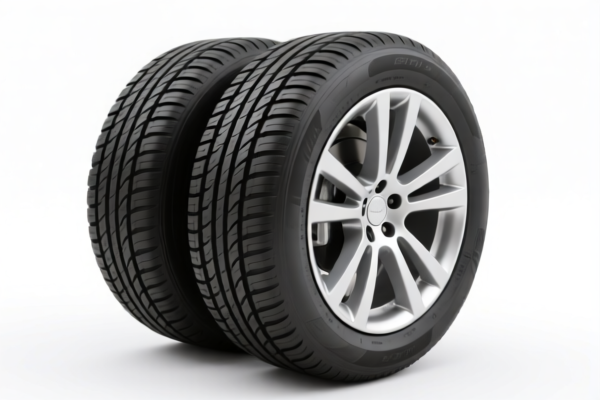
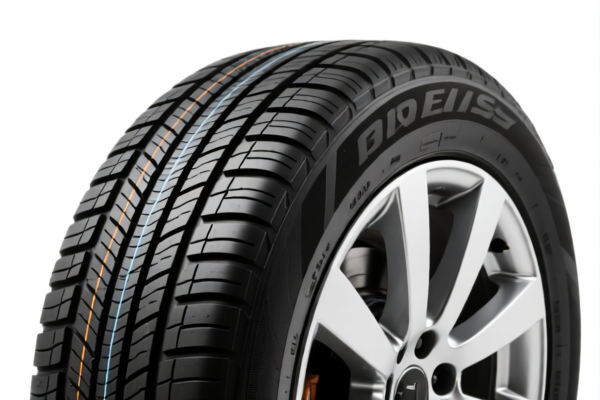
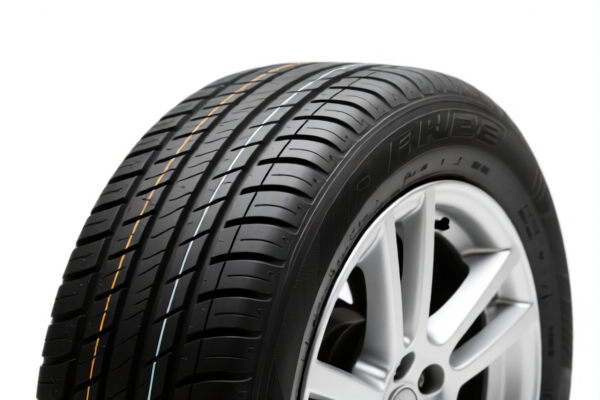
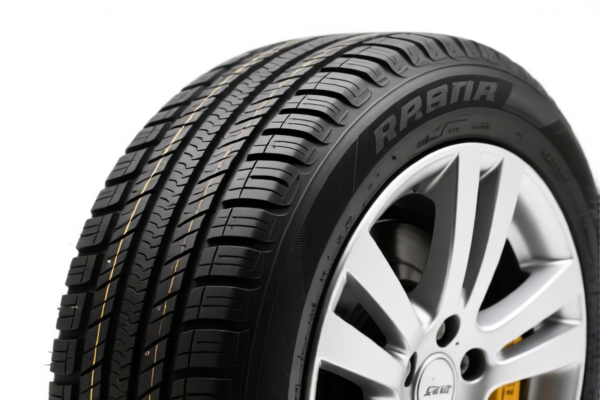
AI Analysis
🚗 Passenger Car Radial Tires (13" & 14 Inches)
🌐 HS Code Reference & Customs Clearance Guide | 2026 Latest Tariff Analysis | Professional Clearance Strategy
📌 I. Product Definition & Classification: Do You Really Understand "Radial Tires"?
Passenger car radial tires are essential safety components for light vehicles. In international trade, they are classified based on their construction type (Radial vs. Bias) and size/application.
Radial Construction: The carcass plies run at 90° to the direction of travel. This is the modern standard for fuel efficiency, handling, and durability. Bias Construction: The plies run diagonally across each other. Rarely used in new passenger cars today but still exists in some vintage or niche applications.
⚠️ Key Distinction:
- If the tire is Radial (marked "R" on the sidewall, e.g., 195/65R14) → It falls under Chapter 40, Heading 4011.
- If the tire is Bias (not marked "R", or marked "B") → It falls under 4011.20.10.00.
- Note: Almost all modern "13-inch" and "14-inch" tires for sedans, hatchbacks, and SUVs are Radial.
📦 II. HS Code Classification Details (2026 Latest Tariff Authority Comparison)
| HS Code | Product Description | Applicable Scenario | Construction Type |
|---|---|---|---|
4011.20.10.00 |
Pneumatic tires, new, of a kind used on passenger motor vehicles | Standard passenger car tires (e.g., 185/65R14) | Radial (R) |
4011.20.90.00 |
Pneumatic tires, new, of a kind used on passenger motor vehicles (Other) | Non-radial tires (Bias), or special types not specified | Bias (B) or Other |
4011.10.00.00 |
Pneumatic tires, new, of a kind used on motor cars of heading 87.01 | Large truck/bus tires (NOT for passenger cars) | Radial/Bias |
4012.10.00.00 |
Retreaded pneumatic tires, of rubber | Old tires recapped for reuse | Retreaded |
🔍 Key Reminder:
- Most 13" and 14" tires for sedans (e.g., Honda Civic, Toyota Corolla, VW Jetta) are Radial.
- HS Code4011.20.10.00is the correct code for new radial tires for passenger cars.
- Do not confuse with truck/bus tires (4011.10) or motorcycle tires (4011.20is for passenger cars only, not bikes).
💰 III. 2026 Latest Tariff Rate Details (Including Additional Taxes, Policy Add-ons)
✅ Applicable Country: United States (US)
✅ Country of Origin: China (CN)
✅ Effective Date: November 10, 2025 (and subsequent imports)
🎯 1. 4011.20.10.00 —— Radial Tires for Passenger Cars
| Item | Content |
|---|---|
| Base Tariff Rate | 0% (Ad valorem) |
| USITC Additional Tariff | +25% (Under USITC Footnote 9903.88.01) |
| IEEPA Additional Tariff | +10% (For China/HK products, effective Nov 10, 2025) |
| Total Tariff Rate | 35% |
| Tax Calculation | CIF Value × 35% |
| De Minimis Eligibility | ❌ Not Eligible (deny_de_minimis) |
| Legal Basis Path | IEEPA:9903.01.25 → IEEPA:9903.01.24 → USITC:4011.20.10.00 → FOOTNOTE:9903.88.01 |
📌 Explanation:
- The 25% USITC tariff is part of the Section 301 duties on Chinese goods.
- The 10% IEEPA tariff is an additional national security tariff.
- Total 35% is a high tariff, significantly increasing import costs.
- No de minimis exemption: Even small shipments (e.g., samples, low-value parcels) are subject to these tariffs.
🎯 2. 4011.20.90.00 —— Non-Radial Tires for Passenger Cars (Bias)
| Item | Content |
|---|---|
| Base Tariff Rate | 0% |
| USITC Additional Tariff | +25% |
| IEEPA Additional Tariff | +10% |
| Total Tariff Rate | 35% |
| Tax Calculation | CIF × 35% |
| De Minimis Eligibility | ❌ Not Eligible |
📌 Note:
- Bias tires are rare. If your product is truly radial (marked "R"), use4011.20.10.00.
- Misclassification as bias (4011.20.90.00) does not reduce tariffs; both are 35%.
🛠️ IV. Customs Clearance Practical Advice (Battle-Tested Pitfall Avoidance Guide)
✅ 1. Required Documentation Checklist (All are Mandatory)
| Document | Required | Description |
|---|---|---|
| ✅ Product Specification Sheet | ✔️ | Include size (e.g., 185/65R14 91H), load index, speed rating, tread pattern |
| ✅ Tire Sidewall Photos | ✔️ | Show "R" for radial, DOT number, size, manufacturer code |
| ✅ Certificate of Origin (CO) | ✔️ | Prove origin (China). If non-Chinese, may qualify for exemptions |
| ✅ Commercial Invoice | ✔️ | Clearly state "Radial Tires for Passenger Cars, HS Code 4011.20.10.00" |
| ✅ Packing List | ✔️ | List tires by size and quantity; avoid mixing with accessories |
| ✅ FDA/USDA Form (if applicable) | ❌ | Not required for tires, but some states require EPA labels |
✅ 2. Declaration Tips (Key Mantra)
🔥 "Radial not bias, R not B, DOT not missing, 35% is the kiss!"
| Scenario | Correct Declaration | Wrong Practice |
|---|---|---|
| New radial tire (14") | 4011.20.10.00 |
Mislabel as "bias" → No tax benefit |
| Retreaded tire | 4012.10.00.00 |
Mislabel as new tire → Heavy penalty |
| Tire + Rim kit | Declare separately | Bundle together → Incorrect classification |
| Small quantity (sample) | Still declare | Rely on de minimis → Confiscation! |
✅ 3. Special Cases
| Scenario | Handling Advice |
|---|---|
| OEM Tires for Auto Makers | Provide PO from car manufacturer; still subject to tariffs |
| Tires with DOT Exemption | Ensure DOT number is present; missing DOT = detention |
| Tires for Electric Vehicles (EVs) | Same HS code; may have different load index but no tariff difference |
| Tires from Vietnam/Mexico | Apply for IEEPA Exemption → Tariff reduced to 0%~5% |
🌍 V. Global Market Comparison (2026 Latest)
| Country/Region | Recommended HS Code | Tariff | Certification Required | Notes |
|---|---|---|---|---|
| 🇺🇸 USA | 4011.20.10.00 |
35% (China) | DOT + EPA | Highest tariff globally |
| 🇨🇳 China | 4011.20.10.00 |
5% | CCC + RoHS | No additional tariffs |
| 🇪🇺 EU | 4011.20.10.00 |
0% (if origin qualified) | E-Mark + REACH | No extra duties |
| 🇦🇺 Australia | 4011.20.10.00 |
5% | RCM + SAA | No extra duties |
| 🇯🇵 Japan | 4011.20.10.00 |
0% | JATMA | No extra duties |
📌 Conclusion:
- USA is the only major market with high additional tariffs for Chinese radial tires.
- Chinese-origin radial tires face a 35% total tariff in the US.
- Strategy: Consider sourcing from Vietnam, Mexico, or Thailand to avoid IEEPA tariffs.
📌 VI. Common Errors & Pitfall Guide (Lessons from Blood & Tears)
❌ Error 1: Declaring radial tires as "Bias" to avoid 25% USITC tariff
👉 Consequence: Customs audit → 35% penalty + seizure
❌ Error 2: Ignoring DOT number requirement
👉 Consequence: Detention by CBP → Delays + storage fees
❌ Error 3: Assuming de minimis applies to small shipments
👉 Consequence: Confiscation → No tax break for tires
❌ Error 4: Mixing new and retreaded tires in one shipment
👉 Consequence: Misclassification → Back taxes + fines
✅ Correct Practice:
"Radial Pneumatic Tire, 185/65R14 91H, DOT: XYZW12345678, Model: XYZ, Manufacturer: ABC"
🎯 VII. Conclusion: Professional Declaration, Save Time & Money
🎯 Remember the Mantra:
🔹 "Radial is R, Bias is B, DOT is mandatory, 35% is the cost."
🔹 "HS Code 4011.20.10.00 is the key, misclassify and you pay dearly."
📌 Pro Tip:
If your tires are originating from Vietnam, Mexico, Thailand, or Malaysia, you may qualify for IEEPA Exemption, reducing the tariff to 0%~5%.
Consider applying for an Advance Ruling to confirm classification and avoid risks.
📣 Act Now:
📞 Contact a licensed customs broker + Provide tire photos + Apply for HS Code Advance Ruling
🚀 Ensure your tires clear customs smoothly, avoid delays, and protect your profit margins!
✨ Professional clearance starts with accurate classification!
💼 Every dollar of tariff savings is worth the effort!
Customer Reviews
About HS Code Classification
The Harmonized System (HS) is an internationally standardized nomenclature developed by the World Customs Organization (WCO) to classify traded products. Over 200 countries use the HS system as the basis for customs tariffs, trade statistics, and import/export regulations.
Each HS code follows a hierarchical structure:
- Chapter (2 digits) — Broad category of goods (e.g., Chapter 84: Machinery and Mechanical Appliances)
- Heading (4 digits) — More specific grouping within the chapter
- Subheading (6 digits) — Internationally standardized breakdown, used by all WCO member countries
- National subdivisions (8-10 digits) — Country-specific extensions for further classification, such as US HTSUS 10-digit codes
Correct HS code classification is essential for smooth customs clearance, accurate duty payment, and compliance with trade regulations. Misclassification can lead to customs delays, overpayment of duties, or penalties.
When importing from CN to US, the applicable tariff rates may include:
- Most-Favored-Nation (MFN) rate — The standard duty rate applied to WTO members
- General rate — Applied to countries without trade agreements
- Trade remedy duties — Additional tariffs such as Section 301 (anti-dumping), Section 232 (national security), or countervailing duties
The information provided on this page is for reference purposes only. For official classification, please consult with your local customs authority or a licensed customs broker.