Passenger Vehicle Radial Tire (17 18 inch)
CN → US| HS Code | Tariff Rate | Origin | Destination | Doc |
|---|---|---|---|---|
| 4013100010 | 38.7% | CN | US | Official Doc |
| 4013905050 | 38.7% | CN | US | Official Doc |
| 4011101050 | 39.0% | CN | US | Official Doc |
| 4012114000 | 39.0% | CN | US | Official Doc |
| 4011101060 | 39.0% | CN | US | Official Doc |
Product Images
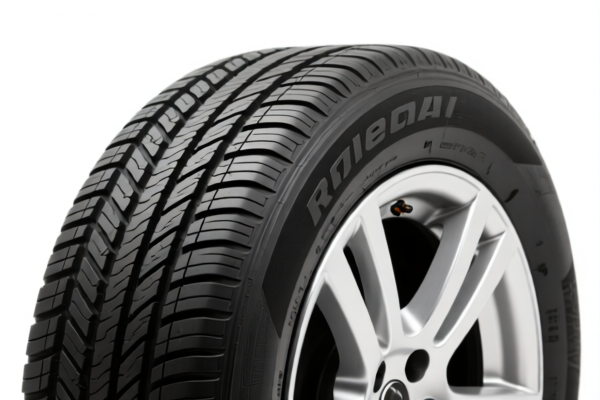
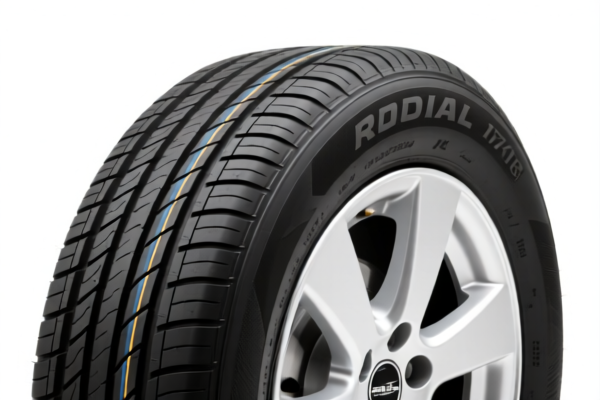
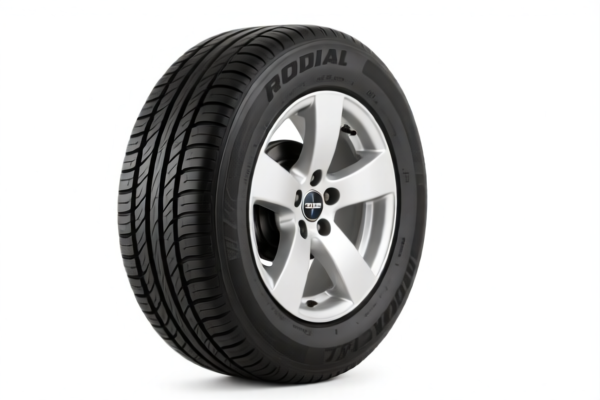
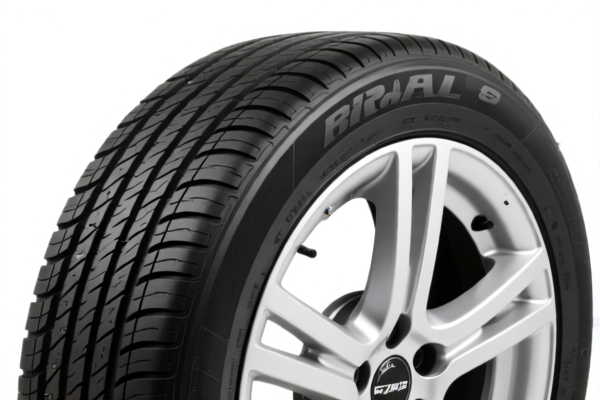
AI Analysis
🚗 Passenger Vehicle Radial Tire (17-18 inch)
🌐 HS Code Reference & Customs Clearance Guide | 2026 Latest Tariff Analysis | Professional Entry Strategy
📌 I. Product Definition & Classification: Do You Really Understand "Tires"?
Passenger Vehicle Radial Tires (17-18 inch) are rubber-constructed tires designed specifically for cars, SUVs, and light trucks. In international trade, they are strictly categorized based on three core attributes:
1. Material: Rubber (implied by "Tire").
2. Shape/Structure: Radial (Sub-peripheral).
3. Use: Passenger Vehicles (Cars).
⚠️ Critical Classification Distinction:
- New vs. Retreaded: New tires fall under Chapter 4011; Retreaded/Reconstructed tires fall under Chapter 4012.
- Inner Tubes vs. Tires: The input explicitly states "Tires," not "Inner Tubes" (which would be 4013). However, HS classification logic sometimes groups related rubber tire accessories if the primary product description is ambiguous.
- Wheel Rim Size: The specification "(17 18 inch)" is the decisive factor for sub-heading selection within 4011.10.
📦 II. HS Code Classification Details (2026 Latest Tariff Authority Match)
Based on the provided data, here are the matched HS Codes, the logical basis for each, and the corresponding tax implications. Note that slight variations in summary descriptions (e.g., "Inner Tube" vs. "Tire") in the raw data reflect specific HS structural interpretations or potential errors in automated matching, which we must address clearly.
| HS Code | Product Description (from Data) | Matching Logic & Basis | Total Tax Rate |
|---|---|---|---|
| 4013.10.00.10 | Inner Tubes / Tires Category | Match Success: 'Passenger Car' matches "Passenger Vehicle" use. 'Tires' matches rubber material. ⚠️ Note: 4013 typically refers to Inner Tubes. If the product is a tire (not just an inner tube), this code may be incorrect unless declared as a set or if the specific subheading allows. |
38.7% |
| 4013.90.50.50 | Other Rubber Tire Products | Basis: Identified as a "Passenger Vehicle Radial Tire." Inferenced as rubber material. Fits the category of tires not specifically excluded for motorcycles. ⚠️ Note: 4013.90 is a residual category for tires/inner tubes. Usually, new radial tires go to 4011. This suggests a broader or alternative classification interpretation. |
38.7% |
| 4011.10.10.50 | Radial Tires for Passenger Cars | Match Success: Material=Rubber, Shape=Radial, Use=Passenger Car. Rim size 16-17 inch is explicitly covered. ✅ This is the most standard code for NEW Radial Passenger Tires. |
39.0% |
| 4012.11.40.00 | Retreaded Passenger Car Tires | Match Success: 'Passenger Car' matches use. 'Radial Tires' matches shape. ⚠️ Critical: This code is for RETREADED (re-manufactured) tires. If your product is NEW, this code is INCORRECT and will lead to penalties. The data summary notes it fits the "material and core shape" but misses the "New vs. Retreaded" distinction. |
39.0% |
| 4011.10.10.60 | Radial Car Tires (17-18 inch) | Match Success: 'Radial Car Tire' fits material/use. Rim diameter 17-18 inch (43.18-45.72 cm) is explicitly covered by this subheading. ✅ This is the most precise code for NEW Radial Tires in the 17-18 inch range. |
39.0% |
🔍 重点提醒 (Key Warnings):
- 4011 vs. 4012: Ensure you declare NEW tires under 4011. Declaring new tires as 4012 (Retreaded) is a major compliance error.
- 4013 vs. 4011: 4013 is for Inner Tubes. If you are importing Tires, 4011 is the correct chapter. The data matches 4013 likely due to the word "Tire" being loosely associated with rubber tire components in some systems, but physically, a tire is not an inner tube.
- Rim Size Precision: Codes 4011.10.10.50 and 4011.10.10.60 are specific to rim sizes. 17-18 inches falls squarely into these brackets.
💰 III. 2026 Latest Tariff Rate Breakdown (Including Add-ons)
✅ Applicable Country: United States (US)
✅ Origin: China (CN)
✅ Effective Time: From November 10, 2025 (and subsequent imports)
🎯 1. 4011.10.10.50 & 4011.10.10.60 —— New Radial Tires for Passenger Vehicles (16-18 inch)
| Item | Details |
|---|---|
| Base Tariff | 4.0% (Ad Valorem) |
| Section 301 Tariff (USITC) | +25.0% (Additional Duty for Chinese Origin) |
| Section 122 / IEEPA Tariff | +10.0% (Additional Duty for Chinese Origin) |
| Total Effective Rate | 39.0% |
| Tax Calculation | CIF Value × 39.0% |
| De Minimis Exemption | ❌ NOT Eligible (deny_de_minimis) |
| Legal Basis Path | IEEPA:9903.01.25 → Section 301: 9903.88.01 → USITC: 4011.10.10.50/60 |
📌 Explanation:
- Base 4%: Standard MFN rate for tires.
- +25%: Standard 301 Tariff on Chinese goods.
- +10%: Additional "122 Clause" or IEEPA duty specifically targeting Chinese rubber products/tires.
- Total 39%: This is a high-cost category. Profit margins must account for this.
🎯 2. 4013.10.00.10 & 4013.90.50.50 —— Inner Tubes / Other Rubber Tire Products
| Item | Details |
|---|---|
| Base Tariff | 3.7% (Ad Valorem) |
| Section 301 Tariff (USITC) | +25.0% |
| Section 122 / IEEPA Tariff | +10.0% |
| Total Effective Rate | 38.7% |
| Tax Calculation | CIF Value × 38.7% |
| De Minimis Exemption | ❌ NOT Eligible (deny_de_minimis) |
📌 Note:
- Slightly lower base rate (3.7% vs 4.0%), resulting in 38.7% total.
- Risk: Using 4013 for Tires (not inner tubes) is a classification error. Use only if importing actual inner tubes.
🎯 3. 4012.11.40.00 —— Retreaded Radial Tires
| Item | Details |
|---|---|
| Base Tariff | 4.0% |
| Section 301 Tariff (USITC) | +25.0% |
| Section 122 / IEEPA Tariff | +10.0% |
| Total Effective Rate | 39.0% |
| Tax Calculation | CIF Value × 39.0% |
| De Minimis Exemption | ❌ NOT Eligible |
📌 CRITICAL WARNING:
- This code is for USED/RETREADED tires.
- If you import NEW tires under this code, Customs will classify it incorrectly, leading to reclassification penalties, back taxes, and potential seizure.
- Only use if the product is genuinely retreaded.
🛠️ IV. Customs Clearance Practical Advice (Avoid Pitfalls)
✅ 1. Required Documentation Checklist
| Document | Required | Description |
|---|---|---|
| ✅ Commercial Invoice | ✔️ | Must state: "New Radial Passenger Vehicle Tires, 17-18 inch, Radial Construction, Rubber." |
| ✅ Packing List | ✔️ | Include tire size, quantity, gross/net weight, and HS Code. |
| ✅ Product Specification Sheet | ✔️ | Confirm "New" status, radial structure, and rim diameter. |
| ✅ Certificate of Origin (CO) | ✔️ | Essential for verifying Chinese origin (triggers 301 + 122 tariffs). |
| ✅ HS Code Pre-Ruling | ✅ Recommended | If unsure between 4011 and 4013, request a pre-ruling from CBP. |
| ✅ Brand/Model Info | ✔️ | Include brand name and model number on the invoice and tire sidewall. |
✅ 2. Declaration Tips (Key Mantras)
🔥 "New vs. Retreaded, Radial vs. Bias, Size Matters!"
| Scenario | Correct Declaration | Incorrect Declaration | Consequence |
|---|---|---|---|
| New Radial Tires | 4011.10.10.50 / 4011.10.10.60 |
4012.11.40.00 (Retreaded) |
Penalties, Back Taxes (39% + penalties) |
| Inner Tubes Only | 4013.10.00.10 |
4011.10.10.50 (Tires) |
Wrong tax rate (38.7% vs 39.0%), Minor discrepancy |
| 17-18 Inch Tires | Specify rim size in description | Vague description "Tires for Cars" | High risk of manual examination, delay |
| Mixed Sizes | Declare separately by size | Mixed declaration | May require multiple HS codes |
✅ 3. Special Cases
| Situation | Handling Advice |
|---|---|
| OEM Tires (No Brand) | Declare as "Generic" or "Private Label." Ensure no infringing marks. |
| Tire + Wheel Rim Combo | If sold as a complete wheel assembly, it may fall under 8708.95 (Wheels), not 4011. Check if the rim is included. |
| Sentinel/Safety Markings | Ensure tires have US DOT markings. Non-compliant tires will be rejected. |
| Origin Diversification | If tires are not from China (e.g., Vietnam, Thailand), the 25% + 10% add-ons may not apply, significantly reducing cost. |
🌍 V. Global Market Comparison (2026 Update)
| Country/Region | Recommended HS Code | Base Tariff | Additional Tariffs (China) | Total Estimate | Notes |
|---|---|---|---|---|---|
| 🇺🇸 USA | 4011.10.10.60 |
4.0% | +25% (301) +10% (IEEPA) | 39.0% | Highest cost due to dual add-ons. |
| 🇨🇳 China | 4011.10.10.60 |
7.0% | None | 7.0% | Lower base, no US add-ons. |
| 🇪🇺 EU | 4011.10.10 |
0% | None (if GSP/LDC) | 0%~4% | Check preferential agreements. |
| 🇲🇽 Mexico | 4011.10.10 |
0% | None (USMCA) | 0% | If meeting USMCA rules of origin. |
📌 Conclusion:
- USA is the most expensive market for Chinese-made tires due to the 39% effective rate.
- Strategy: Consider sourcing from non-China origins (e.g., Southeast Asia) to avoid IEEPA/301 add-ons if exporting to the US.
- Accuracy is Critical: Misclassifying New Tires as Retreaded (4012) or Inner Tubes (4013) can lead to severe compliance issues.
📌 VI. Common Errors & Pitfalls (Lessons Learned)
❌ Error 1: Declaring New Tires as Retreaded Tires (4012)
👉 Result: CBP detects "New" condition, reclassifies to 4011, charges 39% instead of any potential difference, plus penalties.
❌ Error 2: Ignoring Rim Size in Declaration
👉 Result: Customs cannot determine the exact subheading, leading to manual review and delays. Always specify "17 inch" or "18 inch."
❌ Error 3: Using 4013 for Tires (not Inner Tubes)
👉 Result: 4013 is for inner tubes. Tires are 4011. Misclassification leads to tax discrepancy and audit flags.
❌ Error 4: Not disclosing Origin correctly
👉 Result: If origin is marked incorrectly (e.g., "Made in China" but origin filed as "Vietnam"), it constitutes fraud, leading to seizure and fines.
✅ Correct Declaration Example:
"NEW RADIAL TIRE FOR PASSENGER VEHICLE, SIZE 205/55R17, RUBBER, MODEL XYZ, MADE IN CHINA, HS CODE 4011.10.10.60"
🎯 VII. Conclusion: Professional Clearance, Cost Efficiency
🎯 Remember the Mantra:
🔹 "New Tires = 4011, Retreaded = 4012, Inner Tubes = 4013."
🔹 "17-18 Inch = 4011.10.10.50/60."
🔹 "Chinese Origin = 39% Total Tax (4% + 25% + 10%)."
📌 Pro Tip:
If your tires are not made in China, you may avoid the 10% IEEPA and potentially the 25% 301 tariff, depending on the country. Always verify the Country of Origin before filing.
Consider applying for a CBP Advance Ruling if your product is borderline between tire types.
📣 Immediate Action:
📞 Consult a licensed Customs Broker
📄 Prepare Product Specs & Origin Proof
🚀 Ensure Compliance, Avoid Penalties, Maximize Profit!
✨ Professional Clearance Starts with Accurate Classification!
💼 Every Percentage Point of Tax Savings is Pure Profit!
Customer Reviews
About HS Code Classification
The Harmonized System (HS) is an internationally standardized nomenclature developed by the World Customs Organization (WCO) to classify traded products. Over 200 countries use the HS system as the basis for customs tariffs, trade statistics, and import/export regulations.
Each HS code follows a hierarchical structure:
- Chapter (2 digits) — Broad category of goods (e.g., Chapter 84: Machinery and Mechanical Appliances)
- Heading (4 digits) — More specific grouping within the chapter
- Subheading (6 digits) — Internationally standardized breakdown, used by all WCO member countries
- National subdivisions (8-10 digits) — Country-specific extensions for further classification, such as US HTSUS 10-digit codes
Correct HS code classification is essential for smooth customs clearance, accurate duty payment, and compliance with trade regulations. Misclassification can lead to customs delays, overpayment of duties, or penalties.
When importing from CN to US, the applicable tariff rates may include:
- Most-Favored-Nation (MFN) rate — The standard duty rate applied to WTO members
- General rate — Applied to countries without trade agreements
- Trade remedy duties — Additional tariffs such as Section 301 (anti-dumping), Section 232 (national security), or countervailing duties
The information provided on this page is for reference purposes only. For official classification, please consult with your local customs authority or a licensed customs broker.