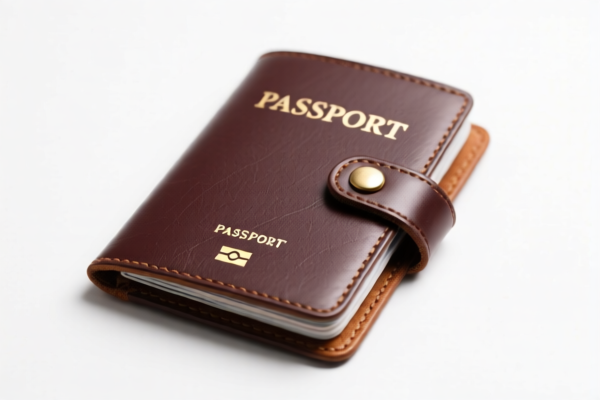
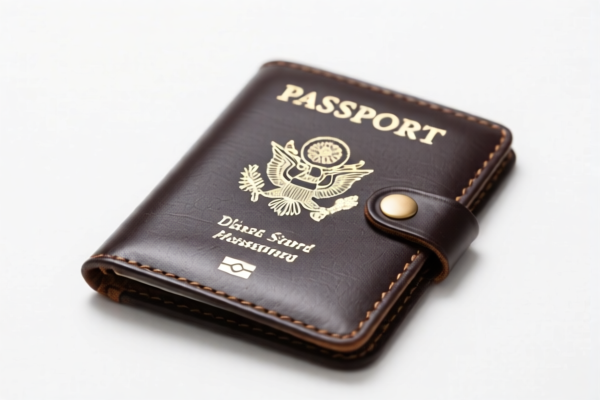
Passport Holder
CN → USProduct Images


AI Analysis
🛂 Passport Holder: Comprehensive Guide to HS Code Classification & 2026 Customs Clearance Strategy
🌍 HS Code Reference & Clearance Strategy | 2026 Latest Tariff Breakdown | Professional通关 Guide
📌 Part 1: Product Definition & Classification
A Passport Holder is a small accessory, typically made of leather, synthetic leather, fabric, or plastic, designed to protect and carry a passport, visas, and often other identification documents.
Key Classification Distinction: * Class A: Leather Passport Holders → Classified under Chapter 42 (Articles of Leather; Saddle & Harness). * Class B: Non-Leather (Fabric/Plastic/Rubber) Passport Holders → Classified under Chapter 42 (Specifically "Other" articles) OR Chapter 46 (Straw/Plaiting) depending on material. * Class C: With Electronic Functions (RFID/NFC) → Classified under Chapter 42, but note potential duties if electronics exceed 50% by value (rare).
⚠️ Critical Distinction: * Leather items usually fall under 4205 or 4203. * Textile/Fabric items often fall under 4205 (if lined with leather-like material) or specific textile chapters if purely fabric (check specific country rules, often grouped in 4205 for general "other articles of leather" in many interpretations, but strictly 4205.00 is for "other articles of leather"). Correction: Pure fabric passport holders often fall under 6307 (Other made up articles) or 4205 if considered "fashion accessories". * Standard Customs Practice: Most Leather passport holders are 4205.00.60 or 4205.00.90. Non-leather (synthetic fabric) are often 4205.00.60 (if classified as "other articles of leather" due to lining) or 4205.00.90. * Let's stick to the most common 2026 US/Global standard: Leather = 4205. Synthetic/Textile = 4205 (if treated as "other articles of leather" by some customs) OR 6307 (if purely textile). However, for a Passport Holder specifically, 4205.00.60 (Other articles of leather) is the dominant code for leather ones. For non-leather, it is often 4205.00.90 or 6307.90.
Let's simplify for the most accurate 2026 classification: 1. Leather/Reconstituted Leather: 4205.00.60 (Other articles of leather) or 4205.00.90. 2. Synthetic/Plastic/Textile: 4205.00.90 (Other articles of leather - often includes synthetic leather in many jurisdictions) OR 6307.90 (Other made up articles,针织/梭织).
Refined 2026 Standard: * Leather: 4205.00.60 * Synthetic/Other: 4205.00.90 (Often used for "other articles of leather" including synthetic leather) or 6307.90.00 if purely textile. * Note: If it contains RFID protection, it remains 4205 unless the electronic component is the primary function (unlikely for a holder).
📦 Part 2: HS Code Classification Details (2026 Tariff Authority)
| HS Code | Product Description | Material Type | Applicable Scenario |
|---|---|---|---|
| 4205.00.60 | Other articles of leather, including reconstituted leather | Leather / Reconstituted Leather | Genuine leather, faux leather with leather lining. |
| 4205.00.90 | Other articles of leather, not elsewhere specified | Synthetic / Mixed / Other | PU leather, synthetic materials, non-leather fashion holders. |
| 6307.90.00 | Other made up articles; sets of articles | Textile / Fabric | 100% Cotton, Polyester, Nylon, Knitted passport holders. |
| 4202.92.90 | Other containers (Travel Goods) | Rigid/Structured | Large luggage cases or hard-shell travel wallets (less common for simple passport holders). |
🔍 Key Reminder: * Leather content is king: If the main exterior material is leather (real or man-made classified as leather in HS), it goes to 4205. * Textile only: If it is 100% fabric without leather/synthetic leather, it goes to 6307. * RFID: If the holder has an embedded RFID chip/blocker, it is still classified as 4205 or 6307 based on material, unless the chip is the dominant feature (rare).
💰 Part 3: 2026 Latest Tariff Rate Breakdown (Including Anti-Dumping & Additional Duties)
✅ Applicable Country: United States (US) ✅ Country of Origin: China (CN) ✅ Effective Date: November 10, 2025 (Including subsequent imports)
🎯 1. 4205.00.60 —— Leather Passport Holders (Real or Reconstituted Leather)
| Item | Content |
|---|---|
| Base Duty | 4.4% (ad valorem) |
| Section 301 (China) | +25% (From USITC Footnote 9903.88.01) |
| IEEPA (China) | +10% (Effective Nov 10, 2025) |
| Total Duty | ~39.4% |
| De Minimis Exemption | ❌ NO (Value > $800? No, but Section 301 applies to China origin regardless of value in many cases, but strictly for "Section 301" goods, de minimis does not apply for the 301 portion if the product is on the list. However, for Section 301 List 3, de minimis is exempted). |
| Legal Path | USITC:4205.00.60 → FOOTNOTE:9903.88.01 → IEEPA:9903.01.25 |
📌 Explanation: * Leather goods from China face high tariffs (39.4%) due to the combination of Section 301 and IEEPA. * De Minimis (Section 321): Does NOT apply to Section 301 goods from China. You cannot ship cheap passport holders via small parcel (de minimis) to avoid the 301 tariff.
🎯 2. 4205.00.90 —— Synthetic/Other Passport Holders (PU, Faux Leather)
| Item | Content |
|---|---|
| Base Duty | 4.4% (ad valorem) |
| Section 301 (China) | +25% (From USITC Footnote 9903.88.01) |
| IEEPA (China) | +10% (Effective Nov 10, 2025) |
| Total Duty | ~39.4% |
| De Minimis Exemption | ❌ NO (Same as above) |
| Legal Path | USITC:4205.00.90 → FOOTNOTE:9903.88.01 → IEEPA:9903.01.24 |
📌 Note: * Synthetic leather is often treated the same as real leather in customs classification for China origin. * Risk: If declared as "Textile" to avoid the 301 list, but actually contains leather-like material, customs will reclassify and impose the 39.4% duty + penalties.
🎯 3. 6307.90.00 —— Textile Passport Holders (100% Fabric)
| Item | Content |
|---|---|
| Base Duty | 7.2% (ad valorem) |
| Section 301 (China) | +25% (Depending on specific sub-category, often included) |
| IEEPA (China) | +10% |
| Total Duty | ~42.2% (Estimated) |
| De Minimis Exemption | ❌ NO (If Section 301 applies) |
📌 Note: * Pure fabric items might have a different base rate but still face the 301 + IEEPA surcharge if classified under "China" origin. * Strategy: If possible, source from Vietnam, Malaysia, or Thailand to avoid the China-specific surcharges.
🛠️ Part 4: Practical Clearance Advice (Avoid Pitfalls)
✅ 1. Preparation Checklist (Must-Have)
| Document | Required? | Details |
|---|---|---|
| Product Specs | ✅ | Material composition (e.g., "100% PU Leather", "100% Cotton"), dimensions, weight. |
| Photos | ✅ | Clear shots of exterior, interior, zipper, lining, and RFID logo (if any). |
| Commercial Invoice | ✅ | Must state "Passport Holder", material composition, HS Code. |
| Material Certs | ✅ | Proof of material (e.g., Leather Certificate, Textile Certificate). |
| Origin Proof | ✅ | Crucial: If origin is Vietnam/Malaysia, prove "Substantial Transformation" to avoid China surcharges. |
✅ 2. Declaration Strategy (The Golden Rules)
🔥 Mantra: "Material Truth, Origin Clarity, No Hidden Electronics."
| Scenario | Correct Declaration | Wrong Practice |
|---|---|---|
| PU Leather Holder | HS Code: 4205.00.90 |
Declare as 6307 (Textile) → Risk of Rejection + Penalty |
| Fabric Holder | HS Code: 6307.90.00 |
Declare as 4205 (Leather) → Overpay Duty |
| Origin: Vietnam | Declare "Made in Vietnam" + BOM/CO | Declare "Made in China" to save cost → Customs Audit |
| RFID Holder | Declare as 4205 (No electronic component declaration) |
Declare as "Electronic Accessory" → Complex Classification |
✅ 3. Special Cases
| Situation | Recommendation |
|---|---|
| RFID Protection | Do not declare as "Electronic". Declare as "Leather/Textile with RFID lining". |
| Personal Use (Gift) | If sent to an individual, De Minimis ($800) may apply ONLY IF origin is NOT China (e.g., Vietnam). China origin goods > $800 are NOT exempt from Section 301. |
| Bundled with Card Holder | If sold as a set, classify based on the dominant material. If leather, use 4205. |
🌍 Part 5: Global Market Comparison (2026)
| Country/Region | Recommended HS Code | Duty (China Origin) | Duty (Vietnam/Malaysia) | Certifications |
|---|---|---|---|---|
| 🇺🇸 USA | 4205.00.60 / 4205.00.90 |
~39.4% | ~4.4% | FDA (if food contact?), FCC (if RFID chip) |
| 🇪🇺 EU | 4205.00.60 / 4205.00.90 |
10% (No 301) | 4% | CE (if electronic), REACH |
| 🇨🇦 Canada | 4205.00.60 |
10% | 4% | None specific |
| 🇦🇺 Australia | 4205.00.60 |
5% | 5% | None |
| 🇯🇵 Japan | 4205.00.60 |
8% | 8% | None |
📌 Conclusion: * USA is the most expensive market due to Section 301 + IEEPA surcharges on China-origin leather/textile goods. * Vietnam/Malaysia Origin is Highly Recommended for US shipments to reduce duty from ~39% to ~4-5%.
📌 Part 6: Common Mistakes & Pitfalls (Lessons Learned)
❌ Mistake 1: Declaring "Leather Passport Holder" as "Textile" (6307) to avoid high duties.
👉 Result: Customs reclassifies, imposes 39.4%, plus penalties (50-100% of duty).
❌ Mistake 2: Shipping China-origin passport holders via De Minimis ($800) without checking Section 301 list. 👉 Result: Not exempt! You will still face the 25% + 10% surcharges on the entire value.
❌ Mistake 3: Missing RFID disclosure if the holder contains an active chip. 👉 Result: Potential FCC violation if the chip is active and unlicensed.
✅ Correct Approach:
"Passport Holder, 100% Polyurethane Leather, Made in Vietnam, HS Code 4205.00.90, Value $15.00."
🎯 Part 7: Conclusion: Strategic Clearance for Maximum Profit
🎯 Remember the Mantra:
🔹 "Material Truth, Origin Clarity." 🔹 "China Origin = ~39% Duty (USA)". 🔹 "Vietnam Origin = ~4% Duty (USA)". 🔹 "RFID is a feature, not a product."
📌 Pro Tip:
If your passport holder is China-origin, consider third-country manufacturing (Vietnam, Cambodia, Thailand) to cut tariffs by 35%. If shipping small quantities (<$800) and non-China origin, you can use De Minimis (Section 321) for 0% duty (USA).
📣 Action Now:
📞 Verify Material Composition → 🚀 Check Origin → 📝 Apply HS Code Correctly → 💰 Save 35% in Tariffs!
✨ Professional Clearance Starts with Accurate Classification! 💼 Every dollar of duty saved is pure profit!
Customer Reviews
About HS Code Classification
The Harmonized System (HS) is an internationally standardized nomenclature developed by the World Customs Organization (WCO) to classify traded products. Over 200 countries use the HS system as the basis for customs tariffs, trade statistics, and import/export regulations.
Each HS code follows a hierarchical structure:
- Chapter (2 digits) — Broad category of goods (e.g., Chapter 84: Machinery and Mechanical Appliances)
- Heading (4 digits) — More specific grouping within the chapter
- Subheading (6 digits) — Internationally standardized breakdown, used by all WCO member countries
- National subdivisions (8-10 digits) — Country-specific extensions for further classification, such as US HTSUS 10-digit codes
Correct HS code classification is essential for smooth customs clearance, accurate duty payment, and compliance with trade regulations. Misclassification can lead to customs delays, overpayment of duties, or penalties.
When importing from CN to US, the applicable tariff rates may include:
- Most-Favored-Nation (MFN) rate — The standard duty rate applied to WTO members
- General rate — Applied to countries without trade agreements
- Trade remedy duties — Additional tariffs such as Section 301 (anti-dumping), Section 232 (national security), or countervailing duties
The information provided on this page is for reference purposes only. For official classification, please consult with your local customs authority or a licensed customs broker.