Password Lock
CN → US| HS Code | Tariff Rate | Origin | Destination | Doc |
|---|---|---|---|---|
| 8302419045 | 38.5% | CN | US | Official Doc |
| 8301406030 | 23.2% | CN | US | Official Doc |
| 7326908688 | 87.9% | CN | US | Official Doc |
| 7326908676 | 87.9% | CN | US | Official Doc |
| 8301300090 | 23.2% | CN | US | Official Doc |
| 8302416045 | 88.9% | CN | US | Official Doc |
Product Images
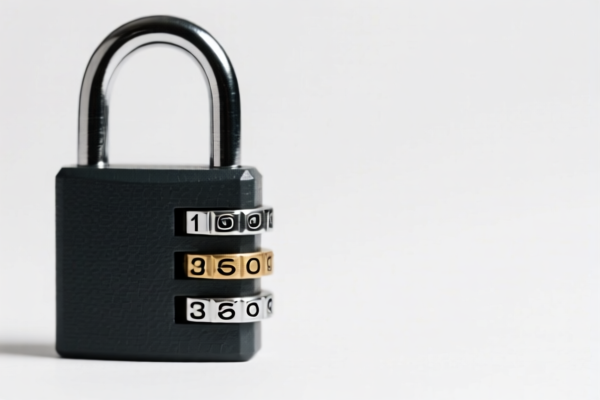
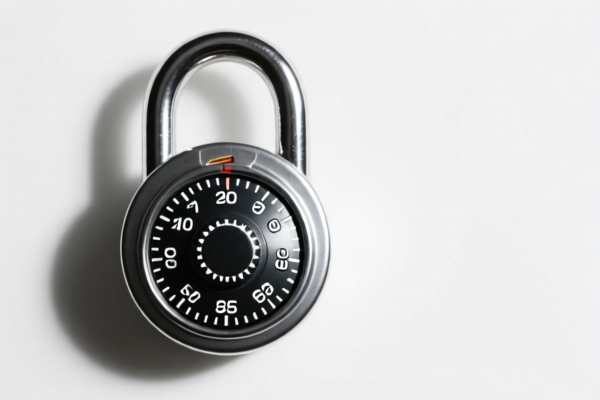
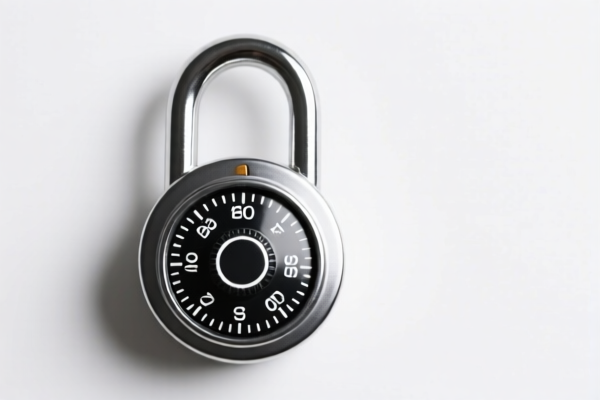
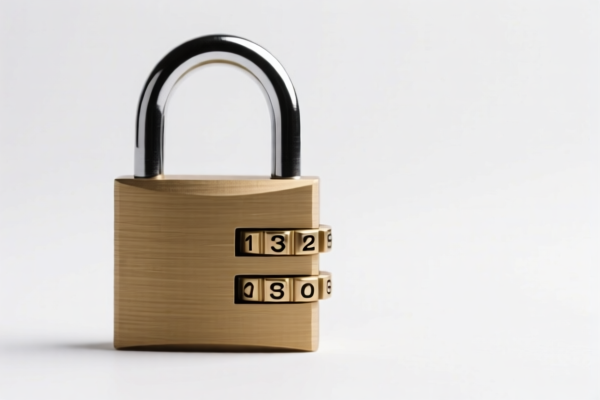
AI Analysis
🔐 Password Locks (Electronic/Smart Locks)
🌐 HS Code Reference & Customs Clearance Guide | 2026 Latest Tariff Analysis | Professional Clearance Strategy
📌 I. Product Definition and Classification: Do You Really Understand "Password Locks"?
A password lock (often categorized under smart locks, electronic locks, or keyless entry systems) is a security device that grants access via a unique code, biometric scan, or digital key, rather than a traditional physical key. In international trade, classification depends heavily on material composition, functionality, and installation context (building vs. furniture).
⚠️ Key Classification Distinctions:
- Built-in Building Hardware: Installed on doors/walls as structural components → Often classified under 8302 (Base Metal Fittings) or 8301 (Locks).
- Furniture-Specific Locks: Designed primarily for cabinets, drawers, or safes → Classified under 8301 (Locks).
- Raw Metal Components: If the product is essentially a machined steel part without complex electronic integration or specific locking function → May fall under 7326 (Other Articles of Iron/Steel).
📦 II. HS Code Classification Details (2026 Latest Tariff Authority Reference)
| HS Code | Product Description | Application Scenario | Material & Function |
|---|---|---|---|
8302.41.90.45 |
Base Metal Fittings for Building Use | Installed on doors, windows, or architectural structures | Base metal; structural fitting character |
8301.40.60.30 |
Electronic Locks (Non-Key) | Smart doors, keyless entry systems | Base metal; specific electronic locking function |
8301.30.00.90 |
Locks for Furniture or Banknote Boxes | Cabinet locks, safe locks, drawer locks | Base metal; specific locking mechanism |
7326.90.86.88 |
Other Articles of Iron or Steel | General metal parts, non-specific hardware | Iron/Steel; generic manufactured article |
7326.90.86.76 |
Parts and Articles of Iron/Steel | Sub-components or generic metal accessories | Iron/Steel; part of a larger mechanism |
🔍 Critical Reminder:
- If the lock is integrated into a door frame or serves as architectural hardware,8302.41.90.45is often appropriate.
- If it is a standalone electronic lock unit with a keypad/biometric sensor,8301.40.60.30or8301.30.00.90is more precise.
- Avoid7326unless the item is a raw metal part without specific locking function; misclassification here leads to extremely high penalties due to "Steel/Aluminum/Copper" surcharges.
💰 III. 2026 Latest Tariff Rate Breakdown (Including Surcharges & Policy Add-ons)
✅ Applicable Country: United States (US)
✅ Origin: China (CN)
✅ Effective Time: 2025–2026 (Current Trade Environment)
🎯 1. 8302.41.90.45 —— Base Metal Fittings for Building Use
| Item | Content |
|---|---|
| Base Duty Rate | 3.5% |
| Section 301 Surcharge | +25.0% |
| Section 122 Surcharge | +10.0% |
| Total Effective Rate | 38.5% |
| Tax Calculation | CIF Value × 38.5% |
| De Minimis Eligibility | ❌ Not Eligible (High risk of seizure under current enforcement) |
| Legal Basis Path | USITC:8302.41.90.45 → Section 301: Footnote 9903.88.01 → Section 122: IEEPA |
📌 Explanation:
- This classification benefits from a lower base duty (3.5%) compared to general metal articles.
- However, the 25% Section 301 and 10% Section 122 still apply, totaling 38.5%.
- This is one of the more favorable classifications for password locks if they are considered "building fittings."
🎯 2. 8301.40.60.30 & 8301.30.00.90 —— Specific Locks (Electronic/Furniture)
| Item | Content |
|---|---|
| Base Duty Rate | 5.7% |
| Section 301 Surcharge | +7.5% (Reduced rate for certain HTS codes) |
| Section 122 Surcharge | +10.0% |
| Total Effective Rate | 23.2% |
| Tax Calculation | CIF Value × 23.2% |
| De Minimis Eligibility | ❌ Not Eligible |
| Legal Basis Path | USITC:8301.40.60.30 → Section 301: Exclusion List → Section 122: IEEPA |
📌 Explanation:
- Most Recommended Classification: If your password lock is a distinct electronic device, this code offers the lowest total tax burden (23.2%).
- The Section 301 rate is only 7.5% for these specific lock codes, a significant saving compared to the 25% general rate.
- Key Requirement: Must clearly demonstrate that the product is a "Lock" (8301) rather than a "Fitting" (8302) or "General Metal Article" (7326).
🎯 3. 7326.90.86.88 & 7326.90.86.76 —— Other Articles of Iron/Steel
| Item | Content |
|---|---|
| Base Duty Rate | 2.9% |
| Section 301 Surcharge | +25.0% |
| Section 122 Surcharge | +10.0% |
| Steel/Aluminum/Copper Surcharge | +50.0% (Critical Penalty) |
| Total Effective Rate | 87.9% |
| Tax Calculation | CIF Value × 87.9% |
| De Minimis Eligibility | ❌ Not Eligible |
| Legal Basis Path | USITC:7326.90.86.88 → Section 301 → Section 232 (Steel/Aluminum) → Section 122 |
📌 Explanation:
- DANGER ZONE: This classification incurs a massive 50% surcharge under Section 232 for steel/aluminum products.
- Never use this code for a finished password lock unless it is a raw, unassembled metal part with no locking function.
- Misclassifying a smart lock as a "generic steel article" can result in audit flags, back taxes, and penalties.
🛠️ IV. Customs Clearance Practical Advice (Battle-Tested Pitfall Guide)
✅ 1. Preparation Checklist (Non-Negotiable)
| Document | Required? | Description |
|---|---|---|
| ✅ Product Specification Sheet | ✔️ | Must detail voltage, battery type, connectivity (Wi-Fi/Bluetooth), and locking mechanism. |
| ✅ Technical Diagram | ✔️ | Shows internal components to prove it is an "Electronic Lock" (8301) vs. "Metal Fitting" (8302). |
| ✅ Product Photos (Clear) | ✔️ | Must show keypad/sensor, brand, model number, and input/output ports. |
| ✅ Certifications | ✔️ | FCC (for electronics), UL/ETL (for safety), RoHS (if applicable). |
| ✅ Commercial Invoice | ✔️ | Clearly state: "Electronic Password Lock, Model XYZ, Origin: China." |
| ✅ Packing List | ✔️ | List all accessories (batteries, screws, template) to avoid "missing parts" delays. |
✅ 2. Declaration Strategy (Key Mnemonics)
🔥 “Classify as Lock, Not Metal; Avoid 7326, Save 50%!”
| Scenario | Correct Declaration | Incorrect Practice |
|---|---|---|
| Smart Door Lock (Wi-Fi/BLE) | 8301.40.60.30 (23.2%) |
Misclassified as 7326.90.86.88 → 87.9% |
| Cabinet/Drawer Lock | 8301.30.00.90 (23.2%) |
Misclassified as "Furniture Part" → Unclear, potential audit |
| Architectural Door Hardware | 8302.41.90.45 (38.5%) |
Using 8301 when installed as part of door frame → Potential re-classification |
| Raw Metal Lock Body (No Electronics) | 8302.41.90.45 or 7326 (if part) |
Claiming 8301 without electronic proof → Denied entry |
✅ 3. Special Handling Cases
| Case | Handling Advice |
|---|---|
| OEM/ODM Smart Locks | Provide design specs and user manual. Proves it is a finished "Lock" (8301), not a component. |
| Locks with Batteries | Declare as UN3480/UN3090 if lithium. Requires MSDS and special shipping marks. |
| Integrated Door Handles | If the lock is part of the handle assembly, argue for 8302 (Fitting) but be prepared for 38.5% tax. |
| Pre-Assembly Kits | If sold as a "Kit" (Lock + Strike Plate + Screws), declare as one complete article under the primary function (Lock). Do not split! |
🌍 V. Global Market Comparison (2026 Update)
| Country/Region | Recommended HS Code | Est. Duty | Certifications | Notes |
|---|---|---|---|---|
| 🇺🇸 USA | 8301.40.60.30 |
23.2% | FCC + UL | Best rate for electronics. Avoid 7326. |
| 🇨🇳 China | 8301.40.60.30 |
5–7% | CCC | Low import duty for re-export. |
| 🇪🇺 EU | 8301.40.60.30 |
0–2.5% | CE + GDPR | Data privacy compliance critical for Wi-Fi locks. |
| 🇬🇧 UK | 8301.40.60.30 |
0–2.5% | UKCA | Post-Brexit rules apply. |
| 🇦🇺 Australia | 8301.40.60.30 |
5% | RCM | Standard rates. |
📌 Conclusion:
- The US is the most complex market due to Section 301, 122, and 232 tariffs.
- Classification as8301(Lock) is critical to avoid the 87.9% penalty rate of7326.
- Always prioritize electronic function proof over material description.
📌 VI. Common Errors & Pitfall Avoidance (Blood & Tears Lessons)
❌ Error 1: Declaring an electronic smart lock as "Steel Fitting" (7326)
👉 Consequence: 87.9% tariff + potential Section 232 penalty. Loss of profitability!
❌ Error 2: Splitting a "Lock + Strike Plate + Batteries" shipment
👉 Consequence: Each item taxed separately. Strike plate might be 8302 (38.5%), Batteries 8507 (varies). Total cost skyrockets.
❌ Error 3: Omitting "Electronic" in product description
👉 Consequence: Customs may reclassify to 7326 (Metal Article) due to lack of evidence for 8301 (Lock). Audit risk.
❌ Error 4: Using "Password Lock" without HS Code precision
👉 Consequence: Vague descriptions lead to manual examination, delays, and storage fees.
✅ Correct Practice:
“Electronic Smart Password Lock, Wi-Fi Enabled, Model XYZ, FCC Certified, Includes Battery and Strike Plate, HS Code 8301.40.60.30”
🎯 VII. Conclusion: Precision Classification = Profit Protection
🎯 Remember the Mantra:
🔹 “Don’t call it steel, call it a lock!”
🔹 “8301 saves you 64% vs. 7326!”
🔹 “Electronics prove the function, metal proves nothing!”
📌 Pro Tip:
If you are importing large volumes, apply for a Binding Ruling (Advance Ruling) from CBP.
- Submit product samples and specs.
- Get written confirmation that your smart locks fall under 8301.40.60.30 (23.2%).
- This shields you from future reclassifications and penalties.
📣 Take Action Now:
📞 Hire a licensed customs broker with experience in electronic hardware.
📄 Prepare FCC certificates and technical manuals immediately.
🚀 Declare accurately as8301to save thousands in duties.
✨ Professional clearance starts with precise classification!
💼 Your profit margin depends on the right HS Code!
Customer Reviews
About HS Code Classification
The Harmonized System (HS) is an internationally standardized nomenclature developed by the World Customs Organization (WCO) to classify traded products. Over 200 countries use the HS system as the basis for customs tariffs, trade statistics, and import/export regulations.
Each HS code follows a hierarchical structure:
- Chapter (2 digits) — Broad category of goods (e.g., Chapter 84: Machinery and Mechanical Appliances)
- Heading (4 digits) — More specific grouping within the chapter
- Subheading (6 digits) — Internationally standardized breakdown, used by all WCO member countries
- National subdivisions (8-10 digits) — Country-specific extensions for further classification, such as US HTSUS 10-digit codes
Correct HS code classification is essential for smooth customs clearance, accurate duty payment, and compliance with trade regulations. Misclassification can lead to customs delays, overpayment of duties, or penalties.
When importing from CN to US, the applicable tariff rates may include:
- Most-Favored-Nation (MFN) rate — The standard duty rate applied to WTO members
- General rate — Applied to countries without trade agreements
- Trade remedy duties — Additional tariffs such as Section 301 (anti-dumping), Section 232 (national security), or countervailing duties
The information provided on this page is for reference purposes only. For official classification, please consult with your local customs authority or a licensed customs broker.