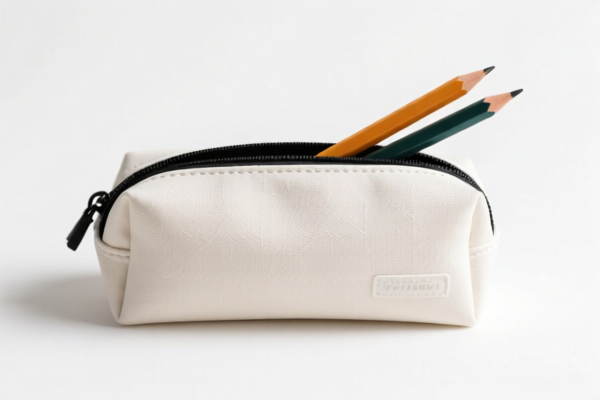
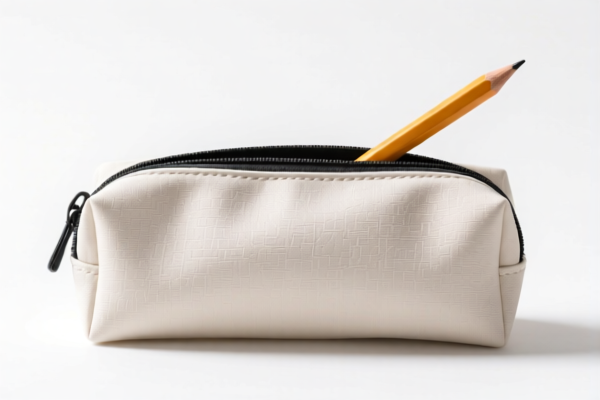
Password Lock Pencil Case
CN → USProduct Images


AI Analysis
🔒 Password Lock Pencil Case (Stationery with Security Feature)
🌐 HS Code Reference & Clearance Guide | 2026 Latest Tariff Analysis | Professional通关 Strategy
📌 I. Product Definition & Classification: What Exactly is a "Password Lock Pencil Case"?
A Password Lock Pencil Case is a stationery container designed to store writing instruments and small office supplies, uniquely equipped with a mechanical or electronic digital password lock for security.
In international trade, it falls under two distinct categories depending on its primary function:
- Stationery Container (Primary Function): A bag/case made of fabric, leather, or plastic for storing school/office supplies. The lock is an accessory for security.
- Locking Device (If the Lock is the Sole Focus): Rare, but if the item is sold only as a locking mechanism (e.g., a standalone lock that comes with a generic pouch), it might be classified differently.
⚠️ Critical Distinction:
- If the pouch/case is the main product and the lock is just a feature → 归类 to Chapter 42 (Leather/Travel Goods) or Chapter 39 (Plastics) or Chapter 48 (Paper) depending on material.
- If the lock mechanism is an independent electronic device (with battery/sensors) integrated into the case → 归类 to Chapter 85 (Electronics) for the lock part, but usually the case dominates the classification.
👉 Most Common: Classified as "Other containers" (Chapter 42) or "Pencil cases" (specific subheading).
📦 II. HS Code Classification Details (2026 Latest Tariff Authority)
| HS Code | Product Description | Applicable Scenario | Material | Lock Type |
|---|---|---|---|---|
| 4202.92.00 | Travel bags, suitcases, handbags, and similar containers of plastic sheeting | Plastic pencil cases with locks | Plastic | Mechanical/Digital |
| 4202.99.00 | Other containers of plastics, rubber, or textile materials | Fabric/Canvas/Leather pencil cases with locks | Textile/Leather | Mechanical |
| 9503.00.90 | Other toys; reduced scale ("scale model") | If marketed as a toy for children with a "lock puzzle" | Mixed | Mechanical |
| 8301.40.00 | Padlocks and locks of a kind used for furniture | Only if sold as a standalone lock (rare for this product) | Metal | Mechanical |
| 8543.70.90 | Electrical machines and apparatus having individual functions | Only if the case is an electronic safe with battery/sensors | Mixed | Electronic |
🔍 Key Reminder:
- Dominant Material Rule: If the case is made of fabric, it usually falls under 4202.
- Electronic Locks: If the lock is electronic (battery-operated, fingerprint), customs may scrutinize Chapter 85, but often the case material dictates the HS code unless the electronic function is the primary purpose.
- For standard "Password Pencil Cases" sold as school/office supplies, 4202.92.00 (Plastic) or 4202.99.00 (Textile) are the most common classifications.
💰 III. 2026 Latest Tariff Rates (Including Additional Duties & Policy Surcharges)
✅ Applicable Country: USA (US)
✅ Origin: China (CN)
✅ Effective Date: Nov 10, 2025 (and onwards)
🎯 Scenario A: 4202.92.00 (Plastic Pencil Case with Lock)
| Item | Content |
|---|---|
| Base Tariff | Free (0%) |
| USITC Section 301 | +25% (Under Footnote 9903.88.01) |
| IEEPA China Duty | +10% (Effective Nov 10, 2025, for Chinese origin) |
| Total Rate | 35% |
| De Minimis Exemption? | ❌ NO (Not eligible for Section 321 $800 exemption) |
| Legal Path | IEEPA:9903.01.24 → USITC:4202.92.00 → FOOTNOTE:9903.88.01 |
📌 Explanation:
- Plastic stationery containers are often targeted under Section 301 due to "consumer goods" classification.
- The 10% IEEPA surcharge is critical for Chinese-origin products.
- Total 35% is high for a low-value item (e.g., $5 case = $1.75 tax), impacting profit margins significantly.
🎯 Scenario B: 4202.99.00 (Textile/Leather Pencil Case with Lock)
| Item | Content |
|---|---|
| Base Tariff | Free (0%) |
| USITC Section 301 | +25% |
| IEEPA China Duty | +10% |
| Total Rate | 35% |
| De Minimis Exemption? | ❌ NO |
| Legal Path | IEEPA:9901.25 → USITC:4202.99.00 → FOOTNOTE:9903.88.01 |
📌 Note:
- Same tax rate as plastic. The material (textile vs. plastic) does not change the 35% burden in the US market for China-origin goods.
- Exception: If the product contains electronic components (e.g., USB charging port + digital lock), it might be re-classified to Chapter 85, potentially changing the duty structure (e.g., to 20% base + 10% IEEPA = 30%).
🛠️ IV. Clearance Practical Suggestions (Avoid Pitfalls)
✅ 1. Document Checklist (Must-Haves)
| Document | Requirement | Reason |
|---|---|---|
| ✅ Product Specification Sheet | ✔️ Must include: Material (Plastic/Textile/Leather), Lock Type (Mechanical/Digital), Battery (if any), Dimensions | To prove it's a "stationery case" not an "electronic device" |
| ✅ Photos (Front/Back/Inside) | ✔️ Clear images of the lock mechanism and the case interior | To verify no hidden electronics that would shift classification to Chapter 85 |
| ✅ Commercial Invoice | ✔️ Must state: "Password Lock Pencil Case (Stationery)" | Avoid ambiguous terms like "Electronics" or "Safe" |
| ✅ Material Declaration | ✔️ Confirm % of plastic, fabric, or leather | Critical for determining the correct 4-digit HS Code |
| ✅ Battery Certificate (If Applicable) | ✔️ If the lock is digital, provide UN38.3 (for lithium) or MSDS | Required for air freight and customs safety checks |
✅ 2. Declaration Strategy (Golden Rules)
🔥 "Case First, Lock Second, No Electronics unless True!"
| Situation | Correct Declaration | Wrong Declaration |
|---|---|---|
| Plastic/Textile Case with Mechanical Padlock | 4202.92.00 / 4202.99.00 |
9503.00 (Toy) → Risk of audit |
| Digital Lock with Battery | Declare as Stationery + Electronic Accessory (if case is dominant) | "Electronic Device" → May trigger Chapter 85 scrutiny |
| Toy-like Design | Explicitly state "Not a Toy" in description | "Pencil Case Toy" → Might trigger safety tests (CPSIA) |
| Metal Case | 4202.92.00 (if plastic-like) or 4202.99.00 |
8301 (Lock only) → If case is main product |
✅ 3. Special Cases & Solutions
| Situation | Advice |
|---|---|
| OEM with Custom Lock | Provide OEM contract + design drawings to prove it's a standard product, not a "new invention" |
| Electronics Inside (e.g., USB) | If the case has a USB port to charge a device, it becomes an electronic accessory. Declare as 8543.70.90 or 4202 with a note. |
| Bulk Import for Resale | Ensure the HS Code matches the commercial invoice. Discrepancies lead to 100% hold. |
| Destination: EU | CE Marking required if electronic components are present. |
🌍 V. Global Market Clearance Comparison (2026)
| Country/Region | Recommended HS Code | Duty Rate (China Origin) | Certification | Notes |
|---|---|---|---|---|
| 🇺🇸 USA | 4202.92.00 / 4202.99.00 |
35% (25% + 10%) | FCC (if electronic) | High duty due to 301 & IEEPA |
| 🇨🇳 China | 4202.99.00 |
5% | CCC (if electronic) | Low duty, no surcharges |
| 🇪🇺 EU | 4202.92.00 |
1.7% (Standard) | CE (if electronic) | No Section 301 equivalent |
| 🇦🇺 Australia | 4202.92.00 |
0% (Free Trade) | RCM | No surcharges |
| 🇯🇵 Japan | 4202.92.00 |
0% (Free Trade) | PSE (if electronic) | No surcharges |
📌 Conclusion:
- USA is the most expensive market for this product due to the 35% total tariff.
- Asia & EU markets are much cheaper (0%~5%).
- Electronic locks significantly increase compliance complexity (battery regulations, FCC/CE).
📌 VI. Common Mistakes & Pitfalls (Lessons Learned)
❌ Mistake 1: Declaring as "Toy" when it's a "Stationery Case"
👉 Consequence: May trigger CPSIA testing (Lead/Phthalates) for children's products, delaying clearance.
❌ Mistake 2: Ignoring Battery Regulations for digital locks
👉 Consequence: Air freight denied. UN38.3 and MSDS are mandatory for lithium batteries.
❌ Mistake 3: Using "Lock" as the primary description in Invoice
👉 Consequence: Customs may classify it as a standalone lock (8301), which has different duties and safety requirements.
❌ Mistake 4: Assuming "De Minimis" ($800) applies
👉 Consequence: NO. Section 301 and IEEPA duties often override de minimis exemptions for China-origin goods.
✅ Correct Way:
"Stationery Pencil Case with Mechanical Password Lock, Made of 600D Polyester, No Electronics, Model XYZ, For Office Use"
🎯 VII. Conclusion: Smart Classification Saves Money!
🎯 Remember the Rules:
🔹 "Case First, Lock Second": Classify by the container material, not the lock.
🔹 "35% is the US Trap": For Chinese goods, expect 35% total duty in the US.
🔹 "Batteries = Extra Paperwork": Digital locks need battery certificates.
🔹 "Avoid Toys": Don't call it a "Toy" unless it is strictly for children.
📌 Pro Tip:
If you ship to the USA, consider warehousing in a Free Trade Zone (FTZ) to defer duties, or re-route through Vietnam/Mexico (if legally compliant) to avoid the 10% IEEPA surcharge.
For digital locks, ensure FCC ID is registered if sold in the US.
📣 Act Now:
📞 Contact a Customs Broker to verify your material composition.
📦 Prepare UN38.3 if your lock has a battery.
🚀 Optimize your HS Code to avoid unnecessary 35% costs!
✨ Precision Classification = Higher Profit Margins!
💼 Don't let a $5 pencil case cost you $1.75 in taxes!
Customer Reviews
About HS Code Classification
The Harmonized System (HS) is an internationally standardized nomenclature developed by the World Customs Organization (WCO) to classify traded products. Over 200 countries use the HS system as the basis for customs tariffs, trade statistics, and import/export regulations.
Each HS code follows a hierarchical structure:
- Chapter (2 digits) — Broad category of goods (e.g., Chapter 84: Machinery and Mechanical Appliances)
- Heading (4 digits) — More specific grouping within the chapter
- Subheading (6 digits) — Internationally standardized breakdown, used by all WCO member countries
- National subdivisions (8-10 digits) — Country-specific extensions for further classification, such as US HTSUS 10-digit codes
Correct HS code classification is essential for smooth customs clearance, accurate duty payment, and compliance with trade regulations. Misclassification can lead to customs delays, overpayment of duties, or penalties.
When importing from CN to US, the applicable tariff rates may include:
- Most-Favored-Nation (MFN) rate — The standard duty rate applied to WTO members
- General rate — Applied to countries without trade agreements
- Trade remedy duties — Additional tariffs such as Section 301 (anti-dumping), Section 232 (national security), or countervailing duties
The information provided on this page is for reference purposes only. For official classification, please consult with your local customs authority or a licensed customs broker.