Password Padlock
CN → US| HS Code | Tariff Rate | Origin | Destination | Doc |
|---|---|---|---|---|
| 8301106080 | 23.6% | CN | US | Official Doc |
| 7326908688 | 87.9% | CN | US | Official Doc |
| 7326190080 | 87.9% | CN | US | Official Doc |
| 8301108000 | 22.3% | CN | US | Official Doc |
| 8301106080 | 23.6% | CN | US | Official Doc |
Product Images
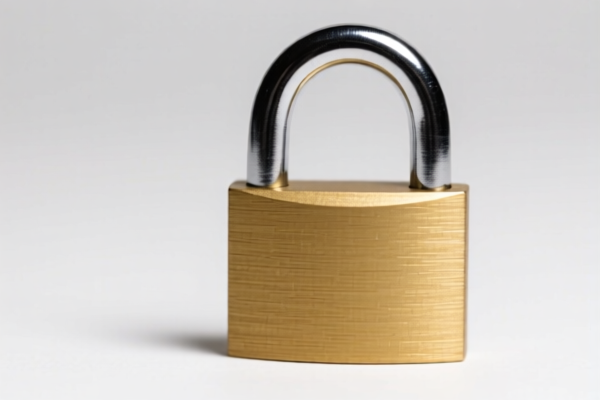
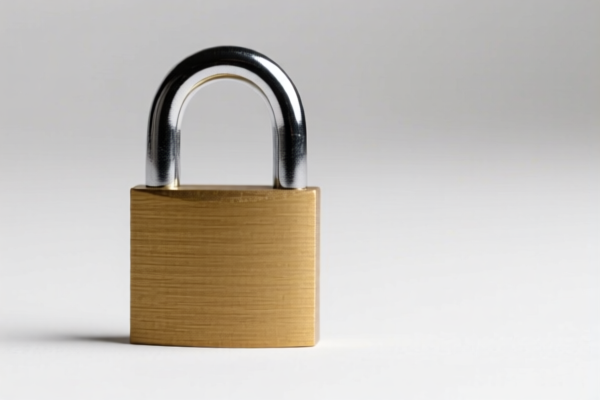


AI Analysis
🔐 Password Padlock (Keyless Combination Locks)
🌐 HS Code Reference & Customs Clearance Guide | 2026 Latest Tariff Analysis | Professional Clearance Strategy
📌 I. Product Definition & Classification: What Exactly Is a "Password Padlock"?
A Password Padlock (also known as a Combination Padlock) is a security device that uses a sequence of numbers, letters, or symbols to unlock. In international trade, the classification heavily depends on the material and the specific mechanism.
Two Primary Classification Paths:
Path A: Precise Classification (Category 8301)
Specifically for "Padlocks" made of base metals. This is the most accurate category for standard commercial padlocks. * HS Code Range:
8301.10.x0.xx
Path B: Generic Material Classification (Category 7326)
Used if the lock is considered a "general steel/iron article" rather than a specific "padlock" mechanism, or if specific sub-headings for padlocks are exhausted. This is often a "fallback" category but carries significantly higher tariffs. * HS Code Range:
7326.90.x8.xx/7326.19.00.xx⚠️ Key Distinction:
- If the product is clearly identifiable as a padlock (has a shackle, locking mechanism designed for hanging) and made of base metal → Priority: 8301.
- If it is a generic steel fitting, clip, or non-standard locking device → Fallback: 7326.
📦 II. HS Code Classification Details (2026 Latest Tariff Authority Comparison)
| HS Code | Product Description | Application Scenario | Tariff Impact |
|---|---|---|---|
8301.10.60.80 |
Padlocks, of base metal; specifically categorized under sub-item 60.80. | Standard combination padlocks, zinc alloy or iron base, consumer/industrial grade. | Lower Tariff (~23.6%) ✅ |
8301.10.80.00 |
Padlocks, of base metal; general category under sub-item 80.00. | General padlocks not fitting specific sub-codes, still base metal. | Lowest Tariff (~22.3%) ✅✅ |
7326.90.86.88 |
Other articles of iron or steel; general basket category. | Misclassified generic steel items, or locks deemed "other articles." | High Tariff (~87.9%) ❌ |
7326.19.00.80 |
Other articles of iron or steel (forged/stamped). | Steel components that fail to meet the strict "padlock" definition in 8301. | High Tariff (~87.9%) ❌ |
🔍 Critical Reminder:
-8301is the correct legal classification for padlocks made of base metal.
-7326results in near-doubling of duties due to US Trade Act Section 301 & IEEPA penalties.
- Always prioritize 8301.10 over 7326 for padlocks to save significant costs.
💰 III. 2026 Latest Tariff Rate Breakdown (Including Additional Taxes & Policies)
✅ Applicable Country: United States (US)
✅ Origin: China (CN)
✅ Effective Date: From November 10, 2025 (including subsequent imports)
🎯 1. 8301.10.80.00 —— Padlocks, of Base Metal (Best Case Scenario)
| Item | Content |
|---|---|
| Base Duty Rate | 4.8% (ad valorem) |
| Section 301 Additional Duty | +7.5% (US Trade Act Section 301) |
| Section 122 Duty | +10% (Retaliatory/Countermeasure Duty) |
| Total Tax Rate | 22.3% |
| Tax Calculation | CIF Value × 22.3% |
| De Minimis Exemption | ❌ Not Eligible (deny_de_minimis) |
| Legal Basis Path | Section 122: 10% → Section 301: 7.5% → USITC: 8301.10.80.00 → Base: 4.8% |
📌 Explanation:
- Base Duty (4.8%): Standard HTSUS rate for padlocks.
- Section 301 (7.5%): Applies to most Chinese manufactured goods.
- Section 122 (10%): Additional duty applied to specific imports under Section 122 of the Trade Act.
- Total 22.3%: This is the recommended target rate for compliant padlock imports.
🎯 2. 8301.10.60.80 —— Padlocks, of Base Metal (Specific Sub-category)
| Item | Content |
|---|---|
| Base Duty Rate | 6.1% (ad valorem) |
| Section 301 Additional Duty | +7.5% |
| Section 122 Duty | +10% |
| Total Tax Rate | 23.6% |
| Tax Calculation | CIF Value × 23.6% |
| De Minimis Exemption | ❌ Not Eligible |
| Legal Basis Path | Section 122: 10% → Section 301: 7.5% → USITC: 8301.10.60.80 → Base: 6.1% |
📌 Note:
- Slightly higher base rate (6.1% vs 4.8%) due to specific sub-classification details.
- Total rate is 23.6%, still vastly superior to the 7326 category.
🎯 3. 7326.90.86.88 & 7326.19.00.80 —— Incorrect Classification (High Risk)
| Item | Content |
|---|---|
| Base Duty Rate | 2.9% (ad valorem) |
| Section 301 Additional Duty | +25.0% |
| Section 122 Duty | +10% |
| Steel/Aluminum/Copper Penalty | +50% (Specific surcharge for steel products) |
| Total Tax Rate | 87.9% |
| Tax Calculation | CIF Value × 87.9% |
| De Minimis Exemption | ❌ Not Eligible |
| Legal Basis Path | Steel Penalty: 50% → Section 301: 25% → Section 122: 10% → Base: 2.9% |
📌 Warning:
- If classified under 7326, you face a STEEL PENALTY of 50% on top of standard tariffs.
- Total 87.9% makes imports commercially unviable for most businesses.
- This rate applies because padlocks are often deemed "steel articles" under 7326, triggering the aggressive steel tariffs.
🛠️ IV. Customs Clearance Practical Advice (Real-World Pitfall Guide)
✅ 1. Required Documentation Checklist (No Exceptions)
| Document | Mandatory? | Notes |
|---|---|---|
| ✅ Product Specification Sheet | ✔️ | Must state: Material (e.g., Zinc Alloy, Steel), Type (Combination/Password), Shackle Length. |
| ✅ Product Photos | ✔️ | Clear images of the lock body, shackle, dial/keypad, and brand/logo. |
| ✅ Commercial Invoice | ✔️ | Must clearly describe as "Combination Padlock" or "Password Padlock", NOT "Steel Fitting". |
| ✅ Packing List | ✔️ | Weight and dimensions per box. |
| ✅ Country of Origin Certificate | ✔️ | Proves China origin (triggers Section 301/122). |
✅ 2. Declaration Strategy (Key Mantra)
🔥 "Classify as Padlock, Not Steel! Use 8301, Save Money!"
| Scenario | Correct Declaration | Wrong Declaration | Consequence |
|---|---|---|---|
| Standard Combination Lock | 8301.10.x0.xx (Padlock) |
7326.90.x8.xx (Other Steel Article) |
Pays 87.9% instead of ~23% |
| Zinc Alloy Padlock | 8301.10.80.00 |
7326.19.00.80 |
Pays 87.9% instead of 22.3% |
| Lock with Wooden Base | 8301.10.xx.xx (if base metal dominant) |
4421.xx.xx (Wood) |
Potential misclassification audit |
| Digital Electronic Padlock | 8301.10.xx.xx |
8530.xx.xx (Electrical) |
Must prove mechanical/base metal nature |
✅ 3. Special Handling Cases
| Situation | Handling Advice |
|---|---|
| Material Confusion | If the lock is made of Stainless Steel, it still falls under 8301 if it is a padlock. Do NOT move to 7326. |
| Mixed Materials | If the shackle is steel but the body is plastic? It may still be classified as a padlock if the locking function is base-metal dependent. Check HTSUS notes. |
| Branded vs. Unbranded | Brand does not change HS Code. Keep descriptions neutral but accurate. |
| Large Volume Import | Consider applying for a Binding Ruling from US CBP to confirm 8301 classification and avoid post-import audits. |
🌍 V. Global Market Comparison (2026 Latest)
| Country/Region | Recommended HS Code | Estimated Total Duty | Notes |
|---|---|---|---|
| 🇺🇸 USA | 8301.10.80.00 |
22.3% | High additional tariffs (301+122). Critical to use 8301. |
| 🇨🇳 China (Import) | 8301.10.60.80 |
6.1% | No Section 301/122. Lower barrier for entry. |
| 🇪🇺 EU | 8301.10.00.00 |
0% - 4.5% | Generally low duty. No Section 301 equivalent. |
| 🇬🇧 UK | 8301.10.00.00 |
0% - 4.5% | Post-Brexit tariffs similar to EU. |
| 🇨🇦 Canada | 8301.10.00.00 |
0% | CUSMA/USMCA benefits if originating in North America. |
📌 Conclusion:
- The USA is the most expensive market for Chinese-made padlocks due to the 87.9% penalty for wrong classification or 22.3% even for correct classification.
- EU and Canada are much more favorable with 0-4.5% rates.
- Strategy: If targeting the US, ensure strict classification under 8301. If possible, consider sourcing from non-China origins to mitigate Section 301/122 risks (though 122 may still apply depending on trade agreements).
📌 VI. Common Errors & Pitfall Guide (Lessons Learned)
❌ Error 1: Describing the item as "Steel Lock Component" or "Fitting"
👉 Consequence: Customs assigns 7326 → 87.9% Duty.
💡 Fix: Always use "Padlock" or "Combination Lock" in the description.
❌ Error 2: Ignoring the Section 122 (10%) and Section 301 (7.5%-25%) layers
👉 Consequence: Underestimating landed cost. A 23.6% rate looks high, but is better than 87.9%.
💡 Fix: Budget for ~23.6% minimum for US imports from China.
❌ Error 3: Assuming De Minimis (Section 321) applies
👉 Consequence: Packages under $800 seized or taxed heavily.
💡 Fix: Denied. Padlocks do not qualify for de minimis entry from China.
🎯 VII. Conclusion: Precise Classification Saves Millions!
🎯 Remember the Mantra:
🔹 "Padlock = 8301 (Save 65%)!"
🔹 "Steel Fitting = 7326 (Pay 87.9%)!"
🔹 "Description Matters: Say 'Padlock', Not 'Lock Part'!"
📌 Pro Tip:
If your padlocks are made in Vietnam, Mexico, or Thailand, you may qualify for Section 301 Exclusions or lower rates under USMCA (Mexico).
Recommendation: Apply for a CBP Advance Ruling to lock in the 8301 classification before shipping.
📣 Immediate Action:
📞 Engage a licensed Customs Broker.
📸 Provide clear photos and material specs.
🚀 Classify under 8301.10.x0.xx to maximize profit margins.
✨ Professional Clearance Starts with Accurate Classification!
💼 Your Duty Bill Should Reflect Product Truth, Not Guesswork!
Customer Reviews
About HS Code Classification
The Harmonized System (HS) is an internationally standardized nomenclature developed by the World Customs Organization (WCO) to classify traded products. Over 200 countries use the HS system as the basis for customs tariffs, trade statistics, and import/export regulations.
Each HS code follows a hierarchical structure:
- Chapter (2 digits) — Broad category of goods (e.g., Chapter 84: Machinery and Mechanical Appliances)
- Heading (4 digits) — More specific grouping within the chapter
- Subheading (6 digits) — Internationally standardized breakdown, used by all WCO member countries
- National subdivisions (8-10 digits) — Country-specific extensions for further classification, such as US HTSUS 10-digit codes
Correct HS code classification is essential for smooth customs clearance, accurate duty payment, and compliance with trade regulations. Misclassification can lead to customs delays, overpayment of duties, or penalties.
When importing from CN to US, the applicable tariff rates may include:
- Most-Favored-Nation (MFN) rate — The standard duty rate applied to WTO members
- General rate — Applied to countries without trade agreements
- Trade remedy duties — Additional tariffs such as Section 301 (anti-dumping), Section 232 (national security), or countervailing duties
The information provided on this page is for reference purposes only. For official classification, please consult with your local customs authority or a licensed customs broker.