Patchwork Clothing
CN → US| HS Code | Tariff Rate | Origin | Destination | Doc |
|---|---|---|---|---|
| 5810910020 | 0.0% | CN | US | Official Doc |
| 5806393080 | 35.0% | CN | US | Official Doc |
| 6307909891 | 24.5% | CN | US | Official Doc |
| 5810929080 | 0.0% | CN | US | Official Doc |
| 6307903020 | 25.4% | CN | US | Official Doc |
Product Images
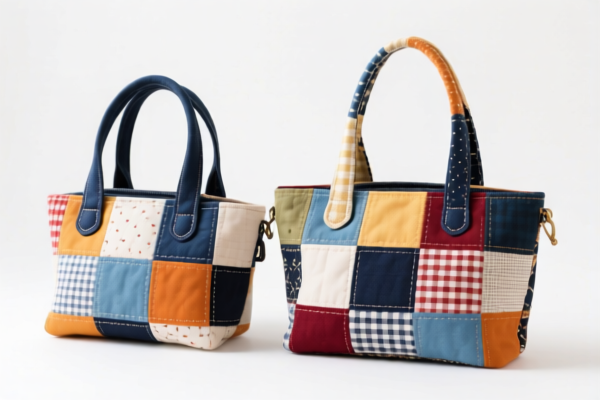
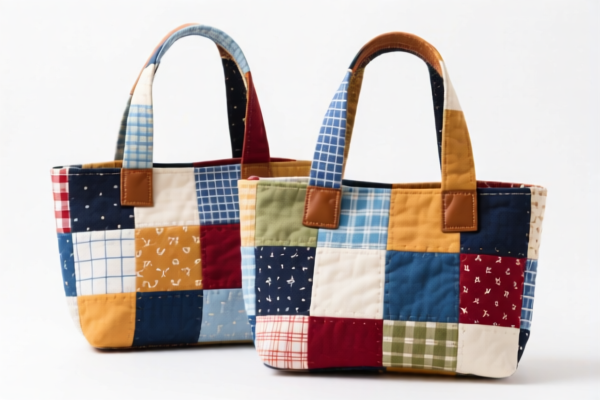
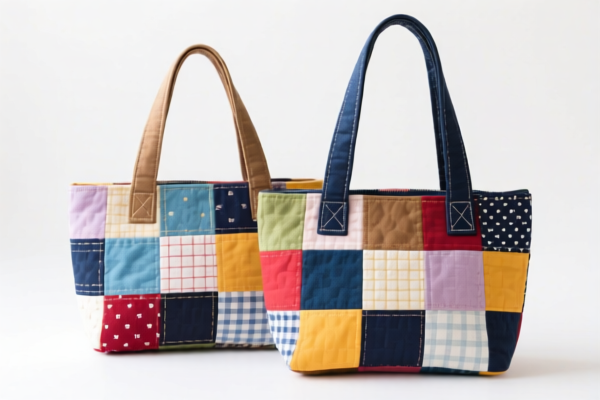
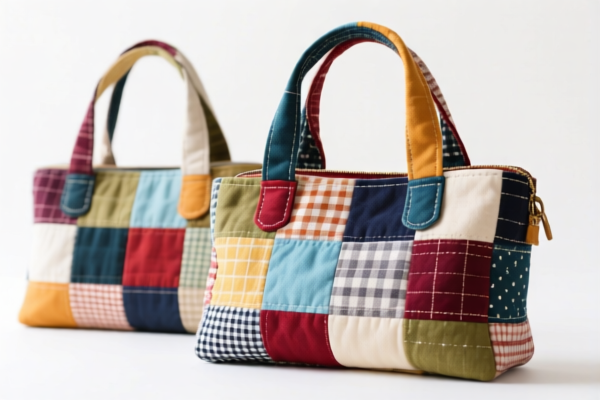
AI Analysis
🧵 Patchwork Clothing & Textiles: HS Code Classification & U.S. Customs Strategy (2026 Guide)
🌐 HS Code Reference & Customs Clearance Guide | 2026 Latest Tariff Analysis | Professional Entry Strategies
📌 I. Product Definition & Classification: What Exactly is "Patchwork"?
In international trade, "Patchwork Clothing" (拼接布料/服装) is not a single HS Code but a category defined by material composition, processing stage, and end-use. The term "patchwork" refers to a craftsmanship/technique (joining pieces of fabric), not a specific material. Therefore, classification depends on:
- The Base Fabric: Is it cotton, synthetic fiber, or knitted/woven?
- The Processing State: Is it raw material (fabrics), semi-finished goods (embroidery), or finished articles (garments)?
- The End Use: Is it for embroidery, labeling, or general textile articles?
⚠️ Critical Distinction:
- If it is embroidery in the piece (stitched design on fabric) → Chapter 58
- If it is finished garments (shirts, pants) → Chapter 61/62 (Not in provided data)
- If it is textile articles (miscellaneous) → Chapter 63
- If it is woven fabric (non-embroidered) → Chapter 58
📦 II. HS Code Classification Matrix (Based on Provided Data)
| HS Code | Product Description | Applicability Scenario | Material/Process Type | Total Tax Rate (CN→US) |
|---|---|---|---|---|
| 5810.91.00.20 | Embroidery in the piece; non-embroidered patches | Embroidery goods, decorative fabric strips | Textile base + Embroidery craft | See Additional U.S. Note 1 + 35.0% |
| 5806.39.30.80 | Woven fabric, woven tape, narrow fabrics (others) | Woven textile strips, processed fabric strips | Woven fabric + Patchwork processing | 35.0% |
| 6307.90.98.91 | Other made-up textile articles (other) | Semi-finished textile products, miscellaneous textile goods | Semi-finished textile article | 24.5% |
| 5810.92.90.80 | Embroidery in the piece; other than 5810.91 | Embroidery strips/patterns from synthetic/natural fibers | Textile base + Embroidery craft | See Additional U.S. Note 3 + 35.0% |
| 6307.90.30.20 | Other made-up textile articles (labels, etc.) | Non-cotton labels, intermediate textile products | Non-cotton made-up article | 25.4% |
🔍 Key Insight:
- "Patchwork" is a process, so the HS Code depends on what is being patched and what the final form is.
- Codes under 5810 are specifically for embroidery (stitched patterns).
- Codes under 6307 are for general textile articles (like labels, tags, or miscellaneous made-ups).
- Codes under 5806 are for narrow woven fabrics/tapes.
💰 III. Detailed Tariff Breakdown (2026 U.S. Import Duties for China-Origin Goods)
✅ Applicable Country: United States (US)
✅ Country of Origin: China (CN)
✅ Effective Time: Post-2025 (Current Trade Policy)
🎯 1. HS Code 5810.91.00.20 & 5810.92.90.80 —— Embroidery in the Piece
| Item | Content |
|---|---|
| Base Duty | See Additional U.S. Note 1 (Code 5810.91) / See Additional U.S. Note 3 (Code 5810.92) |
| Section 301 Duty | +25.0% |
| IEEPA Duty | +10.0% |
| Total Additional Duty | +35.0% (on top of base rate) |
| Total Effective Tax | Base Rate + 35% |
| Calculation Method | (CIF Value × Base Rate) + (CIF Value × 35%) |
| De Minimis Exemption | ❌ Not Applicable (High scrutiny) |
📌 Explanation:
- Base Rate: Depends on specific notes (Note 1/Note 3). For many embroidered goods, the base rate can be low (0-5%), but the additional 35% is the key cost driver.
- Section 301 (25%): Retaliatory tariff on Chinese goods.
- IEEPA (10%): Additional tariff under International Emergency Economic Powers Act.
- Total Surcharge: 35% is fixed regardless of base rate.
🎯 2. HS Code 5806.39.30.80 —— Narrow Woven Fabrics/Tapes
| Item | Content |
|---|---|
| Base Duty | 0.0% |
| Section 301 Duty | +25.0% |
| IEEPA Duty | +10.0% |
| Total Tax Rate | 35.0% |
| Calculation Method | CIF Value × 35% |
| De Minimis Exemption | ❌ Not Applicable |
📌 Note:
- Even though the base duty is 0%, the 35% surcharge applies fully.
- This code applies if the "patchwork" is simply woven strips joined together without embroidery.
🎯 3. HS Code 6307.90.98.91 —— Other Made-up Textile Articles
| Item | Content |
|---|---|
| Base Duty | 7.0% |
| Section 301 Duty | +7.5% |
| IEEPA Duty | +10.0% |
| Total Tax Rate | 24.5% |
| Calculation Method | CIF Value × 24.5% |
| De Minimis Exemption | ❌ Not Applicable |
📌 Note:
- This is the lowest total tax rate among the options (24.5% vs 35%).
- Suitable for semi-finished textile products or miscellaneous articles that don’t fit embroidery or narrow fabric categories.
🎯 4. HS Code 6307.90.30.20 —— Other Made-up Textile Articles (Labels)
| Item | Content |
|---|---|
| Base Duty | 7.9% |
| Section 301 Duty | +7.5% |
| IEEPA Duty | +10.0% |
| Total Tax Rate | 25.4% |
| Calculation Method | CIF Value × 25.4% |
| De Minimis Exemption | ❌ Not Applicable |
📌 Note:
- Applies if the patchwork is used as labels, tags, or non-cotton textile accessories.
🛠️ IV. Customs Clearance Practical Advice (Real-World Pitfall Avoidance)
✅ 1. Required Documentation Checklist
| Document | Must Provide | Purpose |
|---|---|---|
| Product Specification | ✔️ | Detailed description: "Patchwork fabric, 100% Cotton, Woven, Semi-finished" |
| Material Composition | ✔️ | Exact % of each fabric type used in patchwork |
| Processing Description | ✔️ | Is it embroidered? Woven? Sewn? |
| Commercial Invoice | ✔️ | Must specify "Patchwork Textile" or "Embroidery in Piece" |
| Packing List | ✔️ | Weight, dimensions, number of pieces |
| Photos | ✔️ | Clear images showing the patchwork structure and label |
✅ 2. Declaration Strategy (Key Rules)
🔥 "Describe the Material, Not Just the Pattern!"
| Scenario | Correct Declaration | Incorrect Declaration | Consequence |
|---|---|---|---|
| Embroidered Patchwork Fabric | 5810.91.00.20 |
"Clothing" | Wrong Chapter → Penalty |
| Woven Tape/Strip Patchwork | 5806.39.30.80 |
"Fabric" | Ambiguous → Delay |
| Semi-finished Textile Article | 6307.90.98.91 |
"Garment" | Wrong Classification |
| Textile Labels/Tags | 6307.90.30.20 |
"Patchwork" | Vague → Rejection |
📌 Important:
- Do NOT declare as "Clothing" (Chapter 61/62) if it is just fabric or semi-finished goods.
- Do NOT declare as "General Textile" if it is specifically embroidery (Chapter 58).
- Accuracy in Material Description is critical for Customs to verify the HS Code.
✅ 3. Special Cases & Tips
| Case | Handling Suggestion |
|---|---|
| Mixed Materials | Declare the principal material (e.g., if 80% cotton, state "Cotton Patchwork") |
| Embroidery vs. Weaving | If stitches are visible → 5810 (Embroidery). If only woven → 5806 (Fabric) |
| Low-Value Shipments | De Minimis ($800) does NOT apply to goods subject to Section 301/IEEPA tariffs |
| Origin Labeling | Must clearly state "Made in China" on all packages |
🌍 V. Global Market Comparison (2026)
| Market | Recommended HS Code | Est. Total Tax (CN→US) | Certification | Notes |
|---|---|---|---|---|
| 🇺🇸 USA | 5810.91.00.20 / 6307.90.98.91 |
24.5% – 35%+ | None specific | High tariffs due to trade policy |
| 🇨🇳 China | 5810.91.00.20 |
5% – 10% | CCC (if applicable) | Lower base duties |
| 🇪🇺 EU | 5810.91.00 |
0% – 6% | CE (if functional) | No Section 301 equivalent |
| 🇬🇧 UK | 5810.91.00 |
0% – 6% | UKCA | Post-Brexit rules apply |
| 🇨🇦 Canada | 5810.91.00 |
0% – 5% | None | No major surcharges |
📌 Conclusion:
- The U.S. is the most expensive market due to Section 301 (25%) and IEEPA (10%) tariffs.
- Total tax ranges from 24.5% to 35%+ depending on the exact nature of the "patchwork."
- Strategy: Consider shifting production to Vietnam/Mexico to avoid Chinese-origin tariffs (subject to local content rules).
📌 VI. Common Errors & Pitfalls (Lessons Learned)
❌ Error 1: Declaring embroidered fabric as general textile (6307)
👉 Result: Customs may reclassify to 5810 with higher scrutiny or penalties.
❌ Error 2: Declaring woven strips as embroidery (5810)
👉 Result: Incorrect HS Code → Audit risk.
❌ Error 3: Assuming De Minimis ($800) applies to patchwork goods
👉 Result: Seized shipment. Section 301/IEEPA tariffs apply regardless of value.
❌ Error 4: Vague description: "Patchwork Cloth"
👉 Result: Customs delays for clarification. Always specify Material, Structure, and Use.
✅ Correct Practice:
"Embroidered Patchwork Fabric, 100% Cotton, Woven, Semi-Finished, for Garment Manufacturing, Model XYZ, Made in China"
🎯 VII. Conclusion: Professional Declaration, Cost Control, Efficient Clearance
🎯 Key Takeaways:
🔹 "Patchwork" is a process, not a HS Code. Define Material + Structure.
🔹 Embroidery → 5810 (High Surcharge 35%)
🔹 Woven Tape → 5806 (Surcharge 35%)
🔹 Misc. Textile → 6307 (Surcharge 24.5% - Lowest)
🔹 No De Minimis Exemption for Chinese Goods.
📌 Pro Tip:
If your patchwork goods are critical components for larger assemblies, consider pre-classification rulings with U.S. Customs and Border Protection (CBP) to ensure accuracy and avoid delays.
📣 Action Required:
📞 Consult a licensed customs broker.
📦 Provide detailed product specs.
🚀 Optimize HS Code selection to minimize tariff burden (24.5% vs 35%).
✨ Precise Classification = Lower Costs + Faster Clearance!
💼 Every percentage point matters in global trade!
Customer Reviews
About HS Code Classification
The Harmonized System (HS) is an internationally standardized nomenclature developed by the World Customs Organization (WCO) to classify traded products. Over 200 countries use the HS system as the basis for customs tariffs, trade statistics, and import/export regulations.
Each HS code follows a hierarchical structure:
- Chapter (2 digits) — Broad category of goods (e.g., Chapter 84: Machinery and Mechanical Appliances)
- Heading (4 digits) — More specific grouping within the chapter
- Subheading (6 digits) — Internationally standardized breakdown, used by all WCO member countries
- National subdivisions (8-10 digits) — Country-specific extensions for further classification, such as US HTSUS 10-digit codes
Correct HS code classification is essential for smooth customs clearance, accurate duty payment, and compliance with trade regulations. Misclassification can lead to customs delays, overpayment of duties, or penalties.
When importing from CN to US, the applicable tariff rates may include:
- Most-Favored-Nation (MFN) rate — The standard duty rate applied to WTO members
- General rate — Applied to countries without trade agreements
- Trade remedy duties — Additional tariffs such as Section 301 (anti-dumping), Section 232 (national security), or countervailing duties
The information provided on this page is for reference purposes only. For official classification, please consult with your local customs authority or a licensed customs broker.