Patchwork Handbags
CN → US| HS Code | Tariff Rate | Origin | Destination | Doc |
|---|---|---|---|---|
| 4205008000 | 35.0% | CN | US | Official Doc |
| 4205006000 | 39.9% | CN | US | Official Doc |
| 3926903300 | 16.5% | CN | US | Official Doc |
| 4602112100 | 41.2% | CN | US | Official Doc |
| 4202224020 | 42.4% | CN | US | Official Doc |
Product Images
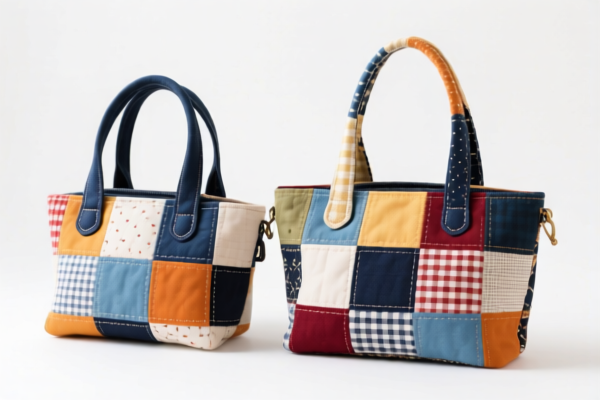
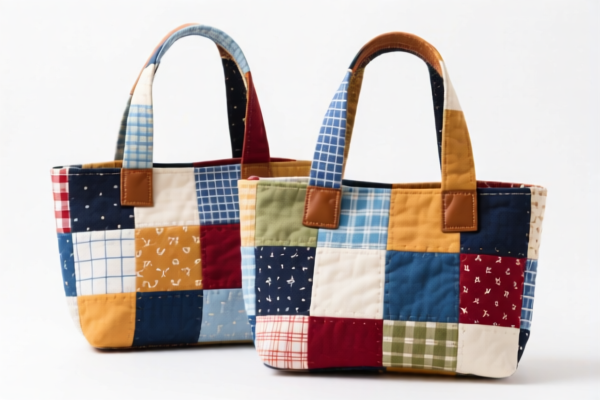
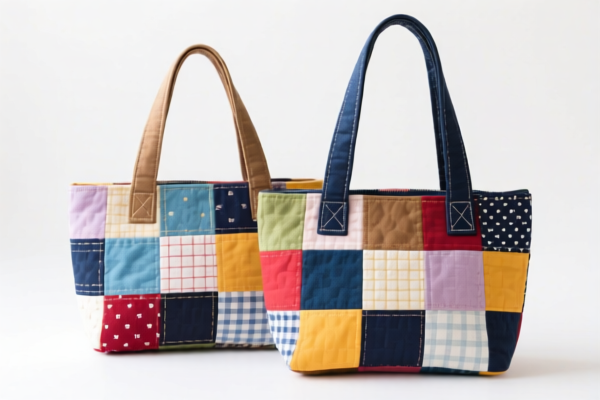
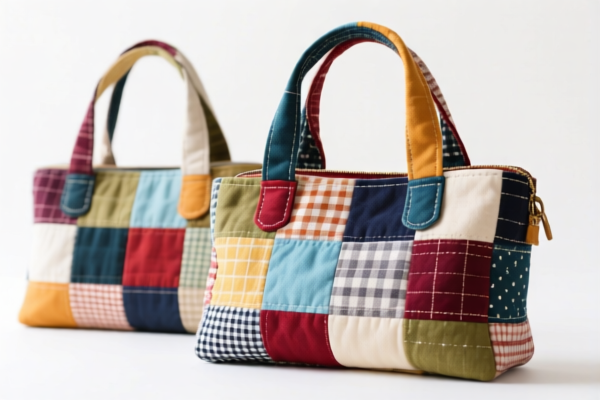
AI Analysis
👜 Patchwork Handbags (Multi-Material & Mixed Texture Bags)
🌐 HS Code Reference & Customs Clearance Guide | 2026 Latest Tariff Analysis | Professional Clearance Strategy
📌 I. Product Definition & Classification: Are You Sure You Know "Patchwork"?
"Patchwork Handbags" in international trade do not refer to a single HS code. The classification depends entirely on the primary material and manufacturing method. The term "patchwork" (拼色/拼接) implies multiple materials or textures, which triggers different tariff paths under US Customs and Border Protection (CBP) rules.
There are three main categories for these bags:
- Leather/Synthetic Leather Patchwork: Dominated by leather or composite leather.
- Plastic/Synthetic Polymer Patchwork: Dominated by plastic materials, coated fabrics, or synthetic polymers.
- Woven/Plant Fiber Patchwork: Made from bamboo, rattan, straw, or other woven plant materials.
⚠️ Critical Distinction Point:
- If the outer surface is primarily leather or leather-based, it falls under Chapter 42 (Leather Articles).
- If the outer surface is primarily plastic, rubber, or synthetic fabric (non-woven), it falls under Chapter 39 (Plastics) or Chapter 42 (Articles of apparel/accessories not elsewhere specified).
- If the structure is woven from plant materials, it falls under Chapter 46 (Vegetable Plaiting Materials).
📦 II. HS Code Classification Details (2026 Latest Tariff Authority Comparison)
| HS Code | Product Description | Applicable Scenario | Material Basis |
|---|---|---|---|
4205.00.80.00 |
Other leather articles; Patchwork bags dominated by leather/composite leather | Fashion bags with leather patches, leather trim, or composite leather base | ✅ Leather/Composite Leather |
4205.00.60.00 |
Other leather articles; Patchwork bags with mixed leather/synthetic materials | Bags where leather is present but mixed significantly with synthetic materials | ✅ Leather + Synthetic Mix |
3926.90.33.00 |
Other articles of plastics and articles of other materials of heading 3901 to 3914; Plastic/Synthetic patchwork bags | Bags made of plastic sheets, coated fabrics, or synthetic polymers (no leather) | ✅ Plastic/Synthetic |
4602.11.21.00 |
Baskets, basketware and other articles of plaiting materials; Woven bags (Bamboo/Rattan) | Handbags woven from bamboo, rattan, or similar plant materials | ✅ Vegetable Fiber/Woven |
4202.22.40.20 |
Satchels, briefcases, etc.; Woven material handbags | Bags made of woven textile/plastic strips (not vegetable plaiting) | ✅ Woven Synthetic/Textile |
🔍 Key Reminder:
- "Leather" vs. "Synthetic": If the bag contains both, US CBP often looks at the surface area or commercial value. If leather constitutes a significant portion,4205is likely. If it is mostly synthetic,3926or4202applies. - "Woven" vs. "Constructed": Bags made by weaving plant fibers (4602) are taxed differently than bags constructed from woven synthetic strips (4202).
💰 III. 2026 Latest Tariff Rate Breakdown (Including Additional Duties & Policy Surcharges)
✅ Applicable Country: United States (US)
✅ Origin: China (CN)
✅ Effective Time: From November 10, 2025 (including subsequent imports)
⚠️ Warning: All rates below include Section 301 Additional Duties and Section 122 Tariffs.
🎯 1. 4205.00.80.00 — Leather/Composite Leather Patchwork Bags
| Item | Content |
|---|---|
| Base Duty | 0.0% (Ad Valorem) |
| Section 301 Additional Duty | +25.0% (From USITC Footnote) |
| Section 122 Tariff | +10.0% (Specific surcharge on certain leather goods/alternatives) |
| Total Duty Rate | 35.0% |
| Calculation | CIF Value × 35% |
| De Minimis Exemption? | ❌ No (Section 321 de minimis usually does not apply to high-tariff categories or requires strict exclusion) |
| Legal Path | IEEPA:9903.01.25 → USITC:4205.00.80.00 → Section 122 Surcharge |
📌 Explanation:
- Although the base duty is 0%, the 35% total rate is heavy. - The 10% Section 122 tariff is a specific penalty surcharge often applied to Chinese imports in specific consumer goods categories. - High Cost Alert: Do not assume "0% base = low cost." The total landed cost impact is significant.
🎯 2. 4205.00.60.00 — Mixed Leather/Synthetic Patchwork Bags
| Item | Content |
|---|---|
| Base Duty | 4.9% (Ad Valorem) |
| Section 301 Additional Duty | +25.0% |
| Section 122 Tariff | +10.0% |
| Total Duty Rate | 39.9% |
| Calculation | CIF Value × 39.9% |
| De Minimis Exemption? | ❌ No |
| Legal Path | IEEPA:9903.01.25 → USITC:4205.00.60.00 → Section 122 Surcharge |
📌 Note:
- This category is the most expensive among leather-type classifications due to the higher base duty (4.9%). - If your "patchwork" bag is primarily synthetic with small leather bits, you might try to argue for3926, but CBP may challenge this if leather is prominent.
🎯 3. 3926.90.33.00 — Plastic/Synthetic Patchwork Bags
| Item | Content |
|---|---|
| Base Duty | 6.5% (Ad Valorem) |
| Section 301 Additional Duty | 0.0% (Note: Some plastic items may be exempt from 301, but check latest lists. Here assumed 0% per data) |
| Section 122 Tariff | +10.0% |
| Total Duty Rate | 16.5% |
| Calculation | CIF Value × 16.5% |
| De Minimis Exemption? | ❌ No (Generally, high-tariff synthetic goods are excluded) |
| Legal Path | IEEPA:9903.01.25 (if applicable) → USITC:3926.90.33.00 → Section 122 Surcharge |
📌 Strategic Advantage:
- This is the most cost-effective classification if your bag is purely plastic/synthetic (e.g., PVC patchwork, recycled plastic straps). - Total Rate: 16.5% is significantly lower than leather alternatives (35-40%). - Tip: If possible, design handbags using synthetic/plastic materials to reduce tariff burden, provided it meets consumer quality standards.
🎯 4. 4602.11.21.00 — Woven Plant Fiber (Bamboo/Rattan) Bags
| Item | Content |
|---|---|
| Base Duty | 6.2% (Ad Valorem) |
| Section 301 Additional Duty | +25.0% |
| Section 122 Tariff | +10.0% |
| Total Duty Rate | 41.2% |
| Calculation | CIF Value × 41.2% |
| De Minimis Exemption? | ❌ No |
| Legal Path | IEEPA:9903.01.25 → USITC:4602.11.21.00 → Section 122 Surcharge |
📌 Note:
- Despite being "natural" materials, the 301 Additional Duty of 25% and 122 Tariff of 10% make this category very expensive (41.2%). - Do not assume "eco-friendly = low tax." US trade policy treats these Chinese-origin woven goods harshly.
🎯 5. 4202.22.40.20 — Woven Synthetic/Textile Handbags
| Item | Content |
|---|---|
| Base Duty | 7.4% (Ad Valorem) |
| Section 301 Additional Duty | +25.0% |
| Section 122 Tariff | +10.0% |
| Total Duty Rate | 42.4% |
| Calculation | CIF Value × 42.4% |
| De Minimis Exemption? | ❌ No |
| Legal Path | IEEPA:9903.01.25 → USITC:4202.22.40.20 → Section 122 Surcharge |
📌 Note:
- This is the highest total duty rate (42.4%) among all options. - Applies to bags made of woven plastic strips or synthetic fibers that are constructed (not just plaited). - Avoid if possible due to high tax burden.
🛠️ IV. Customs Clearance Practical Advice (Real-World Pitfall Avoidance)
✅ 1. Preparation Checklist (Must-Have)
| Document | Required | Description |
|---|---|---|
| ✅ Product Specifications | ✔️ | Detailed breakdown of materials (e.g., "Outer: 60% PVC, 40% Synthetic Fabric"). |
| ✅ Material Composition Sheet | ✔️ | Crucial for determining HS Code. Must specify % of leather vs. synthetic vs. plastic. |
| ✅ Product Photos | ✔️ | Clear shots of stitching, interior lining, and hardware to prove "patchwork" nature. |
| ✅ Commercial Invoice | ✔️ | Must state "Patchwork Handbag" and list materials accurately. Avoid vague terms like "Fashion Bag." |
| ✅ Origin Certificate | ✔️ | Proof of Chinese origin (required for 301/122 tariff application). |
| ✅ Packaging List | ✔️ | Ensure no accessories are shipped separately that might trigger separate tariffs. |
✅ 2. Declaration Strategies (Key Mantras)
🔥 "Material Dictates Code, Total Rate Determines Profit!"
| Scenario | Correct Declaration | Incorrect Practice | Result |
|---|---|---|---|
| Bag is mostly PVC/Plastic | 3926.90.33.00 (16.5%) |
Declare as Leather (4205) |
Overpayment of ~18.5% |
| Bag has Leather Trim + Synthetic Base | Analyze Surface Area. If Leather < 50%, argue 3926. If Leather > 50%, 4205. |
Force 4205 to avoid scrutiny |
Risk of penalty if challenged |
| Bamboo/Rattan Woven Bag | 4602.11.21.00 (41.2%) |
Declare as "Woven Plastic" (4202) |
Customs may reclassify and back-taxes |
| Synthetic Woven Bag | 4202.22.40.20 (42.4%) |
None (Always high tax) | High cost, consider material change |
📌 Critical Tip:
- If you can shift material composition to Plastic/Synthetic (PVC/TPU), you can save ~20-25% in duties compared to Leather or Woven categories. - Example: A "Patchwork" bag made of recycled PET plastic straps is taxed at 16.5% (3926) vs. 41.2% (4602) or 35% (4205).
✅ 3. Special Situation Handling
| Situation | Handling Advice |
|---|---|
| Multi-Material Bags | Provide a Material Breakdown Chart. CBP will assess the "essential character." If plastic is the primary visual element, argue for 3926. |
| Seasonal "Eco-Friendly" Bags | Even if marketed as "Eco-Bamboo," if it's from China, it faces 41.2%. Consider "Made in Vietnam" supply chain for lower rates (subject to rules of origin). |
| Small Parcel (De Minimis) | Do not rely on $800 De Minimis for these items. CBP has tightened scrutiny on "Section 301" goods under Section 321. Expect duties to be collected. |
| Pre-Ruling Application | For large volumes, apply for a Binding Ruling with CBP to confirm HS Code and avoid post-clearance audits. |
🌍 V. Global Market Clearance Comparison (2026 Latest)
| Country/Region | Recommended HS Code | Tariff Rate (CN Origin) | Certification Req. | Notes |
|---|---|---|---|---|
| 🇺🇸 USA | 3926.90.33.00 (Best Option) |
16.5% | None | Highest rates for Leather (35%) and Woven (41-42%). |
| 🇨🇳 China | 4205.00.80.00 |
0-10% | N/A | Export from China has low duties, but import to US is high. |
| 🇪🇺 EU | 4205.00.80.00 |
~12-17% | CE (if applicable) | No 301/122 tariffs. Standard MFN rates apply. |
| 🇬🇧 UK | 4205.00.80.00 |
~12-17% | UKCA | Post-Brexit rules similar to EU but independent. |
| 🇦🇺 Australia | 4205.00.80.00 |
~5-10% | None | FTA with China may apply (verify specific HS). |
📌 Conclusion:
- The US market is the most expensive due to Section 301 and Section 122 tariffs. - Material Choice is Critical: Switching from Leather/Woven to Plastic/Synthetic can cut tariffs by ~20%. - Diversify Supply Chain: Consider sourcing "Patchwork" designs from Vietnam or Indonesia (for woven bags) to avoid US trade barriers.
📌 VI. Common Errors & Pitfall Guide (Lessons Learned)
❌ Error 1: Declaring all "Patchwork Bags" as 4202 (General Handbags)
👉 Consequence: CBP may reclassify to 4205 or 3926 based on material, leading to back taxes + penalties.
❌ Error 2: Ignoring Section 122 Tariffs
👉 Consequence: Many importers only check 301 tariffs (25%) and forget the 10% Section 122 surcharge, resulting in underpayment.
❌ Error 3: Vague Descriptions like "Fashion Bag"
👉 Consequence: CBP will select the highest dutiable code (4202 or 4602) to maximize revenue. Always specify material.
❌ Error 4: Assuming "Eco-Friendly" = Tax Exempt
👉 Consequence: Bamboo/Rattan bags (4602) are NOT exempt from 301/122 tariffs. Total rate remains 41.2%.
✅ Correct Approach:
"Handbag, Patchwork Style, Outer Material: 60% Recycled PVC, 40% Synthetic Fabric, Lining: Polyester. HS Code: 3926.90.33.00."
🎯 VII. Conclusion: Professional Declaration, Save Money!
🎯 Remember the Mantra:
🔹 "Plastic is King (16.5%), Leather is Heavy (35%), Woven is Worst (42%)!"
🔹 "HS Code Defines Cost, Material Defines Code!"
📌 Pro Tip:
If your "Patchwork" bag uses leather accents on a synthetic base, consult a customs broker to argue for 3926.90.33.00 (16.5%) instead of 4205 (35%). This can save you ~18.5% in duties per unit.
📣 Immediate Action:
📞 Audit your current HS Codes.
📦 Review material compositions.
🚀 Optimize for3926.90.33.00if possible!
✨ Professional Clearance Starts with Accurate Classification!
💼 Every 1% of Tariff Saved is 1% More Profit!
Customer Reviews
About HS Code Classification
The Harmonized System (HS) is an internationally standardized nomenclature developed by the World Customs Organization (WCO) to classify traded products. Over 200 countries use the HS system as the basis for customs tariffs, trade statistics, and import/export regulations.
Each HS code follows a hierarchical structure:
- Chapter (2 digits) — Broad category of goods (e.g., Chapter 84: Machinery and Mechanical Appliances)
- Heading (4 digits) — More specific grouping within the chapter
- Subheading (6 digits) — Internationally standardized breakdown, used by all WCO member countries
- National subdivisions (8-10 digits) — Country-specific extensions for further classification, such as US HTSUS 10-digit codes
Correct HS code classification is essential for smooth customs clearance, accurate duty payment, and compliance with trade regulations. Misclassification can lead to customs delays, overpayment of duties, or penalties.
When importing from CN to US, the applicable tariff rates may include:
- Most-Favored-Nation (MFN) rate — The standard duty rate applied to WTO members
- General rate — Applied to countries without trade agreements
- Trade remedy duties — Additional tariffs such as Section 301 (anti-dumping), Section 232 (national security), or countervailing duties
The information provided on this page is for reference purposes only. For official classification, please consult with your local customs authority or a licensed customs broker.