Patrol Boat
CN → US| HS Code | Tariff Rate | Origin | Destination | Doc |
|---|---|---|---|---|
| 8906100000 | 17.5% | CN | US | Official Doc |
| 8906900090 | 35.0% | CN | US | Official Doc |
| 8901900000 | 35.0% | CN | US | Official Doc |
| 8901100000 | 35.0% | CN | US | Official Doc |
Product Images
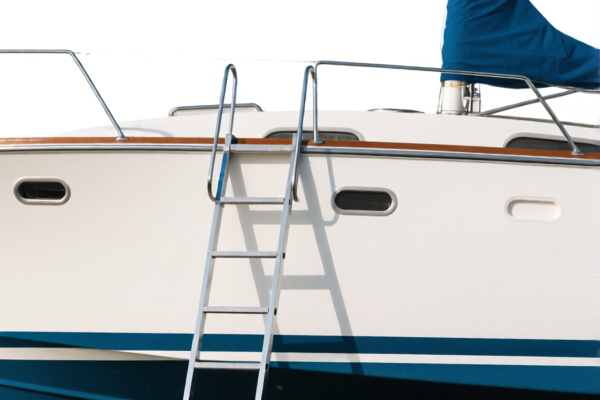
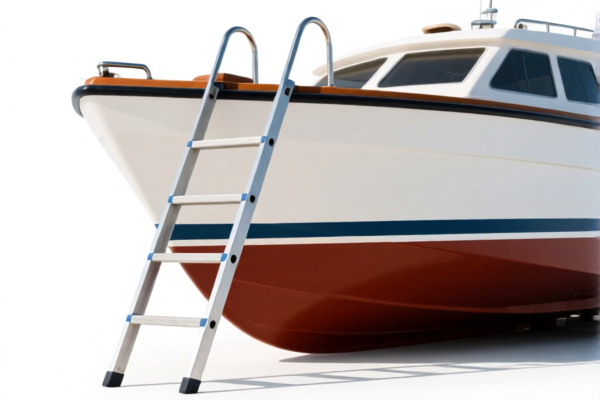
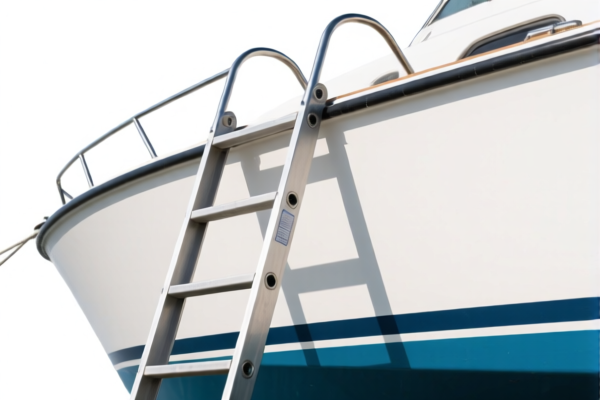
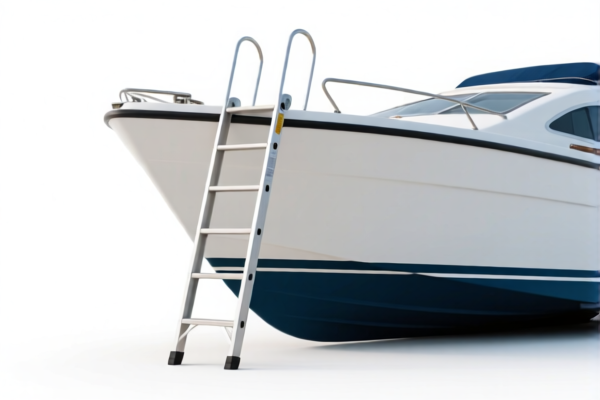
AI Analysis
🚤 Patrol Boat (Coast Guard / Law Enforcement Vessels)
🌐 HS Code Reference & Customs Clearance Guide | 2026 Latest Tariff Analysis | Strategic Clearance Strategy for Maritime Imports
📌 I. Product Definition & Classification: What Exactly is a "Patrol Boat"?
A Patrol Boat is a small military or law enforcement vessel used for coast guard duties, border control, maritime security, or naval operations. Unlike commercial cargo ships or passenger ferries, its primary function is security, surveillance, and interception.
In international trade classification, the key distinction lies in usage: * Military/Law Enforcement Use: Falls under "Vessels of War" or specific security categories. * Commercial/Transport Use: Falls under "Other Vessels" for transport of persons or goods.
⚠️ Critical Distinction:
- If the vessel is designed for combat, coast guard, or police duties → It is treated as a Warship/Security Vessel.
- If the vessel is designed for transporting passengers or cargo (even if used by authorities) → It is treated as a Transport Vessel.
- Misclassification leads to drastic tax differences (17.5% vs. 35%)!
📦 II. HS Code Classification Details (2026 Latest Tariff Authority Comparison)
| HS Code | Product Description | Application Scenario | Classification Logic |
|---|---|---|---|
8906.10.00.00 |
Vessels of war (excluding rowing boats) | Coast Guard vessels, Police boats, Military patrol craft | ✅ Military/Security Use |
8906.90.00.90 |
Other vessels | General purpose patrol boats not strictly defined as warships | ✅ General "Other Vessel" |
8901.90.00.00 |
Other vessels for transport of persons/goods | Patrol boats used primarily for transport functions | ✅ Transport Function |
8901.10.00.00 |
Cruise ships, excursion boats, similar vessels | Patrol boats designed like ferries/cruise ships | ✅ Passenger Transport |
🔍 Key Reminder:
- HS 8906.10.00.00 is the most favorable classification if the boat is strictly for military/coast guard/security purposes, as it attracts the lowest tax rate (17.5%).
- All other classifications (8906.90,8901.90,8901.10) result in a higher tax rate (35.0%) because they are classified as general transport or non-military vessels.
- Do NOT assume all patrol boats are "warships." If it lacks military-grade armament or official designation, customs may classify it under8906.90or8901.xxxx, leading to higher taxes.
💰 III. 2026 Latest Tariff Rate Detailed Breakdown (Including Surcharges & Policy Add-ons)
✅ Applicable Country: United States (US)
✅ Country of Origin: China (CN)
✅ Effective Date: From November 10, 2025 (and subsequent imports)
🎯 1. 8906.10.00.00 —— Vessels of War (Security/Military Patrol Boats)
| Item | Content |
|---|---|
| Base Tariff | 0.0% (ad valorem) |
| Section 301 Surcharge | +7.5% (USITC Footnote related to specific vessels) |
| Section 122 Tariff | +10% (Specific to maritime/defense items) |
| Total Tax Rate | 17.5% |
| Tax Calculation | CIF Value × 17.5% |
| De Minimis Exemption | ❌ Not Applicable (High-value maritime goods do not qualify) |
| Legal Basis Path | Section 122:10% → Section 301:7.5% → USITC:8906.10.00.00 |
📌 Explanation:
- This is the most tax-efficient classification for patrol boats.
- The 17.5% rate is significantly lower than the 35% rate for other categories.
- Eligibility: Must be clearly defined as a military, coast guard, or law enforcement vessel. Provide official documentation (e.g., contract with government agency, military specification sheets).
🎯 2. 8906.90.00.90 —— Other Vessels (General Patrol Boats)
| Item | Content |
|---|---|
| Base Tariff | 0.0% |
| Section 301 Surcharge | +25.0% |
| Section 122 Tariff | +10% |
| Total Tax Rate | 35.0% |
| Tax Calculation | CIF Value × 35.0% |
| De Minimis Exemption | ❌ Not Applicable |
| Legal Basis Path | Section 122:10% → Section 301:25% → USITC:8906.90.00.90 |
📌 Warning:
- This classification applies if the boat is not deemed a "vessel of war" but still falls under "other vessels."
- Avoid this if possible. The 35% rate is double the 17.5% rate.
- Reason for Higher Tax: Lack of clear military/security designation.
🎯 3. 8901.90.00.00 —— Other Transport Vessels (Person/Goods)
| Item | Content |
|---|---|
| Base Tariff | 0.0% |
| Section 301 Surcharge | +25.0% |
| Section 122 Tariff | +10% |
| Total Tax Rate | 35.0% |
| Tax Calculation | CIF Value × 35.0% |
| De Minimis Exemption | ❌ Not Applicable |
| Legal Basis Path | Section 122:10% → Section 301:25% → USITC:8901.90.00.00 |
📌 Warning:
- Applies if the boat is viewed as a transport vessel rather than a security vessel.
- Even if used by police, if it’s classified as "transporting persons," it falls here.
- Same high tax rate (35%) as8906.90.
🎯 4. 8901.10.00.00 —— Cruise/Excursion Ships
| Item | Content |
|---|---|
| Base Tariff | 0.0% |
| Section 301 Surcharge | +25.0% |
| Section 122 Tariff | +10% |
| Total Tax Rate | 35.0% |
| Tax Calculation | CIF Value × 35.0% |
| De Minimis Exemption | ❌ Not Applicable |
| Legal Basis Path | Section 122:10% → Section 301:25% → USITC:8901.10.00.00 |
📌 Warning:
- Rarely applicable to patrol boats unless they are luxury-style vessels used for tourism or passenger transport.
- 35% tax rate. Avoid if your product is a functional patrol craft.
🛠️ IV. Customs Clearance Practical Advice (Real-World Pitfall Avoidance Guide)
✅ 1. Document Checklist (Absolutely Essential)
| Document | Required? | Description |
|---|---|---|
| ✅ Official Letter of Intent/Contract | ✔️ | Must state the vessel is for military, coast guard, or law enforcement use. |
| ✅ Technical Specifications | ✔️ | Include speed, armament (if any), navigation systems, and intended operational area. |
| ✅ Product Photos (Full View & Interior) | ✔️ | Show military-style design, lack of commercial passenger amenities (e.g., no cabins for tourists). |
| ✅ Bill of Lading | ✔️ | Clearly describe as "Patrol Boat for Coast Guard Use" or "Military Patrol Vessel." |
| ✅ Commercial Invoice | ✔️ | Value must match CIF; HS Code must be specified as 8906.10.00.00 (if eligible). |
| ✅ Origin Certificate (CO) | ✔️ | To prove origin (China) and apply correct surcharges. |
| ✅ Third-Party Inspection Report | ✔️ | Verify vessel specifications match declared purpose. |
✅ 2. Declaration Tips (Key Mnemonic)
🔥 "Security Design, 17.5% Tax; Transport Style, 35% Tax!"
| Scenario | Correct Declaration | Wrong Practice |
|---|---|---|
| Coast Guard / Police Boat | 8906.10.00.00 |
Declaring as "Yacht" or "Cargo Boat" → 35% |
| General Purpose Patrol Boat | 8906.90.00.90 |
Declaring as "Warship" without proof → Risk of penalty |
| Patrol Boat with Passenger Cabins | 8901.90.00.00 or 8901.10.00.00 |
Declaring as "Warship" → Misclassification |
| Military-Spec Vessel | 8906.10.00.00 |
Providing only commercial specs → 35% |
✅ 3. Special Situation Handling
| Situation | Handling Advice |
|---|---|
| OEM Patrol Boats for Government | Provide government contract + military specification sheets. This is critical for 8906.10.00.00. |
| Dual-Use Vessels (Security + Transport) | Declare as Security Vessel if primary function is patrol. Provide evidence of security features (e.g., radar, comms, lack of luxury amenities). |
| Vessels with Minor Armament | Still eligible for 8906.10.00.00 if used for law enforcement. Include armament list and intended operational mode. |
| Vessels for Private Security Firms | Risky. Customs may classify as 8906.90.00.90 (35%) unless you can prove official government authorization. |
🌍 V. Global Market Clearance Comparison (2026 Latest)
| Country/Region | Recommended HS Code | Tariff Rate | Certification Requirements | Notes |
|---|---|---|---|---|
| 🇺🇸 USA | 8906.10.00.00 |
17.5% (China Origin) | No special certs required for classification | Lowest tax rate if military/security use is proven |
| 🇺🇸 USA | 8906.90.00.90 |
35.0% (China Origin) | Same as above | Higher rate if not classified as warship |
| 🇨🇳 China | 8906.10.00.00 |
0% | CCC (if applicable) | No additional surcharges |
| 🇪🇺 EU | 8906.10.00.00 |
0% | CE Marking (if applicable) | No additional surcharges |
| 🇦🇺 Australia | 8906.10.00.00 |
5% | RCM (if applicable) | Low tariff |
| 🇯🇵 Japan | 8906.10.00.00 |
0% | PSE (if applicable) | No additional surcharges |
📌 Conclusion:
- USA is the only market with significant surcharges (Section 301 & Section 122).
- Correct classification is critical:8906.10.00.00saves you 17.5% compared to other categories.
- China-origin patrol boats face 17.5% total tax in the US if classified as "vessels of war," but 35% if not.
📌 VI. Common Mistakes & Pitfall Guide (Lessons Learned)
❌ Mistake 1: Declaring a military patrol boat as a "Yacht" or "Recreation Vessel"
👉 Consequence: Customs may reclassify as 8906.90.00.90 → 35% tax + penalties!
❌ Mistake 2: Not providing official documentation proving security/military use
👉 Consequence: Customs defaults to 8906.90.00.90 or 8901.xxxx → 35% tax
❌ Mistake 3: Using vague descriptions like "Small Boat" or "Watercraft"
👉 Consequence: Delay in clearance, additional inspections, potential reclassification → Higher costs & delays
❌ Mistake 4: Assuming all patrol boats are "Warships"
👉 Consequence: If the boat lacks military specifications, customs may reject 8906.10.00.00 → 35% tax
✅ Correct Approach:
"Patrol Boat, 20m length, Coast Guard Specification, Equipped with Radar & VHF Comms, No Passenger Cabins, Model XYZ, Intended for Law Enforcement Use"
🎯 VII. Conclusion: Professional Declaration, Save Time, Reduce Costs!
🎯 Remember the Mnemonic:
🔹 "Security Design = 17.5%, Transport Style = 35%!"
🔹 "HS Code Determines Tax, 17.5% vs. 35% is a Big Difference!"
🔹 "Provide Proof of Military/Security Use to Unlock Lower Rates!"
📌 Pro Tip:
If your patrol boat is originating from Vietnam, Mexico, or Thailand, you may qualify for IEEPA Exemptions, reducing the tax to 0%~5%.
Recommendation: Apply for an Advance Ruling from US Customs and Border Protection (CBP) to confirm the correct HS Code (8906.10.00.00) before shipping. This avoids unexpected 35% taxes.
📣 Immediate Action:
📞 Contact a Professional Customs Broker + Provide Technical Specs + Apply for HS Code Advance Ruling
🚀 Let your patrol boat clear customs smoothly, efficiently, and profitably!
✨ Professional Clearance Starts with Accurate Classification!
💼 Every dollar of cost should be precisely calculated!
Customer Reviews
About HS Code Classification
The Harmonized System (HS) is an internationally standardized nomenclature developed by the World Customs Organization (WCO) to classify traded products. Over 200 countries use the HS system as the basis for customs tariffs, trade statistics, and import/export regulations.
Each HS code follows a hierarchical structure:
- Chapter (2 digits) — Broad category of goods (e.g., Chapter 84: Machinery and Mechanical Appliances)
- Heading (4 digits) — More specific grouping within the chapter
- Subheading (6 digits) — Internationally standardized breakdown, used by all WCO member countries
- National subdivisions (8-10 digits) — Country-specific extensions for further classification, such as US HTSUS 10-digit codes
Correct HS code classification is essential for smooth customs clearance, accurate duty payment, and compliance with trade regulations. Misclassification can lead to customs delays, overpayment of duties, or penalties.
When importing from CN to US, the applicable tariff rates may include:
- Most-Favored-Nation (MFN) rate — The standard duty rate applied to WTO members
- General rate — Applied to countries without trade agreements
- Trade remedy duties — Additional tariffs such as Section 301 (anti-dumping), Section 232 (national security), or countervailing duties
The information provided on this page is for reference purposes only. For official classification, please consult with your local customs authority or a licensed customs broker.