Paulownia Wood Boards (Rough)
CN → USProduct Images
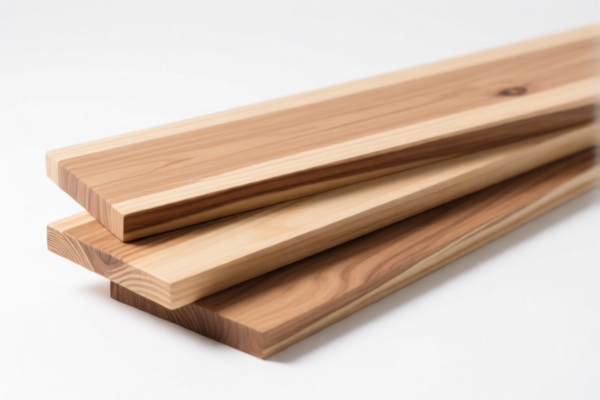
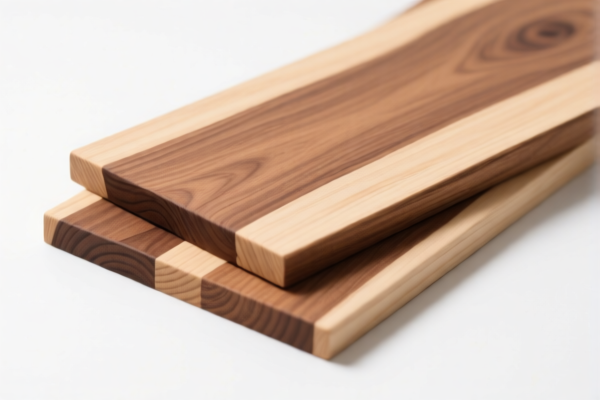
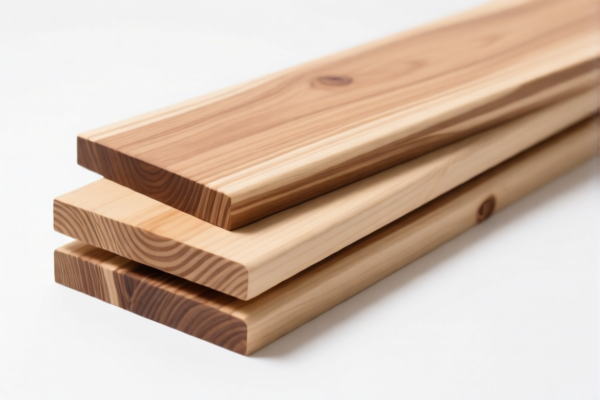
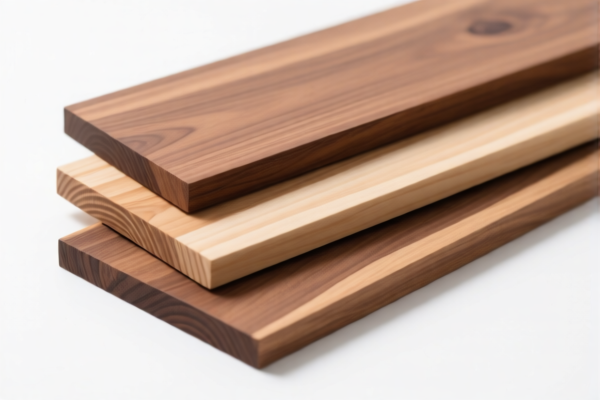
AI Analysis
🌳 Paulownia Wood Boards (Rough) – The "Paper Wood" of International Trade
🌐 HS Code Reference & Customs Clearance Guide | 2026 Latest Tariff Analysis | Professional Entry Strategy
📌 Part 1: Product Definition & Classification: What Exactly is "Paulownia"?
Paulownia wood (often referred to as "Empress Tree" or "Paper Wood") is renowned for its exceptional lightness, low density, high dimensional stability, and excellent insulation properties. It is widely used in musical instruments (guitars, pianos), aerospace modeling, high-end packaging, and furniture.
In international trade, "Rough Boards" refers to lumber that has been sawn but not planed, sanded, or treated with preservatives. It is in its raw, natural state.
⚠️ Key Distinction Point:
- Rough Boards (未加工板材): Only sawn to size, retaining bark or natural edges, no surface treatment. → Classified under Chapter 44 (Sawn Wood).
- Veneers/Chips (木皮/刨花): Thin slices or particles for plywood/glue. → Classified under 4408 or 4407.
- Finished Furniture Parts (成品部件): If already shaped for a specific use (e.g., a guitar body blank with pre-drilled holes), it may fall under Chapter 92 or 94, but simple rough boards stay in 4407.
📦 Part 2: HS Code Classification Details (2026 Official Tariff Alignment)
| HS Code | Product Description | Application Scenario | Processing Level |
|---|---|---|---|
4407.10.00.00 |
Paulownia wood, sawn/chipped longitudinally, thickness > 6mm | Rough lumber for furniture, instrument bodies, light construction | ✅ Sawn only, raw surface |
4407.10.00.10 |
Paulownia wood, sawn/chipped longitudinally, thickness ≤ 6mm | Thin rough boards for lining, packaging, or further veneer processing | ✅ Sawn only, raw surface |
4403.49.00.00 |
Paulownia wood, treated with paint, creosote, etc. | Treated timber for outdoor use (rare for Paulownia due to cost/value) | ❌ Treated (Not typical for "Rough") |
4408.10.00.00 |
Paulownia wood, veneer sheets (≤ 6mm) | Thin sheets for plywood or decorative lamination | ❌ Sliced, not sawn |
4407.97.00.00 |
Other wood, sawn (if Paulownia is excluded in local tariff) | Note: In most US/EU tariffs, Paulownia has specific sub-headings under 4407.10 | N/A |
🔍 Critical Reminder:
- Thickness is Key: Most customs authorities distinguish between thick boards (>6mm) and thin boards (≤6mm) under 4407.10.
- "Rough" Means No Surface Treatment: If the wood is sanded, planed, or polished, it may still fall under 4407, but the description must be precise. However, if it is veneered, it moves to 4408.
- Do Not Confuse with "Furniture Parts": A rough Paulownia board is a raw material. If it is cut into a specific shape for a guitar, it may still be 4407 unless it is a semi-finished instrument part (which can be complex).
💰 Part 3: 2026 Latest Tariff Rate Breakdown (Including Surcharge Policies)
✅ Applicable Country: United States (US)
✅ Country of Origin: China (CN)
✅ Effective Time: Post-November 2025 (Current Policy)
🎯 1. 4407.10.00.00 —— Paulownia Wood, Sawn (Thickness > 6mm)
| Item | Details |
|---|---|
| Base Duty Rate | 5.4% (General Ad Valorem) |
| Section 301 Surcharge | +7.5% (Footnote 9903.88.01 for certain wood products) |
| IEEPA Surcharge | +10% (Targeting Chinese-origin goods, effective Nov 2025) |
| Total Effective Rate | ~22.9% (5.4% + 7.5% + 10%) |
| Calculation Basis | CIF Value × 22.9% |
| De Minimis Eligibility | ❌ No (Not eligible for $800 exemption) |
| Legal Path | IEEPA:9903.01.25 → USITC:4407.10.00.00 → FOOTNOTE:9903.88.01 |
📌 Explanation:
- Section 301: Paulownia is often caught in the broader "wood products" basket. Check if your specific supplier declaration triggers the 7.5% or 25% tier. Many light woods are at 7.5%.
- IEEPA 10%: This is the new standard for most Chinese goods unless specifically exempted.
- Total: Over 20% duty is significant. Margin erosion must be calculated carefully.
🎯 2. 4407.10.00.10 —— Paulownia Wood, Sawn (Thickness ≤ 6mm)
| Item | Details |
|---|---|
| Base Duty Rate | 5.4% |
| Section 301 Surcharge | +7.5% |
| IEEPA Surcharge | +10% |
| Total Effective Rate | ~22.9% |
| De Minimis Eligibility | ❌ No |
| Legal Path | Same as above |
📌 Note:
- Thin rough boards are frequently used in packaging or as raw material for veneer. The tariff burden is identical to thicker boards.
- Strategic Tip: If you can import as veneers (4408) or plywood (4412), check if tariffs differ. Often, processed wood products face similar or higher duties, so raw material import is sometimes still the most neutral option.
🛠️ Part 4: Customs Clearance Practical Advice (Avoiding Pitfalls)
✅ 1. Essential Documentation Checklist
| Document | Required? | Notes |
|---|---|---|
| ✅ Commercial Invoice | ✔️ | Must state: "Paulownia Wood Boards (Rough), HS 4407.10, Origin: China" |
| ✅ Packing List | ✔️ | Include net/gross weight, number of bundles, dimensions |
| ✅ Phytosanitary Certificate | ✔️ | Mandatory for all wood from China. Must be issued by GACC (China) and accepted by USDA (US). |
| ✅ Fumigation Certificate | ✔️ | Wood must be treated (MB or Heat Treatment) per ISPM 15 standards. |
| ✅ Wood Marking (IPPC) | ✔️ | Pallets/containers must bear the IPPC stamp. The wood itself should be labeled by bundle. |
| ✅ Bill of Lading | ✔️ | Freight forwarder must confirm "Wood Product" to ensure proper inspection. |
✅ 2. Declaration Strategy (Key Mnemonics)
🔥 "No Bark, No Treatment, Mark IPPC, Cert Phyto!"
| Scenario | Correct Declaration | Error to Avoid |
|---|---|---|
| Rough Boards | Paulownia Wood, Sawn, Rough, Thickness 10mm |
Calling it "Furniture Material" → Triggers extra scrutiny |
| With Bark | Specify "With Bark" or "Without Bark" | Ambiguity → Inspection delay |
| Treated Wood | If heat-treated, state "Heat Treated (HT)" | Claiming "Untreated" when marked → Seizure Risk |
| Mixed Loads | Separate Paulownia from other woods | Mixed wood → One certificate for all, but different HS codes |
✅ 3. Special Handling for Paulownia
| Situation | Advice |
|---|---|
| Moisture Content | Declare approximate moisture content. High moisture can lead to fungal detection by USDA. |
| Insect Damage | Even minor signs of insect holes can trigger a full container rejection. Ensure fumigation was effective. |
| Value Misstatement | Paulownia prices fluctuate. Under-declaring to avoid duty is a common customs audit target. Provide contract proof. |
| USDA Inspection | Expect a physical inspection at the port of entry. Have the Phytosanitary Certificate ready for the inspector. |
🌍 Part 5: Global Market Comparison (2026)
| Country/Region | Recommended HS Code | Duty Rate | Certification | Notes |
|---|---|---|---|---|
| 🇺🇸 USA | 4407.10.00.00 |
~22.9% | Phytosanitary + IPPC | High duty due to Section 301 + IEEPA |
| 🇨🇳 China | 4407.10.00.00 |
5-10% (Import) | N/A | Paulownia is a major export, not import |
| 🇪🇺 EU | 4407.10.00 |
0-5% | FLEGT / Timber Regulation | Stricter on legality documentation |
| 🇯🇵 Japan | 4407.10 |
0% | Phytosanitary | Free trade under EPA, but biosecurity strict |
📌 Conclusion:
- USA is the most expensive market for Chinese Paulownia wood due to layered tariffs.
- EU requires robust proof of legal harvesting (FLEGT or equivalent).
- Biosecurity is the biggest non-tariff barrier globally. Ensure your wood is dry and pest-free.
📌 Part 6: Common Mistakes & Pitfalls (Lessons Learned)
❌ Mistake 1: Forgetting the Phytosanitary Certificate
👉 Result: Container held at port, fumigation done again (costly) or returned.
👉 Fix: Ensure GACC issues the certificate before shipment.
❌ Mistake 2: Declaring as "Generic Wood" or "Furniture Parts"
👉 Result: Misclassification → Penalties + Backdated Duties.
👉 Fix: Be specific: "Paulownia, Rough Sawn, HS 4407.10".
❌ Mistake 3: Ignoring the IPPC Mark on Pallets
👉 Result: Entire shipment rejected if pallets are not treated.
👉 Fix: Only use heat-treated or methyl bromide-treated pallets.
❌ Mistake 4: High Moisture Content
👉 Result: Mold detection → USDA rejection.
👉 Fix: Dry wood to <20% moisture before shipping.
✅ Correct Declaration Example:
"PAULOWNIA WOOD BOARDS, ROUGH SAWN, THICKNESS 10MM, MOISTURE CONTENT 12%, TREATED WITH HEAT (HT), HS CODE 4407.10.00.00, ORIGIN: CHINA"
🎯 Part 7: Conclusion: Precision Saves Money and Time
🎯 Remember:
🔹 "Rough Wood is Raw Material, Not Furniture!"
🔹 "Phyto Cert + IPPC Mark = No Delays"
🔹 "22.9% Duty is Real – Factor it into your FOB Price"
📌 Pro Tip:
If you are importing large volumes, consider applying for a Section 301 Exclusion if available for your specific product type (though Paulownia is often excluded from exclusions). Alternatively, explore transshipment options (though risky if not handled properly) or source from non-China origins (e.g., Vietnam, Turkey) if tariff avoidance is critical.
📣 Immediate Action:
📞 Contact your freight forwarder to confirm USDA inspection requirements at your port of entry.
📄 Ensure your supplier provides the original Phytosanitary Certificate with matching serial numbers.
🚀 Clear your Paulownia wood smoothly, profitably, and without delay!
✨ Professional Customs Clearance Starts with Accurate Classification!
💼 Every percentage point of duty matters in the wood trade!
Customer Reviews
About HS Code Classification
The Harmonized System (HS) is an internationally standardized nomenclature developed by the World Customs Organization (WCO) to classify traded products. Over 200 countries use the HS system as the basis for customs tariffs, trade statistics, and import/export regulations.
Each HS code follows a hierarchical structure:
- Chapter (2 digits) — Broad category of goods (e.g., Chapter 84: Machinery and Mechanical Appliances)
- Heading (4 digits) — More specific grouping within the chapter
- Subheading (6 digits) — Internationally standardized breakdown, used by all WCO member countries
- National subdivisions (8-10 digits) — Country-specific extensions for further classification, such as US HTSUS 10-digit codes
Correct HS code classification is essential for smooth customs clearance, accurate duty payment, and compliance with trade regulations. Misclassification can lead to customs delays, overpayment of duties, or penalties.
When importing from CN to US, the applicable tariff rates may include:
- Most-Favored-Nation (MFN) rate — The standard duty rate applied to WTO members
- General rate — Applied to countries without trade agreements
- Trade remedy duties — Additional tariffs such as Section 301 (anti-dumping), Section 232 (national security), or countervailing duties
The information provided on this page is for reference purposes only. For official classification, please consult with your local customs authority or a licensed customs broker.