Pearl Brooch
CN → US| HS Code | Tariff Rate | Origin | Destination | Doc |
|---|---|---|---|---|
| 9601908000 | 21.2% | CN | US | Official Doc |
| 7116205000 | 17.5% | CN | US | Official Doc |
| 7116201500 | 24.0% | CN | US | Official Doc |
| 7117909000 | 28.5% | CN | US | Official Doc |
| 9505102500 | 10.0% | CN | US | Official Doc |
Product Images
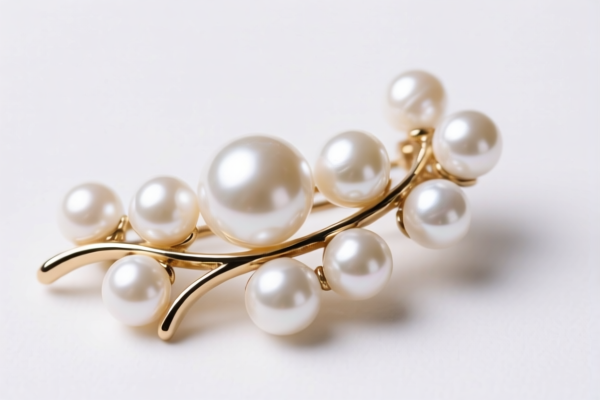
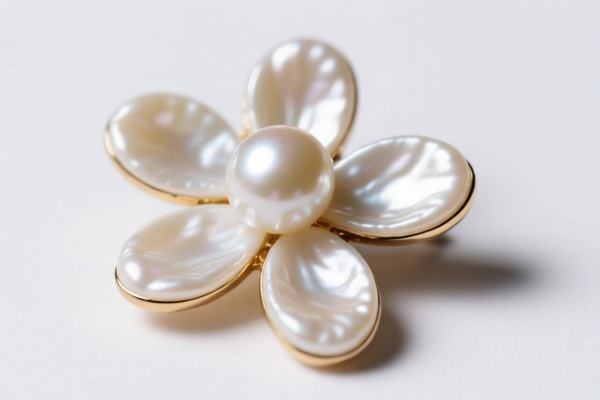
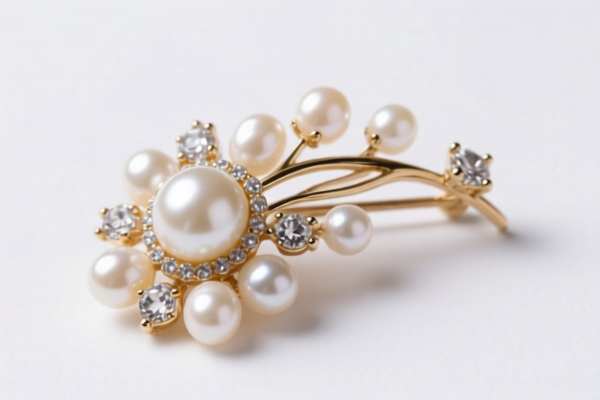
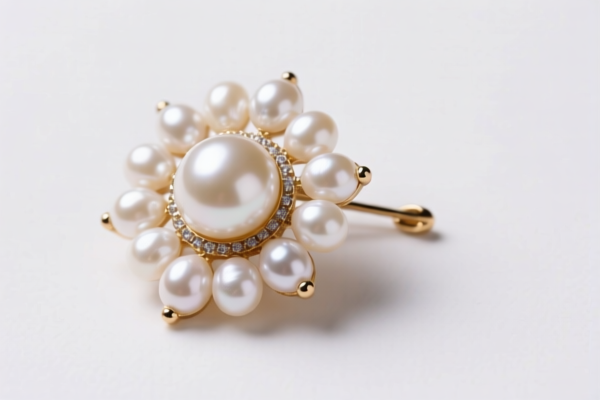
AI Analysis
🌟 Pearl Brooch (珍珠胸针)
🌐 HS Code Reference & Customs Clearance Guide | 2026 Latest Tariff Analysis | Professional Clearance Strategy
📌 I. Product Definition & Classification: Are You Sure You Know “Pearl Brooch”?
The Pearl Brooch is a decorative accessory worn on clothing, often serving as a symbol of elegance and status. In international trade, its classification is highly sensitive to the material nature of the pearls and the intended use. Because pearls can be categorized differently (natural organic gem, imitation material, or semi-precious stone), the HS Code and resulting tax rates vary significantly.
⚠️ Key Distinction Points:
- Real/Natural Pearls → Treated as Animal Product (Mother of Pearl) or Gemstone.
- Imitation/Fake Pearls → Treated as Imitation Jewelry or Plastic/Other Materials.
- Festive/Decorative Use → Treated as Seasonal/Celebratory Items (if applicable).
📦 II. HS Code Classification Details (2026 Latest Tariff Authority Comparison)
| HS Code | Product Description | Applicability Scenario | Material/Nature |
|---|---|---|---|
9601.90.80.00 |
Other worked animal material (excluding ivory, tortoise-shell, whalebone, etc.), including carvings and ornaments | Pearl brooches made from Mother of Pearl or genuine Animal-derived pearl materials, carved or shaped. | 🐚 Animal Product |
7116.20.50.00 |
Articles of natural or cultured pearls, or of semi-precious stones (excluding jewelry) | If pearls are classified as Semi-precious stones, the brooch falls under non-jewelry gem articles. | 💎 Semi-precious Stone |
7116.20.15.00 |
Other articles of natural or cultured pearls, or of other semi-precious stones (mineral attribute) | If pearls are viewed strictly as Minerals/Stones, this category covers other stone-based jewelry accessories. | 🪨 Mineral/Stone |
7117.90.90.00 |
Other imitation jewelry | If pearls are Artificial/Imitation (plastic, glass, resin), the brooch is classified as fake jewelry. | 🎭 Imitation/Fake |
9505.10.25.00 |
Christmas trees and other Christmas decorations | If the brooch is specifically designed for Festivals/Celebrations (e.g., holiday-themed decorative pins). | 🎄 Festive Decor |
🔍 Critical Reminder:
- Genuine Pearls must be clearly declared to avoid being misclassified as "Imitation Jewelry" (which may have different duty implications depending on origin, but often triggers higher base tariffs for fake goods in some contexts, or conversely, lower base tariffs but higher scrutiny).
- Imitation Pearls MUST be declared as such. Misdeclaring fake pearls as real gems can lead to severe penalties for fraud.
- Festive Classification is niche; unless the product is explicitly marketed for Christmas/Holidays, this code is rarely applicable.
💰 III. 2026 Latest Tariff Rate Breakdown (Including Surcharges & Policy Add-ons)
✅ Applicable Country: United States (US)
✅ Origin: China (CN)
✅ Effective Date: November 10, 2025 onwards (including subsequent imports)
🎯 1. 9601.90.80.00 — Worked Animal Material (Mother of Pearl/Genuine Pearls)
| Item | Content |
|---|---|
| Base Tariff | 3.7% (ad valorem) |
| Section 301 Surcharge | +7.5% |
| Section 301 (122 Clause) | +10% |
| Total Tariff Rate | 21.2% |
| Tax Calculation | CIF Value × 21.2% |
| De Minimis Exemption | ❌ Not Applicable |
| Legal Path | USITC:9601.90.80.00 → Section 301: 7.5% → Section 122: 10% |
📌 Explanation:
- This is the most common classification for natural pearl/mother-of-pearl brooches that are considered "worked animal materials."
- The 7.5% surcharge is part of the ongoing Section 301 tariffs.
- The 10% is the additional "122 Clause" tariff.
- Total 21.2% is moderate but significant for high-value jewelry.
🎯 2. 7116.20.50.00 — Articles of Semi-Precious Stones (Pearls as Gems)
| Item | Content |
|---|---|
| Base Tariff | 0.0% |
| Section 301 Surcharge | +7.5% |
| Section 301 (122 Clause) | +10% |
| Total Tariff Rate | 17.5% |
| Tax Calculation | CIF Value × 17.5% |
| De Minimis Exemption | ❌ Not Applicable |
| Legal Path | USITC:7116.20.50.00 → Section 301: 7.5% → Section 122: 10% |
📌 Note:
- If customs agrees to classify pearls as semi-precious stones rather than animal products, the base tariff drops to 0%.
- However, the 17.5% total rate still applies due to surcharges.
- This is a lower rate than the animal material classification (21.2%).
🎯 3. 7116.20.15.00 — Other Articles of Minerals/Stones
| Item | Content |
|---|---|
| Base Tariff | 6.5% |
| Section 301 Surcharge | +7.5% |
| Section 301 (122 Clause) | +10% |
| Total Tariff Rate | 24.0% |
| Tax Calculation | CIF Value × 24.0% |
| De Minimis Exemption | ❌ Not Applicable |
| Legal Path | USITC:7116.20.15.00 → Section 301: 7.5% → Section 122: 10% |
📌 Attention:
- This classification is higher than the other gem/stone codes.
- Use this only if the pearls are strictly viewed as mineral deposits and not cultured/natural gems.
- Risk: High tariff (24.0%) with no offsetting base rate benefit.
🎯 4. 7117.90.90.00 — Imitation Jewelry
| Item | Content |
|---|---|
| Base Tariff | 11.0% |
| Section 301 Surcharge | +7.5% |
| Section 301 (122 Clause) | +10% |
| Total Tariff Rate | 28.5% |
| Tax Calculation | CIF Value × 28.5% |
| De Minimis Exemption | ❌ Not Applicable |
| Legal Path | USITC:7117.90.90.00 → Section 301: 7.5% → Section 122: 10% |
📌 Warning:
- If your brooches are made of plastic, resin, or glass pearls, they MUST be classified here.
- The base tariff is high (11.0%), leading to a 28.5% total rate.
- Do NOT misdeclare as real pearls to avoid this; customs will inspect and penalize for undervaluation/fraud.
🎯 5. 9505.10.25.00 — Festive/Celebration Decorations
| Item | Content |
|---|---|
| Base Tariff | 0.0% |
| Section 301 Surcharge | 0.0% |
| Section 301 (122 Clause) | +10% |
| Total Tariff Rate | 10.0% |
| Tax Calculation | CIF Value × 10.0% |
| De Minimis Exemption | ❌ Not Applicable (Generally, Section 301 applies to festive items from China) |
| Legal Path | USITC:9505.10.25.00 → Section 122: 10% |
📌 Caution:
- This is the LOWEST RATE (10%), BUT it is highly restricted.
- Only applies if the item is explicitly a Christmas/Holiday decoration.
- A general fashion pearl brooch cannot use this code unless it is part of a holiday collection and clearly marked as such.
- Abuse of this code leads to reclassification and back taxes.
🛠️ IV. Customs Clearance Practical Advice (Battle-Tested Pitfall Avoidance Guide)
✅ 1. Document Checklist (Essential)
| Document | Required | Description |
|---|---|---|
| ✅ Product Specification Sheet | ✔️ | Material composition (Real Pearl vs. Plastic/Glass), dimensions, weight. |
| ✅ Photographs | ✔️ | Clear images of the brooch, back clasp, and any hallmarks. |
| ✅ Certificate of Authenticity | ✔️ | If claiming "Real Pearl," provide lab reports (e.g., GÜBELIN, GIA) to avoid being classified as imitation. |
| ✅ Commercial Invoice | ✔️ | Must accurately describe the item. Use "Pearl Brooch" or "Imitation Pearl Pin" as per HS code. |
| ✅ Packing List | ✔️ | Details on quantity, gross weight, net weight. |
| ✅ Origin Certificate | ✔️ | To prove Country of Origin (China) for Section 301 calculations. |
✅ 2. Declaration Tips (Key Mantra)
🔥 “Truth in Material, Precision in Code, Avoid Fraud, Save Money!”
| Scenario | Correct Declaration | Error to Avoid |
|---|---|---|
| Real Pearl Brooch | Declare as Natural/Cultured Pearl → 9601.90.80.00 or 7116.20.50.00 |
Declaring as "Fashion Jewelry" → May face audits; or declaring as "Imitation" → Wrong rate. |
| Plastic/Glass Pearl Brooch | Declare as Imitation Jewelry → 7117.90.90.00 |
Declaring as "Real Pearl" → Fraud, heavy penalties, seizure. |
| Holiday-Themed Brooch | Declare as Festive Decoration → 9505.10.25.00 (Only if clearly seasonal) |
Declaring as "Fashion Jewelry" when it’s a Christmas ornament → Risk of reclassification. |
✅ 3. Special Cases Handling
| Case | Handling Advice |
|---|---|
| Mixed Materials | If brooch has real pearls + metal setting → Still generally classified under pearl article, but disclose metal content if significant. |
| High-Value Luxury Items | For very expensive real pearl brooches, consider Advance Ruling to lock in 7116.20.50.00 (17.5%) vs 9601.90.80.00 (21.2%). |
| Gift Items | Even if labeled "Gift," customs values based on transaction value. Do not underinvoice. |
🌍 V. Global Market Comparison (2026 Latest)
| Country/Region | Recommended HS Code | Est. Tariff (China Origin) | Certification | Notes |
|---|---|---|---|---|
| 🇺🇸 USA | 9601.90.80.00 (Real) 7117.90.90.00 (Fake) |
21.2% (Real) 28.5% (Fake) |
None required for personal use, but CE/RoHS for plastic components | Section 301 + 122 Clause applies. |
| 🇨🇳 China | 9601.90.80.00 |
~6-13% | CCC (if electronic parts, unlikely for brooch) | Lower base tariffs, no Section 301. |
| 🇪🇺 EU | 7113.11.00 (Real Pearls) 7117.19.00 (Fake) |
0% (Real) 4.5% (Fake) |
CE (for any metal alloys if applicable) | No additional surcharges like US. |
| 🇬🇧 UK | Similar to EU | 0% (Real) 4.5% (Fake) |
UKCA | Post-Brexit rules apply. |
| 🇦🇺 Australia | 7113.11.00 |
5% (Real) | None | Competitive rates. |
📌 Conclusion:
- The US market is the most expensive due to Section 301 and 122 Clause tariffs.
- Real pearls (17.5%-21.2%) are cheaper than Imitation jewelry (28.5%) in the US due to base rate differences.
- EU/UK/Australia are more favorable for imitation jewelry but have strict material labeling laws.
📌 VI. Common Mistakes & Pitfall Guide (Blood & Tears Lessons)
❌ Mistake 1: Declaring Plastic Pearls as Real Pearls to avoid the 28.5% tariff.
👉 Consequence: Customs audit, seizure, fraud penalties, and potential blacklisting.
👉 Reality: Customs uses X-ray and visual inspection. Plastic has distinct density/refractive index.
❌ Mistake 2: Using 9505.10.25.00 (10% rate) for a regular fashion brooch.
👉 Consequence: Rejection, forced reclassification to 7117.90.90.00 (28.5%) + back taxes.
👉 Reality: This code is strictly for Christmas/Holiday decorations. A year-round brooch does not qualify.
❌ Mistake 3: Not providing Material Proof for real pearls.
👉 Consequence: Customs defaults to "Other" or "Imitation" classifications, leading to higher duties or delays.
👉 Reality: Always attach a Certificate of Authenticity or detailed material description.
✅ Correct Approach:
"Natural Pearl Brooch, Sterling Silver Setting, Model ABC, Certified Real Pearl" →
9601.90.80.00(21.2%)
"Imitation Pearl Brooch, Alloy Setting, Model XYZ, Plastic Pearls" →7117.90.90.00(28.5%)
🎯 VII. Conclusion: Precise Classification, Lower Costs, Smoother Clearance!
🎯 Remember the Mantra:
🔹 "Real Pearls: Animal or Stone? Choose Wisely!"
🔹 "Fake Pearls: Declare as Imitation, Avoid Fraud!"
🔹 "US Tariffs: 10-28.5%, Prepare Cash Flow!"
📌 Pro Tip:
If your brooches are not from China (e.g., Vietnam, Thailand), you may be eligible for IEEPA Exemptions or lower Section 301 rates.
Recommendation: Apply for an Advance Ruling from US Customs and Border Protection (CBP) if you are importing large volumes. This provides legal certainty on the HS Code and tariff rate.
📣 Immediate Action:
📞 Consult a Licensed Customs Broker
📄 Prepare Material Certificates
🚀 Ensure Clear Declaration, Avoid Penalties, Maximize Profit!
✨ Professional Clearance Starts with Accurate Classification!
💼 Every Percentage Point of Duty Matters!
Customer Reviews
About HS Code Classification
The Harmonized System (HS) is an internationally standardized nomenclature developed by the World Customs Organization (WCO) to classify traded products. Over 200 countries use the HS system as the basis for customs tariffs, trade statistics, and import/export regulations.
Each HS code follows a hierarchical structure:
- Chapter (2 digits) — Broad category of goods (e.g., Chapter 84: Machinery and Mechanical Appliances)
- Heading (4 digits) — More specific grouping within the chapter
- Subheading (6 digits) — Internationally standardized breakdown, used by all WCO member countries
- National subdivisions (8-10 digits) — Country-specific extensions for further classification, such as US HTSUS 10-digit codes
Correct HS code classification is essential for smooth customs clearance, accurate duty payment, and compliance with trade regulations. Misclassification can lead to customs delays, overpayment of duties, or penalties.
When importing from CN to US, the applicable tariff rates may include:
- Most-Favored-Nation (MFN) rate — The standard duty rate applied to WTO members
- General rate — Applied to countries without trade agreements
- Trade remedy duties — Additional tariffs such as Section 301 (anti-dumping), Section 232 (national security), or countervailing duties
The information provided on this page is for reference purposes only. For official classification, please consult with your local customs authority or a licensed customs broker.