Pearl Brooch Clip
CN → US| HS Code | Tariff Rate | Origin | Destination | Doc |
|---|---|---|---|---|
| 8308903000 | 35.0% | CN | US | Official Doc |
| 8308906000 | 38.9% | CN | US | Official Doc |
| 7117196000 | 17.5% | CN | US | Official Doc |
Product Images


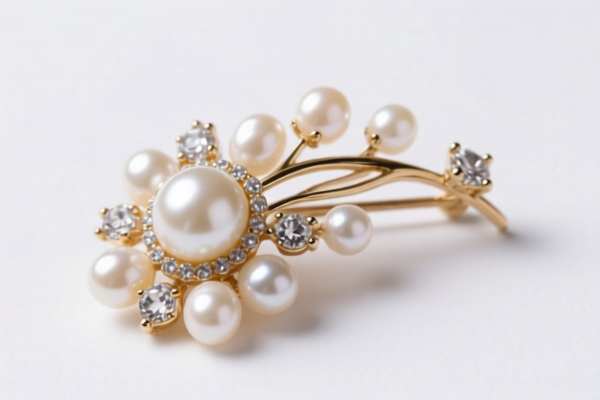
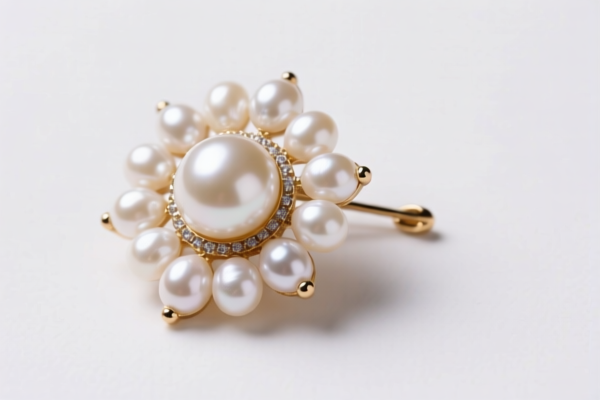
AI Analysis
👑 Pearl Brooch Clips (Jewelry & Accessories)
🌐 HS Code Reference & Customs Clearance Guide | 2024/2025 Latest Tariff Analysis | Professional Compliance Strategy
📌 I. Product Definition & Classification: What Exactly is a "Pearl Brooch Clip"?
Pearl Brooch Clips are decorative accessories primarily used in fashion and apparel. In international trade, their classification depends heavily on their material composition, primary function, and decorative nature. They are not classified simply as "jewelry" or "metal parts" but fall into specific sub-categories under Chapter 71 (Imitation Jewelry) or Chapter 83 (Miscellaneous Articles of Base Metal).
Key Distinction: * Imitation Jewelry (Chapter 71): If the item is primarily decorative, made of non-precious metals (base metal) with pearls (natural, cultured, or imitation), it often falls here. * Miscellaneous Metal Articles (Chapter 83): If the item is considered a "clasp" or "fastener" (like a buckle or clip) rather than pure jewelry, it may fall here.
⚠️ Critical Classification Point:
- If the pearl is the main visual feature and it is worn as a brooch → Likely HS 7117.
- If the metal clip/mechanism is the primary function (e.g., a heavy-duty clip with minor pearl decoration) → Likely HS 8308.
📦 II. HS Code Classification Details (Based on Provided Data)
| HS Code | Product Description | Primary Material | Key Feature |
|---|---|---|---|
7117.19.60.00 |
Pin Pearl Clip, Base Metal Material, Imitation Jewelry Accessory | Base Metal + Pearl | Classified as Imitation Jewelry; Pearl is the dominant aesthetic element. |
8308.90.30.00 |
Pearl Brooch Clip, Metal Fitting Class, Contains Pearl Decorative Components | Metal Fitting | Classified as Metal Fitting/Accessory; Pearl is a decorative add-on to a metal base. |
8308.90.60.00 |
Pearl Brooch Clip, Metal Base, Classified as Buckles & Buckle Clips | Metal Base | Classified as Clasp/Buckle; Emphasizes the mechanical fastening aspect. |
🔍 Important Note:
- HS 7117 is generally the most common for decorative brooches where the pearl is central.
- HS 8308 codes are used when the item is viewed more as a "hardware fitting" or "clasp" than a standalone piece of jewelry.
- The Total Tax Rate varies significantly based on which code is chosen (17.5% vs. 35-39%), making accurate classification critical for cost control.
💰 III. 2024/2025 Tariff Rate Breakdown (Including Additional Duties)
✅ Applicable Country: United States (US)
✅ Origin: China (CN)
✅ Effective Time: Current rates include Section 301 duties and Section 122 tariffs.
🎯 1. 7117.19.60.00 —— Pearl Brooch Clip (Imitation Jewelry)
Best for: Fashion accessories where pearls are the main attraction.
| Item | Content |
|---|---|
| Base Tariff | 0% (ad valorem) |
| Section 301 Additional Tariff | +7.5% (Standard rate for certain jewelry/accessories under current trade rules) |
| Section 122 Tariff | +10% (Specific provision for certain imports) |
| Total Tariff Rate | 17.5% |
| Tax Calculation | CIF Value × 17.5% |
| De Minimis Exemption | ❌ Not Eligible (Value often exceeds $800 threshold for certain categories, or excluded by specific list) |
| Legal Basis Path | USITC:7117.19.60.00 → Section 301: 7.5% → Section 122: 10% |
📌 Explanation:
- This is the lowest tax rate among the three options.
- It assumes the product is primarily "imitation jewelry."
- Strategy: Use this code if the design is clearly a decorative brooch/pin.
🎯 2. 8308.90.30.00 —— Pearl Brooch Clip (Metal Fitting Class)
Best for: Items where the metal fitting is structurally dominant.
| Item | Content |
|---|---|
| Base Tariff | 0% |
| Section 301 Additional Tariff | +25% (High penalty rate for base metal articles) |
| Section 122 Tariff | +10% |
| Total Tariff Rate | 35.0% |
| Tax Calculation | CIF Value × 35.0% |
| De Minimis Exemption | ❌ Not Eligible |
| Legal Basis Path | USITC:8308.90.30.00 → Section 301: 25% → Section 122: 10% |
📌 Explanation:
- Higher tax due to classification under "Miscellaneous Articles of Base Metal" which faces steeper Section 301 duties.
- Use only if customs authorities insist the item is a "fitting" rather than jewelry.
🎯 3. 8308.90.60.00 —— Pearl Brooch Clip (Buckles & Buckle Clips)
Best for: Items with a strong clasp/fastener mechanism.
| Item | Content |
|---|---|
| Base Tariff | 3.9% |
| Section 301 Additional Tariff | +25% |
| Section 122 Tariff | +10% |
| Total Tariff Rate | 38.9% |
| Tax Calculation | CIF Value × 38.9% |
| De Minimis Exemption | ❌ Not Eligible |
| Legal Basis Path | USITC:8308.90.60.00 → Section 301: 25% → Section 122: 10% |
📌 Explanation:
- Highest tax rate in this dataset.
- The base tariff is higher (3.9%) because it is classified as a "buckle/clasp."
- Avoid this code unless the product is essentially a metal clip with minor pearl decoration.
🛠️ IV. Customs Clearance Operational Advice (Practical Pitfall Guide)
✅ 1. Preparation Checklist (Essential Documents)
| Document | Mandatory? | Purpose |
|---|---|---|
| Product Photos | ✔️ | Show pearls, metal type, and clasp mechanism clearly. |
| Bill of Materials (BOM) | ✔️ | List materials: Metal alloy type, pearl type (natural/imitation), glue, etc. |
| Product Description | ✔️ | Be specific: "Women's fashion brooch, base metal with freshwater pearls." |
| Composition Statement | ✔️ | Declare if pearls are natural, cultured, or imitation (affects HS 7117 vs 7113). |
| Commercial Invoice | ✔️ | Must match HS Code description exactly. |
| Packing List | ✔️ | Weight and dimensions for freight calculation. |
✅ 2. Declaration Strategy (Key Tips)
🔥 "Describe the Art, Not Just the Parts!"
| Scenario | Recommended Declaration | Incorrect Declaration |
|---|---|---|
| Fashion Brooch | "Pearl Brooch Pin, Imitation Jewelry" | "Metal Clip" |
| Heavy Duty Clip | "Metal Clasp with Pearl Decor" | "Jewelry" |
| Mixed Use | Specify primary function | Vague term "Accessory" |
- Tip 1: If using HS 7117.19.60.00, emphasize "Imitation Jewelry" in the description.
- Tip 2: If using HS 8308, emphasize "Metal Fitting" or "Clasp" and downplay the decorative aspect.
- Tip 3: Never mix codes for the same SKU. Consistency is key to avoiding audits.
✅ 3. Special Considerations
| Situation | Advice |
|---|---|
| Pearl Type | If pearls are natural/cultured, they might fall under HS 7113 (higher base tariff). If imitation/glass/plastic, HS 7117 is correct and cheaper. |
| Value | Ensure CIF value includes freight and insurance. Incorrect valuation leads to penalties. |
| Origin | If shipped via a third country (e.g., Vietnam), ensure Form A or Certificate of Origin is valid to avoid US duties if eligible (though Section 301 often still applies to Chinese content). |
🌍 V. Global Market Comparison (2024/2025)
| Region | Recommended HS Code | Est. Duty Rate (China Origin) | Notes |
|---|---|---|---|
| 🇺🇸 USA | 7117.19.60.00 |
17.5% | Lowest rate. Use if possible. |
| 🇺🇸 USA | 8308.90.60.00 |
38.9% | Highest rate. Avoid if jewelry classification is valid. |
| 🇪🇺 EU | 7117.19.00 |
0% - 2.7% | Low duty, but VAT applies. No Section 301. |
| 🇨🇳 China | 7117.19.00 |
15% | Import duty for inbound goods. |
| 🇬🇧 UK | 7117.19.00 |
0% | Post-Brexit tariffs may vary. Check UK Trade Tariff. |
📌 Conclusion:
- USA is the most challenging market due to Section 301 and Section 122 tariffs.
- Choosing the correct HS Code can save 21.4% (38.9% - 17.5%) in duties.
- Always aim for HS 7117 if the product is primarily decorative.
📌 VI. Common Errors & Pitfalls (Lessons Learned)
❌ Error 1: Classifying a decorative brooch as a "metal clasp"
👉 Consequence: 38.9% tax instead of 17.5%. Overpayment!
❌ Error 2: Using "Jewelry" description for a heavy metal clip with small pearls
👉 Consequence: Customs may reclassify to HS 8308 and levy penalties.
❌ Error 3: Ignoring Section 122 Tariffs
👉 Consequence: Unexpected 10% additional tax if not accounted for in cost modeling.
❌ Error 4: Vague description "Brooch"
👉 Consequence: Customs delay for classification review. Always specify materials.
✅ Correct Practice:
"Women's Fashion Brooch, Base Metal Alloy with Imitation Pearls, Pin Back, Model PB-01"
→ Supports HS 7117.19.60.00
🎯 VII. Conclusion: Precision Classification, Maximum Profit!
🎯 Remember the Golden Rule:
🔹 "Jewelry = 17.5% | Metal Fitting = 35-39% | Vague = Delays & Fines!"
🔹 "Pearl is King, but Metal is Mechanism. Know which one Customs sees!"
📌 Pro Tip:
If you are importing large volumes, consider Advance Rulings from US Customs and Border Protection (CBP) to get a binding opinion on your HS Code. This prevents surprises at the border.
📣 Immediate Action:
📞 Consult your freight forwarder with product photos.
📝 Request a Pre-classification for your specific SKUs.
🚀 Secure the 17.5% rate, not the 38.9% penalty!
✨ Accurate Classification Starts Here!
💼 Every Percent Saved is Pure Profit!
Customer Reviews
About HS Code Classification
The Harmonized System (HS) is an internationally standardized nomenclature developed by the World Customs Organization (WCO) to classify traded products. Over 200 countries use the HS system as the basis for customs tariffs, trade statistics, and import/export regulations.
Each HS code follows a hierarchical structure:
- Chapter (2 digits) — Broad category of goods (e.g., Chapter 84: Machinery and Mechanical Appliances)
- Heading (4 digits) — More specific grouping within the chapter
- Subheading (6 digits) — Internationally standardized breakdown, used by all WCO member countries
- National subdivisions (8-10 digits) — Country-specific extensions for further classification, such as US HTSUS 10-digit codes
Correct HS code classification is essential for smooth customs clearance, accurate duty payment, and compliance with trade regulations. Misclassification can lead to customs delays, overpayment of duties, or penalties.
When importing from CN to US, the applicable tariff rates may include:
- Most-Favored-Nation (MFN) rate — The standard duty rate applied to WTO members
- General rate — Applied to countries without trade agreements
- Trade remedy duties — Additional tariffs such as Section 301 (anti-dumping), Section 232 (national security), or countervailing duties
The information provided on this page is for reference purposes only. For official classification, please consult with your local customs authority or a licensed customs broker.