Peeled Eucalyptus Construction Logs
CN → US| HS Code | Tariff Rate | Origin | Destination | Doc |
|---|---|---|---|---|
| 4407190093 | 35.0% | CN | US | Official Doc |
| 4401490090 | 35.0% | CN | US | Official Doc |
| 4401394290 | 35.0% | CN | US | Official Doc |
| 4407290296 | 35.0% | CN | US | Official Doc |
| 4403980095 | 35.0% | CN | US | Official Doc |
Product Images
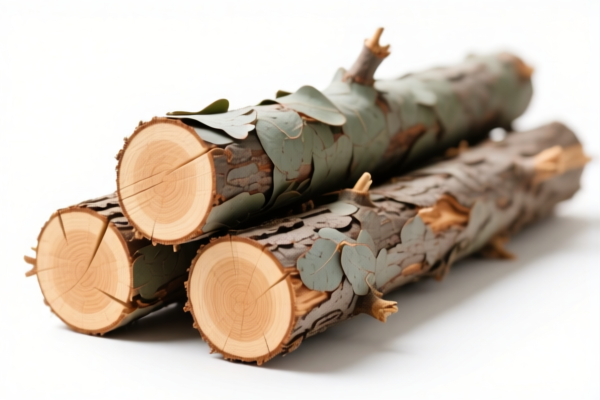
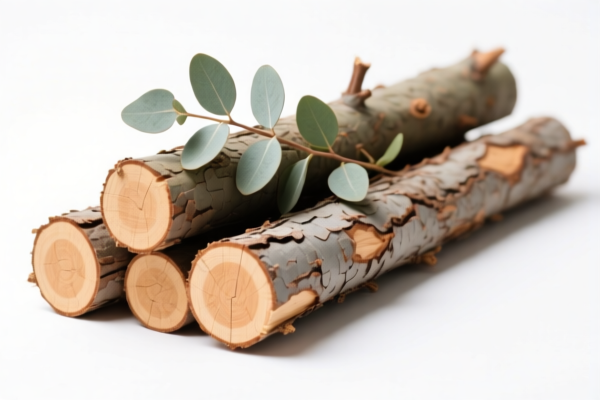
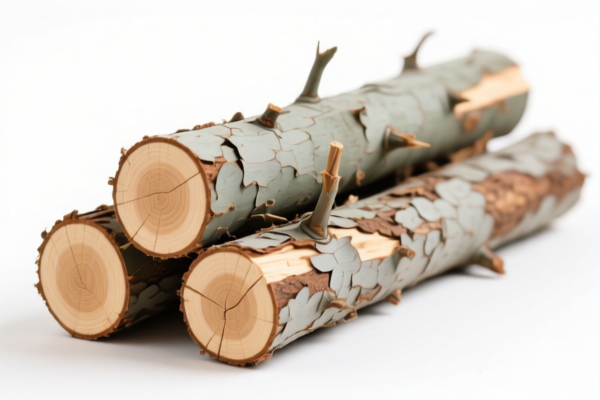
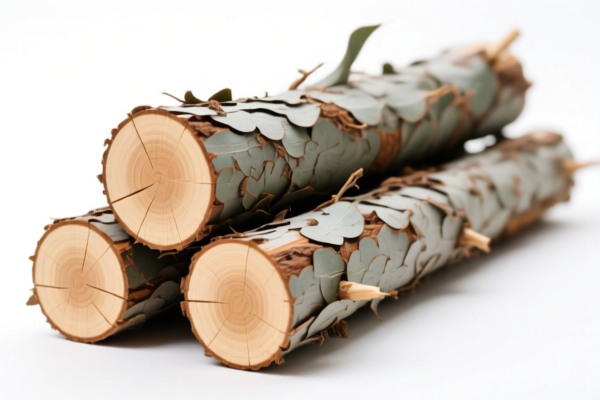
AI Analysis
🌲 Peeled Eucalyptus Construction Logs
🌐 HS Code Reference & Customs Clearance Guide | 2026 Latest Tariff Analysis | Professional Entry Strategy
📌 Part I: Product Definition & Classification: Do You Really Know "Peeled Eucalyptus Logs"?
Peeled Eucalyptus Logs refer to timber that has undergone debarking, primarily used for construction, fuel, or industrial processing. In international trade, the classification depends heavily on the physical state, processing depth, and intended use.
Eucalyptus is a fast-growing tropical/subtropical wood. When entering the US market, it faces significant tariff barriers due to its botanical origin and current trade policies.
⚠️ Key Distinction Points:
- Raw Logs/Blocks (Thick/Unprocessed): Treated as raw material → Chapter 44 (Wood and articles of wood).
- Fuel Grade: If chipped or explicitly sold as biomass → Chapter 44 (Section 4401).
- Waste/Chips: If debris or small fragments → Chapter 44 (Section 4401.39).
📦 Part II: HS Code Classification Details (2026 Latest Tariff Authority Comparison)
| HS Code | Product Description | Application Scenario | Processing State |
|---|---|---|---|
4407.19.00.93 |
Peeled Eucalyptus, >6mm thick, untreated | Structural beams, heavy timber construction | ✅ Solid wood, thick (>6mm) |
4401.49.00.90 |
Peeled Eucalyptus as wood fuel | Biomass energy, industrial boilers | ✅ Solid, for combustion |
4401.39.42.90 |
Peeled Eucalyptus chips or waste | Biomass powder, particle board feedstock | ❌ Fragmented/Waste |
4407.29.02.96 |
Peeled Eucalyptus, tropical wood (Catch-all) | General tropical timber processing | ✅ Solid, general trade |
4403.98.00.95 |
Peeled Eucalyptus, roughly sawn logs | Basic construction logs, rough lumber | ✅ Roughly sawn/processed |
🔍 Important Reminder:
- Eucalyptus is generally classified under Chapter 44 (Wood).
- The difference between4407(Sawn wood/thick) and4401(Fuel/Waste) is critical for valuation and tariff calculation.
- Note: Although Eucalyptus is often tropical, specific HTSUS sub-headings may vary by thickness and treatment status.
💰 Part III: 2026 Latest Tariff Rate Breakdown (Including Surtaxes & Policy Add-ons)
✅ Applicable Country: United States (US)
✅ Country of Origin: China (CN) [Assumed based on data context; adjust if origin differs]
✅ Effective Date: Current rates apply (Subject to IEEPA/Footnote adjustments)
🎯 1. 4407.19.00.93 —— Peeled Eucalyptus, Thick (>6mm), Untreated
| Item | Detail |
|---|---|
| Base Duty Rate | 0.0% (Ad valorem) |
| Section 301 Surtax | +25.0% (USITC Footnote) |
| IEEPA Add-on Duty | +10.0% (Section 172/122 Clause for Chinese Timber) |
| Total Duty Rate | 35.0% |
| Calculation Basis | CIF Value × 35% |
| De Minimis Eligibility | ❌ Not Eligible (Timber products generally excluded) |
| Legal Path | HTSUS:4407.19.00.93 → Footnote:301 → IEEPA:122 |
📌 Explanation:
- 0% Base Rate: Standard MFN rate for many sawn woods is low or zero.
- 25% Surtax: Applies to most Chinese wood products under Trade Act Section 301.
- 10% IEEPA: Specific add-on for certain Chinese raw material imports.
- Total: 35%. This is a high-cost entry.
🎯 2. 4401.49.00.90 —— Peeled Eucalyptus as Wood Fuel
| Item | Detail |
|---|---|
| Base Duty Rate | 0.0% |
| Section 301 Surtax | +25.0% |
| IEEPA Add-on Duty | +10.0% |
| Total Duty Rate | 35.0% |
| Calculation Basis | CIF Value × 35% |
| De Minimis Eligibility | ❌ Not Eligible |
| Legal Path | HTSUS:4401.49.00.90 → Footnote:301 → IEEPA:122 |
📌 Note:
- Even if intended as "fuel," if classified as solid wood under 4401, it attracts the same surtaxes as structural timber if from China.
- Misdeclaration as "biomass" without proper fuel specs may lead to audits.
🎯 3. 4401.39.42.90 —— Peeled Eucalyptus Chips or Waste
| Item | Detail |
|---|---|
| Base Duty Rate | 0.0% |
| Section 301 Surtax | +25.0% |
| IEEPA Add-on Duty | +10.0% |
| Total Duty Rate | 35.0% |
| Calculation Basis | CIF Value × 35% |
| De Minimis Eligibility | ❌ Not Eligible |
| Legal Path | HTSUS:4401.39.42.90 → Footnote:301 → IEEPA:122 |
📌 Warning:
- Wood waste/chips are often cheaper to ship but still subject to 35% total duty if from China.
- Ensure proper ISPM 15 compliance (fumigation/packaging) to avoid quarantine delays.
🎯 4. 4407.29.02.96 —— Peeled Eucalyptus, Tropical Wood (Catch-all)
| Item | Detail |
|---|---|
| Base Duty Rate | 0.0% |
| Section 301 Surtax | +25.0% |
| IEEPA Add-on Duty | +10.0% |
| Total Duty Rate | 35.0% |
| Calculation Basis | CIF Value × 35% |
| De Minimis Eligibility | ❌ Not Eligible |
| Legal Path | HTSUS:4407.29.02.96 → Footnote:301 → IEEPA:122 |
📌 Context:
- This code serves as a "residual" for tropical woods not specifically listed.
- Eucalyptus is often grouped here if it doesn't fit specific species codes.
- Same 35% burden.
🎯 5. 4403.98.00.95 —— Peeled Eucalyptus, Roughly Sawn Logs
| Item | Detail |
|---|---|
| Base Duty Rate | 0.0% |
| Section 301 Surtax | +25.0% |
| IEEPA Add-on Duty | +10.0% |
| Total Duty Rate | 35.0% |
| Calculation Basis | CIF Value × 35% |
| De Minimis Eligibility | ❌ Not Eligible |
| Legal Path | HTSUS:4403.98.00.95 → Footnote:301 → IEEPA:122 |
📌 Note:
- 4403 covers wood treated/preserved or roughly sawn.
- If the logs are "roughly sawn" (not planed), they fall here.
- Still 35% total duty.
🛠️ Part IV: Customs Clearance Operational Advice (Practical Pitfall Avoidance)
✅ 1. Required Documentation Checklist (No Exceptions)
| Document | Mandatory | Notes |
|---|---|---|
| ✅ Commercial Invoice | ✔️ | Must state "Peeled Eucalyptus," species, volume, HS Code. |
| ✅ Packing List | ✔️ | Detail weight, dimensions, number of logs. |
| ✅ ISPM 15 Certificate | ✔️ | Critical. Wood packaging/logs must be fumigated/stamped. |
| ✅ Phytosanitary Certificate | ✔️ | Issued by origin country's agriculture dept. |
| ✅ Bill of Lading/Air Waybill | ✔️ | Standard shipping doc. |
| ✅ Origin Certificate (CO) | ✔️ | If applicable for any preferential treatment (rare for US/China). |
✅ 2. Declaration Strategy (Key Mnemonics)
🔥 “Be Honest, Be Specific, Be Fumigated!”
| Scenario | Correct Declaration | Wrong Practice |
|---|---|---|
| Structural Logs | 4407.19.00.93 or 4403.98.00.95 |
Vague "Wood Logs" → 10-day delay |
| Fuel Chips | 4401.39.42.90 |
Calling it "Timber" → Misclassification penalty |
| Unpeeled Logs | 4403.10 (if pine) or 4403.99 |
Calling it "Peeled" → False declaration |
| Without ISPM 15 | N/A | Rejected/Destroyed at port |
✅ 3. Special Circumstances Handling
| Situation | Recommendation |
|---|---|
| Species Confusion | Provide botanical name (Eucalyptus spp.) and photos. |
| Treatment Status | Clearly state if "Untreated," "Kiln-dried," or "Chemically Treated." |
| Origin Verification | Ensure wood is not from endangered species (CITES check). Eucalyptus is generally not CITES-listed, but verify. |
| Tariff Engineering | Consider if processing in a third country (e.g., Vietnam) changes origin status and tariff rate. |
🌍 Part V: Global Market Comparison (2026 Latest)
| Country/Region | Recommended HS Code | Duty Rate (China Origin) | Certification Required | Notes |
|---|---|---|---|---|
| 🇺🇸 USA | 4407.19.00.93 / 4401.49.00.90 |
35% (Base 0% + 25% + 10%) | ISPM 15, Phytosanitary | High barrier. |
| 🇨🇳 China | 4407 / 4401 |
5% - 10% (Import Tariff) | None specific | Low entry barrier. |
| 🇪🇺 EU | 4407 |
0% - 2.7% | FLEGT (if applicable), ISPM 15 | Strict wood traceability. |
| 🇬🇧 UK | 4407 |
0% - 2.7% | UK Timber Regulation (UKTR) | Post-Brexit rules apply. |
📌 Conclusion:
- The US is the most expensive market due to Section 301 + IEEPA surtaxes.
- Total 35% is significant. Profit margins must account for this.
- Documentation (ISPM 15) is non-negotiable in the US and EU.
📌 Part VI: Common Errors & Pitfalls (Blood & Tears Lessons)
❌ Error 1: Declaring "Chips" as "Logs" to avoid inspection
👉 Consequence: Misclassification fraud. Penalties + Back Taxes.
❌ Error 2: Skipping ISPM 15 Stamping
👉 Consequence: Shipment held at port. Fumigation costs ~$500+ per container + demurrage.
❌ Error 3: Not specifying "Peeled" vs. "Unpeeled"
👉 Consequence: Customs may upgrade to a different HS code with higher duty or reject the entry.
❌ Error 4: Assuming "Eucalyptus" is exempt from surtaxes
👉 Consequence: Surprise 35% bill. Eucalyptus is not exempt.
✅ Correct Approach:
“Peeled Eucalyptus Timber Logs, Species: Eucalyptus spp., Origin: China, ISPM 15 Certified, For Construction Use, HTS: 4407.19.00.93”
🎯 Part VII: Conclusion: Precision Saves Money!
🎯 Remember the Mnemonic:
🔹 “Base is zero, surtax is thirty-five, ISPM is must, or else you’ll lose!”
🔹 “HS Code decides fate, 35% tax is steep, document right, or lose sleep!”
📌 Pro Tip:
If your eucalyptus is sourced from Australia, Indonesia, or Vietnam, tariffs may be lower or zero.
- Check Free Trade Agreements (FTAs).
- Consider supply chain diversification to avoid the 35% US surcharge.
📣 Immediate Action:
📞 Consult a licensed customs broker.
📄 Ensure ISPM 15 compliance before loading.
📋 Apply for Advance Rulings if unsure about classification.
🚀 Clear customs smoothly, protect profits, and export efficiently!
✨ Professional Clearance Starts with Accurate Classification!
💼 Every Percent of Duty Counts!
Customer Reviews
About HS Code Classification
The Harmonized System (HS) is an internationally standardized nomenclature developed by the World Customs Organization (WCO) to classify traded products. Over 200 countries use the HS system as the basis for customs tariffs, trade statistics, and import/export regulations.
Each HS code follows a hierarchical structure:
- Chapter (2 digits) — Broad category of goods (e.g., Chapter 84: Machinery and Mechanical Appliances)
- Heading (4 digits) — More specific grouping within the chapter
- Subheading (6 digits) — Internationally standardized breakdown, used by all WCO member countries
- National subdivisions (8-10 digits) — Country-specific extensions for further classification, such as US HTSUS 10-digit codes
Correct HS code classification is essential for smooth customs clearance, accurate duty payment, and compliance with trade regulations. Misclassification can lead to customs delays, overpayment of duties, or penalties.
When importing from CN to US, the applicable tariff rates may include:
- Most-Favored-Nation (MFN) rate — The standard duty rate applied to WTO members
- General rate — Applied to countries without trade agreements
- Trade remedy duties — Additional tariffs such as Section 301 (anti-dumping), Section 232 (national security), or countervailing duties
The information provided on this page is for reference purposes only. For official classification, please consult with your local customs authority or a licensed customs broker.