Peeled Eucalyptus Wood
CN → US| HS Code | Tariff Rate | Origin | Destination | Doc |
|---|---|---|---|---|
| 4407190093 | 35.0% | CN | US | Official Doc |
| 4401490090 | 35.0% | CN | US | Official Doc |
| 4401394290 | 35.0% | CN | US | Official Doc |
| 4407290296 | 35.0% | CN | US | Official Doc |
| 4403980095 | 35.0% | CN | US | Official Doc |
Product Images


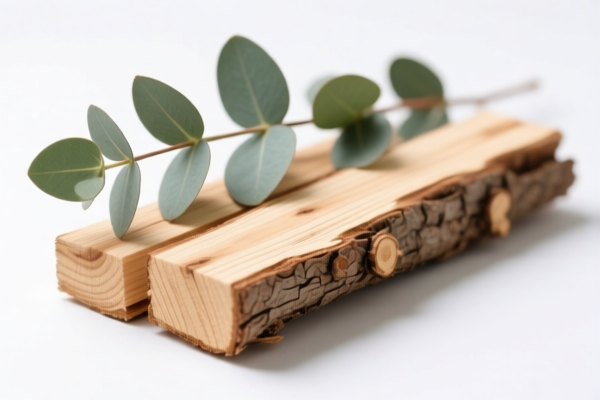
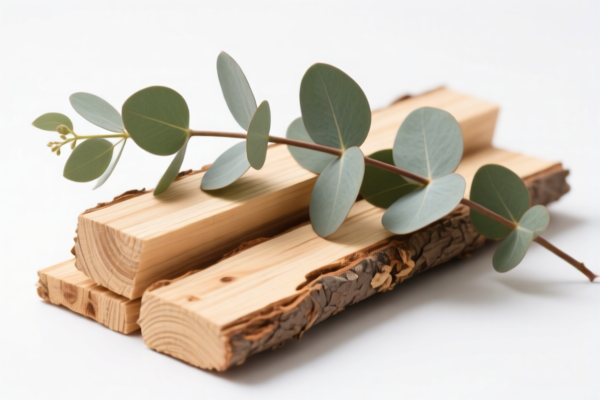
AI Analysis
🌳 Peeled Eucalyptus Wood (剥皮桉木)
🌐 HS Code Reference & Customs Clearance Guide | 2026 Latest Tariff Analysis | Professional Entry Strategy
📌 I. Product Definition and Classification: What Exactly Is "Peeled Eucalyptus Wood"?
Peeled Eucalyptus Wood refers to eucalyptus logs or timber that have had their bark removed. In international trade, this commodity is highly sensitive due to its dual-use nature: it can be raw material for plywood/paper or simple biomass fuel/waste. The classification depends strictly on the physical state and intended use.
⚠️ Key Distinction Point:
- Is it processed timber with specific dimensions? → Chapter 44 (Wood & Articles of Wood)
- Is it raw fuel or waste? → Chapter 44 (Fuel/Waste Categories)
- Note: All categories below attract the same total tax rate of 35% due to current trade policies, but the legal basis for the HS Code varies by product form.
📦 II. HS Code Classification Details (2026 Latest Tariff Authority)
| HS Code | Product Description | Application Scenario | Physical State |
|---|---|---|---|
4407.19.00.93 |
Peeled Eucalyptus, thickness >6mm, untreated wood | Plywood veneer substrate, construction timber | ✅ Sawn/Roughly processed |
4401.49.00.90 |
Peeled Eucalyptus, wood material as fuel | Biomass power plants, heating fuel | ✅ Raw/Chopped/Fuel grade |
4401.39.42.90 |
Peeled Eucalyptus, wood waste or chips | Paper pulp production, particle board raw material | ✅ Waste/Chips/Shavings |
4407.29.02.96 |
Peeled Eucalyptus, other tropical wood category (catch-all) | Miscellaneous tropical wood uses not elsewhere specified | ✅ Other/Tropical classification |
4403.98.00.95 |
Peeled Eucalyptus, rough-sawn processing state | General rough timber processing, intermediate goods | ✅ Roughly Sawn |
🔍 Critical Reminder:
- Thickness Matters: For4407.19.00.93, the wood must be >6mm thick. If thinner, it may fall under veneer sheets (different HS). - Treatment Status: All listed HS codes specify "Untreated". If preservatives are added, the classification may change entirely. - Fuel vs. Timber: Misclassifying fuel wood as timber (or vice versa) can lead to customs audits, even if the tax rate is identical in this specific dataset.
💰 III. 2026 Latest Tariff Rate Breakdown (Including Surcharges & Policy Add-ons)
✅ Applicable Country: United States (US)
✅ Origin: China (CN)
✅ Total Tax Rate: 35.0%
✅ Effective Date: Current enforcement period
🎯 1. Universal Tax Structure for All Listed Eucalyptus HS Codes
| Item | Content |
|---|---|
| Base Tariff | 0.0% (Ad Valorem) |
| Section 301 Surcharge | +25.0% (USITC Footnote related to China-origin goods) |
| Section 122 Tariff | +10.0% (Specific policy add-on for certain wood/forestry products) |
| Total Tax Rate | 35.0% |
| Tax Calculation | CIF Value × 35% |
| De Minimis Exemption | ❌ Not Eligible (deny_de_minimis) |
| Legal Basis Path | USITC:301 → Section122:Wood → Specific HS: 44xx.xx.xx.xx |
📌 Explanation:
- The Base Tariff is 0%, which is unusual for wood, but the Surcharges dominate the cost. - The 25% Section 301 Tariff is the standard penalty on Chinese manufactured goods. - The 10% Section 122 Tariff is a specific provision targeting certain agricultural and forestry products. - Combined Impact: Even with a 0% base, the effective entry duty is 35%. This is a high-cost category. Importers must factor this into landed cost calculations immediately.
🛠️ IV. Customs Clearance Operational Advice (Practical Pitfall Avoidance)
✅ 1. Document Checklist (Mandatory)
| Document | Required | Description |
|---|---|---|
| ✅ Commercial Invoice | ✔️ | Must clearly state "Peeled Eucalyptus Wood" and HS Code. |
| ✅ Packing List | ✔️ | Detail dimensions, weight, and number of bundles. |
| ✅ Wood Treatment Certificate | ✔️ | Prove no chemical treatment (to match HS descriptions). |
| ✅ Phytosanitary Certificate | ✔️ | Mandatory for all plant/wood products to prove freedom from pests. |
| ✅ Bill of Lading (B/L) | ✔️ | Clean on-board bill. |
| ✅ Proof of Origin (CO) | ✔️ | Essential for verifying China origin (triggers 35% tariff). |
| ✅ Product Photos | ✔️ | Show bark removal status and thickness (>6mm if claiming 4407.19.00.93). |
✅ 2. Declaration Tips (Key Mantra)
🔥 "State Clearly: Peeled, Untreated, Use-Specific. Don't Mix Categories!"
| Scenario | Correct Declaration | Incorrect Practice |
|---|---|---|
| Wood >6mm, for plywood | 4407.19.00.93 |
Calling it "Firewood" → Audit Risk |
| Wood chips/waste | 4401.39.42.90 |
Calling it "Planks" → Misdeclaration |
| Wood for fuel | 4401.49.00.90 |
Calling it "Construction Timber" → Duty Risk |
| Mixed batch | Separate Lines | Mixing in one line → Rejection/De Minimis Loss |
✅ 3. Special Case Handling
| Situation | Handling Advice |
|---|---|
| Thickness Borderline | If thickness is exactly 6mm or less, do not use 4407.19.00.93. Use appropriate veneer or waste codes. |
| Treated Wood | If fumigated or chemically treated, the "Untreated" assumption fails. May require different HS (e.g., 4403 variants). |
| Mixed Species | If eucalyptus is mixed with other tropical woods, 4407.29.02.96 might be used, but purity must be declared. |
| Value Misdeclaration | The 35% tariff is high. Under-invoicing triggers intense scrutiny. Declare accurate CIF value. |
🌍 V. Global Market Customs Comparison (2026 Latest)
| Country/Region | Recommended HS Code | Tariff Rate | Certification | Remarks |
|---|---|---|---|---|
| 🇺🇸 USA | 4407.19.00.93 (as example) |
35% | Phytosanitary + Fumigation | High tariff due to 301/122 |
| 🇨🇳 China | 4407.19.00.93 |
~10-15% | Phytosanitary | No 301/122 surcharges |
| 🇪🇺 EU | 4407.19.00.93 |
~0-6% | FLEGT License (if applicable) | Strict timber legality checks |
| 🇬🇧 UK | 4407.19.00.93 |
~0-6% | FLEGT License | Post-Brexit rules apply |
| 🇦🇺 Australia | 4407.19.00.93 |
~5% | Biosecurity Import Permit | Strict pest controls |
📌 Conclusion:
- USA is the most expensive market for peeled eucalyptus wood due to the 35% combined tariff. - China and EU are more competitive on duty, but have strict legality/phytosanitary requirements. - Importers to the US must calculate the 35% cost into the FOB price or negotiate DDP terms carefully.
📌 VI. Common Errors & Pitfall Guide (Lessons Learned)
❌ Error 1: Claiming "De Minimis" (Section 321) for Peeled Eucalyptus
👉 Consequence: Rejected. Wood products are explicitly excluded from de minimis exemptions under current US rules. All shipments, regardless of value, must clear formally.
❌ Error 2: Mixing "Untreated" with "Fumigated" in Description
👉 Consequence: Customs rejection. If wood is fumigated for export, it may not fit the "Untreated" definition of the listed HS codes. Check if a different HS code applies for treated wood.
❌ Error 3: Incorrect Thickness Declaration
👉 Consequence: If declared as >6mm but physical inspection shows ≤6mm, the HS code 4407.19.00.93 is invalid. This leads to reclassification and potential penalties.
❌ Error 4: Ignoring Section 122 Tariff
👉 Consequence: Budget failure. The 10% add-on is specific. If the system doesn't auto-apply it, manual adjustment is needed, or payment will be short.
✅ Correct Practice:
"Peeled Eucalyptus Logs, Untreated, Thickness >6mm, No Chemical Preservative, for Plywood Manufacturing, HS 4407.19.00.93"
🎯 VII. Conclusion: Professional Declaration, Cost Control!
🎯 Remember the Mantra:
🔹 "Peeled & Untreated, 35% is the Price. No De Minimis, Check Thickness Twice!"
🔹 "Section 301 + Section 122 = 35%. Plan Your Landing Cost!"
📌 Tips:
- If your eucalyptus wood is treated (e.g., with preservatives), the HS code may change, potentially affecting the "Untreated" description match.
- Always obtain a Phytosanitary Certificate before shipment to avoid quarantine delays at US ports.
- For large volumes, consider Advance Rulings from CBP to confirm the specific HS code application for your exact product specs.
📣 Immediate Action:
📞 Contact your customs broker with product photos and thickness measurements.
🚀 Calculate the 35% landed cost accurately. Do not let unexpected tariffs eat your margin!
✨ Professional Clearance Starts with Accurate Classification!
💼 Every percent of tariff counts in the wood trade!
Customer Reviews
About HS Code Classification
The Harmonized System (HS) is an internationally standardized nomenclature developed by the World Customs Organization (WCO) to classify traded products. Over 200 countries use the HS system as the basis for customs tariffs, trade statistics, and import/export regulations.
Each HS code follows a hierarchical structure:
- Chapter (2 digits) — Broad category of goods (e.g., Chapter 84: Machinery and Mechanical Appliances)
- Heading (4 digits) — More specific grouping within the chapter
- Subheading (6 digits) — Internationally standardized breakdown, used by all WCO member countries
- National subdivisions (8-10 digits) — Country-specific extensions for further classification, such as US HTSUS 10-digit codes
Correct HS code classification is essential for smooth customs clearance, accurate duty payment, and compliance with trade regulations. Misclassification can lead to customs delays, overpayment of duties, or penalties.
When importing from CN to US, the applicable tariff rates may include:
- Most-Favored-Nation (MFN) rate — The standard duty rate applied to WTO members
- General rate — Applied to countries without trade agreements
- Trade remedy duties — Additional tariffs such as Section 301 (anti-dumping), Section 232 (national security), or countervailing duties
The information provided on this page is for reference purposes only. For official classification, please consult with your local customs authority or a licensed customs broker.