Peeled White Poplar Pole
CN → US| HS Code | Tariff Rate | Origin | Destination | Doc |
|---|---|---|---|---|
| 4403970026 | 35.0% | CN | US | Official Doc |
| 4417008090 | 40.1% | CN | US | Official Doc |
| 4417008010 | 40.1% | CN | US | Official Doc |
| 4407970079 | 35.0% | CN | US | Official Doc |
| 4403120050 | 35.0% | CN | US | Official Doc |
Product Images
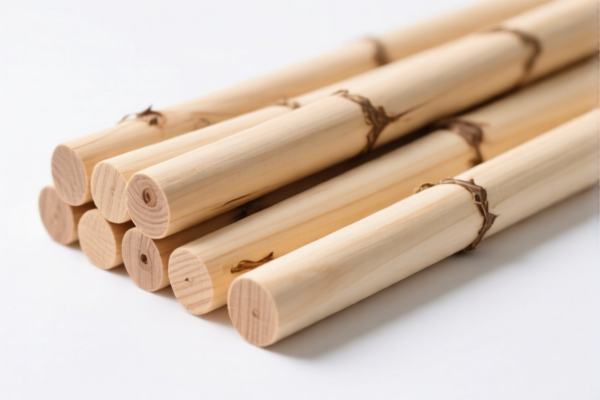
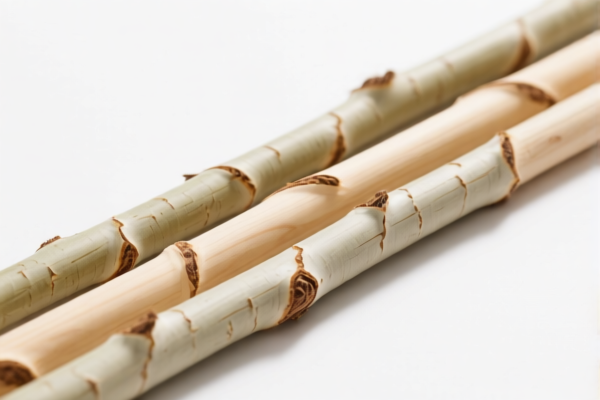
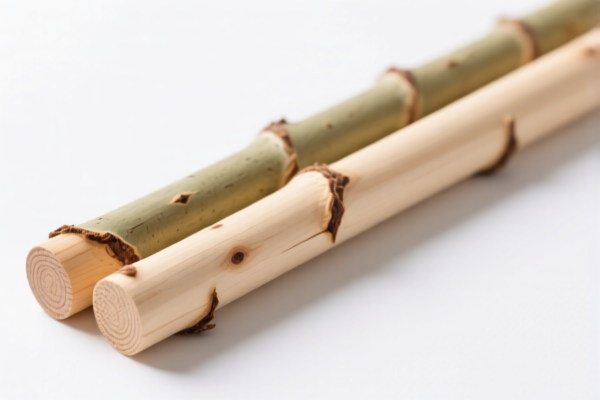

AI Analysis
🌲 Peeled White Poplar Pole (去皮白杨木杆)
🌐 HS Code Reference & Customs Clearance Guide | 2024/2025 Latest Tariff Analysis | Professional Clearance Strategy 📌 I. Product Definition: What is a "Peeled White Poplar Pole"?
A "Peeled White Poplar Pole" refers to wooden poles specifically made from White Poplar (Populus alba or related species) that have undergone peeling (removal of bark/sapwood) but retain their basic cylindrical or slightly tapered shape. They are not fully processed into construction timber (sawn) or furniture parts, but are in a semi-processed state.
In international trade, classification depends heavily on: 1. Material: Wood (specifically non-coniferous/poplar). 2. Processing: Peeled (bark removed) vs. Unpeeled vs. Sawn. 3. Form: Pole/Prefabricated Building Components (Piles, Posts, Poles) vs. Raw Logs.
⚠️ Key Classification Divergence: - If considered "Prefabricated Building Components" (Poles/Posts) → Likely 4403 or 4417. - If considered "Wood Prepared for Veneer or Plywood" → Likely 4407. - If considered "Other Wooden Articles" → Likely 4417.
📦 II. HS Code Classification Details (Based on Provided Data)
| HS Code | Product Description | Applicable Scenario | Processing State | Total Tax Rate |
|---|---|---|---|---|
4403.97.00.26 |
Peeled White Poplar Poles, classified under "Other wood... not coniferous... peeled or otherwise simply prepared..." | Poles/Posts made of White Poplar | Peeled, un-sawn | 35.0% |
4407.97.00.79 |
Peeled White Poplar Poles, classified as "Longitudinally sawn/chipped... thickness >6mm" | Wood for veneer/plywood preparation | Longitudinally processed | 35.0% |
4403.12.00.50 |
Peeled White Poplar Poles, classified as "Other non-coniferous wood" | General non-coniferous wood poles | Peeled | 35.0% |
4417.00.80.90 |
Peeled White Poplar Poles, classified as "Other wooden articles" | General wooden accessories/items | Processed article | 40.1% |
4417.00.80.10 |
Peeled White Poplar Poles, classified as "Other wooden processing products" | Specific wooden processed goods | Processed product | 40.1% |
🔍 Critical Distinction: - 35.0% Rate Group (
4403/4407): Applies if the product is viewed as raw/prepared wood (e.g., poles for construction support, piles, or veneer stock). Base duty is often 0%, but additional tariffs apply. - 40.1% Rate Group (4417): Applies if the product is viewed as a finished or semi-finished "article" (e.g., a specific tool handle, decorative item, or specialized component). Base duty is 5.1%, plus additional tariffs.
💰 III. 2024/2025 Latest Tariff Rate Breakdown (Including Additional Duties)
✅ Applicable Country: United States (US)
✅ Origin: China (CN)
✅ Effective Date: Includes current import cycles (Section 301 & IEEPA provisions)
🎯 1. The 35.0% Rate Group (4403.97.00.26, 4407.97.00.79, 4403.12.00.50)
| Item | Content |
|---|---|
| Base Tariff Rate | 0.0% (Ad Valorem) |
| Section 301 Additional Tariff | +25.0% (USITC Footnote 9903.88.01 or similar for Chapter 44) |
| IEEPA Additional Tariff (122 Clause) | +10.0% (Targeted Chinese goods) |
| Total Tax Rate | 35.0% |
| Tax Calculation | CIF Value × 35% |
| De Minimis Exemption | ❌ Not Applicable (Deny De Minimis) |
| Legal Basis Path | IEEPA:122 → Section301:9903.88.01 → USITC:4403/4407 |
📌 Explanation: - "Base 0%": Wood products in certain categories enjoy low base duties. - "+25% Section 301": Standard retaliatory tariff on many Chinese wood products. - "+10% IEEPA 122 Clause": Specific additional duty under the International Emergency Economic Powers Act targeting certain Chinese imports. - Total 35%: This is the effective landed duty cost impact before insurance/freight.
🎯 2. The 40.1% Rate Group (4417.00.80.90, 4417.00.80.10)
| Item | Content |
|---|---|
| Base Tariff Rate | 5.1% (Ad Valorem) |
| Section 301 Additional Tariff | +25.0% |
| IEEPA Additional Tariff (122 Clause) | +10.0% |
| Total Tax Rate | 40.1% |
| Tax Calculation | CIF Value × 40.1% |
| De Minimis Exemption | ❌ Not Applicable |
| Legal Basis Path | IEEPA:122 → Section301 → USITC:4417 |
📌 Explanation: - "Base 5.1%": "Other wooden articles" have a higher base duty than raw wood. - Same Additional Tariffs: The 25% + 10% penalties still apply. - Total 40.1%: Higher than the 35% group. Misclassification as a "finished article" increases cost by 5.1%.
🛠️ IV. Customs Clearance Practical Advice (Battle-Tested Guide)
✅ 1. Document Preparation Checklist (Non-Negotiable)
| Document | Must Provide | Description |
|---|---|---|
| ✅ Commercial Invoice | ✔️ | Must clearly state "Peeled White Poplar Pole", Material: Populus alba, HS Code. |
| ✅ Packing List | ✔️ | Detail quantity, weight, dimensions per pole. |
| ✅ Product Photos | ✔️ | Show cross-section (to prove wood type) and length/cylindrical shape. |
| ✅ Wood Treatment Certificate | ✔️ | Phytosanitary Certificate is MANDATORY to prevent pest quarantine rejection. |
| ✅ Processing Description | ✔️ | Confirm if it is "peeled only" or "sawn/chipped". Affects 4403 vs 4407 vs 4417. |
| ✅ Country of Origin | ✔️ | China (CN) triggers the 35%/40.1% rates. |
✅ 2. Classification Strategy (Key Mantra)
🔥 "Peeled Wood = 4403 (Lower Tax); Finished Article = 4417 (Higher Tax). Define as 'Pole/Post' not 'Article'!"
| Scenario | Correct Declaration | Wrong Declaration | Consequence |
|---|---|---|---|
| Poles for Construction/Fencing | 4403.97.00.26 (35%) |
4417.00.80.90 (40.1%) |
Overpay 5.1% + Potential Penalty |
| Wood for Veneer/Plywood | 4407.97.00.79 (35%) |
4403... (35%) |
Same rate, but different inspection focus. |
| Decorative Wooden Handles | 4417.00.80.90 (40.1%) |
4403... (35%) |
Underpayment + Fine if audited. |
| Unpeeled Logs | 4403.91/92 |
4403.97 (Peeled) |
Misclassification of processing state. |
✅ 3. Special Situations
| Situation | Handling Advice |
|---|---|
| Phytosanitary Risk | Ensure wood is heat-treated (HT) or fumigated. US Customs (CBP) and APHIS will seize untreated wood. |
| "Peeled" vs. "Sawn" | If the pole is cut to length and shaped, it might be considered "sawn" (4407) or "article" (4417). Stick to "peeled pole" for 4403 if possible. |
| Origin Fraud | Do not misdeclare as Vietnam or Thailand to avoid tariffs. IEEPA and Section 301 have strict origin tracing. |
🌍 V. Global Market Comparison (2024/2025)
| Country/Region | Recommended HS Code | Estimated Total Duty | Certification Requirements | Notes |
|---|---|---|---|---|
| 🇺🇸 USA | 4403.97.00.26 |
35.0% | Phytosanitary Certificate (HT) | Highest duty due to Section 301 + IEEPA. |
| 🇨🇳 China | 4403.97.00 |
~20-25% | Fumigation Certificate | Export duty may apply depending on policy. |
| 🇪🇺 EU | 4403.97.00 |
~20% + Anti-dumping? | EUTR (Eco-Regulation) Compliance | Strict legality verification required. |
| 🇬🇧 UK | 4403.97.00 |
~20% | UKCA + Phytosanitary | Post-Brexit rules apply. |
📌 Conclusion: - USA is the most costly market due to 35% total duty. - EU requires strict legality documentation (EUTR). - Tariff Avoidance Strategy: Cannot easily avoid Section 301 tariffs for Chinese wood products. Focus on accurate classification to avoid the higher 40.1% rate.
📌 VI. Common Mistakes & Pitfalls (Lessons Learned)
❌ Mistake 1: Declaring as "Lumber" or "Planks" instead of "Poles"
👉 Consequence: Misclassification → Potential audit or penalty.
❌ Mistake 2: Omitting "Peeled" in description
👉 Consequence: Customs may assume "Unpeeled" or "Sawn" → Incorrect duty calculation.
❌ Mistake 3: Using 4417 (40.1%) when 4403 (35%) is appropriate
👉 Consequence: Overpaying 5.1% unnecessarily on large volumes.
❌ Mistake 4: Lack of Phytosanitary Certificate
👉 Consequence: Seizure or Destruction of goods by APHIS (USA) or EU authorities.
✅ Correct Practice:
"Peeled White Poplar Poles, Length 3m, Diameter 10cm, Heat-Treated (HT), HS Code: 4403.97.00.26"
🎯 VII. Conclusion: Precision in Classification Saves Money!
🎯 Remember:
🔹 "Peeled Pole = 35%; Finished Article = 40.1%."
🔹 "5.1% Difference = Huge Savings on Bulk Shipments."
🔹 "Phytosanitary Cert = No Seizure."
📌 Pro Tip:
For shipments to the USA, ensure your supplier provides a Phytosanitary Certificate stating "Heat Treated (ISPM 15)" or "Fumigated". Without this, your goods will be rejected at port, causing massive delays and costs.
📣 Immediate Action:
📞 Confirm HS Code with your customs broker: 4403.97.00.26 (35%) vs 4417.00.80.90 (40.1%).
🚀 Save 5.1% on every dollar.
📄 Ensure Phytosanitary Compliance.
✨ Professional Clearance Starts with Accurate Classification!
💼 Your Bottom Line Depends on These Details!
Customer Reviews
About HS Code Classification
The Harmonized System (HS) is an internationally standardized nomenclature developed by the World Customs Organization (WCO) to classify traded products. Over 200 countries use the HS system as the basis for customs tariffs, trade statistics, and import/export regulations.
Each HS code follows a hierarchical structure:
- Chapter (2 digits) — Broad category of goods (e.g., Chapter 84: Machinery and Mechanical Appliances)
- Heading (4 digits) — More specific grouping within the chapter
- Subheading (6 digits) — Internationally standardized breakdown, used by all WCO member countries
- National subdivisions (8-10 digits) — Country-specific extensions for further classification, such as US HTSUS 10-digit codes
Correct HS code classification is essential for smooth customs clearance, accurate duty payment, and compliance with trade regulations. Misclassification can lead to customs delays, overpayment of duties, or penalties.
When importing from CN to US, the applicable tariff rates may include:
- Most-Favored-Nation (MFN) rate — The standard duty rate applied to WTO members
- General rate — Applied to countries without trade agreements
- Trade remedy duties — Additional tariffs such as Section 301 (anti-dumping), Section 232 (national security), or countervailing duties
The information provided on this page is for reference purposes only. For official classification, please consult with your local customs authority or a licensed customs broker.