Pen
CN → US| HS Code | Tariff Rate | Origin | Destination | Doc |
|---|---|---|---|---|
| 4421919820 | 38.3% | CN | US | Official Doc |
| 4421999820 | 38.3% | CN | US | Official Doc |
| 9609202000 | 17.5% | CN | US | Official Doc |
| 9609100000 | 0.0% | CN | US | Official Doc |
Product Images
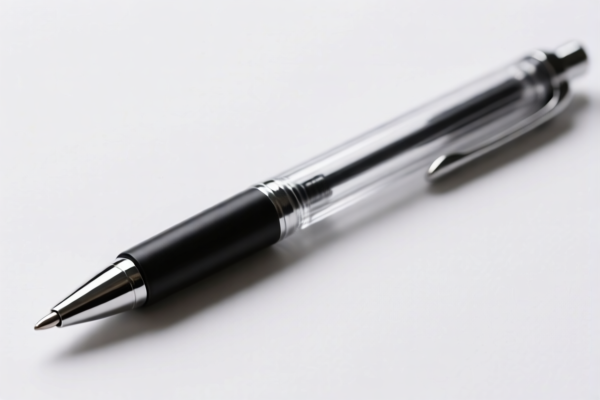
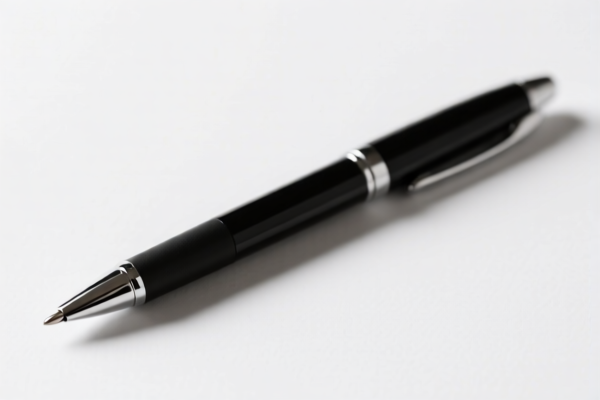
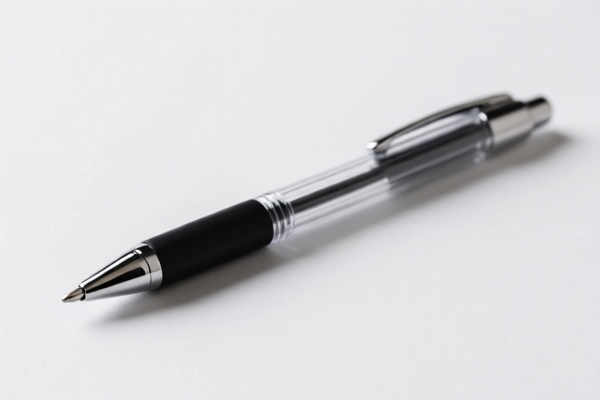
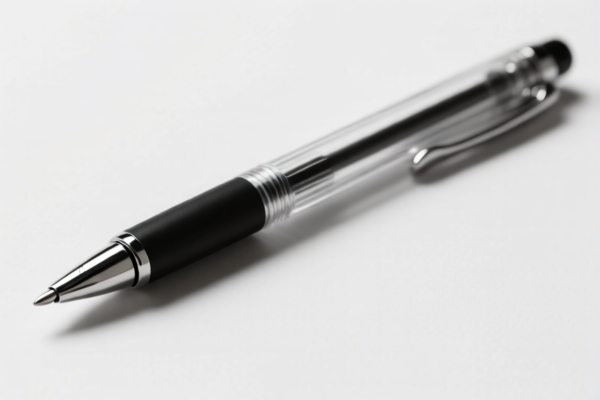
AI Analysis
🖊️ Pens (Writing Instruments)
🌐 HS Code Reference & Customs Clearance Guide | 2026 Latest Tariff Analysis | Professional Clearance Strategy
📌 I. Product Definition & Classification: Do You Really Understand "Pens"?
Pens, as essential stationery items, are strictly classified in international trade based on their material, component structure, and state of assembly. In the context of US import regulations (noted by the 122-Clause tariffs and Section 301 rates in the data), they are divided into three main categories:
1. Wood Pencil Blanks (未加工的木铅笔坯): Raw wooden shafts without graphite cores or ferrules; 2. Other Wood Products (Other Wooden Pencils): Wooden pencils that may be partially processed or classified under general wooden goods; 3. Graphite Cores & Finished Pencils: The actual writing instruments, including refills (cores) and fully assembled pencils.
⚠️ Key Distinction Point:
- If the item is merely a wooden shaft without a lead core → Classified under 4421.91.98.20 / 4421.99.98.20 (Wood Products); - If it is just the graphite core (the writing substance) → Classified under 9609.20.20.00; - If it is a finished pencil (core wrapped in a casing/sleeve) → Classified under 9609.10.00.00.
📦 II. HS Code Classification Details (2026 Latest Tariff Authoritative Comparison)
| HS Code | Product Description | Application Scenario | Status/Component |
|---|---|---|---|
4421.91.98.20 |
Pencil blanks, wooden, for writing (铅笔坯,木质,用于书写) | Raw wooden shafts before core insertion | ✅ No core |
4421.99.98.20 |
Other wood products, wooden pencils (其他木制品,木质铅笔) | General wooden pencil items | ✅ Wood-based |
9609.20.20.00 |
Lead cores, pencil core components (铅芯,铅笔核心组件) | Replacement graphite leads, refills | ✅ Core only |
9609.10.00.00 |
Pencils, core wrapped in a casing (铅笔,芯由护套包裹) | Finished pencils, ready for use | ✅ Assembled |
🔍 Key Reminder:
- All finished pencils (core + casing) must be classified under 9609.10.00.00, not as "wooden goods" or "cores"; - If importing raw wooden blanks, they fall under Chapter 44 (Wood), not Chapter 96 (Stationery), significantly affecting tariff rates.
💰 III. 2026 Latest Tariff Rate Details (Including Additional Taxes, Policy Add-ons)
✅ Applicable Country: USA (US)
✅ Origin: China (CN) (Implied by "122-Clause" and high rates)
✅ Effective Time: Current (Post-2025 policies)
🎯 1. 4421.91.98.20 & 4421.99.98.20 —— Pencil Blanks / Other Wood Products
| Item | Content |
|---|---|
| Base Tariff | 3.3% (Ad Valorem) |
| Additional Tariff (Section 301) | +25.0% |
| 122-Clause Tariff | +10.0% |
| Total Tax Rate | 38.3% |
| Tax Calculation | CIF Value × 38.3% |
| De Minimis Eligibility | ❌ No (High tax burden) |
| Legal Basis Path | Base:3.3% → Sec301:25% → 122-Clause:10% |
📌 Explanation:
- These HS codes fall under Chapter 44 (Wood). While the base rate is low, the Section 301 additional tariff (25%) and 122-Clause tariff (10%) apply due to the origin. - Total 38.3% is significantly high for raw materials. This highlights the cost penalty for importing unfinished wooden pencil parts from China to the US.
🎯 2. 9609.20.20.00 —— Lead Cores (Graphite Refills)
| Item | Content |
|---|---|
| Base Tariff | 0.0% |
| Additional Tariff (Section 301) | +7.5% |
| 122-Clause Tariff | +10.0% |
| Total Tax Rate | 17.5% |
| Tax Calculation | CIF Value × 17.5% |
| De Minimis Eligibility | ❌ No |
| Legal Basis Path | Base:0% → Sec301:7.5% → 122-Clause:10% |
📌 Note:
- Core components have a 0% base tariff, but still attract the 17.5% combined additional tax. - This is more tax-efficient than importing wooden blanks (38.3%), but still substantial.
🎯 3. 9609.10.00.00 —— Finished Pencils (Core Wrapped in Casing)
| Item | Content |
|---|---|
| Base Tariff | $0.14/gross (Specific Duty) + 4.3% (Ad Valorem) |
| Additional Tariff (Section 301) | +7.5% (Ad Valorem) |
| 122-Clause Tariff | +10.0% (Ad Valorem) |
| Total Tax Rate | $0.14/gross + 21.8% |
| Tax Calculation | $(0.14 \times Quantity) + (CIF Value \times 21.8\%)$ |
| De Minimis Eligibility | ❌ No |
| Legal Basis Path | Base:0.14/gross+4.3% → Sec301:7.5% → 122-Clause:10% |
📌 Note:
- This HS code has a mixed duty (Specific + Ad Valorem). - The total ad valorem rate is 21.8% (4.3% + 7.5% + 10%), plus the fixed $0.14 per gross unit. - This is the most common code for standard wooden pencils. The tax burden is lower than wood blanks but higher than non-wood stationery.
🛠️ IV. Customs Clearance Practical Advice (Battle-Tested Pitfall Avoidance Guide)
✅ 1. Preparation Checklist (All Required)
| Document | Must Provide | Description |
|---|---|---|
| ✅ Product Specification Sheet | ✔️ | Must specify material (Wood vs. Graphite), dimensions, and whether it’s a blank or finished product. |
| ✅ Product Photos (Clear Labels) | ✔️ | Show if the pencil has a core, ferrule, or eraser. Crucial for distinguishing HS 9609 vs. 4421. |
| ✅ Commercial Invoice | ✔️ | Clearly state "Pencil Blanks" OR "Finished Pencils" OR "Graphite Cores". Do not use generic terms like "Stationery". |
| ✅ Packing List | ✔️ | Include gross/net weight and unit count (Gross/Dozen). |
| ✅ Certificate of Origin (CO) | ✔️ | Essential for proving Chinese origin (triggers the 301 & 122 tariffs). |
✅ 2. Declaration Tips (Key Mantra)
🔥 "Specify Material! Distinguish State! Avoid Misclassification!"
| Scenario | Correct Declaration | Wrong Practice |
|---|---|---|
| Raw wooden shafts (no core) | 4421.91.98.20Desc: "Wooden Pencil Blanks" |
Misdeclare as "Pencils" → Wrong HS Code & Penalty |
| Finished wooden pencils | 9609.10.00.00Desc: "Pencils, Core Wrapped in Casing" |
Misdeclare as "Wood Products" → Higher Tax Risk |
| Graphite Refills | 9609.20.20.00Desc: "Graphite Cores for Pencils" |
Misdeclare as "Finished Pencils" → Overpayment of Specific Duty |
| Mixed Container | Split HS Codes | Single HS Code for mixed items → Customs Detention & Rejection |
✅ 3. Special Handling for High-Risk Scenarios
| Situation | Handling Advice |
|---|---|
| Mixed Shipment (Blanks + Finished) | Must Split Declaration. Do not lump all under one HS Code. Declare blanks under 4421 and finished pencils under 9609 separately. |
| Pencil Boxes/Stationery Sets | If pencils are packed with notebooks/pens, check if "Principal Character" applies. Often, pencils are declared separately if listed in the invoice. |
| Non-Wood Pencils (Plastic/Mechanical) | Not covered in this specific data snippet, but generally fall under different 9609 subheadings. Ensure material is accurately declared to avoid misclassification under 4421 (Wood). |
| De Minimis (Section 321) | ⚠️ Not Eligible: Due to the 122-Clause Tariff and high Section 301 rates, even small shipments from China to the US do not enjoy de minimis exemption. All shipments are subject to duties. |
🌍 V. Global Market Clearance Comparison (2026 Latest)
| Country/Region | Recommended HS Code | Tariff Burden (China Origin) | Notes |
|---|---|---|---|
| 🇺🇸 USA | 9609.10.00.00 |
$0.14/gross + 21.8% | High impact from 122-Clause & Sec 301 |
| 🇺🇸 USA (Blanks) | 4421.91.98.20 |
38.3% | Much higher than finished pencils |
| 🇨🇳 China | 9609.10.00.00 |
Low/Standard | Import duties are standard WTO rates |
| 🇪🇺 EU | 9609.10.00 |
Standard MFN | No 122-Clause/Sec 301 equivalents |
| 🇬🇧 UK | 9609.10.00 |
Standard MFN | Post-Brexit tariffs apply |
📌 Conclusion:
- USA imposes the highest effective tax burden on Chinese pencil products due to the combination of Section 301 (7.5%-25%) and 122-Clause (10%) tariffs. - Wooden blanks are the most heavily taxed (38.3%) compared to finished pencils (21.8% + specific duty). This suggests it may be more tax-efficient to process pencils overseas before importing into the US, if possible.
📌 VI. Common Errors & Pitfall Guide (Blood & Tears Lessons)
❌ Mistake 1: Declaring "Pencil Blanks" as "Finished Pencils" to avoid the 38.3% tax on wood products.
👉 Consequence: Customs inspection will reveal the lack of cores. Penalty + Back Duties + Potential Fraud Charges.
❌ Mistake 2: Declaring "Finished Pencils" as "Other Wood Products" to avoid the $0.14/gross specific duty.
👉 Consequence: Misclassification. While the ad valorem rate might seem similar, the specific duty is a legal requirement for this HS code. Rejection by CBP.
❌ Mistake 3: Ignoring the 122-Clause Tariff.
👉 Consequence: The 10% tariff is mandatory for many Chinese goods. Under-declaring value or HS code to evade this leads to seizure of goods.
❌ Mistake 4: Assuming De Minimis ($800) applies.
👉 Consequence: Due to the 122-Clause and Section 301 rates, small shipments from China are not exempt. Expect duties on every package.
✅ Correct Practice:
"Finished Wooden Pencils, 12/Bx, Lead Type HB, Cased in Wood, Model XYZ, Origin: China"
HS Code:9609.10.00.00
Declaration Value: Accurate CIF Value
🎯 VII. Conclusion: Precision in Classification, Savings in Clearance!
🎯 Remember the Mantra:
🔹 "Blanks are Wood (38.3%), Cores are Parts (17.5%), Pencils are Instruments (21.8%+$0.14)."
🔹 "122-Clause is 10%, Sec 301 is 7.5-25%. No De Minimis for China."
📌 Pro Tip:
If you are importing large volumes, consider:
1. Pre-classification Ruling: Request an official ruling from CBP for your specific product structure.
2. Supply Chain Optimization: If margins are thin, evaluate if manufacturing finished pencils in a non-Chinese origin country (e.g., Vietnam, Indonesia) can bypass the Section 301 and 122-Clause tariffs entirely (0% additional tariffs).
3. Accurate Description: Always include "Pencil Blanks" or "Finished Pencils" in the commercial invoice to prevent customs delays.
📣 Immediate Action:
📞 Contact a Customs Broker + Provide Product Photos + Apply for Advance Ruling
🚀 Ensure Smooth Customs Clearance, Minimize Tax Liability, Maximize Profit!
✨ Professional Clearance Starts with Accurate Classification!
💼 Every Cent of Tax is Worth Calculating Precisely!
Customer Reviews
About HS Code Classification
The Harmonized System (HS) is an internationally standardized nomenclature developed by the World Customs Organization (WCO) to classify traded products. Over 200 countries use the HS system as the basis for customs tariffs, trade statistics, and import/export regulations.
Each HS code follows a hierarchical structure:
- Chapter (2 digits) — Broad category of goods (e.g., Chapter 84: Machinery and Mechanical Appliances)
- Heading (4 digits) — More specific grouping within the chapter
- Subheading (6 digits) — Internationally standardized breakdown, used by all WCO member countries
- National subdivisions (8-10 digits) — Country-specific extensions for further classification, such as US HTSUS 10-digit codes
Correct HS code classification is essential for smooth customs clearance, accurate duty payment, and compliance with trade regulations. Misclassification can lead to customs delays, overpayment of duties, or penalties.
When importing from CN to US, the applicable tariff rates may include:
- Most-Favored-Nation (MFN) rate — The standard duty rate applied to WTO members
- General rate — Applied to countries without trade agreements
- Trade remedy duties — Additional tariffs such as Section 301 (anti-dumping), Section 232 (national security), or countervailing duties
The information provided on this page is for reference purposes only. For official classification, please consult with your local customs authority or a licensed customs broker.