Pen Case
CN → US| HS Code | Tariff Rate | Origin | Destination | Doc |
|---|---|---|---|---|
| 4205008000 | 35.0% | CN | US | Official Doc |
| 3926100000 | 15.3% | CN | US | Official Doc |
| 4202329300 | 52.6% | CN | US | Official Doc |
| 3926903500 | 16.5% | CN | US | Official Doc |
| 4202322000 | 55.0% | CN | US | Official Doc |
Product Images


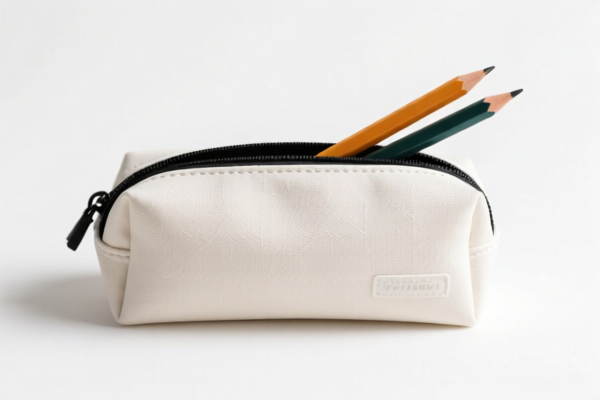
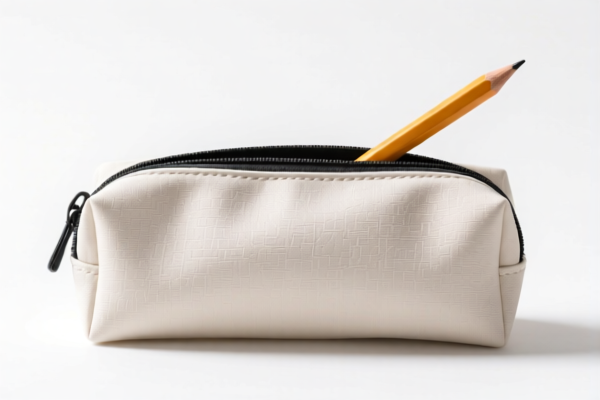
AI Analysis
✏️ Pen Case: The Ultimate Global Customs & Tariff Guide (2026 Edition)
🌐 HS Code Decoding & Duty Strategy | 2026 Tariff Deep Dive | Smart Import Solutions
📌 Section 1: What is a "Pen Case"? You Might Be Wrong About Its Classification!
A Pen Case is a portable container designed to hold writing instruments, rulers, erasers, and other stationery. While it seems simple, its material composition is the single most critical factor determining its HS Code and tax liability in the US market.
The Material Matrix: * Leather/Synthetic Leather → Chapter 42 (Leather Goods) * Plastic/Vinyl → Chapter 39 (Plastics) * Textile/Fabric → Chapter 42 (Apparel & Travel Goods)
⚠️ Critical Alert:
- Leather cases face the highest duties (35%) due to Section 301 & Section 122.
- Plastic cases vary wildly depending on the specific plastic type (15.3% vs 16.5%).
- Textile cases are the most expensive (52.6% – 55.0%) due to "Section 122" + Section 301 penalties.
One wrong material claim can double your tax bill!
📦 Section 2: HS Code Classification Matrix (2026 Data)
| HS Code | Material Composition | Summary Description | Total Duty Rate | Tax Breakdown |
|---|---|---|---|---|
| 4205.00.80.00 | 🧵 Leather / Synthetic Leather | Other leather or synthetic leather products. | 35.0% | Base: 0% + 301: 25% + Sec 122: 10% |
| 3926.10.00.00 | 🧪 Plastic / Office Supplies | Office/school supplies & plastic articles. | 15.3% | Base: 5.3% + Sec 301: 0% + Sec 122: 10% |
| 4202.32.93.00 | 🧶 Textile / Artificial Fiber | Pen cases with textile outer surface (Art. Fiber). | 52.6% | Base: 17.6% + 301: 25% + Sec 122: 10% |
| 3926.90.35.00 | 💧 Other Plastic / Synthetic | Other plastic articles (non-textile, non-office spec). | 16.5% | Base: 6.5% + Sec 301: 0% + Sec 122: 10% |
| 4202.32.20.00 | 📦 Mixed (Plastic/Textile/Leather) | Carrying cases with plastic sheet or textile surface. | 55.0% | Base: 20.0% + 301: 25% + Sec 122: 10% |
🔍 Key Distinction:
- Leather = 35% (High risk category).
- Plastic (Office) = 15.3% (Lowest risk category).
- Textile = 52.6% – 55.0% (The "Tax Trap" zone).
Note: "Section 122" (10%) is a punitive tariff applied specifically to Chinese goods in these categories.
💰 Section 3: 2026 Tariff Rate Deep Dive (US Market)
✅ Country of Origin: China (CN)
✅ Destination: United States (US)
✅ Applicable Laws: Section 301 (USITC) + Section 122 (Trade Action)
🎯 Scenario A: Leather Pen Cases (4205.00.80.00)
| Item | Value |
|---|---|
| Base Tariff | 0.0% |
| Section 301 Duty | +25.0% |
| Section 122 Duty | +10.0% |
| Total Duty | 35.0% |
| De Minimis Exemption | ❌ NO (Subject to Section 301) |
| Legal Basis | 301: 4205.00.80.00 + 122: 4205.00.80.00 |
📌 Analysis: Even though the base tariff is 0%, the 35% total makes leather pen cases extremely expensive to import. This is because leather goods are targeted for heavy protectionism.
🎯 Scenario B: Textile Pen Cases (4202.32.93.00 & 4202.32.20.00)
| Item | Value |
|---|---|
| Base Tariff | 17.6% – 20.0% (Varies by exact fabric) |
| Section 301 Duty | +25.0% |
| Section 122 Duty | +10.0% |
| Total Duty | 52.6% – 55.0% |
| De Minimis Exemption | ❌ NO |
| Legal Basis | 301: 4202.32.xxxxx + 122: 4202.32.xxxxx |
📌 Analysis: This is the most dangerous category. Textile pen cases face a combined duty of over 50%. The "Base Tariff" is already high, and the 25%+10% add-ons push it to the roof. Do not import textile pen cases from China without a massive price adjustment.
🎯 Scenario C: Plastic Pen Cases (3926.10.00.00 & 3926.90.35.00)
| Item | Value |
|---|---|
| Base Tariff | 5.3% – 6.5% |
| Section 301 Duty | 0.0% (Exempt for specific office items) |
| Section 122 Duty | +10.0% |
| Total Duty | 15.3% – 16.5% |
| De Minimis Exemption | ✅ YES (For Section 301, but 122 applies) |
| Legal Basis | 301: 3926.10.00.00 (Exempt) + 122: 3926.10.00.00 |
📌 Analysis: Plastic office/school pen cases are the "Goldilocks" zone. They avoid the 25% Section 301 penalty (if classified correctly as office supplies) but still face the 10% Section 122 tariff. Total cost is under 17%.
🛠️ Section 4: Customs Clearance Strategy (Action Plan)
✅ 1. Documentation Checklist (Must-Have)
| Document | Requirement | Why? |
|---|---|---|
| Material Composition Report | ✔️ Critical | Must explicitly state % of Leather vs. Plastic vs. Textile. |
| Product Photography | ✔️ Required | Show exterior texture (Leather grain, Plastic shine, Fabric weave). |
| Function Statement | ✔️ Required | "Used for carrying pens/pencils" vs. "General Storage". |
| Bill of Materials (BOM) | ✔️ Recommended | Proves if it is a "Pen Case" or "General Pouch". |
| Commercial Invoice | ✔️ Mandatory | Must use precise HS Code, not generic "Stationery". |
✅ 2. Declaration Tips (The "Golden Rules")
🔥 Rule #1: "Material is King"
If your product is 80% Fabric + 20% Plastic, it is likely a Textile case (55% duty).
If you claim it's "Plastic", you will be audited and fined.🔥 Rule #2: "Office Supplies Exception"
Only Plastic cases can claim the 0% Section 301 rate. You must declare them as "Office Supplies" or "School Supplies" (HS 3926.10).🔥 Rule #3: "The 122 Trap"
ALL HS Codes listed here are subject to Section 122 (10%). No exemption. Factor this into your landed cost immediately.
✅ 3. Optimization Strategy
| Strategy | Action | Potential Savings |
|---|---|---|
| Material Switch | Change Fabric to Hard Plastic | Save ~38% duty (55% → 16.5%) |
| Origin Shift | Move production to Vietnam/Mexico | Avoid Section 301 & 122 (if applicable) |
| Classification Audit | Prove it is "Office Supply" not "General Pouch" | Save 25% (Section 301 exemption) |
🌍 Section 5: Market Comparison (2026)
| Region | Recommended HS Code | Est. Total Duty | Notes |
|---|---|---|---|
| 🇺🇸 USA | 3926.10.00.00 |
15.3% | Best option: Plastic Office Supply. Avoid Textile. |
| 🇪🇺 EU | 4202.32.00 |
~10-12% | No Section 301, but has VAT (20%). |
| 🇨🇳 China | 4205.00.80.00 |
5-10% | Domestic trade rates differ; export rates are high. |
🚨 Section 6: Common Pitfalls & How to Avoid Them
❌ Mistake 1: Calling all pen cases "Stationery"
👉 Result: US Customs may classify textile cases as 4202.32.93.00 (55% duty) instead of a lower rate.
✅ Fix: Be specific about material in the invoice description.
❌ Mistake 2: Ignoring the "Section 122" 10%
👉 Result: Budgeting for 25% tax but not 10% more → Profit loss.
✅ Fix: Always add 10% to your landed cost calculation for Chinese goods in these categories.
❌ Mistake 3: Assuming Leather is exempt
👉 Result: Leather cases (4205.00.80.00) get 35% duty (0% base + 25% 301 + 10% 122).
✅ Fix: Switch to plastic or fabric if cost-sensitive; avoid leather for US export.
📌 Final Verdict: The "Pen Case" Profit Calculator
🎯 Golden Rule:
"Plastic Office = 15.3% (Winner)"
"Leather = 35.0% (Mediocre)"
"Textile = 55.0% (Loser)"💡 Pro Tip:
If you are importing from China, avoid Textile and Leather pen cases unless your margin is >60%.
Focus on Plastic Office Supplies (3926.10.00.00) to maximize profit and minimize customs friction.
✨ Ready to Ship?
📞 Contact: Get a pre-clearance ruling for your specific material mix.
🚀 Action: Update your invoice descriptions to match the HS Code material requirements.
💼 Goal: Clear your pen cases through US Customs in <48 hours with 15% tax.
Disclaimer: This guide is based on 2026 tariff data provided. Always verify with a licensed customs broker before shipment.
Customer Reviews
About HS Code Classification
The Harmonized System (HS) is an internationally standardized nomenclature developed by the World Customs Organization (WCO) to classify traded products. Over 200 countries use the HS system as the basis for customs tariffs, trade statistics, and import/export regulations.
Each HS code follows a hierarchical structure:
- Chapter (2 digits) — Broad category of goods (e.g., Chapter 84: Machinery and Mechanical Appliances)
- Heading (4 digits) — More specific grouping within the chapter
- Subheading (6 digits) — Internationally standardized breakdown, used by all WCO member countries
- National subdivisions (8-10 digits) — Country-specific extensions for further classification, such as US HTSUS 10-digit codes
Correct HS code classification is essential for smooth customs clearance, accurate duty payment, and compliance with trade regulations. Misclassification can lead to customs delays, overpayment of duties, or penalties.
When importing from CN to US, the applicable tariff rates may include:
- Most-Favored-Nation (MFN) rate — The standard duty rate applied to WTO members
- General rate — Applied to countries without trade agreements
- Trade remedy duties — Additional tariffs such as Section 301 (anti-dumping), Section 232 (national security), or countervailing duties
The information provided on this page is for reference purposes only. For official classification, please consult with your local customs authority or a licensed customs broker.