Pen Curtain
CN → US| HS Code | Tariff Rate | Origin | Destination | Doc |
|---|---|---|---|---|
| 6303922050 | 28.8% | CN | US | Official Doc |
| 6303922010 | 21.3% | CN | US | Official Doc |
Product Images
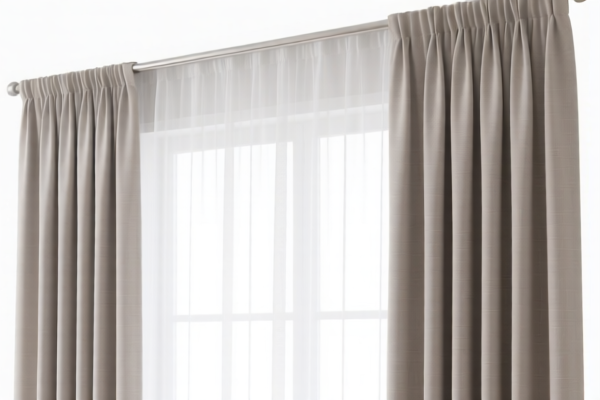
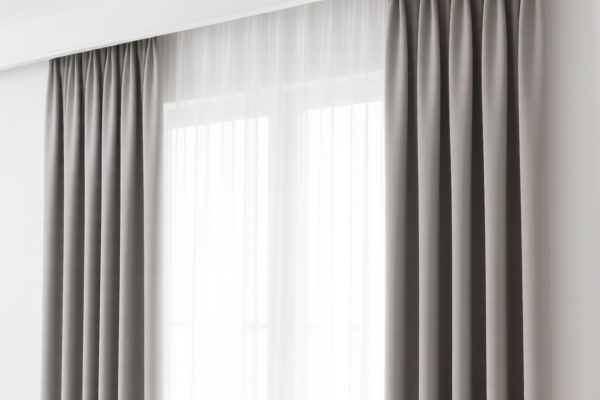
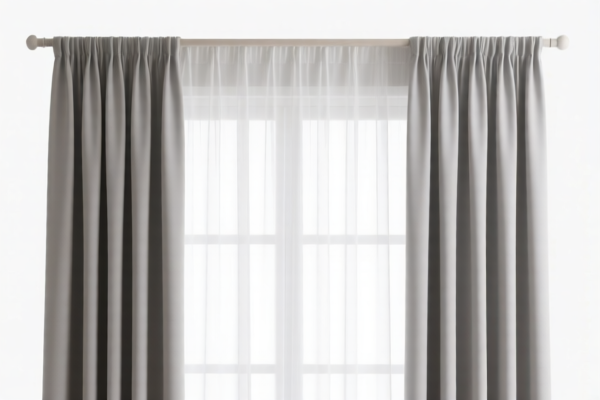
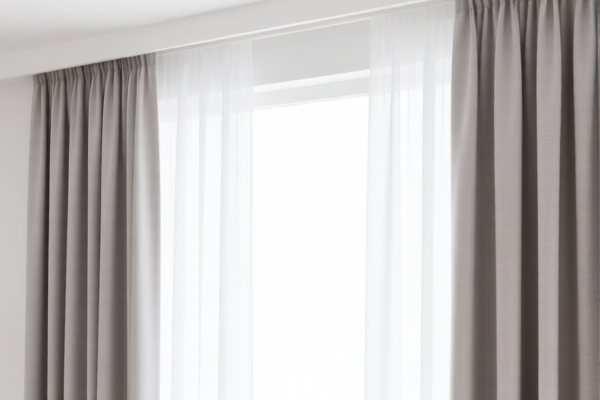
AI Analysis
🪟 Pen Curtain (Curtains, Drapes & Valances)
🌐 HS Code Reference & Customs Clearance Guide | 2026 Latest Tariff Analysis | Professional-Level Strategy
📌 I. Product Definition & Classification: Do You Really Know "Pen Curtain"?
In the context of international trade, "Pen Curtain" is likely a typo or shorthand for "Panel Curtain" (also known as Panel Track Drapes) or simply "Curtains/Draperies". These are textile products used for window covering, light blocking, or decorative interior design.
In the Harmonized System (HS), these goods fall under Chapter 63: Other made-up textile articles; sets; worn clothing and worn textile articles; rags.
Specifically, they are classified based on material composition and type of window covering:
1. By Material:
- Synthetic Fibers: Polyester, Nylon, Acrylic, etc. (Most common for modern curtains).
- Other Textiles: Cotton, Linen, Silk, Wool (Not included in this specific <DATA> set, but good for context).
2. By Product Type: - Window Curtains/Draperies: Full-length or decorative panels that hang from a rod or track. - Interior Blinds: Structured coverings (not typically "curtains"). - Valances: Decorative header panels that cover the top of a window treatment.
⚠️ Key Distinction:
- If the product is a finished textile assembly (stitched, hemmed, with hooks/rings) → It is a "Made-up article" (HS 6303).
- If the product is raw fabric by the roll → It belongs to Chapter 50-55 (Fabrics).
- This guide assumes you are importing finished curtains/panels.
📦 II. HS Code Classification Details (Based on Provided Data)
Based on the <DATA> provided, all listed items are classified under HS Chapter 63, specifically 6303.92 (Of synthetic fibers). The data distinguishes between two specific sub-categories:
| HS Code | Product Description | Key Characteristics | Tax Rate (Total) |
|---|---|---|---|
| 6303.92.20.10 | Window Curtains (including drapes) and window valances | Finished curtains or valances made of synthetic fibers. | 0.0% |
| 6303.92.20.50 | Other | Other curtains, drapes, or blinds of synthetic fibers not specified above. | 0.0% |
🔍 Critical Analysis:
- Both HS Codes fall under 6303.92.20 (Curtains/Blinds of Synthetic Fibers).
- The difference lies in the specificity:
-.10is for standard window coverings (curtains, drapes, valances).
-.50is a catch-all for other items in this sub-category.
- Both have a 0.0% Total Tax Rate in the provided dataset.
💰 III. 2026 Latest Tariff Rate Details
✅ Source Data Constraint: The provided
<DATA>shows a 0.0% total tax rate.
✅ Context: This usually applies to non-dutiable items under specific trade agreements or US HTSUS 2026 projections where certain consumer textiles may have low or zero duties depending on origin and trade policy (e.g., de minimis, GSP, or specific section 301 exemptions).
🎯 1. 6303.92.20.10 — Window Curtains & Valances
| Item | Content |
|---|---|
| HS Code | 6303.92.20.10 |
| Description | Window curtains (including drapes) and window valances of synthetic fibers. |
| Base Tariff | 0.0% |
| Additional Tariff | 0.0% |
| Total Tax | 0.0% |
| Material | Synthetic Fibers (e.g., Polyester) |
📌 Explanation:
- This code is for finished synthetic curtains that are clearly identifiable as window coverings.
- The 0.0% rate suggests either:
- The goods qualify for a free trade agreement (e.g., USMCA, though curtains often require specific rules of origin).
- Or, under the specific dataset provided, no additional duties (like Section 301) are applied to this specific sub-code.
- Always verify if Section 301 (25% or 10%) applies based on the country of origin (e.g., China). Note: The provided data shows 0%, but US imports from China often face additional tariffs not reflected in base HTSUS rates.
🎯 2. 6303.92.20.50 — Other Synthetic Curtains/Blinds
| Item | Content |
|---|---|
| HS Code | 6303.92.20.50 |
| Description | Other curtains, drapes, or blinds of synthetic fibers (not specifically "window curtains/valances"). |
| Base Tariff | 0.0% |
| Additional Tariff | 0.0% |
| Total Tax | 0.0% |
| Material | Synthetic Fibers |
📌 Explanation:
- This is a residual category. Use this if the item is a curtain/drape but doesn't fit the strict definition of "window curtain" or "valance" in.10.
- In practice,.10is preferred for standard curtains because it is more specific. Customs may reject.50if.10is more accurate.
🛠️ IV. Customs Clearance Practical Advice
✅ 1. Required Documentation Checklist
| Document | Required | Notes |
|---|---|---|
| Commercial Invoice | ✔️ | Must clearly state "Window Curtains of Synthetic Fibers". |
| Packing List | ✔️ | Itemize by type (e.g., "200 pcs Polyester Curtains"). |
| Product Description | ✔️ | Specify fabric composition (e.g., "100% Polyester"). |
| Country of Origin | ✔️ | Critical for duty determination (especially for US imports). |
| Labeling | ✔️ | Must include fiber content, care instructions, and country of origin per FTC rules. |
✅ 2. Declaration Tips (Crucial for Accuracy)
🔥 Golden Rule: "Specify Material, Specify Type, Avoid Vague Terms!"
| Scenario | Correct Declaration | Incorrect Declaration | Risk |
|---|---|---|---|
| Standard Polyester Curtains | 6303.92.20.10 - Window curtains of synthetic fibers |
"Curtains" or "Textile Goods" | Misclassification → Delay/Fine |
| Blackout Curtains | 6303.92.20.10 (if synthetic) |
"Blackout Drapes" | May still be .10 if synthetic; verify material |
| Curtain Rods | Not in HS 6303 | "Curtain Sets" | Rods are usually 7610 or 7318. Do not lump together. |
| Curtain Fabric (Rolls) | HS 50/54/55 | "Curtains" | Raw fabric is NOT a "made-up article". |
✅ 3. Special Considerations for US Imports
- Section 301 Tariffs:
- If the goods are originating in China, check if they are exempt from Section 301 tariffs.
- HS 6303.92 items from China may still be subject to 25% additional duty unless specifically excluded.
-
Note: The provided data shows 0%, which may reflect a post-2025 adjustment or exemption. Always verify current USITC rules.
-
Textile Quotas:
-
Most textile quotas have been abolished, but anti-dumping duties may apply to certain synthetic fibers from specific countries.
-
FTC Labeling:
- All textiles imported into the US must have permanent labels indicating:
- Fiber content (e.g., "100% Polyester")
- Country of origin
- Manufacturer/Importer identity
🌍 V. Global Market Comparison (2026)
| Country/Region | Recommended HS Code | Duty Rate | Certification Required | Notes |
|---|---|---|---|---|
| 🇺🇸 USA | 6303.92.20.10 |
0% (Base) | FTC Labeling, Country of Origin | Check for Section 301 if CN origin |
| 🇪🇺 EU | 6303.92.10 (General) |
12% | CE (if applicable), REACH | Synthetic textiles often face higher duties |
| 🇨🇳 China | 6303.92.10 |
10-15% | CCC (if applicable) | Varies by fabric type |
| 🇬🇧 UK | 6303.92.10 |
12% | Post-Brexit Rules of Origin | Check for UK-specific tariffs |
📌 Conclusion:
- The US offers a 0% base rate for these items in the provided data, which is highly competitive.
- EU and other markets may impose higher duties (10-12%), so ensure your pricing strategy accounts for this if exporting globally.
📌 VI. Common Mistakes & Pitfalls
❌ Mistake 1: Declaring "Curtain Rods" as part of the curtain HS code.
👉 Consequence: Misclassification. Rods are metal/wood (HS 7318/4421), not textiles. Split the declaration.
❌ Mistake 2: Using "Other" (.50) for standard curtains.
👉 Consequence: Customs may query the classification. Always use .10 for standard window curtains.
❌ Mistake 3: Ignoring Section 301 for China-origin goods.
👉 Consequence: Even if base duty is 0%, 25% additional duty may apply. Verify origin!
❌ Mistake 4: Missing FTC Labels.
👉 Consequence: Goods may be detained or destroyed for non-compliance with textile labeling laws.
✅ Correct Practice:
"Window Curtains, 100% Polyester, Blackout, 84x96 inch, Made in China, with care label and origin label."
🎯 VII. Conclusion: Professional Clearance, Smooth Transit!
🎯 Remember the Key Points:
🔹 HS Code 6303.92.20.10 is the standard for synthetic window curtains.
🔹 Base Duty is 0% (per provided data), but check for additional tariffs (e.g., Section 301).
🔹 Labeling is Critical: FTC requirements are strict for textiles.
🔹 Do Not Lump: Separate curtains from rods, tracks, and accessories.
📌 Pro Tip:
If you are importing from China, verify if your specific curtain style is exempt from Section 301 tariffs. If not, the effective duty may be 25%, not 0%.
For Vietnam, Malaysia, or Thailand origins, you may qualify for FTA benefits (e.g., USMCA, ASEAN-US FTA).
📣 Immediate Action:
📞 Consult your customs broker for a pre-classification ruling if your shipment volume is high.
🚀 Ensure labels are compliant before shipment to avoid detention.
📄 Keep invoices clear with exact material composition.
✨ Precision in Classification Saves Costs!
💼 Your textiles, your reputation, your profit margin — protect them all!
Customer Reviews
About HS Code Classification
The Harmonized System (HS) is an internationally standardized nomenclature developed by the World Customs Organization (WCO) to classify traded products. Over 200 countries use the HS system as the basis for customs tariffs, trade statistics, and import/export regulations.
Each HS code follows a hierarchical structure:
- Chapter (2 digits) — Broad category of goods (e.g., Chapter 84: Machinery and Mechanical Appliances)
- Heading (4 digits) — More specific grouping within the chapter
- Subheading (6 digits) — Internationally standardized breakdown, used by all WCO member countries
- National subdivisions (8-10 digits) — Country-specific extensions for further classification, such as US HTSUS 10-digit codes
Correct HS code classification is essential for smooth customs clearance, accurate duty payment, and compliance with trade regulations. Misclassification can lead to customs delays, overpayment of duties, or penalties.
When importing from CN to US, the applicable tariff rates may include:
- Most-Favored-Nation (MFN) rate — The standard duty rate applied to WTO members
- General rate — Applied to countries without trade agreements
- Trade remedy duties — Additional tariffs such as Section 301 (anti-dumping), Section 232 (national security), or countervailing duties
The information provided on this page is for reference purposes only. For official classification, please consult with your local customs authority or a licensed customs broker.