Pentachlorophenol Sand Hardener
CN → US| HS Code | Tariff Rate | Origin | Destination | Doc |
|---|---|---|---|---|
| 3824860000 | 41.5% | CN | US | Official Doc |
| 3824999397 | 40.0% | CN | US | Official Doc |
| 3824999397 | 40.0% | CN | US | Official Doc |
| 3824860000 | 41.5% | CN | US | Official Doc |
Product Images
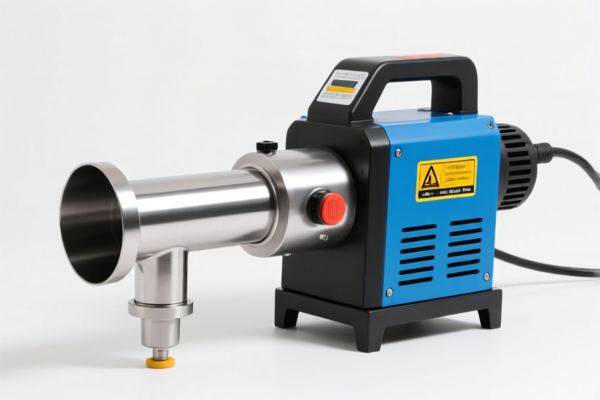
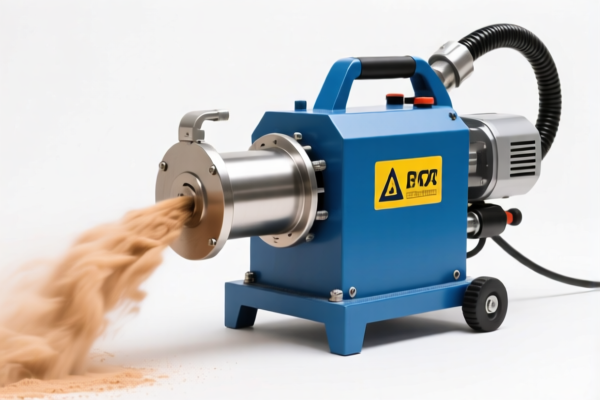


AI Analysis
⚗️ Pentachlorophenol Sand Hardener (Chemical Casting Adhesives)
🌐 HS Code Reference & Customs Clearance Guide | 2026 Latest Tariff Analysis | Professional Clearance Strategy 📌 1. Product Definition & Classification: Do You Know What "Sand Hardener" Really Is?
Pentachlorophenol Sand Hardener is a critical chemical additive used in the casting industry, specifically for sand molds and cores. It acts as a binder or hardener to ensure the structural integrity of the sand mold during the metal pouring process.
In international trade, this product is classified under Chemical Products and Preparations. The key distinction lies in its specific chemical composition and functional application:
- Pentachlorophenol-Based Hardeners: If the product contains Pentachlorophenol (PCP) as a primary active ingredient and is specifically designed for sand molding, it falls under a specific subheading related to PCP preparations.
- Other Chemical Preparations: If the product is a general chemical hardener where PCP is not the defining characteristic for a specific subheading, or if it is a mixed chemical preparation not specifically listed elsewhere, it may fall under the general "Other Chemical Products and Preparations" category.
⚠️ Key Classification Distinction: * If the product is explicitly described as a "Pentachlorophenol Sand Hardener" and matches the characteristics of Pentachlorophenol preparations for casting molds → HS Code 3824.86.00.00. * If the product is a generic "Chemical Hardener" or "Casting Adhesive" categorized broadly under chemical preparations without the specific PCP heading alignment → HS Code 3824.99.93.97.
📦 2. HS Code Classification Details (2026 Latest Tariff Authority Cross-Reference)
| HS Code | Product Description | Applicable Scenario | Tax Rate (Total) |
|---|---|---|---|
| 3824.86.00.00 | Pentachlorophenol Sand Hardener; Matches Pentachlorophenol characteristics and casting mold adhesive use | Specific chemical hardeners for casting, explicitly containing/matching PCP traits | 41.5% |
| 3824.99.93.97 | Pentachlorophenol Hardener, classified as a chemical preparation, falling under other chemical products and preparations | General chemical preparations, broader category of industrial chemical additives | 40.0% |
| 3824.99.93.97 | Pentachlorophenol Casting Sand Hardener, classified as chemical industry chemical products and preparations | Broad classification for industrial chemical hardeners | 40.0% |
| 3824.86.00.00 | Pentachlorophenol Casting Sand Hardener; Matches Pentachlorophenol material and casting mold adhesive use | Specific chemical hardeners for casting, explicitly containing/matching PCP traits | 41.5% |
🔍 Key Reminder: * 3824.86.00.00 is used when the product is specifically identified as matching Pentachlorophenol (PCP) characteristics and uses. This often carries a slightly higher base tariff. * 3824.99.93.97 is used for broader categories of chemical preparations, including hardeners, where the classification is more generic under "Other Chemical Products." * Crucial: Both categories are subject to significant additional tariffs due to trade policies (see Section 3).
💰 3. 2026 Latest Tariff Rate Breakdown (Including Additional Taxes & Policy Add-ons)
✅ Applicable Country: United States (US) ✅ Country of Origin: China (CN) ✅ Effective Time: Current rates apply (Includes Section 301 and IEEPA provisions)
🎯 1. 3824.86.00.00 —— Pentachlorophenol Sand Hardener (Specific PCP Classification)
| Item | Content |
|---|---|
| Base Tariff | 6.5% (Ad Valorem) |
| Section 301 Additional Tariff | +25.0% (USITC Footnote 5 for HTS 3824.86.00.00) |
| IEEPA Additional Tariff | +10.0% (Against China/China-derived products) |
| Total Tax Rate | 41.5% |
| Tax Calculation | CIF Value × 41.5% |
| De Minimis Exemption | ❌ Not Eligible (High tariff burden denies de minimis benefits for commercial shipments) |
| Legal Basis Path | USITC:3824.86.00.00 → SECTION_301:3824.86.00.00 → IEEPA:9903.01.24 |
📌 Explanation: * The 25% additional tariff is due to Section 301 of the Trade Act, targeting specific chemical preparations from China. * The 10% IEEPA tariff is an additional levy on Chinese goods. * Total 41.5% is a high-cost item. Pre-clearance planning is essential to manage cash flow and pricing.
🎯 2. 3824.99.93.97 —— Other Chemical Products and Preparations (General Chemical Hardener)
| Item | Content |
|---|---|
| Base Tariff | 5.0% (Ad Valorem) |
| Section 301 Additional Tariff | +25.0% (USITC Footnote 5 for HTS 3824.99.93.97) |
| IEEPA Additional Tariff | +10.0% (Against China/China-derived products) |
| Total Tax Rate | 40.0% |
| Tax Calculation | CIF Value × 40.0% |
| De Minimis Exemption | ❌ Not Eligible (High tariff burden denies de minimis benefits) |
| Legal Basis Path | USITC:3824.99.93.97 → SECTION_301:3824.99.93.97 → IEEPA:9903.01.24 |
📌 Note: * The 25% additional tariff applies similarly to this category under Section 301. * The 10% IEEPA tariff also applies. * Total 40.0% is slightly lower than
3824.86.00.00due to a lower base tariff (5% vs 6.5%), but the additional tariffs remain the same. * Strategic Tip: If customs accepts the broader classification3824.99.93.97for your specific product, you may save 1.5% on the total cost. However, misclassification carries risks.
🛠️ 4. Customs Clearance Practical Advice (实战避坑指南)
✅ 1. Documentation Checklist (Essential Items)
| Document | Required | Notes |
|---|---|---|
| ✅ Product Specification Sheet | ✔️ | Must clearly state chemical composition, especially Pentachlorophenol content. |
| ✅ Safety Data Sheet (SDS) | ✔️ | Mandatory for hazardous chemicals. Must comply with GHS standards. |
| ✅ Commercial Invoice | ✔️ | Must clearly describe the product as "Sand Hardener" or "Chemical Preparation." |
| ✅ Packing List | ✔️ | Detail net/gross weight, package dimensions, and hazard class. |
| ✅ Certificate of Origin (CO) | ✔️ | Confirm Chinese origin for accurate tariff application. |
| ✅ Third-Party Test Report | ✔️ | Optional but recommended to prove chemical composition and safety. |
✅ 2. Classification Strategy (Key Tips)
🔥 "Be Specific, But Not Over-Specific!"
| Situation | Correct Declaration | Incorrect Approach |
|---|---|---|
| Product is clearly a Pentachlorophenol-based hardener | 3824.86.00.00 (41.5%) |
Misclassifying as 3824.99.93.97 (40%) without justification → Risk of penalty. |
| Product is a general chemical hardener with minor PCP | 3824.99.93.97 (40.0%) |
Using 3824.86.00.00 unnecessarily → Higher tax, no benefit. |
| Product is a sand mold binder (not hardener) | Verify if it fits 3824.99.93.97 |
Assuming all chemical binders go to the same code → Potential misclassification. |
📌 Important: * Pentachlorophenol (PCP) is a regulated substance in many countries due to its toxicity. Ensure all environmental and safety regulations are met. * Misclassification Risk: If you declare
3824.99.93.97but the product is specifically identified as a Pentachlorophenol preparation, Customs may reclassify it to3824.86.00.00and charge the higher rate + penalties.
✅ 3. Special Considerations
| Situation | Handling Advice |
|---|---|
| High Hazard Chemical | Ensure proper labeling (GHS) and SDS are provided. US Customs and FDA may require additional clearance. |
| Bilingual Documentation | Provide both English and Chinese descriptions to avoid confusion. |
| Pre-Clearance Ruling | If unsure, apply for an Advance Ruling from US Customs and Border Protection (CBP) to confirm the HS Code. |
| Packaging | Use non-absorbent, leak-proof packaging. Hazmat labeling is mandatory. |
🌍 5. Global Market Comparison (2026 Latest)
| Country/Region | Recommended HS Code | Tariff | Certification | Notes |
|---|---|---|---|---|
| 🇺🇸 USA | 3824.86.00.00 or 3824.99.93.97 |
40.0% - 41.5% | SDS, GHS Labeling | High tariffs due to Section 301 and IEEPA. |
| 🇨🇳 China | 3824.86.00.00 |
~6.5% | N/A | Low base tariff, no additional taxes for import into China. |
| 🇪🇺 EU | 3824.99.93 |
Varies (0-6.5%) | REACH, CLP | REACH registration required for chemicals. |
| 🇦🇺 Australia | 3824.99.93 |
~5-10% | GHS Labeling | Check for specific chemical import licenses. |
| 🇯🇵 Japan | 3824.99.90 |
~6-8% | Fertilizer Control Law (if applicable) | Check for specific chemical regulations. |
📌 Conclusion: * The US is the most challenging market due to high additional tariffs (35% total add-on). * China, EU, and other markets have significantly lower or zero additional tariffs, making them more cost-effective for exports. * Chemical Compliance: Always check local chemical regulations (REACH in EU, TSCA in US, etc.) beyond just tariffs.
📌 6. Common Mistakes & Pitfalls (Lessons Learned)
❌ Mistake 1: Declaring as "General Chemical" to avoid the 41.5% tariff when it is clearly a PCP hardener. 👉 Consequence: Customs reclassification, back-taxes, and potential fines.
❌ Mistake 2: Ignoring the IEEPA 10% tariff. 👉 Consequence: Unexpected cost increase. The total tax is not just Section 301 (25%) + Base (6.5%), but also includes IEEPA (10%).
❌ Mistake 3: Incorrect SDS or missing GHS labeling. 👉 Consequence: Shipment held at customs, delay, or return due to safety concerns.
❌ Mistake 4: Assuming "De Minimis" (Section 321) applies to small shipments. 👉 Consequence: Many chemical products, especially those with high tariffs, are excluded from de minimis benefits. Ensure proper duty payment even for small samples.
✅ Correct Approach:
"Pentachlorophenol Sand Hardener, Chemical Preparation for Casting Molds, Contains 98% Pentachlorophenol, SDS Provided, GHS Labeled, HS Code 3824.86.00.00"
🎯 7. Conclusion: Professional Classification, Save Costs, Avoid Risks!
🎯 Remember:
🔹 "Base Tariff + 301 Tariff + IEEPA Tariff = Total Cost." 🔹 "41.5% for PCP-specific, 40.0% for general chemical. Choose wisely!" 🔹 "SDS and GHS labels are non-negotiable for chemicals."
📌 Tips:
If your product can be justified as a general chemical preparation rather than a specific Pentachlorophenol preparation, consider using
3824.99.93.97to save 1.5%. However, ensure your documentation supports this classification.Always apply for an Advance Ruling if there is any doubt about the classification. This protects you from future penalties.
📣 Immediate Action:
📞 Contact a professional customs broker. 📄 Provide detailed product specs and SDS. 🚀 Ensure smooth clearance, avoid delays, and protect your margins!
✨ Professional clearance starts with accurate classification! 💼 Every percentage point of tax matters!
Customer Reviews
About HS Code Classification
The Harmonized System (HS) is an internationally standardized nomenclature developed by the World Customs Organization (WCO) to classify traded products. Over 200 countries use the HS system as the basis for customs tariffs, trade statistics, and import/export regulations.
Each HS code follows a hierarchical structure:
- Chapter (2 digits) — Broad category of goods (e.g., Chapter 84: Machinery and Mechanical Appliances)
- Heading (4 digits) — More specific grouping within the chapter
- Subheading (6 digits) — Internationally standardized breakdown, used by all WCO member countries
- National subdivisions (8-10 digits) — Country-specific extensions for further classification, such as US HTSUS 10-digit codes
Correct HS code classification is essential for smooth customs clearance, accurate duty payment, and compliance with trade regulations. Misclassification can lead to customs delays, overpayment of duties, or penalties.
When importing from CN to US, the applicable tariff rates may include:
- Most-Favored-Nation (MFN) rate — The standard duty rate applied to WTO members
- General rate — Applied to countries without trade agreements
- Trade remedy duties — Additional tariffs such as Section 301 (anti-dumping), Section 232 (national security), or countervailing duties
The information provided on this page is for reference purposes only. For official classification, please consult with your local customs authority or a licensed customs broker.