Pentalobe Bit
CN → US| HS Code | Tariff Rate | Origin | Destination | Doc |
|---|---|---|---|---|
| 8207906000 | 39.3% | CN | US | Official Doc |
| 8207903085 | 40.0% | CN | US | Official Doc |
| 8205100000 | 41.2% | CN | US | Official Doc |
| 8205595560 | 40.3% | CN | US | Official Doc |
Product Images
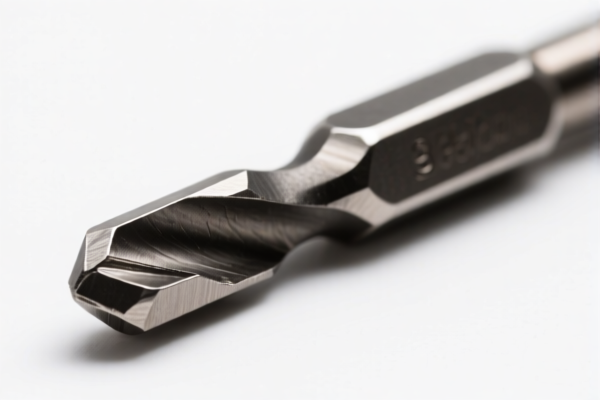
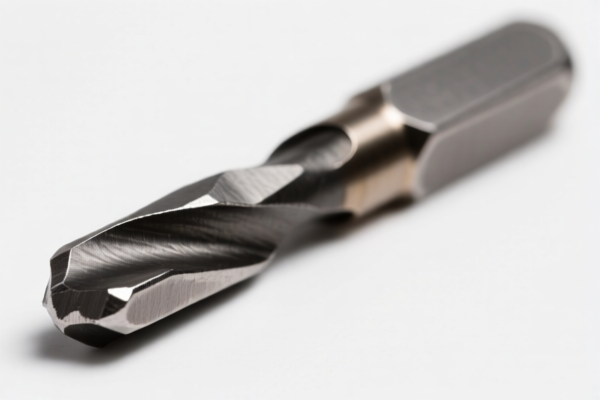
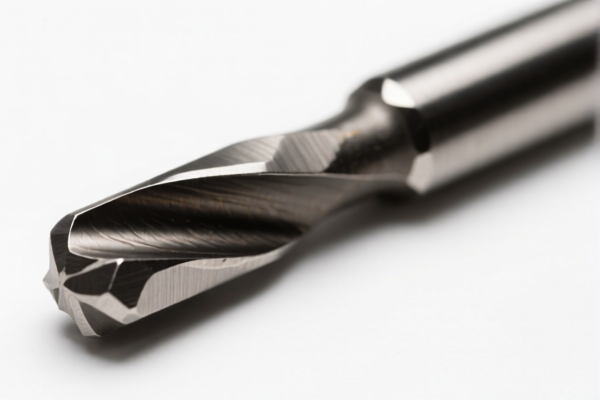
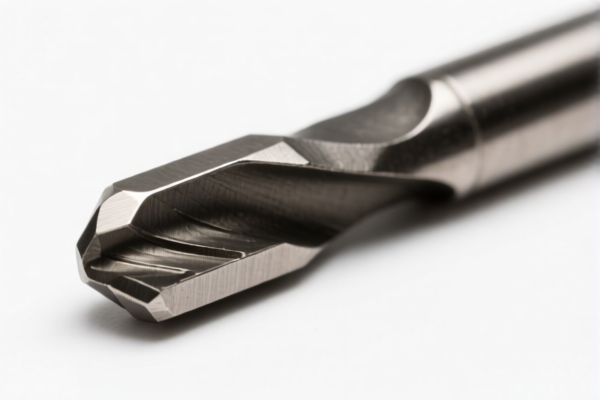
AI Analysis
🛠️ Pentalobe Bits (Screwdriver Bits)
🌐 HS Code Reference & Clearance Guide | 2026 Latest Tariff Breakdown | Professional Level Customs Strategy
📌 I. Product Definition and Classification: Do You Really Understand "Pentalobe Bits"?
Pentalobe bits are specialized interchangeable screwdriver bits featuring a five-point star-shaped tip, primarily used for opening devices manufactured by Apple (e.g., iPhone, MacBook) and other precision electronics. In international trade, they fall under Hand Tools or Interchangeable Tools for Hand Tools/Machine Tools, depending on their specific composition and intended use.
The key distinction lies in: * Base Metal Bits: Simple metal tips without complex cutting geometries suitable for machining. * Cutting Tools with Specific Alloy Content: Bits containing specific percentages of chromium, molybdenum, tungsten, or vanadium, classified as advanced cutting tools. * Hand Tools vs. Interchangeable Parts: Whether they are sold as standalone hand tools or as replaceable parts for power tools.
⚠️ Key Distinction Point:
- If the bit is not suitable for cutting metal and is purely for turning fasteners → It falls under Hand Tools (Chapter 82, Heading 8205 or 8207).
- If the bit has cutting edges and meets specific metal content thresholds → It falls under Cutting Tools (HS Code8207.90.30.85).
- Note: Pentalobe bits are generally not "cutting" in the machining sense (like a drill bit removing chips), but tariff classification often hinges on the material composition and function description in the HTSUS.
📦 II. HS Code Classification Details (2026 Latest Tariff Authority Comparison)
| HS Code | Product Description | Applicability | Tax Detail (Base + Additional) | Total Tax |
|---|---|---|---|---|
8205.10.00.00 |
Drilling, threading or tapping tools, and parts thereof | Pentalobe bits classified as general hand tools or parts of such tools (if not specified elsewhere) | Base: 0.0% Additional: 0.0% |
0.0% |
8205.59.55.60 |
Other handtools (including glass cutters) and parts thereof: Other: Other: Of iron or steel Other Other (including parts) | General-purpose metal pentalobe bits sold as hand tools or parts, not meeting cutting tool criteria | Base: 0.0% Additional: 0.0% |
0.0% |
8207.90.60.00 |
Other interchangeable tools, and parts thereof: Other: Other: Not suitable for cutting metal, and parts thereof: For handtools, and parts thereof | Interchangeable pentalobe bits NOT suitable for cutting metal (e.g., simple driver bits) | Base: 4.3% Additional: 25.0% |
29.3% |
8207.90.30.85 |
Other interchangeable tools, and parts thereof: Other: Cutting tools with cutting part containing by weight over 0.2 percent of chromium, molybdenum, or tungsten or over 0.1 percent of vanadium | Pentalobe bits classified as cutting tools with specific alloy content (Cr, Mo, W, V) | Base: 5.0% Additional: 25.0% |
30.0% |
🔍 Critical Reminder:
-8205Codes (0% Tax): Apply if the pentalobe bit is considered a simple hand tool or part thereof, not specifically an "interchangeable tool for machine tools" with cutting properties.
-8207.90.60.00(29.3% Tax): The most common classification for interchangeable pentalobe bits used in power drivers, provided they are not made with specific high-alloy content that triggers the "cutting tool" clause.
-8207.90.30.85(30.0% Tax): Applies if the bit is deemed a "cutting tool" AND contains >0.2% Cr/Mo/W or >0.1% Vanadium. This is rare for standard pentalobe bits unless they are specialized industrial-grade bits.
💰 III. 2026 Latest Tariff Rate Breakdown (Including Surtaxes, Policy Add-ons)
✅ Applicable Country: United States (US)
✅ Country of Origin: China (CN)
✅ Effective Date: From November 10, 2025 (including subsequent imports)
🎯 1. 8205.10.00.00 & 8205.59.55.60 —— General Hand Tools / Parts
| Item | Content |
|---|---|
| Base Tariff | 0% (ad valorem) |
| USITC Additional Tariff (Section 301) | 0% |
| IEEPA Additional Tariff | 0% |
| Total Tax Rate | 0.0% |
| Tax Calculation | CIF Value × 0% |
| De Minimis Eligibility | ❌ N/A (0% tax anyway, but value must still be declared) |
| Legal Basis Path | HTSUS: 8205.10.00.00 / 8205.59.55.60 |
📌 Explanation:
- These codes represent non-cutting hand tools. If the pentalobe bit is imported as a standalone screwdriver (hand tool) or a simple part not classified as an "interchangeable tool for machine tools," it escapes the 25% Section 301 tariff.
- Key Strategy: Ensure the product description emphasizes "Hand Tool" or "Part of Hand Tool" rather than "Interchangeable Tool for Machine Tools."
🎯 2. 8207.90.60.00 —— Interchangeable Tools (Not Suitable for Cutting Metal)
| Item | Content |
|---|---|
| Base Tariff | 4.3% |
| USITC Additional Tariff (Section 301) | +25.0% |
| IEEPA Additional Tariff | 0% (Not explicitly added in the provided data for this code, total is 29.3%) |
| Total Tax Rate | 29.3% |
| Tax Calculation | CIF Value × 29.3% |
| De Minimis Eligibility | ❌ No (Deny de minimis) |
| Legal Basis Path | HTSUS: 8207.90.60.00 → FOOTNOTE:301 |
📌 Explanation:
- This is the most likely classification for standard interchangeable pentalobe bits used in electric screwdrivers.
- The 25% surcharge is applied because it is an interchangeable tool not suitable for cutting metal.
- Warning: If you declare these as "Hand Tools" (8205) but customs deems them "Interchangeable Tools" (8207), you will face a 29.3% shortfall plus penalties.
🎯 3. 8207.90.30.85 —— Cutting Tools with Specific Alloy Content
| Item | Content |
|---|---|
| Base Tariff | 5.0% |
| USITC Additional Tariff (Section 301) | +25.0% |
| IEEPA Additional Tariff | 0% |
| Total Tax Rate | 30.0% |
| Tax Calculation | CIF Value × 30.0% |
| De Minimis Eligibility | ❌ No (Deny de minimis) |
| Legal Basis Path | HTSUS: 8207.90.30.85 → FOOTNOTE:301 |
📌 Explanation:
- This code applies only if the bit is classified as a cutting tool AND meets the metal content threshold (Cr, Mo, W, V).
- Standard Pentalobe bits are usually not cutting tools in the machining sense, so this code is less common unless the bits are specialized for tapping/drilling applications with high-alloy steel.
- If misclassified, the rate difference is minimal (29.3% vs 30.0%), but the legal risk remains.
🛠️ IV. Customs Clearance Practical Advice (Combat Pit-Avoidance Guide)
✅ 1. Required Documentation Checklist (Nothing is Optional)
| Document | Mandatory? | Explanation |
|---|---|---|
| ✅ Product Specifications | ✔️ | Material composition (steel type, alloy content), dimensions, tip shape. |
| ✅ Product Photos | ✔️ | Clear images of the bit tip, shaft, and any packaging labeling. |
| ✅ Commercial Invoice | ✔️ | Must clearly state "Pentalobe Screwdriver Bit" and specify "Interchangeable Tool" or "Hand Tool Part" accurately. |
| ✅ HS Code Pre-Ruling Request | ✔️ | Highly recommended to avoid misclassification. |
| ✅ Material Declaration | ✔️ | Explicitly state if the bit contains >0.2% Cr, Mo, W or >0.1% V to rule in/out 8207.90.30.85. |
| ✅ Packing List | ✔️ | Show quantity and packaging details. |
✅ 2. Declaration Tips (Key Mantra)
🔥 "Bit Type Matters: Interchangeable vs. Hand Tool, Alloy Content is Key!"
| Scenario | Correct Declaration | Wrong Practice |
|---|---|---|
| Standard Pentalobe Bit (Interchangeable) | 8207.90.60.00 |
Misdeclare as 8205 (0%) → Risk of 29.3% Penalty |
| High-Alloy Cutting Pentalobe Bit | 8207.90.30.85 |
Misdeclare as 8207.90.60.00 → Minor Rate Diff, but Legal Risk |
| Hand Screwdriver (Not just a bit) | 8205.10.00.00 or 8205.59.55.60 |
Declaring as "Interchangeable Tool" → Unnecessary 29.3% Tax |
| Pentalobe Bit Kit (with Handle) | 8205 (Hand Tool) |
Declaring as separate "Bits" → Higher Tax on Bits |
📌 Strategy:
- If selling pre-assembled screwdrivers with pentalobe heads, declare as Hand Tools (8205) to achieve 0% Tax.
- If selling replacement bits only, they are likely Interchangeable Tools (8207) at 29.3% Tax.
- Never under-declare alloy content if it triggers8207.90.30.85, as customs may test the metal.
✅ 3. Special Case Handling
| Scenario | Handling Advice |
|---|---|
| Pentalobe Bit with Non-Standard Tip | Ensure description matches HTSUS "interchangeable tool" criteria. |
| OEM/White Label Bits | Provide manufacturer specs to prove material composition. |
| Bits for Electric Screwdrivers | Clearly state "Interchangeable Tool for Handtools" → 8207.90.60.00. |
| Bits Sold in Sets | The entire set may be classified as "Hand Tools" if the handle is included and primary use is manual. |
🌍 V. Global Market Clearance Comparison (2026 Latest)
| Country/Region | Recommended HS Code | Tariff (CN Origin) | Certification | Notes |
|---|---|---|---|---|
| 🇺🇸 USA | 8207.90.60.00 |
29.3% | N/A | High tariff due to Section 301. |
| 🇨🇳 China | 8207.90.60.00 |
5-10% (Varies) | N/A | Lower tariff than US. |
| 🇪🇺 EU | 8207.90.60 |
0-2.5% (Varies) | CE (if applicable) | Lower tariffs, focus on safety standards. |
| 🇬🇧 UK | 8207.90.60 |
0-2.5% (Varies) | UKCA | Post-Brexit tariffs may differ. |
| 🇯🇵 Japan | 8207.90.60 |
0-3% (Varies) | JIS | Low tariffs, high quality standards. |
📌 Conclusion:
- USA is the most expensive market for Pentalobe bits due to Section 301 tariffs.
- Strategy: Consider sourcing from non-China origin (e.g., Vietnam, Taiwan) to avoid US surcharges, or classify carefully as Hand Tools (8205) if applicable to save 29.3%.
📌 VI. Common Errors & Pitfall Guide (Blood-Teaching Lessons)
❌ Error 1: Declaring interchangeable bits as Hand Tools (8205) to avoid tax
👉 Consequence: Customs detects "interchangeable" nature → Assesses 29.3% + Penalties.
❌ Error 2: Ignoring alloy content when declaring 8207.90.30.85
👉 Consequence: Metal test fails → Reclassification to 30.0% or higher, plus fraud risk.
❌ Error 3: Using vague terms like "Screwdriver Part"
👉 Consequence: Customs delays for clarification → Storage fees, detention charges.
❌ Error 4: Combining bits and handles in one shipment but declaring separately
👉 Consequence: Inconsistent valuation → Audit risk.
✅ Correct Practice:
"Interchangeable Pentalobe Screwdriver Bit, 3mm, Steel, for Handtools, HS 8207.90.60.00"
OR
"Pentalobe Screwdriver, Hand Tool, Complete, HS 8205.59.55.60"
🎯 VII. Conclusion: Precise Classification, Cost Savings!
🎯 Remember the Mantra:
🔹 "Interchangeable Bits = 29.3% (USA)"
🔹 "Complete Hand Tools = 0% (USA)"
🔹 "High-Alloy Cutting Tools = 30.0% (USA)"
🔹 "Don't Guess, Declare Accurately!"
📌 Pro Tip:
If your Pentalobe bits are pre-assembled into a screwdriver handle, declare as Hand Tool (
8205) to achieve 0% Tax.
If they are loose bits, expect 29.3% Tax in the US.
Pre-Ruling Recommendation: Apply for an HS Code Pre-Ruling from CBP to confirm the correct classification and avoid post-entry adjustments.
📣 Immediate Action:
📞 Contact your customs broker with product specs and photos.
🚀 Clarify: Bits Only vs. Complete Tool → This decision saves you 29.3% in the US market.
✨ Professional Clearance, Start with Accurate Classification!
💼 Every Percentage Point Counts in Profit!
Customer Reviews
About HS Code Classification
The Harmonized System (HS) is an internationally standardized nomenclature developed by the World Customs Organization (WCO) to classify traded products. Over 200 countries use the HS system as the basis for customs tariffs, trade statistics, and import/export regulations.
Each HS code follows a hierarchical structure:
- Chapter (2 digits) — Broad category of goods (e.g., Chapter 84: Machinery and Mechanical Appliances)
- Heading (4 digits) — More specific grouping within the chapter
- Subheading (6 digits) — Internationally standardized breakdown, used by all WCO member countries
- National subdivisions (8-10 digits) — Country-specific extensions for further classification, such as US HTSUS 10-digit codes
Correct HS code classification is essential for smooth customs clearance, accurate duty payment, and compliance with trade regulations. Misclassification can lead to customs delays, overpayment of duties, or penalties.
When importing from CN to US, the applicable tariff rates may include:
- Most-Favored-Nation (MFN) rate — The standard duty rate applied to WTO members
- General rate — Applied to countries without trade agreements
- Trade remedy duties — Additional tariffs such as Section 301 (anti-dumping), Section 232 (national security), or countervailing duties
The information provided on this page is for reference purposes only. For official classification, please consult with your local customs authority or a licensed customs broker.