Perforated Card Eco friendly Paper
CN → US| HS Code | Tariff Rate | Origin | Destination | Doc |
|---|---|---|---|---|
| 4823400000 | 35.0% | CN | US | Official Doc |
| 4823903100 | 35.0% | CN | US | Official Doc |
| 4802201000 | 35.0% | CN | US | Official Doc |
| 4805911090 | 35.0% | CN | US | Official Doc |
| 4823400000 | 35.0% | CN | US | Official Doc |
Product Images
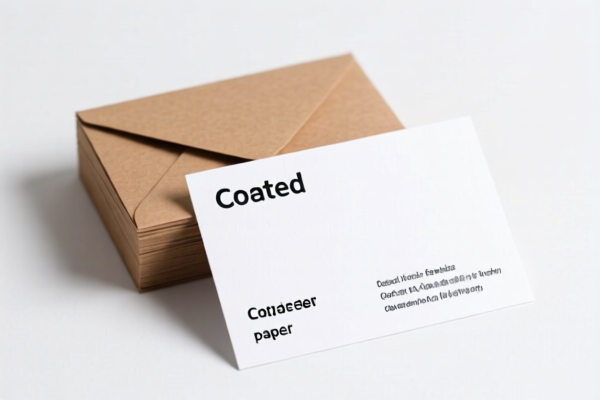
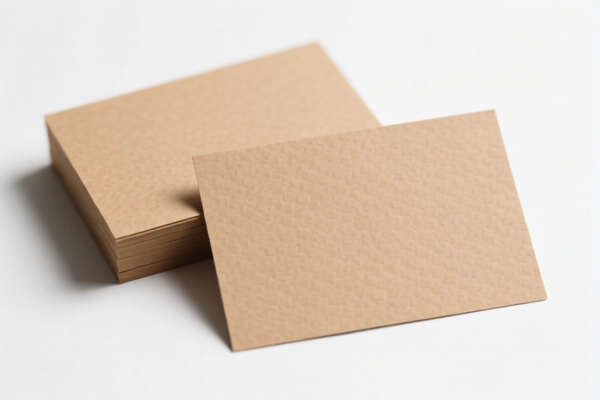

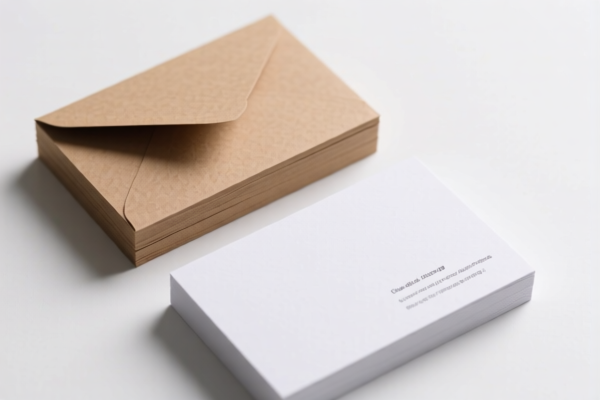
AI Analysis
🎟️ Perforated Card Eco-friendly Paper (Cotton Fiber Punched Cards)
🌐 HS Code Reference & Customs Clearance Guide | 2026 Latest Tariff Analysis | Professional通关 Strategy
📌 1. Product Definition & Classification: What Exactly Is "Perforated Card Eco-friendly Paper"?
"Perforated Card Eco-friendly Paper" refers to paper rolls or sheets specifically designed for use in punch card machines, data recorders, or legacy computing systems. The key material characteristic is that it is made of cotton or cellulose fibers, distinguishing it from standard wood-pulp paper. It is typically supplied in roll form and intended for recording, data entry, or mechanical processing via perforation.
In international trade, this product falls under Chapter 48 (Paper and Paperboard) because its primary value and function are derived from its paper material properties, not electronic components. However, specific subheadings depend on whether it is considered a "card," "roll," or "other paper article."
⚠️ Key Classification Distinction:
- If the product is strictly cotton/cellulose based and used for recording/data → 4823.40.00.00
- If classified broadly as paper rolls for punched cards → 4823.90.31.00 or 4802.20.10.00
- If categorized under other paper/paperboard articles → 4805.91.10.90
📦 2. HS Code Classification Details (2026 Official Tariff Alignment)
Based on the provided data, here are the exact HS Codes and their corresponding descriptions and tax implications:
| HS Code | Product Description | Material/Form | Usage/Scenario |
|---|---|---|---|
4823.40.00.00 |
Cotton-based paper rolls for punched cards | Cotton/Cellulose; Roll | For recording devices; high-grade fiber content |
4823.90.31.00 |
Cotton-based paper rolls for punched cards | Cellulose-based | Specifically for use in punch card machines |
4802.20.10.00 |
Cotton-based paper rolls for punched cards | Paper; Roll form | General use for punched cards |
4805.91.10.90 |
Cotton-based paper rolls for punched cards | Paper/Board; Roll pack | Categorized under "Other" paper articles |
🔍 Note on Consistency:
- All listed HS Codes share the same total tax rate of 35.0% due to identical tariff components. - The primary difference lies in the legal description and subheading specificity.4823.40.00.00and4823.90.31.00are more specific to "cotton/cellulose" content, while4802.20.10.00and4805.91.10.90are broader "paper" categories.
💰 3. 2026 Latest Tariff Rate Breakdown (Including Surcharges & Policy Add-ons)
✅ Applicable Country: United States (US)
✅ Origin: China (CN)
✅ Effective Date: Ongoing (including imports post-2025)
🎯 1. Tax Composition for All Listed HS Codes
| Item | Rate | Legal Basis / Explanation |
|---|---|---|
| Base Tariff | 0.0% | Standard Most Favored Nation (MFN) rate for these paper articles is often 0% |
| Section 301 Surcharge | +25.0% | Added tariff under US Trade Act Section 301 targeting Chinese goods |
| IEEPA Clause 122 | +10.0% | Additional tariff under International Emergency Economic Powers Act (Clause 122) |
| Total Effective Tax Rate | 35.0% | Sum of Base (0%) + Section 301 (25%) + IEEPA (10%) |
| De Minimis Exemption | ❌ Not Applicable | These goods are not eligible for de minimis duty-free entry under current rules |
📌 Critical Explanation:
- "Base Tariff 0%": The standard import duty for paper products is low or zero. - "Section 301 Tariff 25%": This is the major cost driver, imposed as a punitive tariff on Chinese-manufactured goods. - "IEEPA Clause 122 Tariff 10%": An additional layer of trade restriction under emergency economic powers, specifically targeting China. - Total 35%: This is a high effective tax rate. Importers must factor this into their CIF (Cost, Insurance, Freight) value. For every $100 of goods, $35 in duties is due upon entry.
🛠️ 4. Customs Clearance Practical Advice (Avoiding Pitfalls)
✅ 1. Required Documentation Checklist (Mandatory)
| Document | Required? | Purpose |
|---|---|---|
| ✅ Commercial Invoice | ✔️ | Must clearly state: "Perforated Card, Cotton/Cellulose, for Punch Card Machines" |
| ✅ Packing List | ✔️ | Specify dimensions, weight, and roll diameter |
| ✅ Material Composition Certificate | ✔️ | Proves "Cotton/Cellulose" content to support HS Code 4823.40.00.00 vs. generic paper |
| ✅ Product Photos | ✔️ | Show perforations, roll form, and any branding |
| ✅ Bill of Lading | ✔️ | Standard shipping document |
| ✅ Origin Declaration | ✔️ | Confirm China origin (triggers 35% tariff) |
✅ 2. Declaration Tips (Key Strategy)
🔥 "Specify Material, Specify Use, Avoid Ambiguity!"
| Scenario | Recommended HS Code | Reason |
|---|---|---|
| High-quality cotton/card stock | 4823.40.00.00 or 4823.90.31.00 |
Most accurate for "eco-friendly" cotton-based products; better defense if audited |
| Standard paper rolls for cards | 4802.20.10.00 |
Broader category; acceptable if cellulose content is low |
| General paper board rolls | 4805.91.10.90 |
Use only if product is not primarily for punch cards but for other paper applications |
📌 Warning:
- Do not classify as "Electronic Equipment" or "Computer Accessories" (e.g., Chapter 84/85). These are paper products. Misclassification can lead to severe penalties and delays. - Ensure the description explicitly mentions "Punch Card" or "Perforated Card" to justify the use case.
✅ 3. Special Circumstances
| Situation | Recommendation |
|---|---|
| Mixed Shipments | If shipped with other goods (e.g., punch card machines), separate the papers in the invoice. Do not bundle under one HS Code. |
| Re-export from 3rd Country | If shipped via Vietnam/Malaysia but originated in China, the 35% tariff still applies. Provide proof of transshipment if any exemption applies (rare). |
| Sample Shipments | Even samples are subject to the 35% tariff unless explicitly declared as non-commercial samples with no commercial value (but de minimis may not apply). |
🌍 5. Global Market Comparison (2026 Context)
| Region | Recommended HS Code | Estimated Duty | Notes |
|---|---|---|---|
| 🇺🇸 USA | 4823.40.00.00 etc. |
35% | High due to Section 301 + IEEPA |
| 🇨🇳 China | 4823.40.00.00 |
~0-6% | Low import duty; no US-style surcharges |
| 🇪🇺 EU | 4823.40.00 |
~0-4% | No Section 301 equivalent; standard MFN rates apply |
| 🇬🇧 UK | 4823.40.00 |
~0-5% | Post-Brexit tariffs align closely with EU |
📌 Conclusion:
- The 35% tariff is unique to US imports from China.
- If targeting other markets, no significant surcharges apply.
- For US shipments, cost absorption or price adjustment is necessary.
📌 6. Common Mistakes & Pitfalls (Lessons Learned)
❌ Mistake 1: Classifying as "Paper Products" without specifying "Cotton/Cellulose"
👉 Consequence: Customs may reject 4823 and assign a different code, causing delays.
✅ Fix: Always specify material composition.
❌ Mistake 2: Assuming "Eco-friendly" grants tariff exemption
👉 Consequence: "Eco-friendly" is not a tariff classification term. It does not reduce the 35% duty.
✅ Fix: Focus on accurate HS Code and material description.
❌ Mistake 3: Bundling with punch card machines
👉 Consequence: Mixed classification errors; machines might be Class 84, papers Class 48. Separate entries required.
✅ Fix: Invoice separately with distinct HS Codes.
🎯 7. Conclusion: Professional Clearance, Cost Control, Efficiency
🎯 Key Takeaway:
🔹 "HS Code 4823, Tax 35%, Material Cotton, Use Punch Card"
🔹 "No Exemptions for 'Eco-Friendly' Label in US Customs"
🔹 "Declare Accurately to Avoid Delays"
📌 Pro Tip:
- If you have high volume, consider applying for a Binding Ruling from US Customs and Border Protection (CBP) to confirm the 35% rate and HS Code before shipping.
- Explore duty drawback programs if these goods are subsequently re-exported (though complex for paper products).
- Always update your supplier's invoice to match the exact HS Code description to prevent customs holds.
📣 Action Required:
📞 Consult a licensed customs broker
📄 Prepare material composition certificates
🚀 Ensure accurate HS Code declaration to avoid the 35% penalty surprises
✨ Precise Classification is the First Step to Seamless Customs Clearance!
💼 Every percentage point of duty matters — plan accordingly!
Customer Reviews
About HS Code Classification
The Harmonized System (HS) is an internationally standardized nomenclature developed by the World Customs Organization (WCO) to classify traded products. Over 200 countries use the HS system as the basis for customs tariffs, trade statistics, and import/export regulations.
Each HS code follows a hierarchical structure:
- Chapter (2 digits) — Broad category of goods (e.g., Chapter 84: Machinery and Mechanical Appliances)
- Heading (4 digits) — More specific grouping within the chapter
- Subheading (6 digits) — Internationally standardized breakdown, used by all WCO member countries
- National subdivisions (8-10 digits) — Country-specific extensions for further classification, such as US HTSUS 10-digit codes
Correct HS code classification is essential for smooth customs clearance, accurate duty payment, and compliance with trade regulations. Misclassification can lead to customs delays, overpayment of duties, or penalties.
When importing from CN to US, the applicable tariff rates may include:
- Most-Favored-Nation (MFN) rate — The standard duty rate applied to WTO members
- General rate — Applied to countries without trade agreements
- Trade remedy duties — Additional tariffs such as Section 301 (anti-dumping), Section 232 (national security), or countervailing duties
The information provided on this page is for reference purposes only. For official classification, please consult with your local customs authority or a licensed customs broker.