Perforated Card Information Paper
CN → US| HS Code | Tariff Rate | Origin | Destination | Doc |
|---|---|---|---|---|
| 4811904090 | 35.0% | CN | US | Official Doc |
| 4814900200 | 17.5% | CN | US | Official Doc |
| 4823903100 | 35.0% | CN | US | Official Doc |
| 4823906700 | 35.0% | CN | US | Official Doc |
| 4811904090 | 35.0% | CN | US | Official Doc |
Product Images

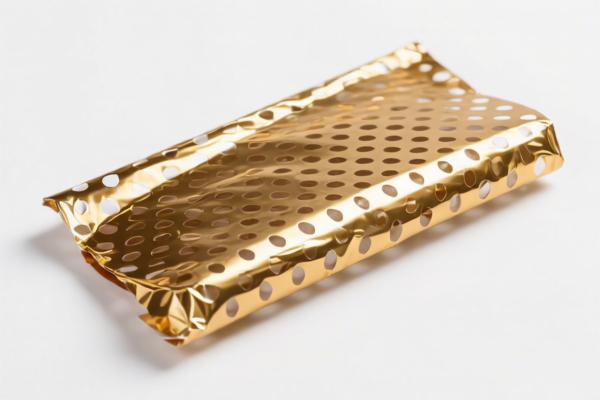


AI Analysis
📋 Perforated Card Information Paper (Cardstock & Cellulose Rolls)
🌐 HS Code Reference & Customs Clearance Guide | 2026 Latest Tariff Analysis | Professional Compliance Strategy
📌 I. Product Definition & Classification: What is "Perforated Card Information Paper"?
Perforated Card Information Paper (often referred to as Punch Cards, Tab Cards, or Data Cards) is a specialized paper product used for data storage, industrial automation controls, and historical computing systems. It is characterized by:
- Material: Typically cellulose-based (cotton linters or wood pulp), often with specific coatings for durability or electrical insulation.
- Form Factor: Usually supplied in rolls (for automated feeding) or sheets, pre-perforated with specific hole patterns.
- Application: Used in early computers, time clocks, voting machines, industrial process controls, and archival systems.
⚠️ Key Distinction:
- If it is a blank, unprinted roll used for punching data → It is a Paper/Cotton Product (Chapter 48).
- If it is a finished electronic component with printed circuits → It might be an electrical part (Chapter 85).
- Note: The provided data confirms classification under Chapter 48 (Paper and Paperboard).
📦 II. HS Code Classification Details (2026 Latest Tariff Authority)
Based on the provided <DATA>, these products are classified into four primary HS Codes, depending on the specific material composition and end-use. All entries are subject to significant tariffs.
| HS Code | Product Description | Key Characteristics | Tax Rate |
|---|---|---|---|
4811.90.40.90 |
Paper Rolls | Cotton paper rolls, rolled form; classified under "Other paper products". | 35.0% |
4814.90.02.00 |
Paper Coverings | Other paper products, rolled form; specifically "Paper coverings" or similar non-decorative paper items. | 17.5% |
4823.90.31.00 |
Unpunched Cotton Paper Rolls | Specifically for punch cards; cellulose-based; not yet punched or ready for punching. | 35.0% |
4823.90.67.00 |
Coated Cellulose Products | Cellulose fiber products, rolled; coated paper or other processed paper items. | 35.0% |
🔍 Critical Note on
4811.90.40.90:
- This code appears twice in the data with slightly different summaries but identical tax rates.
- It covers cotton paper rolls that do not fit other specific subheadings.
- Warning: If the product is simply "cotton paper rolls" without specific "punch card" designation, it may fall here, but4823.90.31.00is more specific for punch card materials.
💰 III. 2026 Latest Tariff Rate Breakdown (Including Surtaxes & Policy Levies)
✅ Applicable Country: USA (US)
✅ Origin: China (CN)
✅ Effective Date: November 10, 2025 onwards
🎯 1. High-Tariff Codes: 4811.90.40.90, 4823.90.31.00, 4823.90.67.00
Total Tax Rate: 35.0%
| Component | Rate | Legal Basis |
|---|---|---|
| Base Duty | 0.0% | MFN Rate |
| Section 301 Surtax | 25.0% | USITC Footnote 9903.88.01 (China-origin goods) |
| IEEPA Surtax | 10.0% | International Emergency Economic Powers Act (China-specific) |
| Total Effective Rate | 35.0% | Sum of Base + 301 + IEEPA |
📌 Explanation:
- These codes are heavily impacted by Section 301 tariffs (25%) and the IEEPA 10% surcharge.
- No de minimis exemption applies for commercial shipments.
- CIF Value × 35% is the estimated duty cost.
🎯 2. Lower-Tariff Code: 4814.90.02.00
Total Tax Rate: 17.5%
| Component | Rate | Legal Basis |
|---|---|---|
| Base Duty | 0.0% | MFN Rate |
| Section 301 Surtax | 7.5% | USITC Footnote 9903.88.01 (Lower tier for specific paper categories) |
| IEEPA Surtax | 10.0% | International Emergency Economic Powers Act (China-specific) |
| Total Effective Rate | 17.5% | Sum of Base + 301 + IEEPA |
📌 Explanation:
- This code benefits from a lower Section 301 surtax (7.5%) instead of 25%.
- CIF Value × 17.5% is the estimated duty cost.
- Strategy: If your product can be legitimately classified under4814(e.g., as a "paper covering" rather than "raw cardstock"), you can save 17.5% in duties.
🛠️ IV. Customs Clearance Practical Advice (Pitfall Avoidance Guide)
✅ 1. Required Documentation Checklist
| Document | Must Provide? | Purpose |
|---|---|---|
| Product Specification Sheet | ✔️ | Must state: Material (Cotton/Cellulose), Form (Roll/Sheet), Diameter/Weight, and Perforation Pattern. |
| Product Photos | ✔️ | Show the roll, the perforation, and any branding/coating. |
| Commercial Invoice | ✔️ | Clearly state "Perforated Card Paper" or "Cotton Paper Rolls". Avoid vague terms like "Paper". |
| Packing List | ✔️ | Detail gross/net weight, dimensions, and number of rolls. |
| Certificate of Origin (CO) | ✔️ | To confirm China origin (if applicable) and calculate correct surtaxes. |
| End-Use Declaration | ✔️ | Confirm if used for punch cards, industrial controls, or other purposes to support HS Code selection. |
✅ 2. Classification Strategy & Tips
🔥 "Material Matters, Form Defines, Use Guides!"
| Scenario | Recommended HS Code | Risk Level |
|---|---|---|
| Unpunched Cotton Rolls for Punch Cards | 4823.90.31.00 |
Medium (High Tax 35%) |
| Coated Cellulose Rolls (Industrial Use) | 4823.90.67.00 |
Medium (High Tax 35%) |
| General Paper Rolls (Non-Specific) | 4811.90.40.90 |
Low (Misclassification Risk) |
| Paper Coverings/Sheets (Less Specific) | 4814.90.02.00 |
Lowest Tax (17.5%) – Best if applicable |
📌 Key Tip:
- If the paper is specifically for punch cards,4823.90.31.00is the most accurate.
- If the paper is coated or used for industrial covering,4823.90.67.00or4814.90.02.00may apply.
- Avoid using4811.90.40.90unless the product is truly generic and uncoated, as it may attract scrutiny.
✅ 3. Special Cases & Exemptions
| Situation | Advice |
|---|---|
| Small Samples (< $800) | May qualify for de minimis if shipped via postal/courier, but commercial shipments > $800 are NOT exempt. |
| Pre-Punched vs. Unpunched | Ensure the invoice clearly states if the product is pre-perforated or blank rolls. Misdeclaration can lead to penalties. |
| Coated Paper | If coated, ensure the coating is not electronic (e.g., not a circuit). If it is, it may move to Chapter 85. |
| Cotton Content | High cotton content may trigger additional requirements for cellulose verification. |
🌍 V. Global Market Comparison (2026)
| Region | Recommended HS Code | Estimated Duty (China Origin) | Notes |
|---|---|---|---|
| 🇺🇸 USA | 4823.90.31.00 / 4811.90.40.90 |
35.0% | High due to 301 + IEEPA. 4814 at 17.5% if applicable. |
| 🇨🇳 China | 4823.90.31.00 |
~0-5% | Low import duty, no surtaxes. |
| 🇪🇺 EU | 4823.90.31.00 |
~6.5% | No US-style surtaxes, but standard EU customs duties apply. |
| 🇬🇧 UK | 4823.90.31.00 |
~6.5% | Post-Brexit tariffs similar to EU. |
📌 Conclusion:
- USA is the most expensive market due to 35% total tariffs for most paper products.
- EU/UK are more competitive with standard duties (~6.5%).
- Strategy: Consider third-country assembly (e.g., Vietnam, Mexico) if eligible for tariff exemptions, but ensure substantial transformation rules are met.
📌 VI. Common Mistakes & Pitfalls
❌ Mistake 1: Declaring as "Office Supplies" or "Stationery"
👉 Consequence: Incorrect HS Code, potential audit, fines.
✅ Fix: Use precise terms like "Perforated Card Paper Rolls".
❌ Mistake 2: Ignoring the "Roll" vs. "Sheet" distinction
👉 Consequence: Wrong subheading. Rolls may fall under different codes than sheets.
✅ Fix: Specify form in the invoice.
❌ Mistake 3: Assuming all paper products are taxed the same
👉 Consequence: Overpaying duties by 17.5%.
✅ Fix: Check if 4814.90.02.00 (17.5%) applies instead of 4823 (35%).
❌ Mistake 4: Failing to disclose coating type
👉 Consequence: Misclassification of 4823.90.67.00 (coated) vs. 4823.90.31.00 (uncoated).
✅ Fix: Provide material specs to customs broker.
🎯 VII. Conclusion: Smart Classification, Cost Optimization!
🎯 Remember:
🔹 "Check the coating, check the form, check the use!"
🔹 "35% is high, 17.5% is better – classify correctly!"
🔹 "IEEPA 10% + 301 25% = 35% Pain – Plan Ahead!"
📌 Pro Tip:
- If you are importing large volumes, consider applying for HTS Exclusions (if available) or consulting a customs broker for Advance Rulings.
- For USA imports, budget for 35% duty for most paper rolls, or 17.5% if 4814 applies.
📣 Action Plan:
📞 Contact a Customs Broker + Provide Product Specs + Request Advance Ruling
🚀 Optimize Your Supply Chain – Avoid 35% Tariff Pitfalls!
✨ Precision in Classification, Power in Compliance!
💼 Your Profit Margin Depends on Accurate HS Codes!
Customer Reviews
About HS Code Classification
The Harmonized System (HS) is an internationally standardized nomenclature developed by the World Customs Organization (WCO) to classify traded products. Over 200 countries use the HS system as the basis for customs tariffs, trade statistics, and import/export regulations.
Each HS code follows a hierarchical structure:
- Chapter (2 digits) — Broad category of goods (e.g., Chapter 84: Machinery and Mechanical Appliances)
- Heading (4 digits) — More specific grouping within the chapter
- Subheading (6 digits) — Internationally standardized breakdown, used by all WCO member countries
- National subdivisions (8-10 digits) — Country-specific extensions for further classification, such as US HTSUS 10-digit codes
Correct HS code classification is essential for smooth customs clearance, accurate duty payment, and compliance with trade regulations. Misclassification can lead to customs delays, overpayment of duties, or penalties.
When importing from CN to US, the applicable tariff rates may include:
- Most-Favored-Nation (MFN) rate — The standard duty rate applied to WTO members
- General rate — Applied to countries without trade agreements
- Trade remedy duties — Additional tariffs such as Section 301 (anti-dumping), Section 232 (national security), or countervailing duties
The information provided on this page is for reference purposes only. For official classification, please consult with your local customs authority or a licensed customs broker.