Perforated Card Paper Aid
CN → US| HS Code | Tariff Rate | Origin | Destination | Doc |
|---|---|---|---|---|
| 4811904090 | 35.0% | CN | US | Official Doc |
| 4814900200 | 17.5% | CN | US | Official Doc |
| 4823903100 | 35.0% | CN | US | Official Doc |
| 4823906700 | 35.0% | CN | US | Official Doc |
| 4811904090 | 35.0% | CN | US | Official Doc |
Product Images
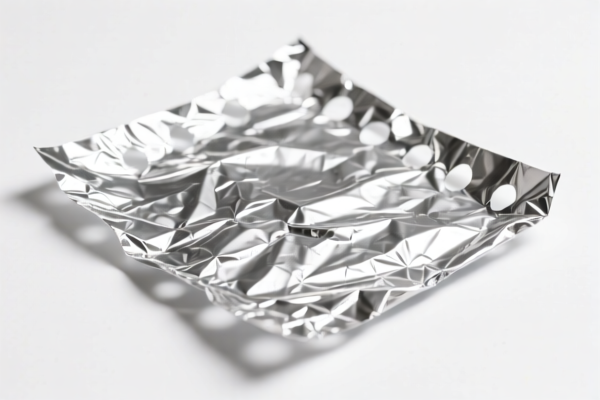
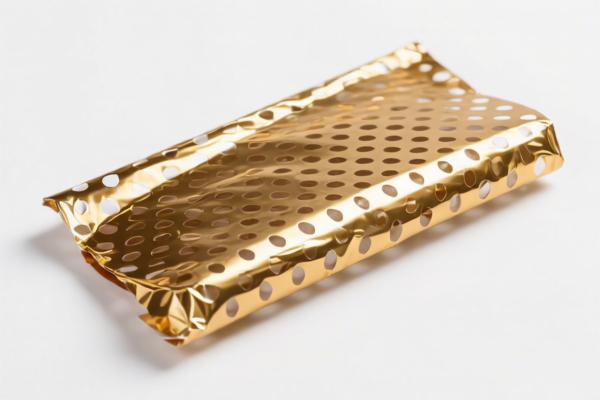


AI Analysis
🎞️ Perforated Card Paper Aid (Punched Card Paper / Paper Tape)
🌐 HS Code Reference & Customs Clearance Guide | 2026 Latest Tariff Analysis | Professional Logistics Strategy
📌 I. Product Definition & Classification: What is "Perforated Card Paper Aid"?
Perforated Card Paper Aid refers to paper-based media used for data input, storage, or control in mechanical and early electronic computing systems. In modern trade contexts, it is often categorized under paper products made from cellulose fibers, regardless of whether it is used for legacy data processing or modern industrial control cards.
International trade classifies these items not by their "digital" function (which might suggest IT equipment), but by their physical material composition (Paper/Cellulose) and form (Rolled/Sheet).
⚠️ Key Distinction:
- If it is paper with holes/perforations for data/control → Classify under Chapter 48 (Paper & Paperboard).
- If it is a magnetic tape or solid-state memory device → Classify under Chapter 85 (Electrical Machinery).
- For this guide, we strictly follow the provided, which categorizes these as Paper Products (Chapter 48).
📦 II. HS Code Classification Details (Based on Provided Data)
The following HS codes are derived strictly from the provided dataset. Note that "Perforated Card Paper" is often grouped with other paper rolls or specific paper products depending on its coating and end-use.
| HS Code | Product Description (Summary) | Key Characteristics | Material Type |
|---|---|---|---|
4811.90.40.90 |
Cotton Paper Rolls, rolled form, fits paper/cellulose material classification | Raw cotton paper, rolled, generic use | Cellulose Fiber |
4814.90.02.00 |
Paper Coverings, rolled form, belongs to other paper products | Decorative or protective paper coverings | Paper/Cellobiose |
4823.90.31.00 |
Non-perforated cotton paper rolls, for punch card purposes, fits paper/cellulose | Specifically noted for punch card use, but described as "non-perforated" in summary (likely base material before punching) | Cellulose Fiber |
4823.90.67.00 |
Cellulose fiber products, rolled, belongs to coated paper or other paper products | Coated or treated paper for industrial use | Coated Paper |
4811.90.40.90 |
Cotton Paper Rolls, rolled, classified as other paper products | Generic cotton paper roll classification | Cellulose Fiber |
🔍 Critical Note on
4823.90.31.00:
Although the summary says "Non-perforated," this code is explicitly linked to "punch card purposes". This likely refers to the base paper stock before the punching process, or a specific tariff line for paper intended for this use. If your product is already punched cards, ensure you confirm with customs if4823.90.31.00is still applicable or if a different "perforated paper" code exists in the local tariff schedule. However, per the provided data, this is the closest match for "punch card" usage.
💰 III. 2026 Latest Tariff Rate Breakdown (Including Surtaxes)
✅ Applicable Country: United States (US)
✅ Origin: China (CN)
✅ Effective Time: Current rates applicable as per data provided.
All items in the provided data fall under a high-tariff regime due to US-China trade policies.
🎯 1. 4811.90.40.90 — Cotton Paper Rolls (Generic)
| Item | Detail |
|---|---|
| Base Tariff | 0.0% (ad valorem) |
| Section 301 Surtax | +25.0% |
| Section 122 Tax | +10.0% |
| Total Tariff Rate | 35.0% |
| Tax Calculation | CIF Value × 35% |
| De Minimis Exemption? | ❌ No (Not eligible for low-value shipment exemption) |
| Legal Basis Path | Section 301: 25% → Section 122: 10% → HTSUS: 4811.90.40.90 |
📌 Explanation:
- Base Tariff (0%): Paper products often have low or zero base MFN tariffs.
- Section 301 (25%): The primary retaliatory tariff on Chinese goods.
- Section 122 (10%): Additional tariff under Section 122 of the Trade Expansion Act (often for national security or supply chain reasons).
- Total: 35% is a significant cost driver.
🎯 2. 4814.90.02.00 — Paper Coverings (Rolls)
| Item | Detail |
|---|---|
| Base Tariff | 0.0% |
| Section 301 Surtax | +7.5% |
| Section 122 Tax | +10.0% |
| Total Tariff Rate | 17.5% |
| Tax Calculation | CIF Value × 17.5% |
| De Minimis Exemption? | ❌ No |
| Legal Basis Path | Section 301: 7.5% → Section 122: 10% → HTSUS: 4814.90.02.00 |
📌 Comparison:
This code has a lower surtax (7.5% vs 25%), resulting in a 17.5% total rate vs 35%. If your "Perforated Card Paper Aid" can be classified as a "Paper Covering" (e.g., if it's used as a backing or wrapper for card stocks), this could save significant duty. However, ensure the classification is legally defensible.
🎯 3. 4823.90.31.00 — Cotton Paper for Punch Cards
| Item | Detail |
|---|---|
| Base Tariff | 0.0% |
| Section 301 Surtax | +25.0% |
| Section 122 Tax | +10.0% |
| Total Tariff Rate | 35.0% |
| Tax Calculation | CIF Value × 35% |
| De Minimis Exemption? | ❌ No |
| Legal Basis Path | Section 301: 25% → Section 122: 10% → HTSUS: 4823.90.31.00 |
📌 Specific Use Case:
This is the most relevant code for "Punch Card Paper" based on the summary. Despite the "non-perforated" description in the summary, it is explicitly for "punch card purposes." The tax burden is high (35%).
🎯 4. 4823.90.67.00 — Coated Cellulose Fiber Products
| Item | Detail |
|---|---|
| Base Tariff | 0.0% |
| Section 301 Surtax | +25.0% |
| Section 122 Tax | +10.0% |
| Total Tariff Rate | 35.0% |
| Tax Calculation | CIF Value × 35% |
| De Minimis Exemption? | ❌ No |
| Legal Basis Path | Section 301: 25% → Section 122: 10% → HTSUS: 4823.90.67.00 |
📌 Note:
Applies if the paper is coated or treated for specific industrial uses. Same high tariff as standard cotton paper.
🛠️ IV. Customs Clearance Practical Advice (Avoiding Pitfalls)
✅ 1. Required Documentation Checklist
| Document | Mandatory? | Purpose |
|---|---|---|
| Commercial Invoice | ✔️ | Must clearly state "Cotton Paper Rolls," "Punch Card Paper," or "Paper Coverings." Avoid vague terms like "Computer Accessories." |
| Product Specification Sheet | ✔️ | Detail material (100% cotton/cellulose), dimensions, weight, and whether it is perforated or not. |
| Certificate of Origin | ✔️ | Crucial for proving Chinese origin to apply surtaxes correctly. |
| Packing List | ✔️ | Detail rolls vs. sheets, weight, and packaging type. |
| Material Safety Data Sheet (MSDS) | Optional | If the paper has special coatings, may be required. |
| Prior Ruling Letter | ✔️ Highly Recommended | Given the high tariffs, a pre-classification ruling from CBP is advised. |
✅ 2. Classification Strategy & Naming Conventions
🔥 "Material First, Use Second: Clear Naming Saves Money!"
| Scenario | Recommended Declaration | Risk |
|---|---|---|
| Raw Paper for Punch Cards | "Cotton Paper Rolls for Punch Card Use, Unperforated" | Use 4823.90.31.00 (35%) |
| Pre-Punched Cards | "Perforated Paper Cards for Data Input" | Verify if 4823.90.31.00 still applies. If not, may need a different subheading. |
| Paper Coverings/Wrappers | "Paper Coverings for Product Packaging" | Use 4814.90.02.00 (17.5%) – Lower Tax! |
| Coated Industrial Paper | "Coated Cellulose Paper Rolls" | Use 4823.90.67.00 (35%) |
⚠️ Warning:
- Do NOT describe these as "Computer Parts" or "IT Accessories." This will lead to incorrect classification (Chapter 84/85) and potential penalties, plus higher duties under other codes.
- Accuracy is Key: If you claim4814.90.02.00(17.5%) for punch card paper, be prepared to prove it fits the definition of "paper covering." If it's purely functional data storage, customs may reject it and move you to 35% codes.
✅ 3. Special Considerations
| Situation | Advice |
|---|---|
| High Tariff Burden (35%) | Consider if the product can be reclassified as 4814.90.02.00 (17.5%) if it serves a secondary purpose as a covering or backing. |
| De Minimis Exemption | ❌ Not Available. Even small shipments will incur the 17.5%-35% duty. Budget accordingly. |
| Section 301 & 122 | These are non-negotiable surtaxes for Chinese-origin goods in these categories. No duty-free relief is currently indicated in the data. |
| Pre-Clearance | Given the complexity of "punch card" vs. "paper product," apply for a CBP Binding Ruling before shipment. |
🌍 V. Global Market Comparison (2026)
| Country/Region | Recommended HS Code (General) | Est. Total Duty (China Origin) | Notes |
|---|---|---|---|
| 🇺🇸 USA | 4823.90.31.00 / 4811.90.40.90 |
17.5% – 35% | High Section 301 & 122 tariffs apply. |
| 🇨🇳 China | 4811 / 4823 series |
~5% | Standard MFN rates, no US surtaxes. |
| 🇪🇺 EU | 4811 / 4823 series |
~6.5% | Standard EU tariff. No Section 301 equivalent. |
| 🇬🇧 UK | 4811 / 4823 series |
~6.5% | Post-Brexit tariff regime similar to EU. |
| 🇯🇵 Japan | 4811 / 4823 series |
~0% - 5% | Favorable tariff rates for paper products. |
📌 Conclusion:
- USA is the most expensive market due to trade war tariffs.
- If possible, consider sourcing from Vietnam, Thailand, or Mexico to avoid Section 301/122 tariffs (subject to rules of origin).
📌 VI. Common Mistakes & Pitfalls (Lessons Learned)
❌ Mistake 1: Declaring "Perforated Cards" as "Computer Peripherals"
👉 Consequence: Misclassification penalty + potential duty under wrong chapter (e.g., 8473.90) + audits.
❌ Mistake 2: Ignoring the "Section 122" tariff
👉 Consequence: Underpayment of 10% → Back taxes + interest + penalties.
❌ Mistake 3: Assuming "De Minimis" applies
👉 Consequence: Small packages seized or held at port because the 35% duty must be paid regardless of value.
❌ Mistake 4: Vague Descriptions ("Paper Aid")
👉 Consequence: Customs delays for clarification → Demurrage charges at the port.
✅ Correct Practice:
"Cotton Paper Rolls, Unperforated, for Punch Card Manufacturing, HS Code 4823.90.31.00, Origin: China"
🎯 VII. Conclusion: Professional Classification, Cost Control
🎯 Key Takeaway:
🔹 "Paper is Paper: Don't Classify as Electronics!"
🔹 "Section 301 + 122 = 35% Duty for Most Codes. Check4814for 17.5% if Applicable."
🔹 "No De Minimis for Chinese Paper Products to the USA."
📌 Recommendation:
1. Confirm Classification: Double-check if 4823.90.31.00 is the best fit for perforated cards vs. raw paper.
2. Apply for Ruling: Get a binding ruling from CBP for "Perforated Card Paper Aid."
3. Cost Calculation: Factor in 35% total duty (or 17.5% if eligible for 4814) into your landed cost.
4. Supply Chain: Consider non-Chinese origins if margins are tight due to high tariffs.
📣 Immediate Action:
📞 Consult a Customs Broker to validate the "punch card" classification.
📄 Prepare Detailed Specifications showing material composition and end-use.
🚀 Optimize Tariff Rate by exploring if your product fits the lower-duty4814.90.02.00category legally.
✨ Accurate Classification, Predictable Costs, Smooth Clearance!
💼 Every Percent Counts in International Trade!
Customer Reviews
About HS Code Classification
The Harmonized System (HS) is an internationally standardized nomenclature developed by the World Customs Organization (WCO) to classify traded products. Over 200 countries use the HS system as the basis for customs tariffs, trade statistics, and import/export regulations.
Each HS code follows a hierarchical structure:
- Chapter (2 digits) — Broad category of goods (e.g., Chapter 84: Machinery and Mechanical Appliances)
- Heading (4 digits) — More specific grouping within the chapter
- Subheading (6 digits) — Internationally standardized breakdown, used by all WCO member countries
- National subdivisions (8-10 digits) — Country-specific extensions for further classification, such as US HTSUS 10-digit codes
Correct HS code classification is essential for smooth customs clearance, accurate duty payment, and compliance with trade regulations. Misclassification can lead to customs delays, overpayment of duties, or penalties.
When importing from CN to US, the applicable tariff rates may include:
- Most-Favored-Nation (MFN) rate — The standard duty rate applied to WTO members
- General rate — Applied to countries without trade agreements
- Trade remedy duties — Additional tariffs such as Section 301 (anti-dumping), Section 232 (national security), or countervailing duties
The information provided on this page is for reference purposes only. For official classification, please consult with your local customs authority or a licensed customs broker.