Perforated Card Positioning Paper
CN → US| HS Code | Tariff Rate | Origin | Destination | Doc |
|---|---|---|---|---|
| 4823903100 | 35.0% | CN | US | Official Doc |
| 4823400000 | 35.0% | CN | US | Official Doc |
| 4821904000 | 35.0% | CN | US | Official Doc |
| 4821902000 | 35.0% | CN | US | Official Doc |
| 4811412100 | 35.0% | CN | US | Official Doc |
Product Images

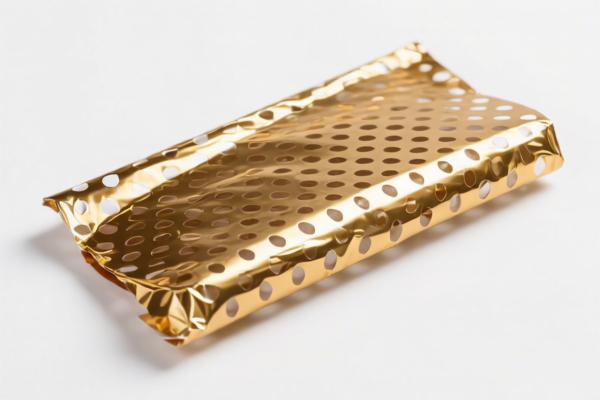


AI Analysis
📄 Perforated Card Positioning Paper
🌐 HS Code Classification & Customs Clearance Guide | 2026 Updated Tariff Breakdown | Expert-Level Compliance Strategy
📌 One Product, Five HS Codes — Why? How to Avoid 35% Tariff Traps!
🧩 I. Product Definition & Key Classification Logic
Perforated Card Positioning Paper is a specialized paper-based medium used in punch card systems, typically for alignment, indexing, or guiding mechanical punches in legacy or industrial data processing environments. Despite its simple appearance, it’s not just "paper" — it's a functional component in automated data entry and control systems.
⚠️ Critical Insight:
- It is not a general-purpose label or sticker.
- It is not a standalone card.
- It is not a regular paper product.
- It is designed for mechanical positioning in punch machines → functional classification matters.
This is why it can be classified under five different HS Codes, depending on material, form, processing, and intended use.
📦 II. HS Code Breakdown (2026 Updated Tariff Authority)
| HS Code | Product Description | Form/Structure | Key Functional Use | Tax Rate |
|---|---|---|---|---|
4823.90.31.00 |
Perforated card positioning paper, made of paper, used as punch machine consumables | Sheet/strip form | Mechanical alignment in punch systems | 35.0% |
4823.40.00.00 |
Perforated card positioning paper, made of paper, in card form | Card-shaped | Paper-based positioning card | 35.0% |
4821.90.40.00 |
Perforated card positioning paper, made of paper, in card form, classified as label or paper制品 | Card form | Label/identification function | 35.0% |
4821.90.20.00 |
Perforated card positioning paper, made of paper, card/positioning type, used as paper carrier | Card/label form | Carrier for data or mechanical guidance | 35.0% |
4811.41.21.00 |
Perforated card positioning paper, made of paper, with coating/processing, used as adhesive or decorative paper | Coated/processed | Adhesive-backed or surface-treated for durability | 35.0% |
🔍 Why So Many HS Codes?
The same product can fall under different subheadings based on: - Physical form (sheet vs. card) - Processing (coated, laminated, adhesive-backed) - Function (positioning, labeling, carrier) - End-use (punch machine, data system, industrial automation)
💰 III. 2026 Tariff Breakdown – The 35% Tax Explained (U.S. Market)
✅ Applicable Country: United States (US)
✅ Origin: China (CN)
✅ Effective Date: November 10, 2025 (post-301/IEEPA enforcement)
🎯 All Five HS Codes Carry the Same Total Tax: 35.0%
| Tax Component | Rate | Legal Basis | Explanation |
|---|---|---|---|
| Base Duty (General Tariff) | 0.0% | HTSUS Chapter 48 | Standard rate for paper products |
| Section 301 (USITC) Additional Duty | +25.0% | USITC Footnote 9903.88.01 | Imposed under Section 301 of the Trade Act of 1974 — targeting Chinese-origin goods deemed to have unfair trade practices |
| IEEPA (International Emergency Economic Powers Act) Duty | +10.0% | IEEPA: 9903.01.24 | Applied to Chinese goods under national emergency powers — targets strategic and industrial materials |
| Total Effective Tariff | 35.0% | — | CIF × 35% |
📌 Critical Legal Pathway:
IEEPA:9903.01.24→USITC:9903.88.01→HTSUS:4823.90.31.00→FOOTNOTE:9903.88.01✅ No De Minimis Exemption
- Cannot use the 8% de minimis rule (as of 2025) → even small shipments are fully taxed. - No tariff relief unless product qualifies under exclusion list.
🛠️ IV. Customs Clearance Best Practices (Pro Tips to Avoid 35% Pitfalls)
✅ 1. Documentation Checklist (Mandatory for U.S. Entry)
| Document | Required? | Why It Matters |
|---|---|---|
| ✅ Product Specification Sheet | ✔️ | Must describe perforation pattern, thickness, material, and use in punch machines |
| ✅ Technical Drawing / Layout | ✔️ | Shows alignment features, hole positions, mechanical fit |
| ✅ Product Photos (Clear, with scale) | ✔️ | Must show perforations, edges, and surface finish |
| ✅ Commercial Invoice | ✔️ | Must state: "Perforated Card Positioning Paper for Punch Machine Use – Not for Labeling" |
| ✅ Certificate of Origin (CO) | ✔️ | Required for tariff claims; if from China → 35% applies |
| ✅ Packing List | ✔️ | Shows quantity, weight, packaging type |
| ✅ Test Report (Optional but Recommended) | ✔️ | Proves mechanical durability, no adhesive residue, non-reflective surface |
✅ 2.申报技巧 (申报口诀)
🔥 “Form Defines Code, Use Defines Duty, No Labeling, No Exemption!”
| Scenario | Correct HS Code | Wrong Code | Risk |
|---|---|---|---|
| Paper with holes, used in punch machine | 4823.90.31.00 |
4821.90.40.00 |
Risk of misclassification |
| Card-shaped, not labeled | 4823.40.00.00 |
4821.90.20.00 |
May trigger labeling duty |
| Coated surface, no adhesive | 4811.41.21.00 |
4823.40.00.00 |
Higher risk of processing duty |
| Used as carrier in automated system | 4821.90.20.00 |
4823.90.31.00 |
May be challenged as functional component |
✅ Pro Tip:
Use the exact phrase in invoice:
"Perforated positioning paper for use in mechanical punch card systems – not for labeling, identification, or decorative purposes."
✅ 3. Special Cases & Risk Mitigation
| Scenario | Recommended Action |
|---|---|
| Product is coated or laminated | Use 4811.41.21.00 → avoid labeling codes |
| Used in legacy industrial systems (e.g., IBM punch cards) | Provide system documentation to prove non-labeling use |
| Shipped in bulk (rolls, sheets) | Use 4823.90.31.00 — best fit for consumable form |
| Origin is Vietnam, Mexico, or Thailand | Apply for IEEPA exemption → 0% tariff (if eligible) |
| Product has adhesive backing | Must be declared as adhesive paper → may trigger higher duty |
🌍 V. Global Customs Comparison (2026)
| Country/Region | Recommended HS Code | Tariff | Certification | Notes |
|---|---|---|---|---|
| 🇺🇸 United States | 4823.90.31.00 or 4821.90.20.00 |
35.0% (China-origin) | None required | No de minimis |
| 🇨🇳 China | 4823.40.00.00 |
5% | CCC (if applicable) | No extra duties |
| 🇪🇺 European Union | 4823.90.31.00 |
0% (if CE) | CE, RoHS | No 301/IEEPA |
| 🇦🇺 Australia | 4823.40.00.00 |
5% | RCM | No extra tariffs |
| 🇯🇵 Japan | 4821.90.20.00 |
0% | PSE | No additional duties |
📌 Key Takeaway:
- Only the U.S. applies the 35% tariff on this product from China. - Non-Chinese origin = 0% (if compliant with IEEPA exemption rules).
🚨 VI. Common Mistakes & Real-World Penalties
❌ Mistake 1: Labeling as "paper label" or "card label"
👉 Result: Wrong HS Code → 35% duty + penalties + audit risk
❌ Mistake 2: Not distinguishing between functional positioning and labeling
👉 Result: Customs may reclassify as 4821.90.40.00 → higher scrutiny
❌ Mistake 3: Using "punch card" in invoice without context
👉 Result: May trigger data processing equipment classification → higher tariff
❌ Mistake 4: Shipment under $800 → assuming de minimis applies
👉 Result: False claim → fines, seizure, blacklisting
✅ Correct Way to Declare:
"Perforated Card Positioning Paper, 80mm x 120mm, 0.15mm thickness, for mechanical alignment in punch card systems. Not for labeling, identification, or decoration. Used in legacy data entry equipment."
🎯 VII. Final Verdict: How to Win the Tariff Battle
🔹 HS Code is NOT a guess — it’s a function
🔹 Form matters more than name
🔹 Use the right code to avoid 35%
🔹 Prove function, not form✅ Golden Rule:
"If it’s not for labeling, don’t call it a label. If it’s not decorative, don’t call it a card. If it’s for alignment, call it positioning paper."
📌 VIII. Action Plan (Do This Now!)
- 📌 Audit your product: Is it a card, sheet, coated, or laminated?
- 📌 Review usage: Is it mechanical positioning or labeling?
- 📌 Choose the correct HS Code from the 5 listed above.
- 📌 Prepare documentation with technical proof.
- 📌 Apply for Advance Ruling (if uncertain) → avoid post-entry penalties.
- 📌 Consider shifting origin to Vietnam/Mexico/Thailand to avoid 35%.
📣 🚨 Immediate Action Required!
📞 Contact a U.S.-licensed customs broker today
🚀 Get your HS Code pre-approved
💼 Avoid 35% tariff traps — protect your margins!
✨ Professional Compliance Starts Here!
💼 One wrong code = 35% loss. One right code = full profit.
🎯 Your product. Your tariff. Your control.
Customer Reviews
About HS Code Classification
The Harmonized System (HS) is an internationally standardized nomenclature developed by the World Customs Organization (WCO) to classify traded products. Over 200 countries use the HS system as the basis for customs tariffs, trade statistics, and import/export regulations.
Each HS code follows a hierarchical structure:
- Chapter (2 digits) — Broad category of goods (e.g., Chapter 84: Machinery and Mechanical Appliances)
- Heading (4 digits) — More specific grouping within the chapter
- Subheading (6 digits) — Internationally standardized breakdown, used by all WCO member countries
- National subdivisions (8-10 digits) — Country-specific extensions for further classification, such as US HTSUS 10-digit codes
Correct HS code classification is essential for smooth customs clearance, accurate duty payment, and compliance with trade regulations. Misclassification can lead to customs delays, overpayment of duties, or penalties.
When importing from CN to US, the applicable tariff rates may include:
- Most-Favored-Nation (MFN) rate — The standard duty rate applied to WTO members
- General rate — Applied to countries without trade agreements
- Trade remedy duties — Additional tariffs such as Section 301 (anti-dumping), Section 232 (national security), or countervailing duties
The information provided on this page is for reference purposes only. For official classification, please consult with your local customs authority or a licensed customs broker.