Perforated Card Roll
CN → US| HS Code | Tariff Rate | Origin | Destination | Doc |
|---|---|---|---|---|
| 4811904090 | 35.0% | CN | US | Official Doc |
| 4814900200 | 17.5% | CN | US | Official Doc |
| 4823903100 | 35.0% | CN | US | Official Doc |
| 4823906700 | 35.0% | CN | US | Official Doc |
| 4811904090 | 35.0% | CN | US | Official Doc |
Product Images
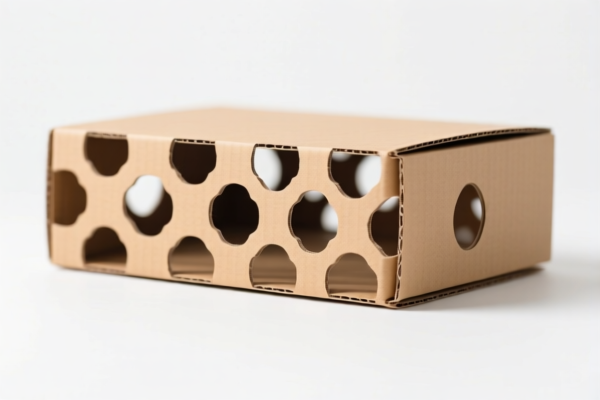
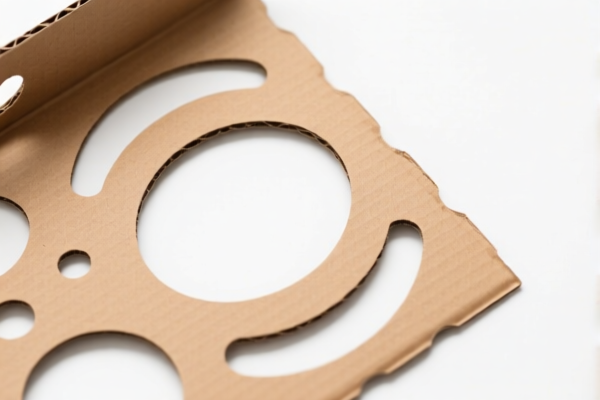
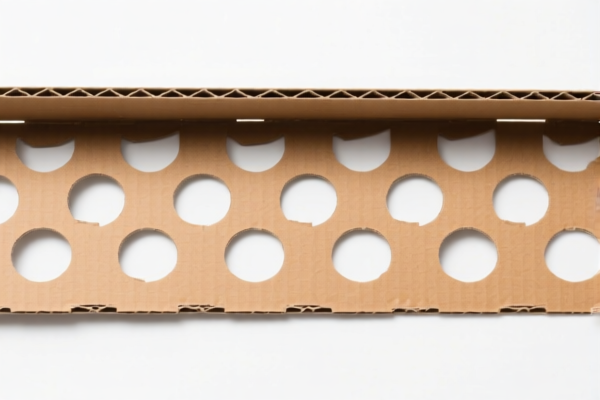
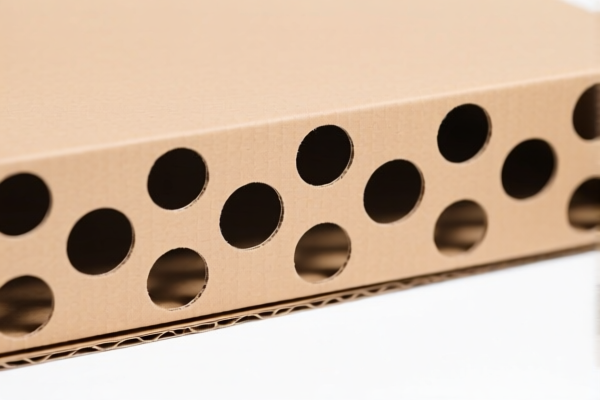
AI Analysis
🎴 Perforated Card Roll (Paper/Cellulose Products)
🌐 HS Code Reference & Customs Clearance Guide | 2026 Latest Tariff Analysis | Professional Clearance Strategy
📌 I. Product Definition & Classification: What is a "Perforated Card Roll"?
In international trade, "Perforated Card Roll" typically refers to rolls of paper or cellulose-based materials that have been punched with holes (perforations) for use in data processing, accounting machines, looms, or industrial control systems. While often historically associated with punch cards, modern classifications focus on the material composition and form (rolled).
Based on the provided data, these products fall under Chapter 48 (Paper and Paperboard), specifically within subheadings related to other paper products or coated paperboards, depending on specific processing (e.g., coating, perforation method).
⚠️ Key Distinction Point:
- If the product is uncoated, plain cellulose paper used for data/looms → Likely4823.90.31.00or4811.90.40.90
- If the product is coated or treated cellulose fiber product → Likely4823.90.67.00
- Note: Even though "Perforated Card" might suggest a specific tech use, US Customs often classifies the physical form (rolled paper/cellulose) rather than just the end-use, unless specific technical criteria are met.
📦 II. HS Code Classification Details (2026 Latest Tariff Authority Cross-Reference)
| HS Code | Product Description | Applicable Scenario | Tax Rate (Total) |
|---|---|---|---|
4811.90.40.90 |
Paper products, rolled form, cotton paper rolls, fitting paper/cellulose material classification | General rolled paper, coated or uncoated rolls not elsewhere specified | 35.0% |
4814.90.02.00 |
Paper coverings, rolled form, belonging to other paper categories | Decorative paper, wallpaper, or specialized covering paper | 17.5% |
4823.90.31.00 |
Perforated cotton paper rolls, for punch cards, fitting paper/cellulose material | Direct use in punch card machines, data processing, loom control | 35.0% |
4823.90.67.00 |
Cellulose fiber products, rolled, classified as coated paper or paperboard | Treated/coated cellulose rolls for industrial or packaging use | 35.0% |
4811.90.40.90 |
Other paper products, cotton paper roll form, fitting rolled description | Duplicate/Alternative classification for general rolled paper | 35.0% |
🔍 Important Reminder:
- Although4814.90.02.00has a lower total tax rate (17.5%), it is specifically for "Paper Coverings" (e.g., wallpaper, decorative layers). If your product is a functional perforated card for machinery/data, this code may be incorrectly applied and rejected by Customs if not intended for covering purposes. - The standard rate for perforated paper/cellulose rolls (4823.90.31.00and4823.90.67.00) is 35.0%. - Do not misclassify functional perforated cards as decorative coverings to save tax; this leads to audits and penalties.
💰 III. 2026 Latest Tariff Rate Details (Including Additional Taxes & Policy Surcharges)
✅ Applicable Country: United States (US)
✅ Origin: China (CN)
✅ Effective Time: From November 10, 2025 (Including subsequent imports)
🎯 1. 4811.90.40.90 & 4823.90.31.00 & 4823.90.67.00 —— Paper/Cellulose Rolls & Perforated Cards
| Item | Content |
|---|---|
| Basic Tariff | 0% (ad valorem) |
| USITC Additional Tariff | +25% (Section 301 Duties) |
| 122 Clause Tariff (IEEPA) | +10% (Targeting China/HK products, effective Nov 10, 2025) |
| Total Tariff Rate | 35.0% |
| Tax Calculation | CIF Value × 35% |
| De Minimis Exemption Available? | ❌ NO (denied_de_minimis) |
| Legal Basis Path | Section 301: USITC → IEEPA Section 122 → HS Code: 4811.90.40.90 / 4823.90.31.00 / 4823.90.67.00 |
📌 Explanation:
- The 25% USITC tariff is a standard Section 301 duty on many Chinese paper/cellulose products. - The 10% IEEPA "122 Clause" tariff is a new/additional levy specifically targeting Chinese goods under the International Emergency Economic Powers Act. - Combined Total: 35%. This is a high tariff category. You must factor this into your landed cost immediately. - No De Minimis Exemption: Small shipments do not bypass these taxes.
🎯 2. 4814.90.02.00 —— Paper Coverings (If Applicable)
| Item | Content |
|---|---|
| Basic Tariff | 0% |
| USITC Additional Tariff | +7.5% |
| 122 Clause Tariff (IEEPA) | +10% |
| Total Tariff Rate | 17.5% |
| Tax Calculation | CIF Value × 17.5% |
| De Minimis Exemption Available? | ❌ NO |
| Legal Basis Path | Section 301: USITC → IEEPA Section 122 → HS Code: 4814.90.02.00 |
📌 Caution:
- This lower rate only applies if the product is genuinely a "paper covering" (e.g., decorative paper, wallpaper). - If your "Perforated Card Roll" is used for data, looms, or industrial purposes, using this code is misclassification. Customs may reclassify it to4823or4811, resulting in a back payment of 17.5% (35% - 17.5%) plus penalties.
🛠️ IV. Customs Clearance Practical Advice (Real-World Pitfall Guide)
✅ 1. Documentation Checklist (Mandatory)
| Document | Must Provide | Description |
|---|---|---|
| ✅ Product Specification Sheet | ✔️ | Detailed description: material (cotton/paper/cellulose), dimensions, perforation pattern, use (data/looms/decorative). |
| ✅ Product Photos | ✔️ | Clear images of the roll, edges, and perforations. Show if it’s coated or plain. |
| ✅ Commercial Invoice | ✔️ | Must explicitly state: "Perforated Paper/Cotton Card Roll for [Specific Use]." Do not just write "Paper." |
| ✅ Packing List | ✔️ | Net/Gross weight, dimensions, number of rolls. |
| ✅ Certificate of Origin (CO) | ✔️ | Proves China origin (triggering the 35% tax). |
✅ 2. Declaration Tips (Key Mantra)
🔥 “Material Determines HS, Use Determines Subhead, Accuracy Saves Thousands!”
| Situation | Correct Declaration Approach | Wrong Approach |
|---|---|---|
| Perforated cards for looms/data | Declare as 4823.90.31.00 (Perforated Paper) or 4811.90.40.90 |
Declare as 4814.90.02.00 (Covering) → High Risk of Audit |
| Coated cellulose rolls | Declare as 4823.90.67.00 |
Declaring as plain paper → Mismatch in Tax |
| Generic Paper Rolls | Declare as 4811.90.40.90 |
Overly vague terms like "Office Supplies" |
📌 Critical Note:
- Do not hide the perforation. If the product is a "Perforated Card," the perforation must be declared. Hiding it to avoid scrutiny can lead to severe penalties for misdeclaration. - Clarify the "Cotton" vs. "Cellulose": If it’s truly cotton-based,4823.90.31.00is more precise. If it’s synthetic cellulose,4823.90.67.00may apply.
✅ 3. Special Cases
| Situation | Handling Advice |
|---|---|
| OEM Custom Perforated Cards | Provide customer drawings/specs to prove the specific perforation pattern and end-use. |
| Small Sample Shipments | Even for samples, de minimis does NOT apply. Taxes must be paid upfront. |
| Mixed Shipments (Paper + Non-Paper) | Separate declarations are required. Do not combine paper rolls with plastic/metal parts. |
🌍 V. Global Market Comparison (2026 Latest)
| Country/Region | Recommended HS Code | Tariff (China Origin) | Certification | Notes |
|---|---|---|---|---|
| 🇺🇸 USA | 4823.90.31.00 / 4811.90.40.90 |
35% (incl. 10% IEEPA) | None Specific | High tariff burden. |
| 🇨🇳 China | 4823.90.31.00 |
5-10% | N/A | Domestic export standard. |
| 🇪🇺 EU | 4823.90.31.00 |
0% (Most MFN rates) | CE (if applicable) | Lower tariff, but VAT applies. |
| 🇬🇧 UK | 4823.90.31.00 |
0% | UKCA | Post-Brexit alignment with EU. |
📌 Conclusion:
- USA is the most costly market for these products due to the 35% total duty. - No duty-free exemptions apply for Chinese-origin paper/cellulose rolls in the US. - Consider supplier diversification or tariff engineering (if legally possible, e.g., slight material change) if cost sensitivity is high.
📌 VI. Common Mistakes & Pitfalls (Blood Lessons)
❌ Mistake 1: Declaring "Perforated Card" as "Wallpaper" (4814) to get 17.5% tax.
👉 Consequence: Customs audit, reclassification to 35%, 17.5% back tax + penalties.
❌ Mistake 2: Assuming "Small Package" means no tax.
👉 Consequence: De Minimis exemption does NOT apply to Section 301/IEEPA goods. Full 35% tax due.
❌ Mistake 3: Vague description "Paper Roll."
👉 Consequence: Customs may apply the highest possible duty or hold the shipment for inspection.
✅ Correct Action:
"Perforated Cotton Paper Roll, for Industrial Loom Control, 200m Length, Coated/Uncoated, Model XYZ, China Origin."
🎯 VII. Conclusion: Professional Declaration, Cost Efficiency!
🎯 Remember the Mantra:
🔹 "35% Tax for Paper/Cotton Rolls from China!"
🔹 "10% IEEPA + 25% Section 301 = No Exceptions!"
🔹 "Declare Perforation & Material Clearly!"
📌 Pro Tip:
If your product is not a "paper covering" but a functional "perforated card," do not use
4814.90.02.00. The risk of misclassification penalty outweighs the 17.5% tax saving. Stick to4823or4811with accurate descriptions.
📣 Immediate Action:
📞 Consult a licensed customs broker
📄 Prepare detailed product specs (material, perforation, use)
🚀 Avoid costly delays by declaring accurately!
✨ Professional Clearance Starts with Accurate Classification!
💼 Every percent matters in the 35% tariff environment!
Customer Reviews
About HS Code Classification
The Harmonized System (HS) is an internationally standardized nomenclature developed by the World Customs Organization (WCO) to classify traded products. Over 200 countries use the HS system as the basis for customs tariffs, trade statistics, and import/export regulations.
Each HS code follows a hierarchical structure:
- Chapter (2 digits) — Broad category of goods (e.g., Chapter 84: Machinery and Mechanical Appliances)
- Heading (4 digits) — More specific grouping within the chapter
- Subheading (6 digits) — Internationally standardized breakdown, used by all WCO member countries
- National subdivisions (8-10 digits) — Country-specific extensions for further classification, such as US HTSUS 10-digit codes
Correct HS code classification is essential for smooth customs clearance, accurate duty payment, and compliance with trade regulations. Misclassification can lead to customs delays, overpayment of duties, or penalties.
When importing from CN to US, the applicable tariff rates may include:
- Most-Favored-Nation (MFN) rate — The standard duty rate applied to WTO members
- General rate — Applied to countries without trade agreements
- Trade remedy duties — Additional tariffs such as Section 301 (anti-dumping), Section 232 (national security), or countervailing duties
The information provided on this page is for reference purposes only. For official classification, please consult with your local customs authority or a licensed customs broker.