Perforated Cardboard Roll
CN → US| HS Code | Tariff Rate | Origin | Destination | Doc |
|---|---|---|---|---|
| 4811904090 | 35.0% | CN | US | Official Doc |
| 4814900200 | 17.5% | CN | US | Official Doc |
| 4823903100 | 35.0% | CN | US | Official Doc |
| 4823906700 | 35.0% | CN | US | Official Doc |
| 4811904090 | 35.0% | CN | US | Official Doc |
Product Images
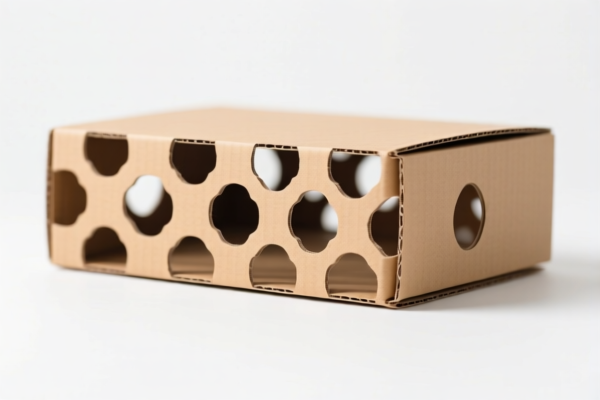
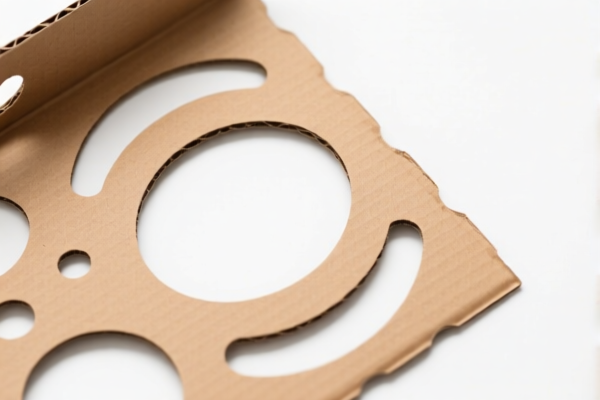
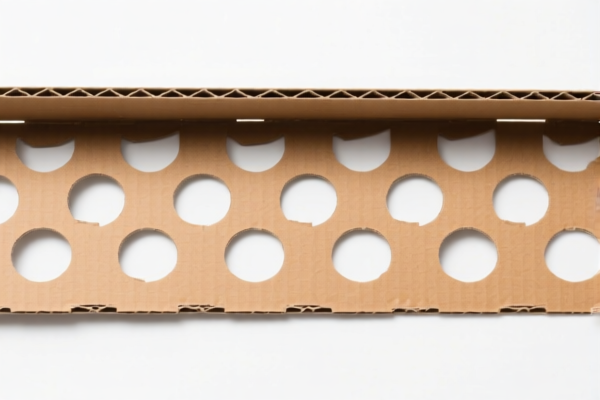
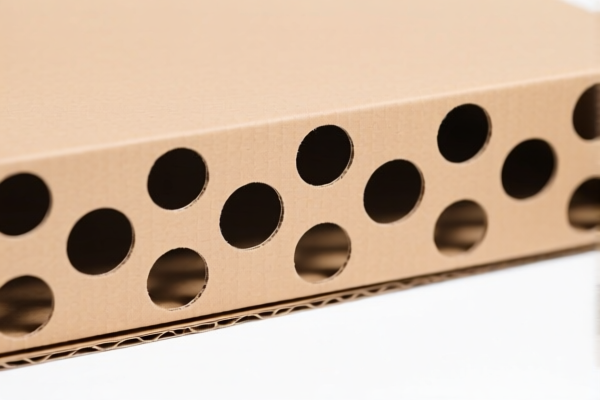
AI Analysis
🎴 Perforated Cardboard Roll (Punch Card Paper / Perforated Paper Rolls)
🌐 HS Code Reference & Customs Clearance Guide | 2026 Latest Tariff Analysis | Professional Clearance Strategy
📌 I. Product Definition & Classification: What Exactly Is a "Perforated Cardboard Roll"?
In international trade, the term "Perforated Cardboard Roll" can refer to several distinct paper products depending on the material composition, usage, and physical structure. This ambiguity often leads to misclassification.
The core distinction lies in whether the paper is: 1. Pure Cotton Paper (Machine-made paper for data processing): Often used for old-school computer punch cards. 2. Coated/Processed Paper: Used for receipts, tickets, or industrial labeling. 3. General Paper Products: Generic cardboard/paper rolls without specific data-processing functions.
⚠️ Key Classification Point:
- If it is machine-made paper (specifically cotton or high-quality pulp) designed for punch cards (data input) → It falls under 4811.90.40.90 or 4823.90.31.00.
- If it is a coated paper product or general-purpose paper roll → It falls under 4823.90.67.00.
- If it is a paper covering material or generic decorative paper → It falls under 4814.90.02.00.
📦 II. HS Code Classification Details (2026 Latest Tariff Authority Comparison)
| HS Code | Product Description | Use Case | Material/Structure |
|---|---|---|---|
4811.90.40.90 |
Paper rolls made of cotton paper, in roll form; classified as other paper products | Data processing punch cards, special industrial paper | ✅ Cotton Paper, Roll |
4814.90.02.00 |
Paper coverings, in roll form; classified as other categories | Decorative paper, wallpaper backing, generic coverings | ✅ Paper, Roll |
4823.90.31.00 |
Perforated paper rolls of cotton paper, for punch cards, no perforations yet processed into cards | Raw material for punch card manufacturing | ✅ Cotton Paper, Perforated, For Punch Cards |
4823.90.67.00 |
Coated paper products, in roll form, made of cellulose-based material | Industrial labels, thermal paper rolls, coated receipt paper | ✅ Cellulose/Coated, Roll |
🔍 Key Reminder:
- "Perforated" does not automatically mean "Punch Card Paper." If the perforation is merely for tearing (like receipt paper), it might be 4823.90.67.00 (coated/other).
- If the product is specifically cotton paper intended for data processing machines (legacy systems), it is 4811.90.40.90 or 4823.90.31.00.
- 4814.90.02.00 is for paper coverings (e.g., wallpaper, protective films), not industrial punch cards.
💰 III. 2026 Latest Tariff Rate Breakdown (Including Surcharges & Policy Add-ons)
✅ Applicable Country: United States (US)
✅ Origin: China (CN)
✅ Effective Date: From November 10, 2025 (and subsequent imports)
🎯 1. 4811.90.40.90 & 4823.90.31.00 —— Cotton Paper Rolls (Data Processing/Punch Card Type)
| Item | Content |
|---|---|
| Base Tariff | 0.0% (ad valorem) |
| USITC Additional Tariff | +25.0% (from USITC Footnote 9903.88.01) |
| IEEPA Additional Tariff | +10.0% (targeting China/HK products, effective Nov 10, 2025) |
| Total Tariff Rate | 35.0% |
| Tax Calculation | CIF Value × 35% |
| De Minimis Eligibility | ❌ Not Eligible (deny_de_minimis) |
| Legal Basis Path | IEEPA:9903.01.25 → IEEPA:9903.01.24 → USITC:4811.90.40.90 → FOOTNOTE:9903.88.01 |
📌 Explanation:
- "USITC 25%": Refers to Section 301 tariffs on specific Chinese paper products.
- "IEEPA 10%": The new additional tariff under the International Emergency Economic Powers Act for Chinese-origin goods.
- Total 35% is a high tariff rate. Must be accounted for in cost planning.
🎯 2. 4823.90.67.00 —— Coated Paper Products (Cellulose-Based)
| Item | Content |
|---|---|
| Base Tariff | 0.0% |
| USITC Additional Tariff | +25.0% |
| IEEPA Additional Tariff | +10.0% |
| Total Tariff Rate | 35.0% |
| Tax Calculation | CIF × 35% |
| De Minimis Eligibility | ❌ Not Eligible |
| Legal Basis Path | IEEPA:9903.01.25 → IEEPA:9903.01.24 → USITC:4823.90.67.00 → FOOTNOTE:9903.88.01 |
📌 Note:
- Coated paper rolls (like thermal labels or industrial receipt rolls) are also subject to the 35% total tariff.
- Even if "perforated," if it's coated cellulose, it falls here.
🎯 3. 4814.90.02.00 —— Paper Coverings (Generic)
| Item | Content |
|---|---|
| Base Tariff | 0.0% |
| USITC Additional Tariff | +7.5% |
| IEEPA Additional Tariff | +10.0% |
| Total Tariff Rate | 17.5% |
| Tax Calculation | CIF × 17.5% |
| De Minimis Eligibility | ❌ Not Eligible |
| Legal Basis Path | IEEPA:9901.25 → IEEPA:9903.01.24 → USITC:4814.90.02.00 → FOOTNOTE:9903.88.01 |
📌 Important:
- If the "perforated cardboard roll" is actually a decorative paper covering (e.g., for furniture, not for data processing), the tariff is lower (17.5%).
- Misclassification Risk: Declaring industrial punch card paper as "paper covering" to save tax is illegal and risky.
🛠️ IV. Customs Clearance Practical Advice (Battle-Tested Pitfall Guide)
✅ 1. Required Documents Checklist (Missing One = Delay)
| Document | Required | Notes |
|---|---|---|
| ✅ Product Specification Sheet | ✔️ | Must detail: Material (Cotton vs. Cellulose), Dimensions, Perforation Type, Intended Use. |
| ✅ Photos of Product | ✔️ | Clear shots of roll ends, perforation pattern, and packaging. |
| ✅ Commercial Invoice | ✔️ | Must state: "Perforated Paper Rolls," HS Code, Country of Origin. |
| ✅ Packing List | ✔️ | Show net/gross weight, number of rolls per package. |
| ✅ Certificate of Origin | ✔️ | Required for US import; verify if any preferential treatment applies (none for China currently). |
✅ 2. Declaration Tips (Key Mantra)
🔥 "Material Defines HS, Use Defines Subcategory, Be Precise or Pay the Price!"
| Scenario | Correct Declaration | Wrong Approach |
|---|---|---|
| Punch Card Paper (Cotton) | 4811.90.40.90 or 4823.90.31.00 |
Misdeclare as "Office Paper" → 35% |
| Coated Receipt Paper | 4823.90.67.00 |
Misdeclare as "Punch Card" → Still 35%, but different legal risk |
| Decorative Wallpaper Roll | 4814.90.02.00 |
Misdeclare as "Industrial Paper" → Unnecessary 35% instead of 17.5% |
| Mixed Bundle (Cover + Paper) | Split Declaration | Bundle together → Each item taxed at higher rate |
✅ 3. Special Case Handling
| Situation | Advice |
|---|---|
| OEM Custom Perforated Paper | Provide client order + design file. Proves it's not "generic" and helps justify specific HS code. |
| "Perforated" vs. "Punched" | Perforated (slits ready to tear) ≠ Punched (holes punched for data). Clarify this to avoid海关 inquiry. |
| Cotton vs. Wood Pulp | If unsure, test material. Cotton often falls under 4811/4823; Wood Pulp may fall under 4823.90.67.00. Both are 35%, but documentation differs. |
| Small Sample Shipments | Even for samples, 35% tax applies. Do not use de minimis ($800) exemption if not eligible. |
🌍 V. Global Market Comparison (2026 Latest)
| Country/Region | Recommended HS Code | Tariff (China Origin) | Certification | Notes |
|---|---|---|---|---|
| 🇺🇸 USA | 4811.90.40.90 / 4823.90.31.00 |
35% | No specific cert, but accurate description required | High tariff due to IEEPA + 301 |
| 🇨🇳 China | 4811.90.40.90 |
5% | None | Low import tariff |
| 🇪🇺 EU | 4811.90.40.90 |
6.5% | CE (if coated chemicals) | No Section 301 equivalent, but VAT applies |
| 🇬🇧 UK | 4811.90.40.90 |
6.5% | UKCA (if applicable) | Post-Brexit tariff structure |
| 🇦🇺 Australia | 4811.90.40.90 |
5% | GEMS (if coated) | No major surcharges |
📌 Conclusion:
- USA is the highest cost market due to 35% total tariff.
- EU/UK/Australia are more favorable (~5-6.5%), but check for chemical/coating regulations.
- China Domestic: Low tariff, but export restrictions may apply depending on material type.
📌 VI. Common Mistakes & Pitfall Guide (Blood & Tears Lessons)
❌ Mistake 1: Declaring "Perforated Cardboard" as "Cardboard" (HS 4807)
👉 Consequence: Wrong HS code. Cardboard is different from paper rolls. Customs will reclassify → Delay + 35% Tax.
❌ Mistake 2: Assuming "Perforated" means "Punch Card"
👉 Consequence: If it's just receipt paper with perforations, it's 4823.90.67.00. Misdeclaring as data paper doesn't change tax (both 35%), but invites audit.
❌ Mistake 3: Ignoring "Cotton" vs. "Cellulose"
👉 Consequence: Different subheadings. While tax is similar, documentation must match. Mismatch leads to seizure.
❌ Mistake 4: Using "Rolls" vaguely
👉 Consequence: Must specify width, weight, material. Vague description → Customs Questionnaire.
✅ Correct Practice:
"Perforated Cotton Paper Rolls for Data Processing Punch Cards, Width: 10.5 inches, Weight: 50kg/Roll, HS: 4811.90.40.90"
🎯 VII. Conclusion: Precise Declaration Saves Money!
🎯 Remember the Mantra:
🔹 "Cotton Paper = 35% (USA)"
🔹 "Coated Paper = 35% (USA)"
🔹 "Paper Covering = 17.5% (USA)"
🔹 "Be Specific, Avoid Fines!"
📌 Pro Tip:
If your product is coated or has chemical treatments, ensure it complies with EPA/TSCA regulations.
For USA imports, calculate the 35% landed cost early. If volume is high, consider Bonded Warehouses or FTZs to defer duty payments.
📣 Take Action:
📞 Contact a licensed customs broker
📄 Provide Material Safety Data Sheet (MSDS) if coated
🚀 Get an Advance Ruling if classification is ambiguous!
✨ Professional Clearance Starts with Accurate Classification!
💼 Every dollar saved in duty is pure profit!
Customer Reviews
About HS Code Classification
The Harmonized System (HS) is an internationally standardized nomenclature developed by the World Customs Organization (WCO) to classify traded products. Over 200 countries use the HS system as the basis for customs tariffs, trade statistics, and import/export regulations.
Each HS code follows a hierarchical structure:
- Chapter (2 digits) — Broad category of goods (e.g., Chapter 84: Machinery and Mechanical Appliances)
- Heading (4 digits) — More specific grouping within the chapter
- Subheading (6 digits) — Internationally standardized breakdown, used by all WCO member countries
- National subdivisions (8-10 digits) — Country-specific extensions for further classification, such as US HTSUS 10-digit codes
Correct HS code classification is essential for smooth customs clearance, accurate duty payment, and compliance with trade regulations. Misclassification can lead to customs delays, overpayment of duties, or penalties.
When importing from CN to US, the applicable tariff rates may include:
- Most-Favored-Nation (MFN) rate — The standard duty rate applied to WTO members
- General rate — Applied to countries without trade agreements
- Trade remedy duties — Additional tariffs such as Section 301 (anti-dumping), Section 232 (national security), or countervailing duties
The information provided on this page is for reference purposes only. For official classification, please consult with your local customs authority or a licensed customs broker.