Perforated Color Film
CN → US| HS Code | Tariff Rate | Origin | Destination | Doc |
|---|---|---|---|---|
| 3921904090 | 39.2% | CN | US | Official Doc |
| 3921905050 | 39.8% | CN | US | Official Doc |
| 3920591000 | 41.0% | CN | US | Official Doc |
| 3920992000 | 39.2% | CN | US | Official Doc |
| 3921904090 | 39.2% | CN | US | Official Doc |
Product Images
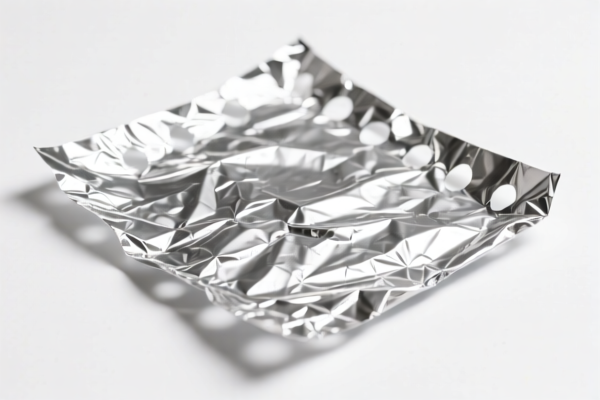
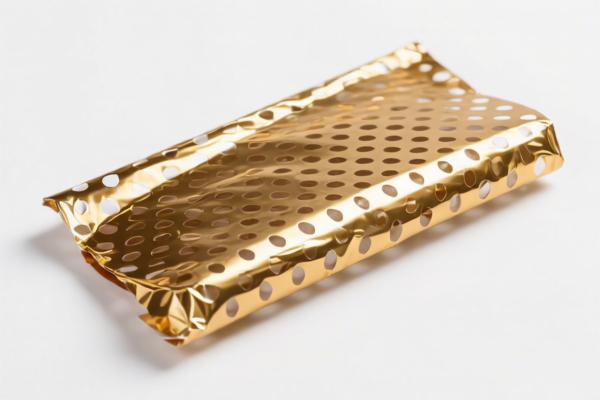

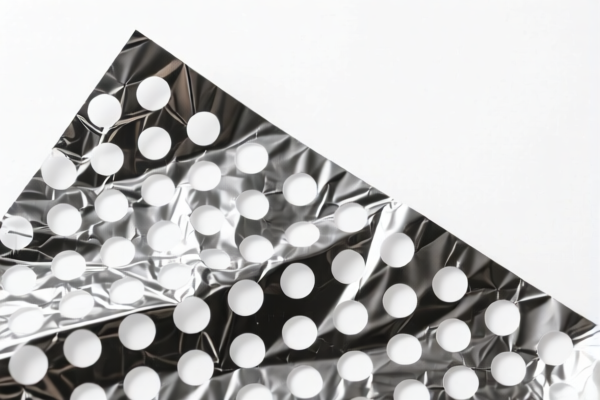
AI Analysis
🎨 Perforated Color Film (彩印穿孔薄膜)
🌐 HS Code Reference & Customs Clearance Guide | 2026 Latest Tariff Analysis | Professional Clearance Strategy
📌 I. Product Definition & Classification: What Exactly is "Perforated Color Film"?
"Perforated Color Film" is a specialized plastic film used primarily for high-precision printing, packaging, labels, and industrial applications where透气性 (breathability) or visual transparency is required. In international trade, its classification depends strictly on its material composition and physical form.
It is not a single HS code but falls into a family of codes under Chapter 39 (Plastics and Articles Thereof). The key distinction lies in whether the base polymer is generic plastic, acrylic, or a specific type of plastic sheet.
⚠️ Critical Distinction Point:
- If the film is made of generic plastic (e.g., PP, PE, PET), it usually falls under 3921.
- If the film is made of acrylic or related polymers, it falls under 3920.
- The term "Perforated" indicates a physical process but does not change the primary material classification in Chapter 39.
- The term "Color Printing Use" describes the application, not the material, so it must be declared based on physical properties.
📦 II. HS Code Classification Details (2026 Latest Tariff Authority Mapping)
Based on the provided data, here are the specific HS codes applicable to "Perforated Color Film," categorized by material:
| HS Code | Product Description | Material Basis | Key Application Scenario |
|---|---|---|---|
3921.90.40.90 |
Plastic Film, For Color Printing | Plastic (General) | General packaging, labels, decorative films. |
3921.90.50.50 |
Plastic Film, For Color Printing | Plastic (General) | Alternative general plastic film variant; often used for specific thickness or density grades. |
3920.59.10.00 |
Plastic Sheet, For Color Printing | Acrylic or Related Polymers | High-clarity printing, acrylic-based labels, premium packaging requiring rigidity or specific optical properties. |
3920.99.20.00 |
Plastic Sheet, For Color Printing | Other Plastics | Specialty plastic sheets not covered by specific acrylic or generic sub-headings. |
🔍 Important Note:
- All items listed are "Film" (形态为薄膜) or "Sheet" (形态为薄膜) made of "Plastic" (材质为塑料).
- The presence of perforations does not shift the product to a textile or paper category; it remains a plastic article under Chapter 39.
- 3920 items generally denote "Plastic Plates, Sheets, Film, Foil and Strip, Non-cellular," while 3921 denotes "Other Plastic Plates, Sheets, Film, Foil and Strip." The specific sub-codes determine the exact duty rate.
💰 III. 2026 Latest Tariff Rate Breakdown (Including Surcharges & Policy Add-ons)
✅ Applicable Country: United States (US)
✅ Origin: China (CN)
✅ Effective Date: Current rates apply (based on 301/122 clauses)
🎯 1. 3921.90.40.90 & 3921.90.50.50 —— Plastic Film (General Plastic)
| Item | Content |
|---|---|
| Base Tariff Rate | 4.2% (3921.90.40.90) / 4.8% (3921.90.50.50) |
| Section 301 Surcharge | +25.0% (Added tariff for Chinese origin goods) |
| Section 122 Surcharge | +10.0% (Additional tariff clause, often linked to specific trade remedies or emergency provisions) |
| Total Effective Rate | 39.2% (3921.90.40.90) / 39.8% (3921.90.50.50) |
| Tax Calculation | CIF Value × Total Rate |
| De Minimis Exemption? | ❌ NO (deny_de_minimis) – These goods are subject to strict scrutiny. |
| Legal Basis Path | Base HTSUS → USITC Footnote (Section 301) → IEEPA Section 122 Clause |
📌 Explanation:
- The 25% Section 301 tariff is the standard penalty for most Chinese-manufactured plastic films under trade war measures.
- The 10% Section 122 tariff is an additional layer, bringing the total burden to nearly 40%.
- Total Tax: ~39.2% - 39.8%. This is a high-cost entry point for importers.
🎯 2. 3920.59.10.00 —— Acrylic/Related Polymer Film
| Item | Content |
|---|---|
| Base Tariff Rate | 6.0% |
| Section 301 Surcharge | +25.0% |
| Section 122 Surcharge | +10.0% |
| Total Effective Rate | 41.0% |
| Tax Calculation | CIF Value × 41.0% |
| De Minimis Exemption? | ❌ NO |
| Legal Basis Path | Base HTSUS → USITC Footnote (Section 301) → IEEPA Section 122 Clause |
📌 Explanation:
- Acrylic films have a higher base rate (6.0% vs 4.2%) due to their specific polymer classification.
- Despite the slightly higher base rate, the surcharges are identical, resulting in the highest total tax rate (41.0%) among the options.
🎯 3. 3920.99.20.00 —— Other Plastic Sheet
| Item | Content |
|---|---|
| Base Tariff Rate | 4.2% |
| Section 301 Surcharge | +25.0% |
| Section 122 Surcharge | +10.0% |
| Total Effective Rate | 39.2% |
| Tax Calculation | CIF Value × 39.2% |
| De Minimis Exemption? | ❌ NO |
| Legal Basis Path | Base HTSUS → USITC Footnote (Section 301) → IEEPA Section 122 Clause |
📌 Explanation:
- Falls under "Other Plastics" but shares the same surcharge structure.
- Total tax is 39.2%, identical to3921.90.40.90.
🛠️ IV. Customs Clearance Practical Advice (Risk Avoidance Guide)
✅ 1. Documentation Checklist (Essential for Smooth Clearance)
| Document | Required? | Purpose |
|---|---|---|
| ✅ Product Spec Sheet | ✔️ | Must specify: Material Type (Acrylic vs. Other Plastic), Thickness, Width, Perforation Pattern. |
| ✅ Commercial Invoice | ✔️ | Clearly state: "Perforated Color Printing Film," HS Code, Country of Origin (China). |
| ✅ Packing List | ✔️ | Confirm gross/net weight. Ensure no "wooden pallets" without ISPM 15 marks. |
| ✅ Certificate of Origin | ✔️ | Critical for verifying Chinese origin and applying (or disputing) surcharges. |
| ✅ Material Declaration | ✔️ | Explicitly declare if the polymer is Acrylic or Other Plastic to prevent re-classification by CBP. |
✅ 2. Declaration Tips (Key Mantras)
🔥 "Material is King, Perforation is Just a Feature!"
| Scenario | Correct Declaration | Common Mistake |
|---|---|---|
| Generic Plastic Film | 3921.90.40.90 or 3921.90.50.50 |
Mislabeling as Acrylic → Higher Base Rate |
| Acrylic Film | 3920.59.10.00 |
Labeling as "Other Plastic" → Risk of Audit |
| Perforated | State "With Perforations" in description | Hiding perforations → Seizure for misdeclaration |
| Mixed Shipment | Split HS Codes by Material | One HS Code for all → Severe Penalty |
✅ 3. Special Considerations
| Situation | Handling Advice |
|---|---|
| High Value Shipment | Consider Advance Ruling (Preliminary Ruling) to confirm if 3921 vs 3920 is accurate. |
| Acrylic Content >50% | Must use 3920 series. Do not use 3921. |
| Recycled Plastic? | If the film contains significant recycled content, ensure this is declared, as it may affect environmental compliance but not necessarily the HS code. |
| Small Samples (< $800) | ❌ Cannot use De Minimis. Section 301/122 surcharges apply regardless of value. |
🌍 V. Global Market Comparison (2026 Overview)
| Country/Region | Recommended HS Code | Base Tariff | Notes on Surcharges |
|---|---|---|---|
| 🇺🇸 USA | 3921 or 3920 |
4.2% - 6.0% | +35% to 36% surcharges (301 + 122). Total ~39-41%. |
| 🇨🇳 China (Import) | 3921.90.40.90 |
6.5% - 10% | No Section 301/122. Lower duty than US import. |
| 🇪🇺 EU | 3920.59.10.00 |
6.5% | No Section 301. Standard MFN rate applies. |
| 🇬🇧 UK | 3921.90.40.90 |
6.5% | Post-Brexit tariff regime. No US-style surcharges. |
📌 Conclusion:
- The United States imposes the highest total tax burden (39.2% - 41.0%) due to the combination of Base Tariff + Section 301 + Section 122.
- Importers should carefully calculate landed costs. If possible, explore supply chain diversification to non-China origins to avoid the 35-36% surcharge wedge.
📌 VI. Common Errors & Pitfalls (Blood & Tears Lessons)
❌ Error 1: Declaring as "Textile Film" or "Paper" because of "Perforations"
👉 Consequence: Misclassification. CBP will re-classify to Chapter 39 + Back Pay 39-41%.
❌ Error 2: Using "Plastic Film" as a generic description without specifying "Acrylic" vs "Other"
👉 Consequence: CBP may default to the higher base rate or trigger an audit. Always specify the polymer type.
❌ Error 3: Assuming De Minimis ($800) applies
👉 Consequence: Denied Entry. Section 301 and 122 goods are explicitly excluded from de minimis treatment.
❌ Error 4: Ignoring Section 122 Tariff
👉 Consequence: Underpayment of 10%. CBP will issue a Post-Centry Summary Correction (PCSC) bill + interest.
✅ Correct Practice:
"Perforated Color Printing Film, Made of Acrylic Polymer, 0.1mm Thickness, Roll Form, HS Code: 3920.59.10.00, Origin: China"
🎯 VII. Conclusion: Professional Classification Saves Millions
🎯 Remember the Golden Rule:
🔹 "Material Determines Code, Origin Determines Surcharge."
🔹 "Acrylic = 3920, Other Plastic = 3921. Both Suffer 35%+ Tax in US."
🔹 "Perforation is Just a Feature, Not a Classification Key!"
📌 Pro Tip:
If your Perforated Color Film is sourced from Vietnam, Thailand, or Mexico, you may be eligible to avoid Section 301 and 122 surcharges.
✅ Action:
📞 Contact a licensed customs broker immediately.
📄 Request a Preliminary Ruling from US CBP if the material blend is ambiguous.
🚀 Optimize your supply chain to bypass the ~40% tax barrier.
✨ Professional Clearance Starts with Precise Classification!
💼 Every Percent of Tax Saved is Pure Profit!
Customer Reviews
About HS Code Classification
The Harmonized System (HS) is an internationally standardized nomenclature developed by the World Customs Organization (WCO) to classify traded products. Over 200 countries use the HS system as the basis for customs tariffs, trade statistics, and import/export regulations.
Each HS code follows a hierarchical structure:
- Chapter (2 digits) — Broad category of goods (e.g., Chapter 84: Machinery and Mechanical Appliances)
- Heading (4 digits) — More specific grouping within the chapter
- Subheading (6 digits) — Internationally standardized breakdown, used by all WCO member countries
- National subdivisions (8-10 digits) — Country-specific extensions for further classification, such as US HTSUS 10-digit codes
Correct HS code classification is essential for smooth customs clearance, accurate duty payment, and compliance with trade regulations. Misclassification can lead to customs delays, overpayment of duties, or penalties.
When importing from CN to US, the applicable tariff rates may include:
- Most-Favored-Nation (MFN) rate — The standard duty rate applied to WTO members
- General rate — Applied to countries without trade agreements
- Trade remedy duties — Additional tariffs such as Section 301 (anti-dumping), Section 232 (national security), or countervailing duties
The information provided on this page is for reference purposes only. For official classification, please consult with your local customs authority or a licensed customs broker.