Perforated Colored Film
CN → US| HS Code | Tariff Rate | Origin | Destination | Doc |
|---|---|---|---|---|
| 3921904090 | 39.2% | CN | US | Official Doc |
| 3921905050 | 39.8% | CN | US | Official Doc |
| 3920591000 | 41.0% | CN | US | Official Doc |
| 3920992000 | 39.2% | CN | US | Official Doc |
| 3921904090 | 39.2% | CN | US | Official Doc |
Product Images

AI Analysis
🎨 Perforated Colored Film (Color Printing Films)
🌐 HS Code Reference & Customs Clearance Guide | 2026 Latest Tariff Analysis | Professional Clearance Strategy
📌 I. Product Definition & Classification: What is "Perforated Colored Film"?
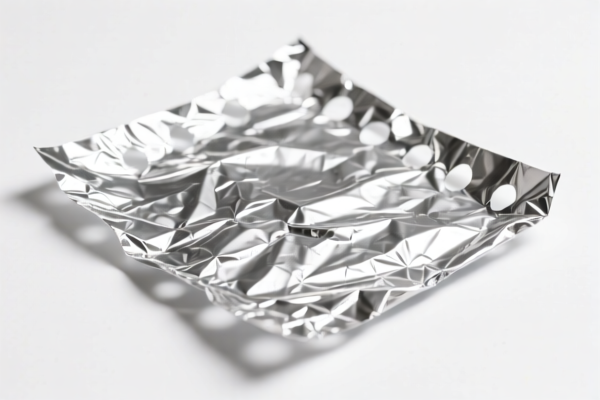
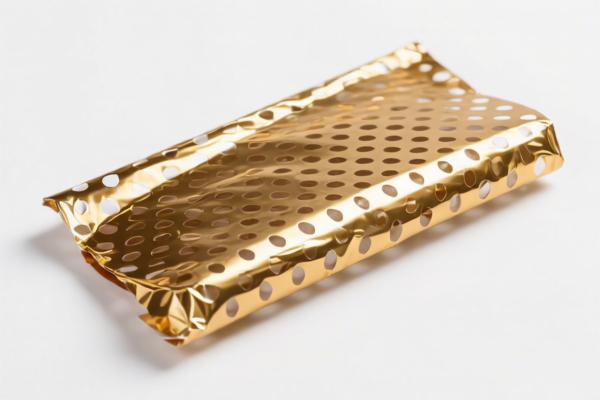
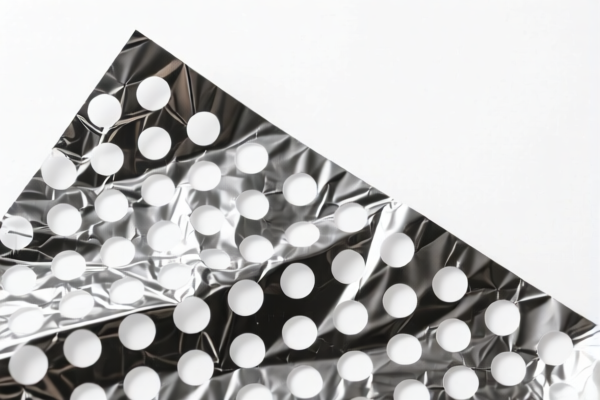
Perforated colored films are specialized plastic sheets used primarily in color printing, packaging, and industrial applications. The key identifier is the perforation (small holes punched through the film) and its colored/pigmented nature for aesthetic or functional printing purposes.
In international trade, these products fall under Chapter 39 (Plastics and Articles Thereof), specifically classified based on their material composition (base polymer) and physical form (film).
⚠️ Critical Distinction:
- Plastic Films (General): If made from general-purpose plastics (like PE, PP, PS), they often fall under 3921.
- Specific Polymers: If made from acrylics or specific other plastics, they may fall under 3920 or 3921 subheadings depending on the exact polymer type.
- Form Factor: Must be described as "Film" (thin, flexible sheet).
📦 II. HS Code Classification Details (2026 Latest Tariff Reference)
Based on the provided data, the product "Perforated Colored Film" can be classified into the following HS Codes depending on the specific material composition. All listed codes are subject to significant import duties if originating from China to the US.
| HS Code | Product Description | Material/Type | Key Characteristics |
|---|---|---|---|
3921.90.40.90 |
Colored Printing Film, Perforated | Plastic (General) | General purpose plastic film, colored, perforated for printing. |
3921.90.50.50 |
Colored Printing Film | Plastic (General) | General purpose plastic film, colored, likely non-perforated or different perforation type. |
3920.59.10.00 |
Colored Printing Film | Acrylic or Related Polymers | Made specifically from acrylic materials or similar polymers. |
3920.99.20.00 |
Colored Printing Film | Other Plastics | Made from other plastic types not specified in 3920.59. |
🔍 Key Note:
- The primary difference between these codes lies in the base polymer (General Plastic vs. Acrylic vs. Other).
- Perforation is a physical characteristic that may influence classification under "Other" subheadings within these chapters.
- All these codes are subject to high tariffs (approx. 39-41%) when importing from China to the US.
💰 III. 2026 Latest Tariff Rate Breakdown (Including Additional Duties)
✅ Applicable Country: United States (US)
✅ Country of Origin: China (CN)
✅ Effective Date: Current rates apply (2025-2026)
🎯 1. 3921.90.40.90 – Perforated Colored Film (General Plastic)
| Item | Details |
|---|---|
| Base Tariff | 4.2% |
| Section 301 Tariff | 25.0% |
| Section 122 Tariff | 10.0% |
| Total Tariff Rate | 39.2% |
| Tax Calculation | CIF Value × 39.2% |
| De Minimis Exemption | ❌ Not Eligible |
| Legal Basis | Section 301 (25%) + Section 122 (10%) + Base Rate (4.2%) |
📌 Explanation:
- 4.2% Base Rate: Standard MFN tariff for general plastic films.
- 25% Section 301 Tariff: Retaliatory tariff on Chinese goods.
- 10% Section 122 Tariff: Additional tariff under specific trade provisions.
- Total: 39.2%. This is a high-cost item for importers.
🎯 2. 3921.90.50.50 – Colored Printing Film (General Plastic)
| Item | Details |
|---|---|
| Base Tariff | 4.8% |
| Section 301 Tariff | 25.0% |
| Section 122 Tariff | 10.0% |
| Total Tariff Rate | 39.8% |
| Tax Calculation | CIF Value × 39.8% |
| De Minimis Exemption | ❌ Not Eligible |
| Legal Basis | Section 301 (25%) + Section 122 (10%) + Base Rate (4.8%) |
📌 Note:
- Similar to the previous code, but with a slightly higher base rate (4.8% vs 4.2%).
- Total rate is 39.8%, the highest among the general plastic films.
🎯 3. 3920.59.10.00 – Colored Printing Film (Acrylic Polymer)
| Item | Details |
|---|---|
| Base Tariff | 6.0% |
| Section 301 Tariff | 25.0% |
| Section 122 Tariff | 10.0% |
| Total Tariff Rate | 41.0% |
| Tax Calculation | CIF Value × 41.0% |
| De Minimis Exemption | ❌ Not Eligible |
| Legal Basis | Section 301 (25%) + Section 122 (10%) + Base Rate (6.0%) |
📌 Explanation:
- Acrylic-based films have a higher base rate (6.0%).
- Total rate is 41.0%, making this the most expensive option in the dataset.
🎯 4. 3920.99.20.00 – Colored Printing Film (Other Plastics)
| Item | Details |
|---|---|
| Base Tariff | 4.2% |
| Section 301 Tariff | 25.0% |
| Section 122 Tariff | 10.0% |
| Total Tariff Rate | 39.2% |
| Tax Calculation | CIF Value × 39.2% |
| De Minimis Exemption | ❌ Not Eligible |
| Legal Basis | Section 301 (25%) + Section 122 (10%) + Base Rate (4.2%) |
📌 Note:
- For other plastics not classified under acrylics.
- Same total rate as3921.90.40.90(39.2%).
🛠️ IV. Customs Clearance Practical Advice (Pitfall Avoidance Guide)
✅ 1. Documentation Checklist (Mandatory)
| Document | Required | Description |
|---|---|---|
| ✅ Product Specification Sheet | ✔️ | Must specify: Material (e.g., Acrylic, PE, PP), Thickness, Width, Perforation Type, Color. |
| ✅ Commercial Invoice | ✔️ | Must clearly state: "Perforated Colored Plastic Film," HS Code, Value, Origin (China). |
| ✅ Packing List | ✔️ | Detail weight, dimensions, and number of rolls/sheets. |
| ✅ Certificate of Origin (CO) | ✔️ | Required to prove origin (China). |
| ✅ Test Reports | ✔️ | If applicable, provide physical properties (tensile strength, perforation strength). |
| ✅ Material Safety Data Sheet (MSDS) | ✔️ | If the film contains any hazardous substances (unlikely for plain plastic, but good practice). |
✅ 2. Classification Strategy (Key Tips)
🔥 "Material Matters, Perforation Defines!"
| Scenario | Correct Classification | Reason |
|---|---|---|
| General Plastic, Perforated, Colored | 3921.90.40.90 |
Fits "Plastic" and "Perforated" description. |
| Acrylic Polymer, Colored | 3920.59.10.00 |
Acrylic is a specific polymer under Chapter 3920. |
| Other Plastic, Colored | 3920.99.20.00 |
Catch-all for other plastics not elsewhere specified. |
| Non-Perforated, Colored | 3921.90.50.50 |
If perforation is absent, it may fall under this general category. |
⚠️ Warning:
- Misclassifying acrylic as general plastic could lead to incorrect duty assessment and potential penalties.
- Always specify the exact polymer type in documentation.
✅ 3. Special Considerations
| Situation | Recommendation |
|---|---|
| OEM/Custom Printing | Provide print proof or design specifications to prove "Colored" nature. |
| Perforation Pattern | Describe perforation type (e.g., "micro-perforated," "hole-punched") in detail. |
| Packaging | Ensure rolls are packed to prevent damage; customs may inspect for material integrity. |
| Origin Labeling | Clearly mark "Made in China" on product and packaging to avoid origin fraud issues. |
🌍 V. Global Market Comparison (2026 Latest)
| Country/Region | Recommended HS Code | Tariff (China Origin) | Certification Requirements | Notes |
|---|---|---|---|---|
| 🇺🇸 USA | 3921.90.40.90 |
39.2% | None specific | High tariffs due to Section 301 & 122. |
| 🇨🇳 China | 3921.90.40.90 |
0-5% (VAT + Consumption) | None | Low export duty. |
| 🇪🇺 EU | 3920.59.10.00 |
~6% + VAT | CE (if applicable) | No Section 301 equivalent. |
| 🇦🇺 Australia | 3921.90.40.90 |
~5% | None | Moderate tariffs. |
| 🇯🇵 Japan | 3921.90.40.90 |
~0-6% | PSE (if electrical components) | Low to moderate tariffs. |
📌 Conclusion:
- USA is the most expensive market due to additional tariffs (39.2-41.0%).
- EU, Australia, and Japan offer significantly lower tariff burdens.
- Consider supply chain diversification if exporting to the US is cost-prohibitive.
📌 VI. Common Errors & Pitfalls (Lessons Learned)
❌ Error 1: Misclassifying Acrylic Film as General Plastic
👉 Consequence: Incorrect HS Code (3920 vs 3921) → Potential duty underpayment/overpayment → Audits.
❌ Error 2: Failing to Declare Perforation
👉 Consequence: Customs may classify as non-perforated film (3921.90.50.50) → Higher base rate (4.8% vs 4.2%) → Extra 0.6% duty.
❌ Error 3: Ignoring Section 122 Tariff
👉 Consequence: Underestimating total duty cost → Profit margin erosion (10% is significant!).
❌ Error 4: Incomplete Documentation
👉 Consequence: Customs hold → Storage fees → Delayed delivery → Customer dissatisfaction.
✅ Best Practice:
"Perforated Colored Plastic Film, Material: Polyethylene, Thickness: 0.05mm, Width: 30cm, Origin: China, HS Code: 3921.90.40.90"
🎯 VII. Conclusion: Strategic Clearance for Cost Efficiency
🎯 Remember the Key Takeaways:
🔹 "Material Defines HS Code, Perforation Defines Subheading!"
🔹 "US Tariffs are High (39-41%)—Plan Ahead!"
🔹 "Accuracy Saves Money—Misclassification Costs Time & Cash!"
📌 Pro Tip:
- If your film is made from Recycled Plastics, check for potential Green Tariff Preferences in some markets.
- Consider Pre-Import Duty Drawback Programs if applicable.
- For large volumes, Apply for an Advance Ruling from US Customs to confirm HS Code and duty rate.
📣 Immediate Action:
📞 Consult a Licensed Customs Broker
📄 Provide Detailed Product Specs (Material, Perforation, Dimensions)
🚀 Optimize Supply Chain to Mitigate High US Tariffs
✨ Precision in Classification, Efficiency in Clearance!
💼 Your Cost Control Starts with the Right HS Code!
Customer Reviews
About HS Code Classification
The Harmonized System (HS) is an internationally standardized nomenclature developed by the World Customs Organization (WCO) to classify traded products. Over 200 countries use the HS system as the basis for customs tariffs, trade statistics, and import/export regulations.
Each HS code follows a hierarchical structure:
- Chapter (2 digits) — Broad category of goods (e.g., Chapter 84: Machinery and Mechanical Appliances)
- Heading (4 digits) — More specific grouping within the chapter
- Subheading (6 digits) — Internationally standardized breakdown, used by all WCO member countries
- National subdivisions (8-10 digits) — Country-specific extensions for further classification, such as US HTSUS 10-digit codes
Correct HS code classification is essential for smooth customs clearance, accurate duty payment, and compliance with trade regulations. Misclassification can lead to customs delays, overpayment of duties, or penalties.
When importing from CN to US, the applicable tariff rates may include:
- Most-Favored-Nation (MFN) rate — The standard duty rate applied to WTO members
- General rate — Applied to countries without trade agreements
- Trade remedy duties — Additional tariffs such as Section 301 (anti-dumping), Section 232 (national security), or countervailing duties
The information provided on this page is for reference purposes only. For official classification, please consult with your local customs authority or a licensed customs broker.