Perforated Data Card Paper
CN → US| HS Code | Tariff Rate | Origin | Destination | Doc |
|---|---|---|---|---|
| 4814900200 | 17.5% | CN | US | Official Doc |
| 4823903100 | 35.0% | CN | US | Official Doc |
| 4823906700 | 35.0% | CN | US | Official Doc |
| 4811904090 | 35.0% | CN | US | Official Doc |
| 4811906090 | 35.0% | CN | US | Official Doc |
Product Images

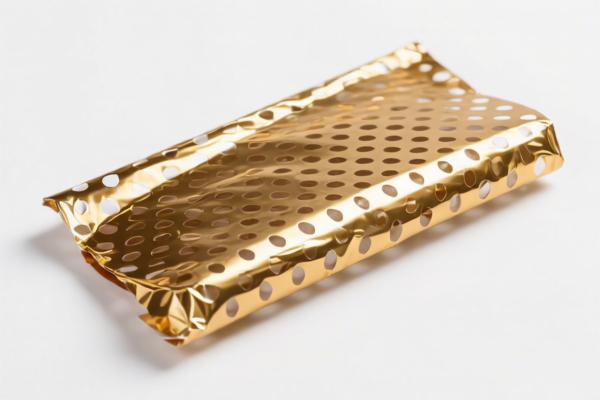


AI Analysis
📄 Perforated Data Card Paper (棉纸卷/纸制窗透明片)
🌐 HS Code Reference & Customs Clearance Guide | 2026 Latest Tariff Analysis | Professional Clearance Strategy
📌 I. Product Definition & Classification: What exactly is "Perforated Data Card Paper"?
Perforated Data Card Paper refers to cellulose-based paper products, often in roll form, specifically designed or used for data processing, industrial printing, or decorative purposes. In international trade, the classification depends heavily on: 1. Material: Cotton paper (cellulose fiber) vs. other paper types. 2. Form: Roll vs. Sheet. 3. Treatment: Coated, coated, or uncoated. 4. Specific Use: Perforated for data cards vs. general paper covering.
⚠️ Key Distinction:
- If the product is explicitly "Perforated Data Cards" made of cotton paper in roll form, it may fall under specific subheadings for punched cards or similar paper articles.
- If it is a "Cotton Paper Roll" used for general wrapping, covering, or as a raw material, it falls under broader categories like "Other paper products" or "Coated paper."
- Critical Note: The input data suggests two primary interpretations:
1. 4814.90.02.00: "Paper window transparencies" or similar covering materials (inferred from "paper" material and "roll" form).
2. 4823.90.31.00: "Perforated cards" or similar paper articles (inferred from "perforated" use and "cotton paper" material).
3. 4811/4823 Subheadings: General "Other paper products" if specific use isn't the primary classifier.
📦 II. HS Code Classification Details (2026 Latest Tariff Authority Comparison)
| HS Code | Product Description | Application Scenario | Key Classification Logic |
|---|---|---|---|
4814.90.02.00 |
Other paper, cellulose wadding or webs, of a kind used for domestic or industrial purposes (e.g., window transparencies, covering rolls) | Paper window covers, general-purpose paper rolls, non-perforated wrapping | ✅ Material: Paper. Form: Roll. Use: Covering/Transparency. |
4823.90.31.00 |
Other paper, paperboard, cellulose wadding or webs, cut to size or shape; other; punched or perforated cards | Perforated data cards, industrial punched cards, cotton paper rolls with perforations | ✅ Material: Cotton paper (Cellulose). Form: Roll/Perforated. Use: Data/Card processing. |
4823.90.67.00 |
Other paper, paperboard, cellulose wadding or webs, coated or impregnated; other | Coated cotton paper rolls, specialty industrial paper | ✅ Material: Cellulose fiber. Form: Roll. Treatment: Coated/Processed. |
4811.90.40.90 |
Other paper, paperboard, cellulose wadding or webs, coated, impregnated, covered, surface-coloured, surface-decorated or printed | General coated paper rolls, decorative paper | ✅ Material: Cotton paper. Form: Roll. Treatment: Coated/Printed. |
4811.90.60.90 |
Other paper, paperboard, cellulose wadding or webs, other | General uncoated or simply processed paper rolls | ✅ Material: Cellulose. Form: Roll. No specific coating/impregnation. |
🔍 Important Reminder:
- 4823.90.31.00 is the most precise fit if the product is explicitly perforated for data cards.
- 4814.90.02.00 is a fallback if the product is a general paper roll used for covering/window transparency, with no specific data card function.
- 4811/4823 Subheadings apply if the paper is coated, printed, or otherwise processed but not specifically for punched cards.
💰 III. 2026 Latest Tariff Rate Breakdown (Including Additional Taxes & Policy Surcharges)
✅ Applicable Country: USA
✅ Country of Origin: China (CN)
✅ Effective Date: November 10, 2025 onwards (including subsequent imports)
🎯 1. 4814.90.02.00 —— Paper Window Transparencies / General Paper Rolls
| Item | Content |
|---|---|
| Base Tariff | 0% (ad valorem) |
| USITC Additional Tariff | +7.5% (Section 301 Footnote) |
| IEEPA Additional Tariff | +10% (China-specific IEEPA Order) |
| Total Rate | 17.5% |
| Tax Calculation | CIF Value × 17.5% |
| De Minimis Eligible? | ❌ No (deny_de_minimis for China) |
| Legal Basis Path | IEEPA:9903.01.25 → USITC:4814.90.02.00 → FOOTNOTE:301 |
📌 Explanation:
- The base tariff for most paper products is 0%.
- The 7.5% is a Section 301 additional tariff applied to specific paper categories.
- The 10% is the IEEPA tariff targeting Chinese-origin goods.
- Total 17.5% is relatively moderate compared to other categories.
🎯 2. 4823.90.31.00 —— Perforated Cards / Punched Paper
| Item | Content |
|---|---|
| Base Tariff | 0% |
| USITC Additional Tariff | +25% (Section 301 Footnote) |
| IEEPA Additional Tariff | +10% |
| Total Rate | 35.0% |
| Tax Calculation | CIF Value × 35.0% |
| De Minimis Eligible? | ❌ No |
| Legal Basis Path | IEEPA:9903.01.25 → USITC:4823.90.31.00 → FOOTNOTE:301 |
📌 Important:
- This rate applies if the product is classified as perforated data cards.
- The 25% Section 301 tariff is significantly higher than for general paper rolls.
- Total 35% is a high tariff, requiring careful cost planning.
🎯 3. 4823.90.67.00 & 4811.90.40.90 & 4811.90.60.90 —— Coated/Processed Paper Rolls
| Item | Content |
|---|---|
| Base Tariff | 0% |
| USITC Additional Tariff | +25% |
| IEEPA Additional Tariff | +10% |
| Total Rate | 35.0% |
| Tax Calculation | CIF Value × 35.0% |
| De Minimis Eligible? | ❌ No |
| Legal Basis Path | IEEPA:9903.01.25 → USITC:4823.90.67.00 / 4811.90.40.90 / 4811.90.60.90 → FOOTNOTE:301 |
📌 Note:
- These HS codes share the same tax structure.
- If the paper is coated, impregnated, or printed, it falls into these categories.
- Total 35% applies, which is significantly higher than the 17.5% for4814.90.02.00.
🛠️ IV. Customs Clearance Practical Advice (Avoiding Pitfalls)
✅ 1. Required Documentation Checklist (All Mandatory)
| Document | Required | Description |
|---|---|---|
| ✅ Product Specification Sheet | ✔️ | Includes material (cotton paper), form (roll), size, thickness, perforation type |
| ✅ Product Photos | ✔️ | Clear images of the roll, perforations, and any labeling |
| ✅ Commercial Invoice | ✔️ | Must specify "Perforated Data Card Paper" or "Cotton Paper Roll" with HS Code |
| ✅ Packing List | ✔️ | Detailing roll length, weight, and dimensions |
| ✅ Certification (if applicable) | ✔️ | FDA (if food contact), CE, RoHS (if applicable) |
| ✅ Letter of Explanation | ✔️ | Clarifying the product's use (e.g., "for data processing" vs. "general wrapping") |
✅ 2. Declaration Tips (Key Mantras)
🔥 "Material First, Form Second, Use Specific, Tax Can Drop!"
| Scenario | Correct Declaration | Wrong Practice |
|---|---|---|
| Perforated Data Cards | 4823.90.31.00 |
Misdeclaring as "General Paper" → 17.5% (but risky if audited) |
| General Paper Roll (Covering) | 4814.90.02.00 |
Misdeclaring as "Perforated Card" → 35% (overpaying) |
| Coated/Printed Paper Roll | 4811.90.40.90 / 4823.90.67.00 |
Misdeclaring as "Uncoated" → 35% |
| OEM Custom Paper | Provide client order + design specs | Generic name "Paper Roll" → Delays or reclassification |
✅ 3. Special Case Handling
| Scenario | Handling Advice |
|---|---|
| Perforation Type | Specify if perforations are for data cards (punch holes) or decorative. Data cards → 4823.90.31.00. |
| Cotton Paper vs. Regular Paper | Emphasize "Cotton Paper" or "Cellulose Fiber" if claiming under 4823.90.31.00. |
| Roll vs. Sheet | Rolls are more likely to fall under 4814 or 4811. Sheets may fall under 4823. |
| Pre-Clearance Ruling | Apply for an Advance Ruling from US CBP if the product's use is ambiguous. |
🌍 V. Global Market Comparison (2026 Latest)
| Country/Region | Recommended HS Code | Tariff (China Origin) | Certification Requirements | Notes |
|---|---|---|---|---|
| 🇺🇸 USA | 4814.90.02.00 / 4823.90.31.00 |
17.5% / 35% | None (standard) | High Section 301 tariffs apply. |
| 🇨🇳 China | 4814.90.02.00 / 4823.90.31.00 |
5% - 10% | None | No additional US tariffs. |
| 🇪🇺 EU | 4814.90.02.00 / 4823.90.31.00 |
0% - 3.7% | CE (if applicable) | No US-style surcharges. |
| 🇦🇺 Australia | 4814.90.02.00 / 4823.90.31.00 |
5% | None | No additional tariffs. |
📌 Conclusion:
- The USA imposes the highest total tariffs due to Section 301 and IEEPA.
- Classifying under4814.90.02.00saves 17.5% vs.4823.90.31.00if the product allows it.
- EU and China offer significantly lower tariff burdens.
📌 VI. Common Errors & Pitfalls (Lessons Learned)
❌ Error 1: Declaring "Perforated Data Cards" as "General Paper Roll"
👉 Consequence: Underpayment if audited → Back taxes + penalties!
❌ Error 2: Declaring "General Paper Roll" as "Perforated Data Card"
👉 Consequence: Overpayment of 17.5% → Lost profit!
❌ Error 3: Not specifying material (Cotton vs. Regular Paper)
👉 Consequence: Customs may reclassify → Delays + extra fees
❌ Error 4: Ignoring IEEPA surcharge
👉 Consequence: 10% unexpected cost if not budgeted.
✅ Correct Approach:
"Perforated Cotton Paper Roll, for Data Processing Use, Model XYZ, Roll Length 100m, Width 50cm"
🎯 VII. Conclusion: Precise Declaration, Cost Savings, Smooth Clearance!
🎯 Remember the Mantra:
🔹 "Perforated Data Cards = 35%; General Paper Rolls = 17.5%. Choose Wisely!"
🔹 "HS Code Determines Tax. A Small Change Can Save Thousands!"
📌 Pro Tip:
If your product is exported from Vietnam, Mexico, or Thailand, you may qualify for IEEPA Exemptions, reducing tariffs to 0%~5%.
Consider Advance Ruling to avoid classification risks.
📣 Immediate Action:
📞 Contact a Professional Customs Broker + Provide Product Photos + Apply for HS Code Advance Ruling
🚀 Ensure Your Paper Rolls Clear Customs Smoothly, Efficiently, and Profitably!
✨ Professional Clearance Starts with Accurate Classification!
💼 Every Cent Matters in Global Trade!
Customer Reviews
About HS Code Classification
The Harmonized System (HS) is an internationally standardized nomenclature developed by the World Customs Organization (WCO) to classify traded products. Over 200 countries use the HS system as the basis for customs tariffs, trade statistics, and import/export regulations.
Each HS code follows a hierarchical structure:
- Chapter (2 digits) — Broad category of goods (e.g., Chapter 84: Machinery and Mechanical Appliances)
- Heading (4 digits) — More specific grouping within the chapter
- Subheading (6 digits) — Internationally standardized breakdown, used by all WCO member countries
- National subdivisions (8-10 digits) — Country-specific extensions for further classification, such as US HTSUS 10-digit codes
Correct HS code classification is essential for smooth customs clearance, accurate duty payment, and compliance with trade regulations. Misclassification can lead to customs delays, overpayment of duties, or penalties.
When importing from CN to US, the applicable tariff rates may include:
- Most-Favored-Nation (MFN) rate — The standard duty rate applied to WTO members
- General rate — Applied to countries without trade agreements
- Trade remedy duties — Additional tariffs such as Section 301 (anti-dumping), Section 232 (national security), or countervailing duties
The information provided on this page is for reference purposes only. For official classification, please consult with your local customs authority or a licensed customs broker.