Perforated Security Card Paper
CN → US| HS Code | Tariff Rate | Origin | Destination | Doc |
|---|---|---|---|---|
| 4811904090 | 35.0% | CN | US | Official Doc |
| 4814900200 | 17.5% | CN | US | Official Doc |
| 4823903100 | 35.0% | CN | US | Official Doc |
| 4823906700 | 35.0% | CN | US | Official Doc |
| 4811904090 | 35.0% | CN | US | Official Doc |
Product Images
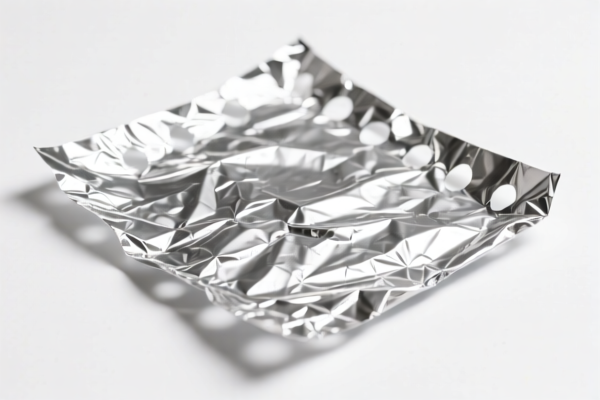
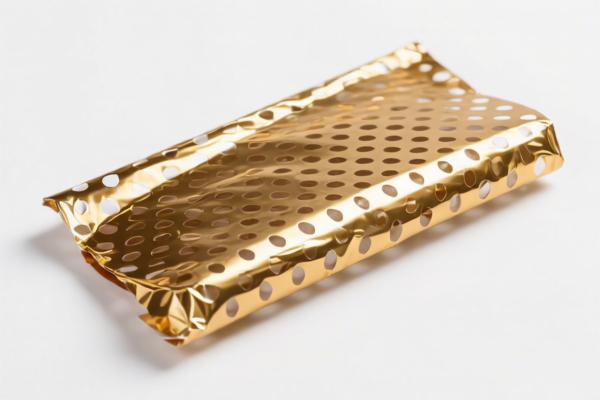


AI Analysis
🎴 Perforated Security Card Paper (Punch Card Paper)
🌐 HS Code Reference & Customs Clearance Guide | 2026 Latest Tariff Analysis | Professional Entry Strategy
📌 I. Product Definition & Classification: What is "Perforated Security Card Paper"?
Perforated Security Card Paper, commonly known as Punch Card Paper, is a specialized cellulose-based material designed for data storage in legacy computing, industrial automation, or specialized card-operated systems. It is characterized by:
- Material: Primarily cotton paper or cellulose fiber-based paper.
- Form: Supplied in rolls (jumbo rolls or individual cards on rolls).
- Structure: Pre-perforated or punchable for data encoding (holes represent binary data 0/1).
- Security Features: May include watermarks, security threads, or specific chemical treatments to prevent forgery or unauthorized duplication.
⚠️ Critical Distinction:
- If the paper is unperforated but intended for perforation, it may fall under general paper codes.
- If it is pre-perforated and specifically shaped for punch card machines, it falls under specific paper products for mechanical data processing.
- If it is a specialty coated or treated security paper (e.g., for checks or certificates), it may be classified differently.
📦 II. HS Code Classification Details (2026 Tariff Authority Comparison)
Based on the provided data, here are the relevant HS Codes for paper products, including those potentially used as security card paper:
| HS Code | Product Description | Application Scenario | Key Features |
|---|---|---|---|
4823.90.31.00 |
Unperforated Cotton Paper Rolls, for punch card use | Legacy computing, industrial automation, backup data systems | ✅ Specifically for punch card purposes |
4811.90.40.90 |
Cotton Paper Rolls, roll form, consistent with other paper products | General security document production, roll-form paper goods | ✅ Cotton-based, roll form |
4814.90.02.00 |
Paper Coverings, roll form, other paper categories | Paper-based overlays, protective covers, general paper goods | ✅ Roll form, paper covering |
4823.90.67.00 |
Cellulose Fiber Products, roll form, coated or other paper products | Treated security paper, coated card stock, specialty paper | ✅ Coated/treated cellulose |
🔍 Key Reminder:
-4823.90.31.00is the most precise match for punch card paper if it is specifically manufactured for that purpose.
-4811.90.40.90and4823.90.67.00may apply if the paper is coated or used for security documents beyond simple data cards.
-4814.90.02.00is less likely unless the paper is used as a covering or overlay.
💰 III. 2026 Latest Tariff Rate Breakdown (Including Surtaxes, Policy Add-ons)
✅ Applicable Country: United States (US)
✅ Origin: China (CN)
✅ Effective Date: From November 10, 2025 onwards (including subsequent imports)
🎯 1. 4823.90.31.00 —— Unperforated Cotton Paper Rolls, for Punch Card Use
| Item | Content |
|---|---|
| Base Rate | 0% (ad valorem) |
| USITC Surtax | +25% (under USITC Footnote 9903.88.01) |
| IEEPA Surtax | +10% (for Chinese/HK products, from Nov 10, 2025) |
| Total Rate | 35% |
| Tax Calculation | CIF Value × 35% |
| De Minimis Exemption | ❌ Not Eligible (deny_de_minimis) |
| Legal Path | IEEPA:9903.01.25 → IEEPA:9903.01.24 → USITC:4823.90.31.00 → FOOTNOTE:9903.88.01 |
📌 Explanation:
- The 25% USITC surtax is imposed under Section 301 of the Trade Act for specific paper products from China.
- The 10% IEEPA surtax is an additional penalty under the International Emergency Economic Powers Act for Chinese-origin goods.
- Total 35% is a high tariff, requiring careful cost planning.
🎯 2. 4811.90.40.90 —— Cotton Paper Rolls, Roll Form
| Item | Content |
|---|---|
| Base Rate | 0% |
| USITC Surtax | +25% |
| IEEPA Surtax | +10% |
| Total Rate | 35% |
| Tax Calculation | CIF × 35% |
| De Minimis Exemption | ❌ Not Eligible |
| Legal Path | IEEPA:9903.01.25 → IEEPA:9903.01.24 → USITC:4811.90.40.90 → FOOTNOTE:9903.88.01 |
📌 Note:
- This code applies to cotton paper in roll form, often used for security documents.
- Same high tariff as4823.90.31.00; must be declared accurately to avoid misclassification penalties.
🎯 3. 4814.90.02.00 —— Paper Coverings, Roll Form
| Item | Content |
|---|---|
| Base Rate | 0% |
| USITC Surtax | +7.5% |
| IEEPA Surtax | +10% |
| Total Rate | 17.5% |
| Tax Calculation | CIF × 17.5% |
| De Minimis Exemption | ❌ Not Eligible |
| Legal Path | IEEPA:9903.01.25 → IEEPA:9903.01.24 → USITC:4814.90.02.00 → FOOTNOTE:9903.88.01 |
📌 Note:
- Lower tariff (17.5%) if the product is classified as a paper covering rather than security paper.
- This may apply if the paper is used as an overlay or protective layer, not directly as punch card data storage.
🎯 4. 4823.90.67.00 —— Cellulose Fiber Products, Coated/Other Paper
| Item | Content |
|---|---|
| Base Rate | 0% |
| USITC Surtax | +25% |
| IEEPA Surtax | +10% |
| Total Rate | 35% |
| Tax Calculation | CIF × 35% |
| De Minimis Exemption | ❌ Not Eligible |
| Legal Path | IEEPA:9903.01.25 → IEEPA:9903.01.24 → USITC:4823.90.67.00 → FOOTNOTE:9903.88.01 |
📌 Note:
- Applies to coated or treated cellulose paper.
- If your security card paper has a special coating for durability or security, this code may be more appropriate.
- Still subject to 35% total tariff.
🛠️ IV. Customs Clearance Practical Advice (Field Pitfall Avoidance Guide)
✅ 1. Required Documentation Checklist (No Exceptions)
| Document | Mandatory | Description |
|---|---|---|
| ✅ Product Specification Sheet | ✔️ | Includes material type (cotton/cellulose), dimensions, perforation pattern, intended use |
| ✅ Technical Drawing | ✔️ | Shows punch hole layout, roll diameter, core size |
| ✅ Product Photos | ✔️ | Clear images of the roll, perforation, and any security features |
| ✅ Third-Party Test Report | ✔️ | If applicable, for security features (watermark, thread) |
| ✅ Commercial Invoice | ✔️ | Must specify "Perforated Security Card Paper" or "Punch Card Paper" |
| ✅ Certificate of Origin (CO) | ✔️ | Required for US-China trade; may need non-preferential CO |
| ✅ Packing List | ✔️ | Detail roll dimensions, weight, and packaging |
✅ 2. Declaration Tips (Key Mantra)
🔥 "Be Specific, Avoid General, Declare Use Clearly!"
| Situation | Correct Declaration | Incorrect Practice |
|---|---|---|
| Pre-perforated punch cards | 4823.90.31.00 |
Misdeclare as "general paper" → 35% |
| Unperforated cotton roll for punching | 4823.90.31.00 |
Declare as "4811" → 35% (same, but inaccurate) |
| Coated security paper | 4823.90.67.00 |
Declare as "4814" → 17.5% (if applicable) |
| Paper overlay/covering | 4814.90.02.00 |
Declare as "card paper" → 35% |
✅ 3. Special Case Handling
| Situation | Handling Advice |
|---|---|
| OEM Custom Perforation | Provide client order + design file to prove specific use |
| Mixed Rolls (Paper + Security Threads) | Declare as 4823.90.67.00 (coated/treated) |
| Low-Value Shipments | ❌ No De Minimis → Must declare fully, even for small quantities |
| Security Features Present | Highlight in invoice description to avoid reclassification |
🌍 V. Global Market Customs Comparison (2026 Latest)
| Country/Region | Recommended HS Code | Tariff | Certification | Note |
|---|---|---|---|---|
| 🇺🇸 USA | 4823.90.31.00 / 4811.90.40.90 |
35% (China) | None specific | High tariff for paper products |
| 🇨🇳 China | 4823.90.31.00 |
5% | CCC (if applicable) | Lower tariff for domestic trade |
| 🇪🇺 EU | 4823.90.31.00 |
0-6% | CE (if electronic components) | No surtax |
| 🇬🇧 UK | 4823.90.31.00 |
0-6% | UKCA | Post-Brexit rules apply |
| 🇦🇺 Australia | 4823.90.31.00 |
5% | RCM | No surtax |
📌 Conclusion:
- USA is the only market imposing high surtaxes on these paper products.
- Chinese-origin paper faces 35% tariff in the US; consider supply chain diversification if cost is a concern.
📌 VI. Common Mistakes & Pitfall Avoidance (Blood-Teaching Lessons)
❌ Mistake 1: Declaring "Perforated Paper" as "General Office Paper"
👉 Consequence: Misclassification → 35% tariff instead of 0-6% in some countries; penalties in the US.
❌ Mistake 2: Ignoring Security Features (Watermarks, Threads)
👉 Consequence: If not declared, customs may reclassify under a different code with higher duty.
❌ Mistake 3: Using "Paper" as a Generic Term
👉 Consequence: Ambiguity → Delayed clearance, possible inspection, or rejection.
❌ Mistake 4: Assuming De Minimis Applies
👉 Consequence: No de minimis for US-China paper products under Section 301/IEEPA; even small shipments are taxed.
✅ Correct Practice:
"Perforated Security Card Paper, Cotton-based, Roll Form, 12" Width, Pre-Perforated for Punch Card Machines, Model XYZ, Origin: China"
🎯 VII. Conclusion: Precise Declaration, Cost Control, Efficient Clearance
🎯 Remember the Mantra:
🔹 "Specify Use, Declare Features, Avoid General Terms!"
🔹 "HS Code Determines Tariff, 35% vs. 17.5%, One Mistake Costs Thousands!"
📌 Pro Tip:
If your paper is originating from Vietnam, Mexico, Thailand, or Malaysia, you may qualify for IEEPA exemptions, reducing tariffs to 0-5%.
Consider applying for an Advance Ruling from US Customs (CBP) to confirm the correct HS Code and tariff.
📣 Immediate Action:
📞 Contact a Licensed Customs Broker + Provide Product Specs + Request HS Code Advance Ruling
🚀 Ensure Smooth Clearance, Efficient Export, and Maximized Profit Margins!
✨ Professional Customs Clearance Starts with Accurate Classification!
💼 Every Cent of Cost Deserves Precise Calculation!
Customer Reviews
About HS Code Classification
The Harmonized System (HS) is an internationally standardized nomenclature developed by the World Customs Organization (WCO) to classify traded products. Over 200 countries use the HS system as the basis for customs tariffs, trade statistics, and import/export regulations.
Each HS code follows a hierarchical structure:
- Chapter (2 digits) — Broad category of goods (e.g., Chapter 84: Machinery and Mechanical Appliances)
- Heading (4 digits) — More specific grouping within the chapter
- Subheading (6 digits) — Internationally standardized breakdown, used by all WCO member countries
- National subdivisions (8-10 digits) — Country-specific extensions for further classification, such as US HTSUS 10-digit codes
Correct HS code classification is essential for smooth customs clearance, accurate duty payment, and compliance with trade regulations. Misclassification can lead to customs delays, overpayment of duties, or penalties.
When importing from CN to US, the applicable tariff rates may include:
- Most-Favored-Nation (MFN) rate — The standard duty rate applied to WTO members
- General rate — Applied to countries without trade agreements
- Trade remedy duties — Additional tariffs such as Section 301 (anti-dumping), Section 232 (national security), or countervailing duties
The information provided on this page is for reference purposes only. For official classification, please consult with your local customs authority or a licensed customs broker.