Perfume Pocket
CN → USProduct Images
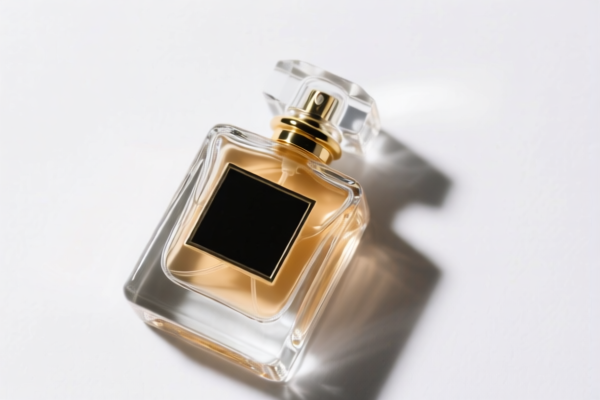
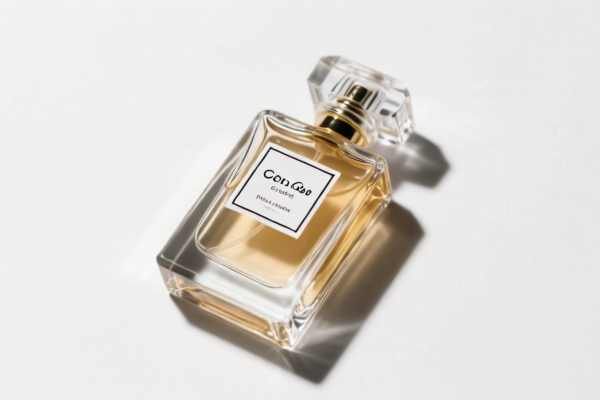
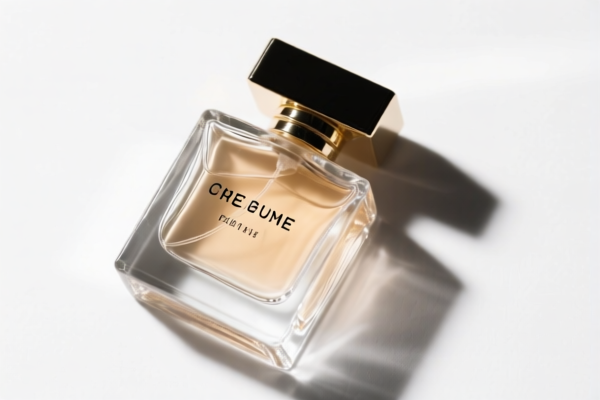
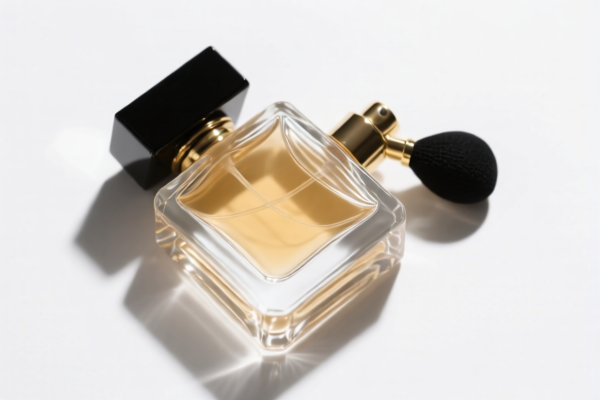
AI Analysis
🎒 Perfume Pocket (Portable Fragrance Dispensers / Refillable Atomizers)
🌐 HS Code Reference & Clearance Guide | 2026 Latest Tariff Analysis | Professional Clearance Strategy
📌 I. Product Definition & Classification: What Exactly is a "Perfume Pocket"?
A "Perfume Pocket" in international trade typically refers to portable, refillable perfume atomizers, spray bottles, or travel-sized fragrance containers. These are distinct from finished perfume products (which contain the liquid fragrance) and from industrial gas cylinders.
In customs classification, the key distinction lies in whether the item is: 1. An empty container/glass/plastic bottle (classified as glassware or plastic articles). 2. A mechanical spray device (classified as a pump dispenser or article of plastic/glass). 3. A finished cosmetic product (if it already contains the perfume liquid).
⚠️ Critical Distinction:
- If the "Perfume Pocket" is an empty vessel (glass/plastic) with a simple cap → Often 7010 (Glass) or 3923 (Plastic).
- If it is a functional spray mechanism (pump, valve, nozzle) sold separately or as part of the unit → Often 8413.70 (Pumps) or 9616 (Perfume sprays).
- Most Common Classification for "Perfume Pocket" (Travel Spray): 9616.19.00.00 (Perfume sprays and the like) or 7010.90.90.00 (Glass bottles if simple).
Note: The examples below will focus on the most common commercial scenario: Refillable Portable Perfume Sprays (Plastic/Glass body with pump mechanism).
📦 II. HS Code Classification Details (2026 Latest Tariff Authority Comparison)
| HS Code | Product Description | Application Scenario | Contains Liquid? | Pump/Mechanism? |
|---|---|---|---|---|
9616.19.00.00 |
Perfume sprays and the like; powder-puffs and pads, fitted with the powder, whether or not covered with textile material | Portable refillable perfume bottles with spray pumps | ❌ No (Empty) | ✅ Yes |
3307.90.00.00 |
Other perfumed preparations, bath preparations, deodorants, etc. | Finished perfume (if the "pocket" contains the liquid fragrance) | ✅ Yes | N/A |
7010.90.90.00 |
Other containers, of glass | Simple glass bottles without complex spray mechanisms | ❌ No | ❌ No (or simple cap) |
3923.21.00.00 |
Flasks, bottles and similar articles, of plastics | Simple plastic bottles without complex spray mechanisms | ❌ No | ❌ No (or simple cap) |
8413.70.90.00 |
Other positive displacement pumps | Industrial or standalone spray pump heads (sold separately) | N/A | ✅ Yes |
8206.00.00.00 |
Hand tools... | N/A (Incorrect for perfume items) | ❌ | ❌ |
🔍 Key Reminder:
- If the product is a complete travel spray bottle (body + pump + cap), it is most accurately classified under 9616.19.00.00 ("Perfume sprays and the like"). This is the standard HS Code for cosmetic accessories designed to dispense perfume. - If it is just a plain bottle with no pump mechanism, it falls under 7010 (Glass) or 3923 (Plastic). - If it contains liquid perfume, it must be declared as 3307.90.00.00 (Cosmetic Preparation), not as a container.
💰 III. 2026 Latest Tariff Rate Details (Including Surtaxes & Policy Add-ons)
✅ Applicable Country: United States (US)
✅ Origin: China (CN)
✅ Effective Time: From November 10, 2025 (including subsequent imports)
🎯 1. 9616.19.00.00 —— Perfume Sprays and the Like (Empty Portable Bottles with Pumps)
| Item | Content |
|---|---|
| Base Tariff Rate | 0% (ad valorem) |
| USITC Surtax | +25% (From USITC Footnote 9903.88.01, Section 301 Tariffs) |
| IEEPA Surtax | +10% (For China/Hong Kong products, from Nov 10, 2025) |
| Total Tariff Rate | 35% |
| Tax Calculation | CIF Value × 35% |
| De Minimis Eligibility | ❌ No (deny_de_minimis) |
| Legal Basis Path | IEEPA:9903.01.25 → IEEPA:9903.01.24 → USITC:9616.19.00.00 → FOOTNOTE:9903.88.01 |
📌 Explanation:
- The "25% USITC surtax" comes from Section 301 tariffs on Chinese imports. - The "IEEPA 10%" is an additional surcharge under the International Emergency Economic Powers Act. - Total 35%, which is significant for low-value cosmetic accessories. This rate applies whether the bottle is glass or plastic, as long as it is a "perfume spray" device.
🎯 2. 7010.90.90.00 / 3923.21.00.00 —— Simple Glass/Plastic Bottles (No Pump)
| Item | Content |
|---|---|
| Base Tariff Rate | 0% |
| USITC Surtax | +25% |
| IEEPA Surtax | +10% |
| Total Tariff Rate | 35% |
| Tax Calculation | CIF Value × 35% |
| De Minimis Eligibility | ❌ No |
| Legal Basis Path | IEEPA:9903.01.25 → IEEPA:9903.01.24 → USITC:7010.90.90.00 / 3923.21.00.00 → FOOTNOTE:9903.88.01 |
📌 Note:
- Even if classified as simple containers, Chinese-made goods face the same 301 + IEEPA surcharges. - Misclassifying a spray bottle as a "simple bottle" to avoid the "perfume spray" category will lead to re-classification penalties by Customs.
🎯 3. 3307.90.00.00 —— Finished Perfume (If Liquid is Included)
| Item | Content |
|---|---|
| Base Tariff Rate | 3.4% |
| USITC Surtax | +25% |
| IEEPA Surtax | +10% |
| Total Tariff Rate | 38.4% |
| Tax Calculation | CIF Value × 38.4% |
| De Minimis Eligibility | ❌ No |
📌 Warning:
- If the "Perfume Pocket" is sold pre-filled, it is a cosmetic product. The base rate is higher (3.4%), plus surcharges. - Many importers mistakenly declare pre-filled items as "empty containers" to save tax, which is fraud.
🛠️ IV. Clearance Operational Advice (Practical Pitfall Avoidance Guide)
✅ 1. Required Documents Checklist (Missing items are not accepted)
| Document | Must Provide | Description |
|---|---|---|
| ✅ Product Specification Sheet | ✔️ | Material (Glass/Plastic), Volume (ml), Type (Atomizer/Spray), Empty/Filled status |
| ✅ Product Photos | ✔️ | Clear images of the item, including the spray mechanism, label, and cap |
| ✅ Commercial Invoice | ✔️ | Clearly state "Empty Refillable Perfume Atomizer" or "Perfume Spray Bottle" |
| ✅ Packing List | ✔️ | Details of quantity, weight, and packaging |
| ✅ Certificate of Origin (CO) | ✔️ | If origin is not China, may qualify for lower tariffs |
| ✅ MSDS (if applicable) | ✔️ | If the product contains any residual chemicals or is classified as a hazardous good |
✅ 2. Declaration Techniques (Key Mantras)
🔥 "Empty vs. Full, Spray vs. Bottle, Name Accurate, Tax Clear!"
| Scenario | Correct Declaration Method | Wrong Practice |
|---|---|---|
| Empty Portable Spray Bottle | 9616.19.00.00 (Perfume Sprays) |
Misdeclare as "Plastic Bottle" (3923) → 89.5% tariff risk if challenged |
| Simple Empty Bottle (No Spray) | 7010.90.90.00 (Glass) or 3923.21.00.00 (Plastic) |
Misdeclare as "Perfume Spray" → Over-declaration risk |
| Pre-filled Perfume Bottle | 3307.90.00.00 (Cosmetic) |
Misdeclare as "Empty Container" → Fraud / Seizure |
| Standalone Spray Pump | 8413.70.90.00 (Pump) |
Misdeclare as "Part of Perfume" → Classification error |
✅ 3. Special Case Handling
| Scenario | Handling Advice |
|---|---|
| OEM Custom Design | Provide design files and customer orders. Ensure the description matches the physical function (spray vs. pour). |
| Mixed Containers | If exporting both glass and plastic bottles, declare separately by HS Code. Do not mix into one line item. |
| Gift Sets | If the "Perfume Pocket" is part of a gift set with other items, it may be classified based on the "essential character" of the set. |
| Samples | Even samples are subject to tariffs if declared as commercial goods. Ensure correct valuation. |
🌍 V. Global Market Comparison (2026 Latest)
| Country/Region | Recommended HS Code | Tariff | Certification Requirements | Remarks |
|---|---|---|---|---|
| 🇺🇸 USA | 9616.19.00.00 |
35% (China) | FDA (if cosmetic), CPSIA (if for kids) | High surtax on Chinese goods |
| 🇨🇳 China | 9616.19.00.00 |
0% | None | No additional surtaxes |
| 🇪🇺 EU | 9616.19.00.00 |
0% (General) | CPSR (Cosmetic Product Safety Report) | Low tariff, high compliance |
| 🇬🇧 UK | 9616.19.00.00 |
0% | UK CPSR | Post-Brexit rules apply |
| 🇦🇺 Australia | 9616.19.00.00 |
5% | AICIS (Chemical Inventory) | Moderate tariff |
📌 Conclusion:
- USA is the most expensive market for Chinese-made perfume pockets due to 301 + IEEPA surcharges (Total ~35-38%).
- EU and UK have low tariffs but strict cosmetic safety regulations (CPSR).
- China has no tariffs but requires proper labeling and compliance if sold domestically.
📌 VI. Common Errors & Pitfall Guide (Lessons from Blood and Tears)
❌ Error 1: Declaring pre-filled perfume as empty bottles
👉 Consequence: Customs will detect liquid weight/volume mismatch → Seizure + Fine + Back Taxes!
❌ Error 2: Misclassifying spray bottles as simple plastic containers (3923)
👉 Consequence: Customs reclassifies to 9616 → Pay the difference + Penalty. While tariffs may be similar, the legal risk is high.
❌ Error 3: Ignoring FDA/FTC Labeling Requirements (for USA)
👉 Consequence: Even empty bottles sold with cosmetic claims may require FDA registration. Lack of proper labeling → Detention at Port.
❌ Error 4: Using vague descriptions like "Container" or "Bottle"
👉 Consequence: Customs needs to know if it has a pump mechanism. Vague descriptions lead to manual inspection delays.
✅ Correct Approach:
"Empty Refillable Perfume Atomizer, Plastic Body, Aluminum Pump, 10ml Capacity, Model XYZ, No Liquid Contents"
🎯 VII. Conclusion: Professional Declaration Saves Money and Time!
🎯 Remember the Mantra:
🔹 "Empty with Spray = 9616 (35% US Tax)
🔹 Empty No Spray = 7010/3923 (35% US Tax)
🔹 Full of Liquid = 3307 (38.4% US Tax)
🔹 Don't Mix, Don't Lie, Declare Clean!"
📌 Tip:
If your perfume pockets are originating from Vietnam, Thailand, or Malaysia, you may apply for IEEPA Exemption, reducing the tariff to 0%~5%.
Suggest Advance Ruling application to Customs to confirm the HS Code before shipment, avoiding clearance risks.
📣 Action Now:
📞 Contact a professional customs broker + Provide product photos + Apply for HS Code Advance Ruling
🚀 Let your perfume pockets clear smoothly, avoid high taxes, and boost profits!
✨ Professional Clearance Starts with Accurate Classification!
💼 Every cent of cost deserves precise calculation!
Customer Reviews
About HS Code Classification
The Harmonized System (HS) is an internationally standardized nomenclature developed by the World Customs Organization (WCO) to classify traded products. Over 200 countries use the HS system as the basis for customs tariffs, trade statistics, and import/export regulations.
Each HS code follows a hierarchical structure:
- Chapter (2 digits) — Broad category of goods (e.g., Chapter 84: Machinery and Mechanical Appliances)
- Heading (4 digits) — More specific grouping within the chapter
- Subheading (6 digits) — Internationally standardized breakdown, used by all WCO member countries
- National subdivisions (8-10 digits) — Country-specific extensions for further classification, such as US HTSUS 10-digit codes
Correct HS code classification is essential for smooth customs clearance, accurate duty payment, and compliance with trade regulations. Misclassification can lead to customs delays, overpayment of duties, or penalties.
When importing from CN to US, the applicable tariff rates may include:
- Most-Favored-Nation (MFN) rate — The standard duty rate applied to WTO members
- General rate — Applied to countries without trade agreements
- Trade remedy duties — Additional tariffs such as Section 301 (anti-dumping), Section 232 (national security), or countervailing duties
The information provided on this page is for reference purposes only. For official classification, please consult with your local customs authority or a licensed customs broker.