Perfume Powder Box and Powder Puff
CN → USProduct Images
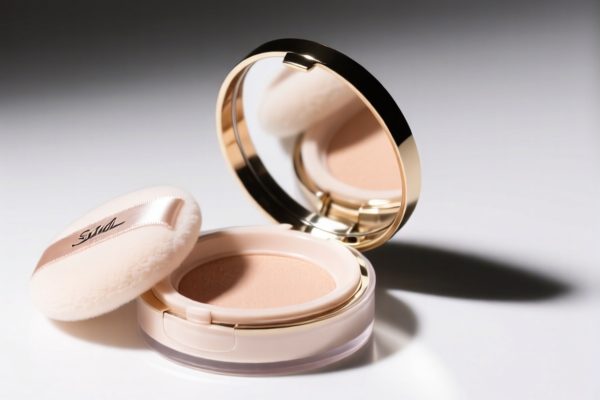
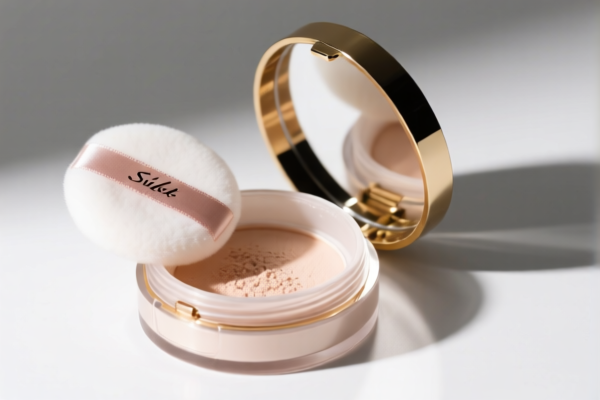
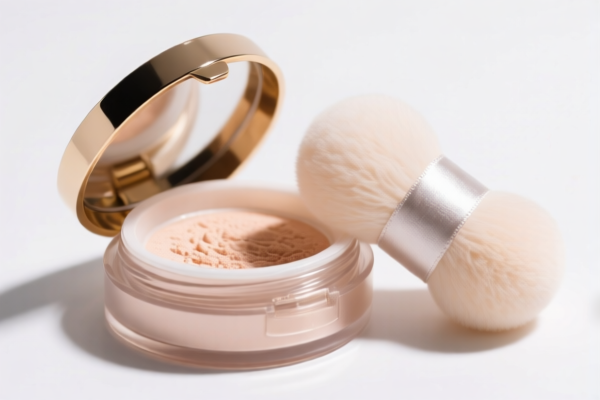
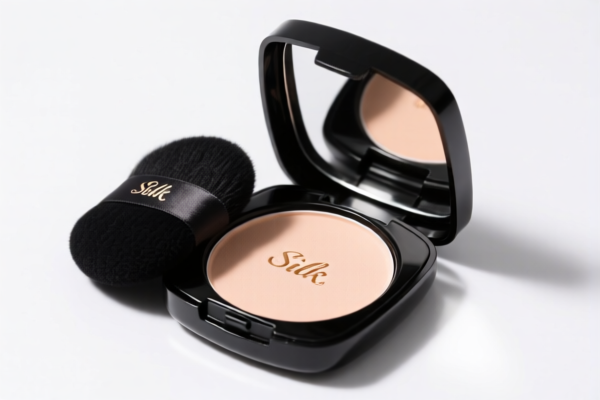
AI Analysis
💄 Perfume Powder Box & Powder Puff (Cosmetic Accessories)
🌐 HS Code Reference & Customs Clearance Guide | 2026 Latest Tariff Analysis | Professional Strategy
📌 Part I: Product Definition & Classification: Do You Know the Distinction Between "Container" and "Applicator"?
Cosmetic accessories like powder boxes (compacts) and powder puffs are essential tools in personal care. In international trade, they are strictly separated based on their material and function:
1. Perfume Powder Box (Compact Case):
The rigid container that holds the pressed powder.
- If made of plastic: Generally considered a "container" for cosmetic goods.
- If made of metal, wood, or leather: Classified by their material.
2. Powder Puff (Applicator):
The soft pad used to apply powder.
- Made of textile materials (cotton, rayon, etc.).
- Considered a "part" or "accessory" of cosmetic equipment or purely as a textile good, depending on specificity.
⚠️ Key Distinction Point:
- The Box (Container): Usually classified under Chapter 48 (Paper), Chapter 39 (Plastic), or Chapter 33 (Perfumery preparations - if deemed integral, but rare for empty boxes). Note: Empty cosmetic containers are often excluded from Chapter 33.
- The Puff: Classified under Chapter 63 (Made-up textile articles) or Chapter 42 (Leather accessories, if leather).
📦 Part II: Detailed HS Code Classification (2026 Latest Tariff Reference)
| HS Code | Product Description | Application Scenario | Material Type |
|---|---|---|---|
4819.20.00.00 |
Folding cartons, boxes, and cases, of paper or paperboard | Cardboard powder compacts, cardboard refill boxes | ✅ Paper/Cardboard |
3926.90.97.90 |
Other articles of plastics | Plastic powder compact cases (hard shell) | ✅ Plastic |
6307.90.98.98 |
Other made-up articles, n.e.c. | Powder puffs (textile-based, cotton/rayon) | ✅ Textile |
4202.92.91.00 |
Articles of apparel and clothing accessories, of plastics | High-end luxury plastic cosmetic cases (if deemed "accessory") | ✅ Plastic (Luxury) |
3307.90.00.00 |
Other perfumery, toilet or cosmetic preparations | Only if sold as a complete set with powder inside | ❌ N/A for empty |
4819.60.00.00 |
Tag or field, of paper or paperboard | Paper inserts, instructions inside the box | ✅ Paper |
🔍 Critical Reminder:
- Empty Containers: Generally not classified under Chapter 33 (Perfumes/Cosmetics). They are classified by their material (Paper/Plastic/Textile).
- Powder Puff: Always classified as a textile made-up article (6307) unless it is made of leather (4202).
- Set Packaging: If the powder puff and box are sold together with the powder, the entire set is classified under the powder itself (3307). If sold empty, they must be split or classified by material.
💰 Part III: 2026 Latest Tariff Rate Breakdown (Including Surcharges)
✅ Applicable Country: United States (US)
✅ Country of Origin: China (CN)
✅ Effective Date: Post-November 10, 2025 (Current Import Regulations)
🎯 1. 6307.90.98.98 —— Powder Puff (Textile-Based)
| Item | Content |
|---|---|
| Base Rate | 9.5% (ad valorem) |
| USITC Surcharge | +25% (Section 301 Tariff, Footnote 9903.88.01) |
| IEEPA Surcharge | +10% (China/HK Specific, Effective Nov 10, 2025) |
| Total Rate | 44.5% |
| Calculation Basis | CIF Value × 44.5% |
| De Minimis Eligibility | ❌ No (Not eligible for $800 de minimis exemption due to Section 301/IEEPA restrictions on textile accessories from China) |
| Legal Basis Path | IEEPA:9903.01.25 → USITC:6307.90.98.98 → FOOTNOTE:9903.88.01 |
📌 Explanation:
- Textile accessories from China face double penalties: The standard Section 301 tariff (25%) and the new IEEPA surcharge (10%).
- Total 44.5% is extremely high for low-cost items like puffs.
- Strategy: Consider sourcing puffs from non-China origins (e.g., Vietnam, Bangladesh) to avoid IEEPA surcharge.
🎯 2. 4819.20.00.00 —— Perfume Powder Box (Paper/Cardboard)
| Item | Content |
|---|---|
| Base Rate | 5.5% |
| USITC Surcharge | +25% (Section 301 Tariff) |
| IEEPA Surcharge | +10% (China/HK Specific) |
| Total Rate | 40.5% |
| Calculation Basis | CIF Value × 40.5% |
| De Minimis Eligibility | ❌ No |
| Legal Basis Path | IEEPA:9903.01.25 → USITC:4819.20.00.00 → FOOTNOTE:9903.88.01 |
📌 Note:
- Paper packaging from China is also heavily taxed.
- If the box is made of Plastic (3926.90.97.90), the base rate is 5.7%, but the total remains ~40.7% after surcharges.
🛠️ Part IV: Customs Clearance Practical Advice (Real-World Pitfall Guide)
✅ 1. Documentation Checklist (Mandatory)
| Document | Required | Explanation |
|---|---|---|
| ✅ Product Specification Sheet | ✔️ | Must specify material (e.g., "Cotton Puff," "Cardboard Box") |
| ✅ Composition Label | ✔️ | E.g., "Puff: 100% Cotton," "Box: 80% Paper, 20% Glue" |
| ✅ Commercial Invoice | ✔️ | Clearly state "Empty Cosmetic Containers" or "Textile Powder Puffs" |
| ✅ Material Test Report | ✔️ | For textiles, confirm fiber content to avoid misclassification |
| ✅ Carton Marking | ✔️ | Ensure HS Code and Origin are visible on outer cartons |
✅ 2. Declaration Tips (Key Mantra)
🔥 “Separate Empty from Set, Material Defines the Rate!”
| Scenario | Correct Declaration | Wrong Practice |
|---|---|---|
| Empty Puff | 6307.90.98.98 (Textile) |
Misdeclaring as "Cosmetic Tool" under 3307 → Audit Risk |
| Empty Paper Box | 4819.20.00.00 (Paper) |
Misdeclaring as "Plastic Case" → Penalty for False Origin/Material |
| Full Set (Box+Puff+Powder) | 3307.90.00.00 (Cosmetic) |
Splitting a complete set → Customs may reject split declaration |
| Plastic Compact Case | 3926.90.97.90 (Plastic) |
Misdeclaring as "Paper Box" → Value Discrepancy |
✅ 3. Special Circumstances Handling
| Situation | Handling Advice |
|---|---|
| Luxury Brand Packaging | If the box is high-end plastic/metal, ensure it’s declared as "Plastic Article" (3926), not "Paper". |
| Mixed Containers | If a carton contains both puffs and boxes, declare them separately on the line items to avoid confusion. |
| Origin Substitution | If puffs are made in Vietnam, declare Origin: VN to avoid the 10% IEEPA surcharge. |
| De Minimis Risk | Do NOT use de minimis ($800) for these items from China. The 40%+ duty outweighs the convenience. |
🌍 Part V: Global Customs Comparison (2026 Update)
| Country/Region | Recommended HS Code | Tariff (China Origin) | Certification | Notes |
|---|---|---|---|---|
| 🇺🇸 USA | 6307.90.98.98 (Puff) |
44.5% | CPC (Textile) | High duty; consider Vietnam origin |
| 🇺🇸 USA | 4819.20.00.00 (Box) |
40.5% | N/A | Paper packaging tax |
| 🇪🇺 EU | 6307.90.98 (Puff) |
12% | N/A | No Section 301 equivalent |
| 🇪🇺 EU | 4819.20.00 (Box) |
6.5% | CE (if applicable) | Lower than US |
| 🇨🇳 China | 6307.90.98 |
8.5% | N/A | Import duty for foreign goods |
| 🇦🇺 Australia | 6307.90.98 |
5% | N/A | Competitive market |
📌 Conclusion:
- USA is the most expensive market for cosmetic accessories due to cumulative tariffs.
- EU and Australia are more favorable for textile/paper accessories.
- Supply Chain Recommendation: For US-bound goods, source puffs from Vietnam/Bangladesh and boxes from non-China origins if possible to save ~10-15% in duties.
📌 Part VI: Common Mistakes & Pitfall Guide (Lessons Learned)
❌ Mistake 1: Declaring "Powder Puffs" under HS Code 3307.90.00.00 (Cosmetics)
👉 Consequence: Customs will reclassify to 6307 and apply incorrect origin rules. May lead to penalties for misdeclaration.
❌ Mistake 2: Combining Empty Boxes and Puffs into one "Cosmetic Kit" line item
👉 Consequence: If no powder is included, the kit is invalid. Customs will force split classification, causing delays.
❌ Mistake 3: Ignoring Material Composition for Boxes
👉 Consequence: Declaring a Plastic Box as "Paper" to avoid higher plastic tariffs → Severe Penalty for fraud.
✅ Correct Practice:
"Powder Puff, 100% Cotton, Made in Vietnam"
"Cardboard Compact Case, Empty, for Cosmetics"
🎯 Part VII: Conclusion: Precision in Classification Saves Money!
🎯 Remember the Mantra:
🔹 “Empty is NOT Cosmetic; Material Defines HS.”
🔹 “Puff is Textile (6307), Box is Paper/Plastic (48/39).”
🔹 “US Tariffs are High; Diversify Origin!”
📌 Pro Tip:
If you are exporting large volumes to the US, consider:
1. Sourcing puffs from Vietnam/Bangladesh to avoid IEEPA 10%.
2. Using USITC Exclusion Numbers if available for specific plastic boxes.
3. Applying for an Advance Ruling with CBP to lock in classification.
📣 Take Action Now:
📞 Contact your freight forwarder to verify Material Certificates.
🚀 Optimize your supply chain to bypass high-tariff origins.
💼 Precision in HS Codes is the key to maximizing profit margins!
✨ Professional Customs Clearance Starts with Accurate Classification!
💼 Every dollar saved on duty is pure profit!
Customer Reviews
About HS Code Classification
The Harmonized System (HS) is an internationally standardized nomenclature developed by the World Customs Organization (WCO) to classify traded products. Over 200 countries use the HS system as the basis for customs tariffs, trade statistics, and import/export regulations.
Each HS code follows a hierarchical structure:
- Chapter (2 digits) — Broad category of goods (e.g., Chapter 84: Machinery and Mechanical Appliances)
- Heading (4 digits) — More specific grouping within the chapter
- Subheading (6 digits) — Internationally standardized breakdown, used by all WCO member countries
- National subdivisions (8-10 digits) — Country-specific extensions for further classification, such as US HTSUS 10-digit codes
Correct HS code classification is essential for smooth customs clearance, accurate duty payment, and compliance with trade regulations. Misclassification can lead to customs delays, overpayment of duties, or penalties.
When importing from CN to US, the applicable tariff rates may include:
- Most-Favored-Nation (MFN) rate — The standard duty rate applied to WTO members
- General rate — Applied to countries without trade agreements
- Trade remedy duties — Additional tariffs such as Section 301 (anti-dumping), Section 232 (national security), or countervailing duties
The information provided on this page is for reference purposes only. For official classification, please consult with your local customs authority or a licensed customs broker.