Pesticide Retail Packaging
CN → US| HS Code | Tariff Rate | Origin | Destination | Doc |
|---|---|---|---|---|
| 4819504060 | 35.0% | CN | US | Official Doc |
| 4819100040 | 35.0% | CN | US | Official Doc |
| 7310210075 | 85.0% | CN | US | Official Doc |
| 7310290065 | 85.0% | CN | US | Official Doc |
| 3923290000 | 38.0% | CN | US | Official Doc |
| 3923109000 | 38.0% | CN | US | Official Doc |
Product Images

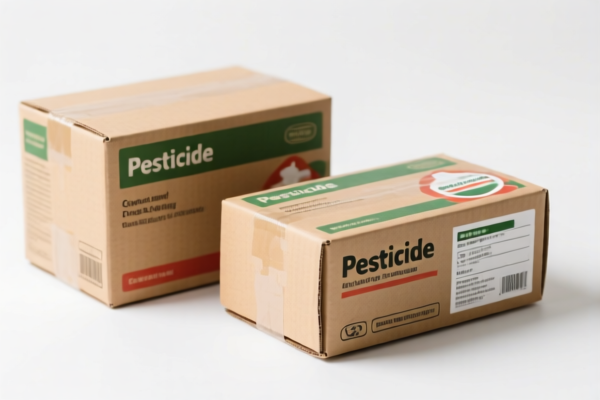

AI Analysis
🌾🚫 Pesticide Retail Packaging: HS Code & Taxation Analysis (2026 Edition)
Professional Classification Guide & Strategic Customs Clearance for Agricultural Chemicals
🧪 Product Definition: What Exactly is "Pesticide Retail Packaging"?
In international trade, "Pesticide Retail Packaging" refers to empty containers, closures, and packaging materials specifically designed for the final consumer or professional application of pesticides, not the pesticide product itself.
It falls under Chapter 39 (Plastics) or Chapter 48 (Paper/Paperboard) depending on material, OR Chapter 73 (Iron/Steel) for metal containers.
⚠️ Critical Distinction:
- NOT the pesticide (that belongs to Chapter 38: Pesticides, etc.)
- ONLY the empty container (plastic, paper, or metal) used to hold/sell the pesticide
- Must be empty, clean, and labeled as "Empty Pesticide Container" to avoid misclassification as hazardous goods.
📦 II. HS Code Classification Breakdown (2026 Latest Tariff)
Based on the provided data, here are the exact HS Codes and tax implications for pesticide retail packaging:
| HS Code | Product Description | Material | Capacity/Type | Applicable Tax |
|---|---|---|---|---|
| 3923.29.00.00 | Sacks and bags (including cones): Of other plastics | Plastic | Flexible bags, sacks, cones | 0.0% (Base + Add-on) |
| 3923.10.90.00 | Boxes, cases, crates and similar articles: Other | Plastic | Rigid plastic containers | 0.0% (Base + Add-on) |
| 4819.50.40.60 | Other packing containers (including record sleeves): Other | Paper/Paperboard | Cartons, boxes, bags | 25.0% (Add-on tariff only) |
| 4819.10.00.40 | Cartons, boxes and cases, of corrugated paper or paperboard | Corrugated Paper | Corrugated boxes | 25.0% (Add-on tariff only) |
| 7310.21.00.75 | Cans for any material, <50L, closed by soldering/crimping | Iron/Steel | Metal cans, sealed | 75.0% (25% + 50% steel tax) |
| 7310.29.00.65 | Other containers <50L, iron/steel | Iron/Steel | Other metal containers | 75.0% (25% + 50% steel tax) |
🔍 Key Insight:
- Plastic packaging = 0% tax (no additional duties)
- Paper/Paperboard packaging = 25% add-on tariff (US Section 301)
- Steel containers = 75% total tax (25% base + 50% steel-specific penalty)
💰 III. 2026 Tax Rate Deep Dive (China → US)
✅ 1. Plastic Packaging (HS 3923.29.00.00 & 3923.10.90.00)
| Item | Detail |
|---|---|
| Base Tariff | 0.0% |
| Section 301 Add-on | 0.0% |
| Total Tax | 0.0% |
| Calculation | CIF × 0% = $0 |
| De Minimis? | ✅ Yes (under $800, no duty) |
| Legal Basis | HTSUS 3923.29, 3923.10 (No Section 301 apply) |
📌 Why?
Plastics are not on the "Section 301" list for China-origin goods.
✅ Best for cost control – use plastic containers for pesticides!
✅ 2. Paper/Paperboard Packaging (HS 4819.50.40.60 & 4819.10.00.40)
| Item | Detail |
|---|---|
| Base Tariff | 0.0% |
| Section 301 Add-on | 25.0% |
| Total Tax | 25.0% |
| Calculation | CIF × 25% |
| De Minimis? | ❌ No (exceeds $800 threshold) |
| Legal Basis | HTSUS 4819 + Section 301 Footnote 9903.88.01 |
📌 Why 25%?
Paper packaging from China is subject to Section 301 (25% punitive tariff).
⚠️ Cost Impact: On $10,000 of paper boxes = $2,500 extra tax!
✅ 3. Steel Containers (HS 7310.21.00.75 & 7310.29.00.65)
| Item | Detail |
|---|---|
| Base Tariff | 0.0% |
| Section 301 Add-on | 25.0% |
| Steel/Aluminum/Copper Penalty | +50% |
| Total Tax | 75.0% |
| Calculation | CIF × 75% |
| De Minimis? | ❌ No |
| Legal Basis | HTSUS 7310 + Section 301 + Steel Tariff (50%) |
📌 Why 75%?
Double whammy:
1. Section 301 (25%) for China origin
2. Steel-specific penalty (50%) under Section 232
⚠️ Avoid steel containers for pesticide packaging – catastrophic tax burden!
🛠️ IV. Customs Clearance Strategy (2026 Practical Guide)
✅ 1. Document Checklist (Mandatory)
| Document | Required? | Purpose |
|---|---|---|
| Product Specification Sheet | ✅ | Confirm material (plastic/paper/steel) and capacity |
| Empty Container Certificate | ✅ | Prove it’s empty (not containing pesticide residue) |
| HS Code Declaration Form | ✅ | Clearly state HS Code + Tax rate |
| Bill of Lading (BOL) | ✅ | Show "Empty Pesticide Containers" as cargo |
| Commercial Invoice | ✅ | List as "Pesticide Retail Packaging (Empty)" |
| Origin Certificate (CO) | ✅ | For China origin (to verify Section 301 applicability) |
| SDS (Safety Data Sheet) | ✅ | If packaging had prior pesticide content (for cleaning proof) |
✅ 2. Declaration Tips (Critical)
🔥 "Empty + Material + No Residue = 0% Tax"
| Scenario | Correct Declaration | Wrong Declaration |
|---|---|---|
| Plastic bags for pesticides | HS 3923.29.00.00 → 0% | Report as "Pesticide" → 15% + penalties |
| Corrugated boxes for pesticides | HS 4819.10.00.40 → 25% | Report as "Plastic boxes" → Audit + fines |
| Steel drums (empty) | HS 7310.29.00.65 → 75% | Claim "Plastic" → Fraud penalty |
| Any container with residue | DO NOT SHIP | Risk of "Hazardous Goods" seizure |
✅ 3. Special Cases & Exceptions
| Case | Action |
|---|---|
| Plastic containers made in Vietnam | Apply IEEPA exemption → 0% tax |
| Steel containers from non-China origin | Still 75% if "steel" classified under 7310 |
| Paper boxes with plastic lining | Classify by outer material (paper = 25%) |
| Containers with "Pesticide" label (empty) | Must be cleared with "Empty" certification |
| Small quantities (<$800) | De Minimis exemption → 0% tax (if plastic) |
🌍 V. Global Market Comparison (2026)
| Country | Plastic Packaging Tax | Paper Packaging Tax | Steel Packaging Tax | Notes |
|---|---|---|---|---|
| 🇺🇸 USA | 0% | 25% | 75% | Highest steel tax |
| 🇪🇺 EU | 0% | 2.5% | 5% | No Section 301 |
| 🇨🇳 China | 0% | 0% | 0% | No additional tax |
| 🇯🇵 Japan | 0% | 0% | 0% | No Section 301 |
| 🇦🇺 Australia | 0% | 5% | 10% | Low steel tax |
📌 Conclusion:
- USA is the most expensive for paper/steel packaging due to Section 301 + Steel Penalty.
- Plastic is universally 0% (if not contaminated).
- Avoid steel containers for US import – 75% tax is unsustainable!
⚠️ VI. Common Pitfalls & How to Avoid Them
❌ Pitfall 1: Reporting "Pesticide" instead of "Empty Container"
Consequence: 15% tariff + seizure risk
✅ Fix: Use "Empty Pesticide Packaging" on invoice + BOL
❌ Pitfall 2: Mixing materials (plastic liner in paper box)
Consequence: Misclassification → 25% tax applied incorrectly
✅ Fix: Declare by outermost material (paper = 25%)
❌ Pitfall 3: Steel containers with pesticide residue
Consequence: Hazardous goods classification → $10,000+ fines
✅ Fix: Clean thoroughly + provide cleaning certificate
❌ Pitfall 4: Ignoring "Section 301" for paper/steel
Consequence: 25%–75% tax not paid → Back taxes + penalties
✅ Fix: Pre-calculate tax based on HS Code + material
🎯 VII. Final Recommendation: Cost-Saving Strategy
✅ Best Option: Plastic Packaging (HS 3923.xx)
- Tax: 0%
- Why? No Section 301, no steel penalty, lightweight, durable
- Action: Switch to plastic sacks, bags, or rigid containers for US import
✅ Second Best: Paper/Paperboard (HS 4819.xx)
- Tax: 25%
- Why? Acceptable if volume is low or plastic unavailable
- Action: Pre-calculate 25% tax into cost model
❌ Worst Option: Steel Containers (HS 7310.xx)
- Tax: 75%
- Why? Double penalty (Section 301 + Steel Tax)
- Action: Avoid completely for US import
📣 Final Takeaway
🔹 "Plastic = 0% Tax | Paper = 25% Tax | Steel = 75% Tax"
🔹 "Empty is Key: Prove no residue to avoid hazardous classification"
🔹 "Steel = Avoid at All Costs for US Import"
Next Step:
✅ Switch to plastic packaging for pesticide retail
✅ Pre-calculate tax based on material
✅ Get pre-clearance ruling from CBP for large shipments
📌 Need Help?
Contact a licensed customs broker + submit HS Code pre-ruling request to CBP.
Your cost savings start with smart packaging choices!
✨ Precision Classification = Zero Tax Risk
💼 Your packaging cost is your profit margin – protect it!
Customer Reviews
About HS Code Classification
The Harmonized System (HS) is an internationally standardized nomenclature developed by the World Customs Organization (WCO) to classify traded products. Over 200 countries use the HS system as the basis for customs tariffs, trade statistics, and import/export regulations.
Each HS code follows a hierarchical structure:
- Chapter (2 digits) — Broad category of goods (e.g., Chapter 84: Machinery and Mechanical Appliances)
- Heading (4 digits) — More specific grouping within the chapter
- Subheading (6 digits) — Internationally standardized breakdown, used by all WCO member countries
- National subdivisions (8-10 digits) — Country-specific extensions for further classification, such as US HTSUS 10-digit codes
Correct HS code classification is essential for smooth customs clearance, accurate duty payment, and compliance with trade regulations. Misclassification can lead to customs delays, overpayment of duties, or penalties.
When importing from CN to US, the applicable tariff rates may include:
- Most-Favored-Nation (MFN) rate — The standard duty rate applied to WTO members
- General rate — Applied to countries without trade agreements
- Trade remedy duties — Additional tariffs such as Section 301 (anti-dumping), Section 232 (national security), or countervailing duties
The information provided on this page is for reference purposes only. For official classification, please consult with your local customs authority or a licensed customs broker.