Pet Bathrobe
CN → US| HS Code | Tariff Rate | Origin | Destination | Doc |
|---|---|---|---|---|
| 4303900000 | 35.0% | CN | US | Official Doc |
| 3926909989 | 22.8% | CN | US | Official Doc |
| 3924905650 | 20.9% | CN | US | Official Doc |
| 3924104000 | 13.4% | CN | US | Official Doc |
| 6307909882 | 24.5% | CN | US | Official Doc |
Product Images
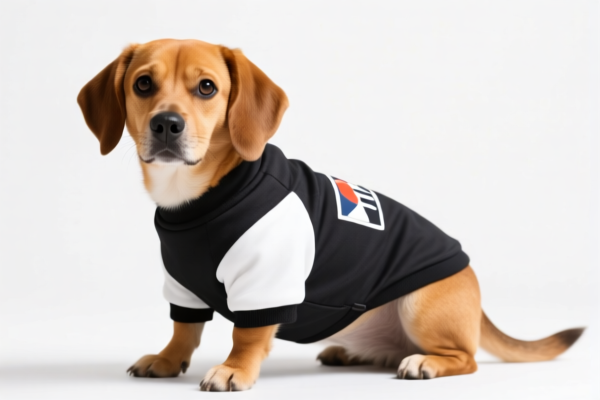
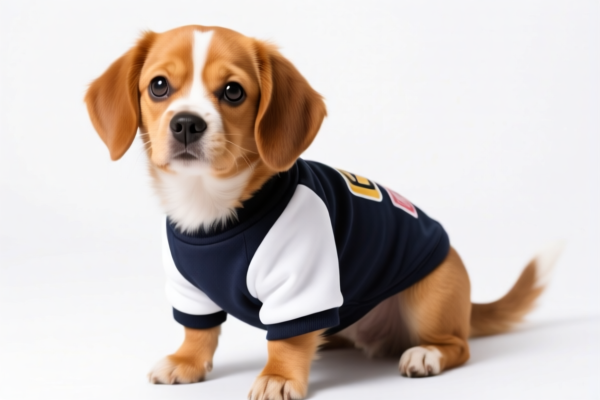
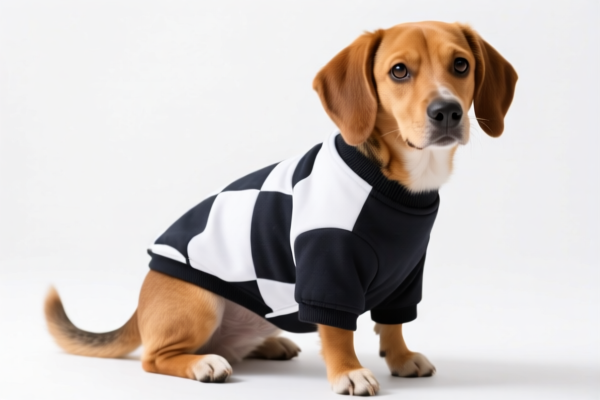

AI Analysis
🐾 Pet Bathrobe (Animal Fur/Synthetic Robe)
🌐 HS Code Reference & Customs Clearance Guide | 2026 Latest Tariff Analysis | Professional Clearance Strategy
📌 I. Product Definition & Classification: Do You Really Know "Pet Bathrobes"?
A Pet Bathrobe is a specialized garment designed for animals (typically dogs or cats) to maintain warmth and hygiene after bathing. In international trade, its classification is critical because it hinges on two factors: 1. Material Composition: Is it real fur, plastic, or synthetic fiber? 2. Intended Use: Is it strictly for pets, or does it fall under general household items?
⚠️ Key Distinction:
- If made of real animal fur/hide → Classified as Fur Garments (HS 4303).
- If made of plastic/synthetic fibers (e.g., PVC, polyester, microfiber) → Classified as Plastic Goods or Textile Accessories (HS 3926 or 6307).
- Mistake Alert: Declaring a pet robe made of synthetic fleece as "Fur" will lead to severe penalties and re-classification!
📦 II. HS Code Classification Details (2026 Latest Tariff Authority Comparison)
| HS Code | Product Description | Material/Use Scenario | Key Classification Logic |
|---|---|---|---|
4303.90.00.00 |
Other Fur Garments & Accessories | Real animal fur, leather, or fur-like pelts. | Classified under "Fur Garments" as it is a finished garment made of fur. |
3926.90.99.89 |
Other Articles of Plastics/Synthetic Fibers | Plastic, PVC, or unlisted synthetic materials. | Not specifically listed elsewhere; falls under "Miscellaneous Plastic Articles." |
3924.90.56.50 |
Other Household/Sanitary Plastic Articles | Plastic/synthetic, used in home/bathroom hygiene. | Fits "Household/Hygiene" category if used for drying/cleaning pets. |
3924.10.40.00 |
Plastic Tableware/Kitchenware/Household Articles | Plastic material, household/卫生用品 use. | Specifically for plastic household items (e.g., non-food contact, but household utility). |
6307.90.98.82 |
Other Made-up Textile Articles (e.g., Towels) | Cotton, microfiber, or textile-based towels/robes. | Classified as a "Towel" or similar textile accessory if made of woven/knitted fabric. |
🔍 Important Note:
- Real Fur vs. Faux Fur: If the material is labeled as "Faux Fur" but is actually synthetic, it cannot be declared under HS4303. It must go to3926or6307.
- Packaging: If sold as a "Pet Bathrobe Kit" with a towel, the principal item determines the HS code.
💰 III. 2026 Latest Tariff Rate Breakdown (Including Surtaxes & Policy Add-ons)
✅ Applicable Country: United States (US)
✅ Origin: China (CN)
✅ Effective Date: From November 10, 2025 (including subsequent imports)
🎯 1. 4303.90.00.00 —— Other Fur Garments
| Item | Content |
|---|---|
| Base Tariff | 0.0% |
| USITC Surtax | +25.0% (Section 301) |
| Section 122 Tariff | +10.0% (Specific to this category) |
| Total Rate | 35.0% |
| Tax Calculation | CIF Value × 35% |
| De Minimis Exemption | ❌ Not Eligible (deny_de_minimis) |
| Legal Basis Path | Base: 0% → USITC: 25% → Sec 122: 10% |
📌 Explanation:
- Even though the base tariff is 0%, the Section 122 surcharge of 10% is critical for this category.
- Combined with the standard Section 301 (25%), the total burden is 35%.
- High Risk: Real fur items often face stricter inspection requirements for CITES or wildlife protection laws.
🎯 2. 3926.90.99.89 —— Other Plastic Articles
| Item | Content |
|---|---|
| Base Tariff | 5.3% |
| USITC Surtax | +7.5% (Section 301 partial) |
| Section 122 Tariff | +10.0% |
| Total Rate | 22.8% |
| Tax Calculation | CIF Value × 22.8% |
| De Minimis Exemption | ❌ Not Eligible (deny_de_minimis) |
| Legal Basis Path | Base: 5.3% → USITC: 7.5% → Sec 122: 10% |
📌 Note:
- This code is for non-specific plastic items. If your pet robe is made of PVC or hard plastic components, this applies.
- The Section 122 adds a significant 10% layer on top of existing tariffs.
🎯 3. 3924.90.56.50 —— Household/Sanitary Plastic Articles
| Item | Content |
|---|---|
| Base Tariff | 3.4% |
| USITC Surtax | +7.5% (Section 301 partial) |
| Section 122 Tariff | +10.0% |
| Total Rate | 20.9% |
| Tax Calculation | CIF Value × 20.9% |
| De Minimis Exemption | ❌ Not Eligible (deny_de_minimis) |
| Legal Basis Path | Base: 3.4% → USITC: 7.5% → Sec 122: 10% |
📌 Explanation:
- If the pet bathrobe is considered a "hygiene/sanitary" item made of plastic/synthetic material, this rate is lower than the generic plastic code.
- Requires proof of "household/hygiene" use.
🎯 4. 3924.10.40.00 —— Plastic Household Articles (Tableware/Kitchenware Type)
| Item | Content |
|---|---|
| Base Tariff | 3.4% |
| USITC Surtax | 0.0% |
| Section 122 Tariff | +10.0% |
| Total Rate | 13.4% |
| Tax Calculation | CIF Value × 13.4% |
| De Minimis Exemption | ❌ Not Eligible (deny_de_minimis) |
| Legal Basis Path | Base: 3.4% → USITC: 0% → Sec 122: 10% |
📌 Critical Advantage:
- Lowest Total Rate (13.4%)!
- Zero USITC Surtax for this specific subheading.
- Caution: You must prove the item fits the definition of "Household/Sanitary" under this specific code. Misclassification here can lead to audits.
🎯 5. 6307.90.98.82 —— Other Made-up Textile Articles (Towels)
| Item | Content |
|---|---|
| Base Tariff | 7.0% |
| USITC Surtax | +7.5% (Section 301 partial) |
| Section 122 Tariff | +10.0% |
| Total Rate | 24.5% |
| Tax Calculation | CIF Value × 24.5% |
| De Minimis Exemption | ❌ Not Eligible (deny_de_minimis) |
| Legal Basis Path | Base: 7.0% → USITC: 7.5% → Sec 122: 10% |
📌 Note:
- Applies to cotton, microfiber, or textile-based pet robes.
- Classified as a "Towel" or similar textile accessory.
- Higher base tariff (7%) compared to plastic household goods, but still subject to the 10% Section 122 tax.
🛠️ IV. Customs Clearance Practical Advice (Battle-Tested Pitfall Guide)
✅ 1. Essential Documentation Checklist (Non-negotiable)
| Document | Must Provide? | Explanation |
|---|---|---|
| ✅ Product Composition Sheet | ✔️ | Explicitly state material (e.g., "100% Polyester Fleece," "PVC," "Real Fur"). |
| ✅ Product Photos (Front/Back/Label) | ✔️ | Must show it is clearly for pets, not humans (to justify "Household" vs. "Garment"). |
| ✅ Commercial Invoice | ✔️ | Description must match HS code logic (e.g., "Plastic Pet Drying Cape" vs. "Fur Robe"). |
| ✅ Origin Certificate (CO) | ✔️ | If applicable for preferential treatment in non-US markets. |
| ✅ Material Test Report | ✔️ | If claiming synthetic, have lab tests to prove it's not real fur (if declaring under plastic/textile). |
✅ 2. Declaration Strategy (Key Mantras)
🔥 "Material Defines Code, Use Defines Tax!"
| Scenario | Correct Declaration | Wrong Practice |
|---|---|---|
| Pet robe made of plastic/Vinyl | 3924.10.40.00 (Lowest Tax) |
Declaring as 3926 → 22.8% Tax |
| Pet robe made of Cotton/Fleece | 6307.90.98.82 |
Declaring as Human Clothing → Higher Tariff |
| Pet robe made of Real Fur | 4303.90.00.00 |
Declaring as Synthetic → Fraud Risk |
| Pet robe made of Unlisted Synthetic | 3926.90.99.89 |
Declaring as 6307 without proof → Rejection |
✅ 3. Special Cases Handling
| Situation | Handling Advice |
|---|---|
| OEM Custom Pet Robes | Provide design drawings to prove it's not a "standard" human garment, supporting classification under 3924 or 6307. |
| "Faux Fur" Claim | Must provide material test reports. If it's synthetic, do not use 4303. Use 3926 or 6307. |
| Packaging with Accessories | If sold with a brush or shampoo, declare the primary item (the robe). Do not split the shipment unless necessary for cost efficiency. |
| Human-Like Size | If the robe is large enough for a small child, customs may classify it as Human Clothing → Higher tariffs & different HS. Ensure sizing indicates "Pet Only". |
🌍 V. Global Market Clearance Comparison (2026 Latest)
| Country/Region | Recommended HS Code | Tariff (China Origin) | Certification | Notes |
|---|---|---|---|---|
| 🇺🇸 USA | 3924.10.40.00 (Best Case) |
13.4% | N/A | Lowest tax if classified as plastic household. |
| 🇨🇳 China | 6307.90.98.82 |
5% | N/A | No surtaxes for domestic import. |
| 🇪🇺 EU | 6217.10.00 (Other Made-up Clothing) |
12% | CE (if plastic) | Different classification logic; textiles often 0-12%. |
| 🇦🇺 Australia | 6307.90.90.90 |
5% | N/A | Generally lower tariffs for textiles. |
| 🇯🇵 Japan | 6307.90.99.90 |
10% | N/A | Textile-based classification common. |
📌 Conclusion:
- USA is the most complex market due to Section 122 and Section 301 surtaxes.
- Optimization Strategy: For US imports, if the material allows, classify under3924.10.40.00to achieve the 13.4% effective rate (avoiding the 7.5% USITC tax).
- Risk Warning: Misclassifying a plastic item as textile (or vice versa) to save tax can lead to audits, penalties, and shipment holds.
📌 VI. Common Errors & Pitfalls Guide (Blood Lessons)
❌ Error 1: Declaring a Synthetic Fleece robe as Real Fur (4303)
👉 Consequence: Customs Inspection + Confiscation + Fine! (False Declaration)
❌ Error 2: Declaring a Plastic robe under Textile Code (6307) to avoid Surtax
👉 Consequence: Re-classification + Back Taxes + 20% Penalty
❌ Error 3: Ignoring Section 122 (10%) in cost calculation
👉 Consequence: Profit Margin Eroded! (Many forget the 10% add-on for these categories)
❌ Error 4: Using vague descriptions like "Dog Clothing" without Material Details
👉 Consequence: Customs Request for Evidence (RFI) → Delayed Clearance
✅ Correct Approach:
"Pet Bathrobe, 100% Microfiber Polyester, Machine Washable, Size M, for Dogs Only, Made in China"
→ HS:6307.90.98.82or3924.10.40.00(if plastic) → Accurate Tax Calculation
🎯 VII. Conclusion: Professional Declaration, Cost Optimization!
🎯 Remember the Mantra:
🔹 "Material First, Use Second, Tax Third!"
🔹 "Fake Fur ≠ Real Fur, Plastic ≠ Textile!"
🔹 "Section 122 is 10%, Don't Forget It!"
📌 Pro Tip:
If your pet bathrobe is made of specific plastic household materials, try to qualify for HS 3924.10.40.00 to enjoy the 13.4% total rate (Base 3.4% + Sec 122 10%). This saves 9.4% compared to the generic plastic code (3926).
Always consult a licensed customs broker before shipping to confirm the exact HS code based on your product's material composition.
📣 Immediate Action:
📞 Contact Professional Customs Broker + Provide Material Report + Pre-classify HS Code
🚀 Ensure Smooth Clearance, Maximize Profit, Avoid Customs Traps!
✨ Professional Clearance Starts with Accurate Classification!
💼 Every Percent of Tax Saved is Pure Profit!
Customer Reviews
About HS Code Classification
The Harmonized System (HS) is an internationally standardized nomenclature developed by the World Customs Organization (WCO) to classify traded products. Over 200 countries use the HS system as the basis for customs tariffs, trade statistics, and import/export regulations.
Each HS code follows a hierarchical structure:
- Chapter (2 digits) — Broad category of goods (e.g., Chapter 84: Machinery and Mechanical Appliances)
- Heading (4 digits) — More specific grouping within the chapter
- Subheading (6 digits) — Internationally standardized breakdown, used by all WCO member countries
- National subdivisions (8-10 digits) — Country-specific extensions for further classification, such as US HTSUS 10-digit codes
Correct HS code classification is essential for smooth customs clearance, accurate duty payment, and compliance with trade regulations. Misclassification can lead to customs delays, overpayment of duties, or penalties.
When importing from CN to US, the applicable tariff rates may include:
- Most-Favored-Nation (MFN) rate — The standard duty rate applied to WTO members
- General rate — Applied to countries without trade agreements
- Trade remedy duties — Additional tariffs such as Section 301 (anti-dumping), Section 232 (national security), or countervailing duties
The information provided on this page is for reference purposes only. For official classification, please consult with your local customs authority or a licensed customs broker.