Pet Carpet
CN → US| HS Code | Tariff Rate | Origin | Destination | Doc |
|---|---|---|---|---|
| 5705002030 | 38.3% | CN | US | Official Doc |
| 5703210090 | 41.7% | CN | US | Official Doc |
| 5705002090 | 38.3% | CN | US | Official Doc |
| 5703310085 | 16.0% | CN | US | Official Doc |
| 3926909989 | 22.8% | CN | US | Official Doc |
Product Images
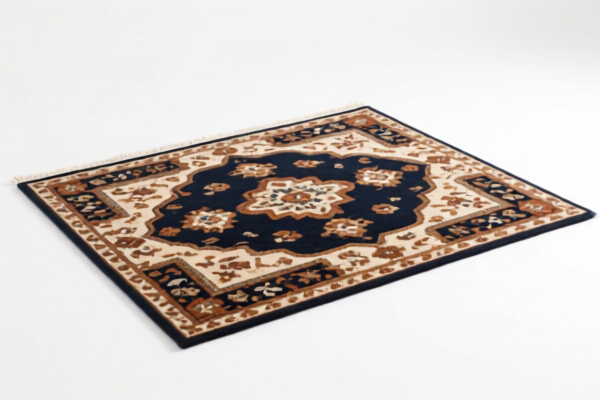
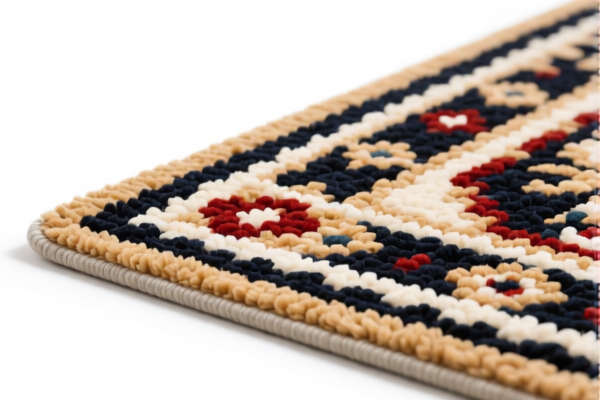
AI Analysis
🐾 Pet Carpet (Pet Rugs & Floor Coverings)
🌐 HS Code Reference & Customs Clearance Guide | 2026 Latest Tariff Analysis | Professional-Level Clearance Strategy
📌 Part 1: Product Definition & Classification: Do You Really Understand "Pet Carpet"?
A "Pet Carpet" in international trade is not a single standardized product but a functional category. It typically refers to textile floor coverings designed specifically for pets, often featuring non-slip backing, absorbent materials (like memory foam or terry cloth), or artificial grass textures. In the customs context, classification depends heavily on two factors:
1. Material Composition (Wool, Synthetic Fibers, Plastic, or Other Textiles)
2. Specific Use/Function (General floor covering vs. Specific "carpet" classification)
⚠️ Key Distinction Point:
- If it is a textile-based rug/carpet (e.g., cotton, nylon, polypropylene pile) → Falls under Chapter 57 (Textile Floor Coverings).
- If it is primarily plastic/synthetic rubber (e.g., artificial turf or plastic mat) → Falls under Chapter 39 (Plastics) or other headings.
- Crucial Note: "Pet" designation alone does not create a special HS code. It must be classified by its physical composition first.
📦 Part 2: HS Code Classification Details (2026 Latest Tariff Authority Comparison)
Based on the available data, here are the most likely HS Code classifications for Pet Carpets, ranked by specificity and tax efficiency.
| HS Code | Product Description | Applicable Scenario | Tax Efficiency |
|---|---|---|---|
5703.31.00.85 |
Textile Floor Coverings: Synthetic Fibers (Non-Wool) | Pet rugs made of nylon, polyester, or polypropylene piles. This is the most accurate classification for standard synthetic pet mats. | 🟢 Lowest Tax (16.0%) |
3926.90.99.89 |
Other Articles of Plastics | Pet mats made entirely of plastic materials (e.g., solid plastic sheets, artificial turf with plastic backing, or rigid plastic floor liners). | 🟡 Medium Tax (22.8%) |
5705.00.20.30 |
Other Carpets: Synthetic Fibers | General synthetic carpets not specifically categorized under pile or tufted. A "catch-all" for synthetic textile floor coverings. | 🟠 High Tax (38.3%) |
5705.00.20.90 |
Other Carpets: Other Textile Materials | A fallback category for textile carpets that don't fit specific pile/tufted definitions. Often used for mixed-material or unique fiber pet products. | 🟠 High Tax (38.3%) |
5703.21.00.90 |
Textile Floor Coverings: Wool/Fine Animal Hair | Unlikely for pet carpets unless explicitly made of nylon or polyamide (often confused with wool in broad terms). Note: Data summary suggests this may be used if material is inferred as Nylon/Polyamide pile. | 🔴 Highest Tax (41.7%) |
🔍 Critical Insight:
-5703.31.00.85is the Golden Standard for most synthetic pet carpets (nylon/polyester). It offers the lowest total duty (16%).
- Avoid5703.21.00.90unless the product is definitively wool or fine animal hair, as this is rare for pet products and incurs the highest tax (41.7%).
- If the product is rigid plastic or artificial turf, use3926.90.99.89instead of textile codes to avoid misclassification penalties.
💰 Part 3: 2026 Latest Tariff Rate Breakdown (Including Surcharges & Policy Add-ons)
✅ Applicable Country: United States (US)
✅ Origin: China (CN)
✅ Effective Date: From November 10, 2025 (including subsequent imports)
🎯 1. 5703.31.00.85 —— Textile Floor Coverings: Synthetic Fibers (Best Option)
| Item | Details |
|---|---|
| Base Duty Rate | 6.0% |
| USITC Surcharge (Section 301) | +0.0% |
| IEEPA Surcharge (Section 122/China-specific) | +10.0% |
| Total Duty Rate | 16.0% |
| Tax Calculation | CIF Value × 16.0% |
| De Minimis Eligibility | ❌ No (Not eligible for $800 exemption if over limit) |
| Legal Basis Path | USITC:5703.31.00.85 → IEEPA:122条款 |
📌 Explanation:
- This is the most cost-effective classification for synthetic pet carpets.
- Why 0% USITC? This specific subheading often enjoys reduced Section 301 rates compared to general textile categories.
- IEEPA 10%: Standard additional tariff for Chinese-origin goods under the International Emergency Economic Powers Act.
🎯 2. 3926.90.99.89 —— Other Articles of Plastics (For Plastic Pet Mats)
| Item | Details |
|---|---|
| Base Duty Rate | 5.3% |
| USITC Surcharge (Section 301) | +7.5% |
| IEEPA Surcharge | +10.0% |
| Total Duty Rate | 22.8% |
| Tax Calculation | CIF Value × 22.8% |
| De Minimis Eligibility | ❌ No |
| Legal Basis Path | USITC:3926.90.99.89 → IEEPA:Section 301/122 |
📌 Explanation:
- Suitable for plastic-based pet products (e.g., artificial grass pads, rigid plastic floor liners).
- Higher base duty than textile, but still significantly cheaper than general textile carpets.
🎯 3. 5705.00.20.30 & 5705.00.20.90 —— Other Carpets (Catch-All Textile)
| Item | Details |
|---|---|
| Base Duty Rate | 3.3% |
| USITC Surcharge (Section 301) | +25.0% |
| IEEPA Surcharge | +10.0% |
| Total Duty Rate | 38.3% |
| Tax Calculation | CIF Value × 38.3% |
| De Minimis Eligibility | ❌ No |
| Legal Basis Path | USITC:5705.00.20.x → IEEPA:Section 301/122 |
📌 Explanation:
- These are high-cost fallback codes.
- The 25% Section 301 surcharge makes them very expensive.
- Only use if the product does not fit the specific "pile" definition of5703. Misclassifying a pile carpet as5705to save on base duty is high-risk and may lead to audits and penalties.
🎯 4. 5703.21.00.90 —— Wool/Fine Animal Hair Carpets (Avoid for Pet Carpets)
| Item | Details |
|---|---|
| Base Duty Rate | 6.7% |
| USITC Surcharge (Section 301) | +25.0% |
| IEEPA Surcharge | +10.0% |
| Total Duty Rate | 41.7% |
| Tax Calculation | CIF Value × 41.7% |
| De Minimis Eligibility | ❌ No |
| Legal Basis Path | USITC:5703.21.00.90 → IEEPA:Section 301/122 |
📌 Explanation:
- Highest tax burden.
- Do NOT use unless your pet carpet is genuinely made of wool or fine animal hair (e.g., high-end wool pet beds).
- If it’s synthetic (nylon/polyester), using this code is misclassification and will result in severe penalties.
🛠️ Part 4: Customs Clearance Practical Advice (Real-World Pitfall Avoidance)
✅ 1. Required Documentation Checklist
| Document | Must Provide | Notes |
|---|---|---|
| ✅ Product Specification Sheet | ✔️ | Detail material composition (e.g., "100% Polyester Pile, PVC Backing"). |
| ✅ Photos of Product | ✔️ | Show texture, backing, and any "pet-specific" features (non-slip, absorbent). |
| ✅ Commercial Invoice | ✔️ | Clearly state "Pet Carpet" or "Pet Floor Mat" and specify material. |
| ✅ Certificate of Origin (CO) | ✔️ | Required for IEEPA surcharge determination. |
| ✅ Packing List | ✔️ | Show gross/net weight, dimensions. |
✅ 2. Declaration Tips (Key Mantras)
🔥 “Material First, Function Second. Synthetic is 16%, Wool is 42%!”
| Scenario | Correct Declaration | Wrong Approach |
|---|---|---|
| Synthetic Pet Mat (Nylon/Polyester) | 5703.31.00.85 – "Synthetic Fiber Textile Floor Covering" |
Calling it "Pet Rug" → May trigger audit for missing material details. |
| Plastic Pet Grass/Turf | 3926.90.99.89 – "Plastic Article for Pet Use" |
Using textile code 5705 → Audit Risk & Penalty. |
| Wool Pet Blanket/Mat | 5703.21.00.90 – "Wool Pile Carpet" |
Using 5703.31 (Synthetic) → Misclassification Fraud. |
| Mixed Material (Textile + Plastic) | 5703.31.00.85 (if textile is essential character) |
Splitting into two HS codes → Complexity & Delays. |
✅ 3. Special Case Handling
| Case | Handling Advice |
|---|---|
| Artificial Grass for Pets | Use 3926.90.99.89 (Plastics) if it’s a rigid plastic sheet. If it’s a flexible textile with plastic backing, use 5703.31.00.85 (Textile). |
| Memory Foam Pet Bed (Not Carpet) | If it’s a bed with fabric cover, consider Chapter 63 (Other Made-Up Articles), but if it’s a floor mat, stick to Chapter 57. |
| OEM Custom Pet Carpets | Provide design specs to prove material composition. Avoid generic terms like "Carpet." |
| Sample Shipments | Even for samples, ensure accurate HS code to avoid future audits on full shipments. |
🌍 Part 5: Global Market Comparison (2026 Latest)
| Country/Region | Recommended HS Code | Tariff Rate | Certification | Notes |
|---|---|---|---|---|
| 🇺🇸 USA | 5703.31.00.85 |
16.0% (China) | None | Best for synthetic pet carpets. |
| 🇨🇳 China | 5703.31.00.85 |
5-6% | CCC (if applicable) | Lower base rate, no US surcharges. |
| 🇪🇺 EU | 5703.31.00.85 |
0-7% | CE (if applicable) | Favorable for textiles. |
| 🇯🇵 Japan | 5703.31.00.85 |
0-8% | PSE | Competitive. |
📌 Conclusion:
- USA has the highest complexity due to Section 301 and IEEPA surcharges.
- China-origin synthetic pet carpets face a 16% total duty in the US, which is manageable if correctly classified.
- Wool pet products are expensive (41.7% in US) and should be avoided unless high-margin.
📌 Part 6: Common Errors & Pitfall Guide (Blood & Tears Lessons)
❌ Error 1: Classifying Synthetic Pet Mats as 5705.00.20.30
👉 Consequence: Pay 38.3% instead of 16.0% → Overpayment of 22.3%.
❌ Error 2: Classifying Plastic Pet Turf as 5703 (Textile)
👉 Consequence: Customs Audit & Penalty for misclassification.
❌ Error 3: Using vague terms like "Pet Rug" without material details
👉 Consequence: Customs delays while they investigate material composition.
❌ Error 4: Assuming "Pet" means a special tax exemption
👉 Consequence: No exemption exists. Tax is based on material, not end-use.
✅ Correct Practice:
"Pet Floor Mat, 100% Polyester Pile with PVC Non-Slip Backing, Model XYZ, for Indoor Use"
🎯 Part 7: Conclusion: Professional Declaration, Cost Savings, Efficiency!
🎯 Remember the Mantra:
🔹 "Synthetic is 16%, Wool is 42%, Plastic is 22%!"
🔹 "Don’t guess the HS Code, verify the material!"
🔹 "Avoid 5705 unless necessary – it’s a tax trap!"
📌 Pro Tip:
- For synthetic pet carpets, always aim for
5703.31.00.85.- For plastic pet products, use
3926.90.99.89.- Avoid
5703.21.00.90unless it’s truly wool.- Avoid
5705unless you’re sure it doesn’t fit5703.
📣 Action Now:
📞 Contact a Professional Broker + Provide Material Specs + Verify HS Code
🚀 Ensure Your Pet Carpets Clear Customs Smoothly, Save Costs, and Boost Profits!
✨ Professional Clearance Starts with Accurate Classification!
💼 Every Penny Saved is a Profit Earned!
Customer Reviews
About HS Code Classification
The Harmonized System (HS) is an internationally standardized nomenclature developed by the World Customs Organization (WCO) to classify traded products. Over 200 countries use the HS system as the basis for customs tariffs, trade statistics, and import/export regulations.
Each HS code follows a hierarchical structure:
- Chapter (2 digits) — Broad category of goods (e.g., Chapter 84: Machinery and Mechanical Appliances)
- Heading (4 digits) — More specific grouping within the chapter
- Subheading (6 digits) — Internationally standardized breakdown, used by all WCO member countries
- National subdivisions (8-10 digits) — Country-specific extensions for further classification, such as US HTSUS 10-digit codes
Correct HS code classification is essential for smooth customs clearance, accurate duty payment, and compliance with trade regulations. Misclassification can lead to customs delays, overpayment of duties, or penalties.
When importing from CN to US, the applicable tariff rates may include:
- Most-Favored-Nation (MFN) rate — The standard duty rate applied to WTO members
- General rate — Applied to countries without trade agreements
- Trade remedy duties — Additional tariffs such as Section 301 (anti-dumping), Section 232 (national security), or countervailing duties
The information provided on this page is for reference purposes only. For official classification, please consult with your local customs authority or a licensed customs broker.