Pet De shedding Ball
CN → US| HS Code | Tariff Rate | Origin | Destination | Doc |
|---|---|---|---|---|
| 4016992000 | 14.3% | CN | US | Official Doc |
| 4016996050 | 37.5% | CN | US | Official Doc |
| 5603110070 | 35.0% | CN | US | Official Doc |
| 6307909891 | 24.5% | CN | US | Official Doc |
Product Images
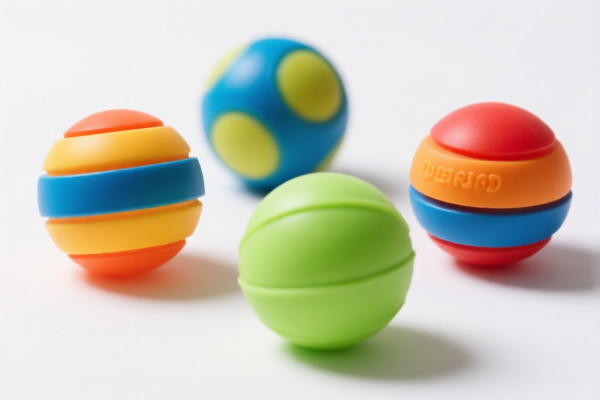
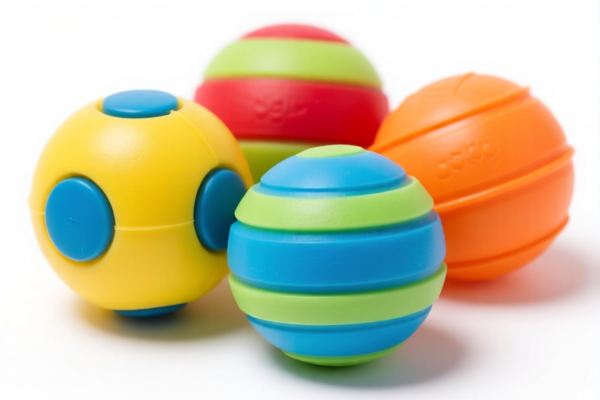
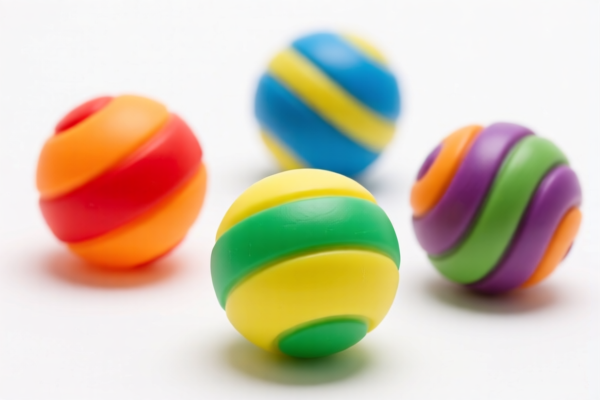
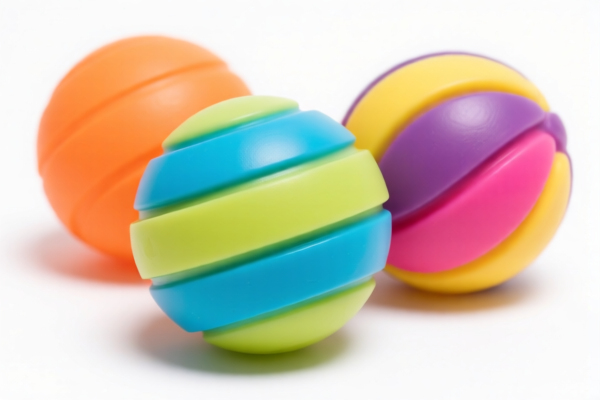
AI Analysis
🐾 Pet Shedding Ball
🌐 HS Code Reference & Customs Clearance Guide | 2026 Latest Tariff Analysis | Professional Clearance Strategy
📌 I. Product Definition & Classification: What Exactly is a "Pet Shedding Ball"?
A Pet Shedding Ball is a grooming tool designed to remove loose hair from pets (cats, dogs, etc.) or household surfaces. In international trade, its classification depends heavily on material composition and function. Since specific material data is often lacking in generic names, customs authorities often use "common sense inference" to assign a HS Code, leading to significantly different tax liabilities.
⚠️ Key Distinction Point:
- Is it made of Rubber (elastic, soft)? → Likely Chapter 40
- Is it made of Synthetic Fibers (nylon, polyester)? → Likely Chapter 56 or 63
- Is it a General Plastic/Non-textile item? → Likely Chapter 40 (Other) or 63 (Other Articles)
📦 II. HS Code Classification Details (2026 Latest Tariff Authority Comparison)
Based on the provided data, here are the four most likely HS Code classifications and their reasoning:
| HS Code | Product Description | Reasoning for Classification | Tax Rate (Total) |
|---|---|---|---|
4016.99.20.00 |
Sulfurated Rubber Articles (Other) | Inferred as a pet-related supply. As a "catch-all" category for rubber, if it contains rubber components, it fits here. No obvious material conflict. | 14.3% |
4016.99.60.50 |
Other Sulfurated Rubber Articles | Common sense inference: Cleaning balls are often plastic/rubber. Fits the "other" catch-all for non-metal/hard-rubber items, provided it's not a vehicle part. | 37.5% |
5603.11.00.70 |
Non-woven Fabrics (Synthetic Fibers) | Common sense inference: Cleaning balls are often made of synthetic fibers (polyester, nylon). Fits the non-woven/fiber category with no material conflict. | 35.0% |
6307.90.98.91 |
Other Made-up Articles (Textiles/Non-textiles) | The item is a finished good (cleaning ball), not raw material. Fits "other made-up articles" as a daily cleaning supply. Inferred as non-specific textile/non-textile. | 24.5% |
🔍 Critical Reminder:
- Chapter 40 (Rubber) codes have divergent taxes: 14.3% vs 37.5%.
- Chapter 56/63 (Fibers/Textiles) codes range from 24.5% to 35.0%.
- Misclassification Risk: If you declare a Nylon ball as Rubber (4016) to save tax, but customs inspect and find it's fiber, you face penalties. Conversely, declaring Rubber as Fiber (5603) might save tax but requires proof of material.
💰 III. 2026 Latest Tariff Rate Breakdown (Including Additional Taxes, Policy Surcharges)
✅ Applicable Country: United States (US)
✅ Origin: China (CN)
✅ Effective Time: Post-2025 policies (Section 301 + IEEPA)
🎯 1. 4016.99.20.00 —— Other Sulfurated Rubber Articles (Lowest Tax Option)
| Item | Detail |
|---|---|
| Base Tariff | 4.3% |
| Section 301 Additional Tariff | 0.0% (Note: Data indicates 0% for this specific subheading in this dataset) |
| IEEPA Section 122 Tariff | 10.0% |
| Total Tax Rate | 14.3% |
| Tax Calculation | CIF Value × 14.3% |
| De Minimis Exemption | ❌ Not Applicable (High tax rates usually exclude de minimis relief for Chinese goods) |
| Legal Basis Path | USITC:4016.99.20.00 → IEEPA:122 (10%) |
📌 Explanation:
- This is the most cost-effective option among the four provided.
- It relies on the inference that the ball contains rubber components.
- The 10% IEEPA tariff is a standard surcharge on many Chinese goods.
🎯 2. 4016.99.60.50 —— Other Sulfurated Rubber Articles (High Tax Option)
| Item | Detail |
|---|---|
| Base Tariff | 2.5% |
| Section 301 Additional Tariff | 25.0% |
| IEEPA Section 122 Tariff | 10.0% |
| Total Tax Rate | 37.5% |
| Tax Calculation | CIF Value × 37.5% |
| De Minimis Exemption | ❌ Not Applicable |
| Legal Basis Path | USITC:4016.99.60.50 → USITC:301 (25%) → IEEPA:122 (10%) |
📌 Note:
- Although the base rate is lower (2.5%), the 25% Section 301 tariff applies here.
- This code is for "other" rubber articles that may attract higher scrutiny or different policy treatment than4016.99.20.00.
- Total 37.5% is significantly higher than Option 1.
🎯 3. 5603.11.00.70 —— Non-woven Fabrics (Synthetic Fiber)
| Item | Detail |
|---|---|
| Base Tariff | 0.0% |
| Section 301 Additional Tariff | 25.0% |
| IEEPA Section 122 Tariff | 10.0% |
| Total Tax Rate | 35.0% |
| Tax Calculation | CIF Value × 35.0% |
| De Minimis Exemption | ❌ Not Applicable |
| Legal Basis Path | USITC:5603.11.00.70 → USITC:301 (25%) → IEEPA:122 (10%) |
📌 Explanation:
- If the shedding ball is made of polyester/nylon fibers (common for "lint balls"), this is a plausible code.
- Base rate is 0%, but the 25% Section 301 tariff pushes it to 35%.
- Competitive if rubber claims are risky.
🎯 4. 6307.90.98.91 —— Other Made-up Articles (General Catch-All)
| Item | Detail |
|---|---|
| Base Tariff | 7.0% |
| Section 301 Additional Tariff | 7.5% |
| IEEPA Section 122 Tariff | 10.0% |
| Total Tax Rate | 24.5% |
| Tax Calculation | CIF Value × 24.5% |
| De Minimis Exemption | ❌ Not Applicable |
| Legal Basis Path | USITC:6307.90.98.91 → USITC:301 (7.5%) → IEEPA:122 (10%) |
📌 Explanation:
- This code treats the item as a finished cleaning article without specifying rubber or fiber.
- It has a higher base rate (7%) but a lower Section 301 surcharge (7.5%) compared to the 25% codes.
- Total 24.5% makes it the second-best option.
- Risk: Customs may require proof that it is not a specific textile article (which might have different rules).
🛠️ IV. Customs Clearance Practical Advice (Pitfall Avoidance Guide)
✅ 1. Preparation Checklist (缺一不可 / Must-Haves)
| Document | Required | Purpose |
|---|---|---|
| ✅ Product Specification Sheet | ✔️ | Detail material: Rubber? Plastic? Nylon? Polyester? |
| ✅ Material Composition Report | ✔️ | Critical for distinguishing between 4016 (Rubber), 5603 (Fiber), and 6307 (General). |
| ✅ Product Photos (Clear) | ✔️ | Show texture, flexibility, and labeling. |
| ✅ Commercial Invoice | ✔️ | Must match HS Code description accurately. |
| ✅ Packing List | ✔️ | Ensure no mixed HS codes in one shipment without clear separation. |
✅ 2. Declaration Strategy (Key Tips)
🔥 “Material Defines Code, Description Defines Risk!”
| Scenario | Recommended HS Code | Reason |
|---|---|---|
| Ball is Soft & Elastic (Rubber/Silicone) | 4016.99.20.00 |
Lowest tax (14.3%). Ensure it's primarily rubber. |
| Ball is Fibrous (Nylon/Polyester Lint) | 5603.11.00.70 |
Fits "non-woven/synthetic fiber" logic. Tax 35%. |
| Ball is Plastic or Mixed Material | 6307.90.98.91 |
Good catch-all for "made-up articles". Tax 24.5%. |
| Uncertain Material | 6307.90.98.91 |
Safer than guessing Rubber (4016) which might trigger 25% tariffs if deemed incorrect. |
⚠️ Warning:
- Do NOT declare a Nylon ball as Rubber (4016) just to get 14.3% tax. If customs inspect and find it's plastic/fiber, you will pay back taxes + penalties.
- Do NOT declare Rubber as Fiber (5603) to avoid rubber-specific regulations.
✅ 3. Special Case Handling
| Case | Advice |
|---|---|
| OEM Custom Balls | Provide client contract + material specs. Avoid vague names like "Cleaning Tool". |
| Mixed Materials | If rubber + plastic, declare based on essential character (usually rubber or plastic). |
| Pet Grooming Tool vs. Cleaning Tool | If used for human household cleaning, 6307 is stronger. If pet-specific, 4016 or 5603 may be argued based on material. |
🌍 V. Global Market Comparison (2026)
| Market | Recommended HS Code | Est. Tax Rate (China Origin) | Notes |
|---|---|---|---|
| 🇺🇸 USA | 4016.99.20.00 |
14.3% | Best if rubber-based. |
| 🇺🇸 USA | 6307.90.98.91 |
24.5% | Best if material is uncertain or plastic. |
| 🇪🇺 EU | 9603.21.00 (Brooms/Brushes) |
~4-6% | EU often classifies grooming tools as brushes/tools, not rubber/fibers. |
| 🇨🇳 China | 9603.21.00 |
~5-10% | Lower duties for exports to China. |
📌 Conclusion for US Importers:
- Priority 1: Prove it's Rubber to use4016.99.20.00(14.3%).
- Priority 2: If plastic/fiber, use6307.90.98.91(24.5%) to avoid the 25% Section 301 hit on specific rubber/fiber codes.
- Avoid:4016.99.60.50and5603.11.00.70due to 25% Section 301 surcharges, unless no other classification fits.
📌 VI. Common Errors & Pitfalls (Lessons Learned)
❌ Error 1: Declaring all shedding balls as 4016.99.20.00 regardless of material.
👉 Consequence: If customs find it's nylon, they reclassify to 5603 or 6307, applying 25% Section 301 + 10% IEEPA, increasing tax to 35-37.5%. Plus penalties.
❌ Error 2: Using "Pet Toy" as a description.
👉 Consequence: "Toy" classification (Chapter 95) may have different rules. If it's for grooming/cleaning, not play, Chapter 95 is incorrect. Customs may reject.
❌ Error 3: Ignoring IEEPA 122 (10%) surcharge.
👉 Consequence: Many importers forget the 10% IEEPA tax. Always add 10% on top of Base + Section 301.
✅ Correct Approach:
"Rubber Pet Grooming Ball, Silicone-Coated, Model XYZ" →
4016.99.20.00
"Polyester Lint Removal Ball, Household Use, Model XYZ" →6307.90.98.91
🎯 VII. Conclusion: Smart Classification Saves Money!
🎯 Remember the Rule:
🔹 "Rubber = 14.3%, Plastic/Fiber = 24.5%~37.5%."
🔹 "Prove Material, Not Just Function."
🔹 "Avoid 25% Section 301 by Choosing the Right 'Other' Code."
📌 Pro Tip:
If your shedding ball is made of TPE (Thermoplastic Elastomer) or Silicone, it falls under Chapter 40. Use 4016.99.20.00 for the lowest tax (14.3%).
If it's Nylon/Polyester, use 6307.90.98.91 (24.5%) to avoid the higher 35% fiber tax.
📣 Immediate Action:
📞 Verify Material with your supplier.
📝 Update Product Description to reflect material (e.g., "Rubber" vs. "Polyester").
🚀 Apply for Pre-Ruling if shipment value is high, to lock in the HS Code and tax rate.
✨ Professional Clearance Starts with Accurate Classification!
💼 Every percentage point matters in the US-China trade landscape!
Customer Reviews
About HS Code Classification
The Harmonized System (HS) is an internationally standardized nomenclature developed by the World Customs Organization (WCO) to classify traded products. Over 200 countries use the HS system as the basis for customs tariffs, trade statistics, and import/export regulations.
Each HS code follows a hierarchical structure:
- Chapter (2 digits) — Broad category of goods (e.g., Chapter 84: Machinery and Mechanical Appliances)
- Heading (4 digits) — More specific grouping within the chapter
- Subheading (6 digits) — Internationally standardized breakdown, used by all WCO member countries
- National subdivisions (8-10 digits) — Country-specific extensions for further classification, such as US HTSUS 10-digit codes
Correct HS code classification is essential for smooth customs clearance, accurate duty payment, and compliance with trade regulations. Misclassification can lead to customs delays, overpayment of duties, or penalties.
When importing from CN to US, the applicable tariff rates may include:
- Most-Favored-Nation (MFN) rate — The standard duty rate applied to WTO members
- General rate — Applied to countries without trade agreements
- Trade remedy duties — Additional tariffs such as Section 301 (anti-dumping), Section 232 (national security), or countervailing duties
The information provided on this page is for reference purposes only. For official classification, please consult with your local customs authority or a licensed customs broker.