Pet Fence Gate
CN → US| HS Code | Tariff Rate | Origin | Destination | Doc |
|---|---|---|---|---|
| 7326908635 | 87.9% | CN | US | Official Doc |
| 4421917020 | 35.0% | CN | US | Official Doc |
| 7326908688 | 87.9% | CN | US | Official Doc |
| 4421997020 | 35.0% | CN | US | Official Doc |
| 9403200017 | 85.0% | CN | US | Official Doc |
Product Images
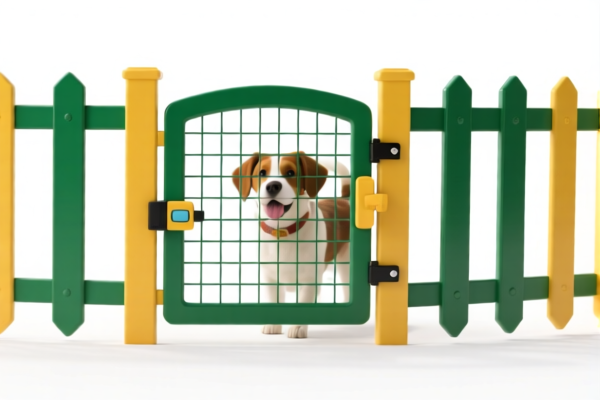
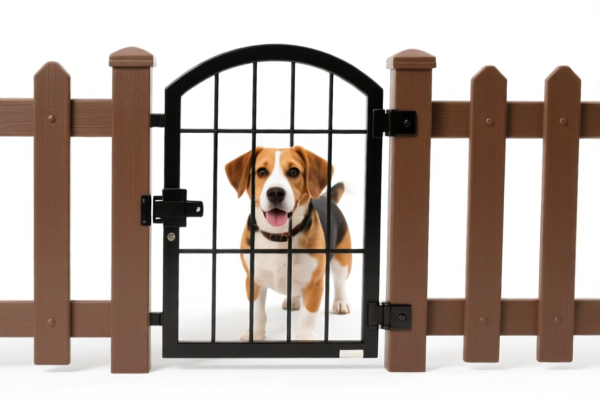
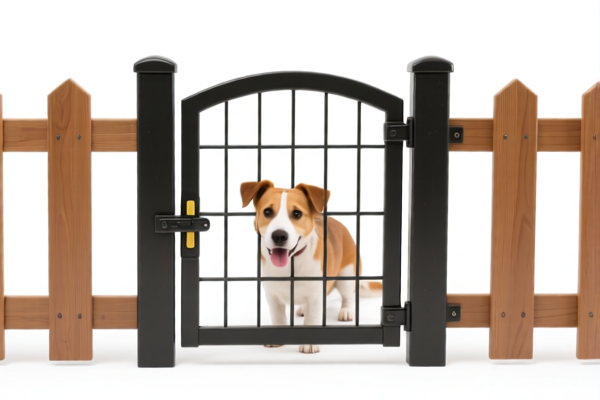
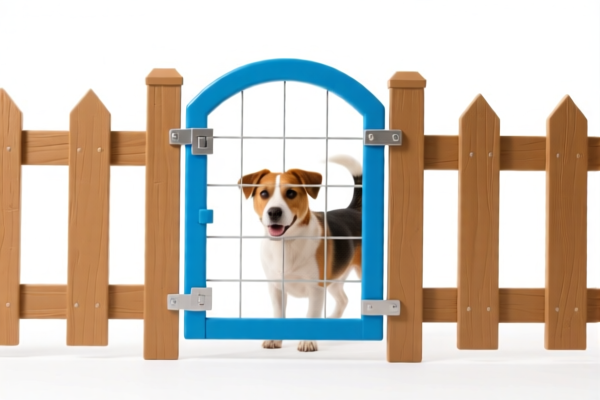
AI Analysis
🐕 Pet Fence Gate (Pet Enclosure Barrier)
🌐 HS Code Reference & Customs Clearance Guide | 2026 Latest Tariff Analysis | Professional Clearance Strategy
📌 I. Product Definition & Classification: Do You Really Understand "Pet Fence Gates"?
A Pet Fence Gate is a specialized barrier component used to create secure enclosures for pets (dogs, cats) in gardens, yards, or indoor spaces. In international trade, these products are primarily classified based on their material composition and structural function. They are generally divided into two main categories:
Metal Pet Gates (Steel/Iron): Made from wrought iron, steel mesh, or aluminum alloy, often featuring locking mechanisms. These fall under metal articles or metal furniture.
Wooden/Bamboo Pet Gates: Constructed from wood or bamboo, often modular or pre-assembled. These fall under wood products.
⚠️ Key Classification Distinction:
- If the product is metallic (iron/steel) and used as a barrier/furniture-like structure → Typically classified under Chapter 73 (Articles of Iron or Steel) or Chapter 94 (Furniture).
- If the product is wooden/bamboo → Typically classified under Chapter 44 (Wood and articles of wood).
- Critical Note: The presence of complex mechanical locking systems or if it’s considered “furniture” (e.g., indoor decorative pet gate) may shift classification to 9403.
📦 II. HS Code Classification Details (2026 Latest Tariff Authority Comparison)
| HS Code | Product Description | Application Scenario | Material Type |
|---|---|---|---|
7326.90.86.35 |
Articles of iron or steel, n.e.s. in heading 7326; specifically matching material and use, inferred as iron/steel fence products | Metal mesh gates, welded steel pet barriers, outdoor pet enclosures | ✅ Iron/Steel |
4421.91.70.20 |
Wooden fences and fence panels; matches use as fence, inferred as wooden or bamboo fence parts | Wooden pet enclosures, bamboo garden gates, modular wood barriers | ✅ Wood/Bamboo |
7326.90.86.88 |
Other articles of iron or steel; fits other categories within iron/steel products, suitable for fence purposes | Heavy-duty steel pet gates, powder-coated steel barriers, industrial-style pet fencing | ✅ Iron/Steel |
4421.99.70.20 |
Wooden fences; matches wooden fence use, has the form of assembled fence parts | Pre-assembled wooden pet gates, treated wood enclosures | ✅ Wood |
9403.20.00.17 |
Metal furniture; used for limiting activity, fits the function of fence facilities | Indoor decorative metal pet gates, furniture-style pet pens, enclosed pet cribs | ✅ Steel/Metal Furniture |
🔍 Key Reminder:
- Metal Gates: Most common outdoor pet gates fall under 7326.90.86.35 or 7326.90.86.88. If they are designed as furniture (e.g., high-end indoor pet enclosures with aesthetic focus), they may be classified under 9403.20.00.17.
- Wooden Gates: Clearly fall under 4421.91.70.20 or 4421.99.70.20.
- Do NOT confuse with general “fencing materials” for livestock; pet gates often have finer mesh or specific locking mechanisms that may affect classification.
💰 III. 2026 Latest Tariff Rate Details (Including Additional Taxes & Policy Surcharges)
✅ Applicable Country: United States (US)
✅ Origin: China (CN)
✅ Effective Date: From November 10, 2025 (including subsequent imports)
🎯 1. 7326.90.86.35 & 7326.90.86.88 —— Iron/Steel Pet Gates (Metal Articles)
| Item | Content |
|---|---|
| Base Tariff Rate | 2.9% (ad valorem) |
| USITC Additional Tax (Section 301) | +25.0% |
| 122-Clause Tax (Steel/Aluminum/Copper) | +50.0% |
| Total Tariff Rate | 87.9% |
| Tax Calculation | CIF Value × 87.9% |
| De Minimis Exemption Eligible? | ❌ No (deny_de_minimis) |
| Legal Basis Path | 122-Clause: Steel/Aluminum/Copper → Section 301: 25% → Base Tariff: 2.9% |
📌 Explanation:
- “USITC Additional Tax 25%” comes from Section 301 of the U.S. Trade Act (China-specific tariffs);
- “122-Clause Tax 50%” is the additional tariff on steel, aluminum, and copper products;
- “Base Tariff 2.9%” is the standard MFN rate for articles of iron/steel;
- Total 87.9% is an extremely high tariff, making metal pet gates from China highly expensive for US importers.
- Must be factored into cost structure!
🎯 2. 4421.91.70.20 & 4421.99.70.20 —— Wooden/Bamboo Pet Gates
| Item | Content |
|---|---|
| Base Tariff Rate | 0.0% (ad valorem) |
| USITC Additional Tax (Section 301) | +25.0% |
| 122-Clause Tax | N/A (does not apply to wood) |
| Total Tariff Rate | 35.0% |
| Tax Calculation | CIF Value × 35.0% |
| De Minimis Exemption Eligible? | ❌ No (deny_de_minimis for Section 301 goods) |
| Legal Basis Path | Section 301: 25% → Base Tariff: 0.0% |
📌 Note:
- Wooden pet gates have significantly lower tariffs (35%) compared to metal ones (87.9%);
- Even though the base rate is 0%, the 25% Section 301 tariff applies;
- Total 35% is still high but much more manageable than steel gates;
- Suitable for eco-friendly, garden-style pet enclosures.
🎯 3. 9403.20.00.17 —— Metal Pet Gates (Classified as Furniture)
| Item | Content |
|---|---|
| Base Tariff Rate | 0.0% (ad valorem) |
| USITC Additional Tax (Section 301) | +25.0% |
| 122-Clause Tax (Steel/Aluminum/Copper) | +50.0% |
| Total Tariff Rate | 85.0% |
| Tax Calculation | CIF Value × 85.0% |
| De Minimis Exemption Eligible? | ❌ No (deny_de_minimis) |
| Legal Basis Path | 122-Clause: Steel/Aluminum/Copper → Section 301: 25% → Base Tariff: 0.0% |
📌 Important:
- If the pet gate is classified as “metal furniture” (e.g., indoor, decorative, furniture-style), it falls under 9403;
- Still subject to 50% 122-Clause tax for steel/aluminum content;
- Total 85% is slightly lower than standard steel articles (87.9%) but still prohibitively high;
- Rarely recommended unless the product is clearly marketed as “furniture” with aesthetic focus.
🛠️ IV. Customs Clearance Practical Advice (实战避坑指南)
✅ 1. Required Documentation Checklist (Missing Any = Delay)
| Document | Required | Description |
|---|---|---|
| ✅ Product Specification Sheet | ✔️ | Material, dimensions, weight, locking mechanism type |
| ✅ Material Composition Certificate | ✔️ | Especially for metal gates (steel alloy content for 122-Clause) |
| ✅ Product Photos (with labels) | ✔️ | Clear view of construction, mesh size, locks, brand |
| ✅ Commercial Invoice | ✔️ | Must specify “Pet Fence Gate” + Material (Steel/Wood) |
| ✅ Packing List | ✔️ | Shows assembly status (knock-down vs. pre-assembled) |
| ✅ Certificate of Origin (CO) | ✔️ | If non-China origin, may qualify for preferential rates |
| ✅ Third-Party Test Report | ✔️ | Strength, stability, safety standards (e.g., ASTM, EN) |
✅ 2. Declaration Tips (Key Mnemonics)
🔥 “Material Matters, Locks Count, Name Precisely, Save Tax!”
| Scenario | Correct Declaration | Wrong Practice |
|---|---|---|
| Steel Pet Gate | 7326.90.86.35 or 7326.90.86.88 |
Misclassify as “furniture” → 85% |
| Wooden Pet Gate | 4421.91.70.20 or 4421.99.70.20 |
Misclassify as metal → 87.9% |
| Indoor Metal Pet Pen | 9403.20.00.17 |
Misclassify as general steel article → 87.9% |
| Knock-Down Kit | Declare as “assembled parts” | Split into “hinges + mesh” → Each item 87.9%+ |
✅ 3. Special Case Handling
| Scenario | Handling Advice |
|---|---|
| OEM Custom Gates | Provide design drawings + client order to avoid “non-standard” penalties |
| Hybrid Material (Wood + Metal) | Declare as primary material; if >50% steel, use 7326 codes |
| Portable/Travel Pet Gate | If collapsible, still classified by material; do not use “camping” as HS differentiator |
| Smart Pet Gate (with locks/electronics) | If electronics are integral, may shift to Chapter 85; consult customs broker |
🌍 V. Global Market Clearance Comparison (2026 Latest)
| Country/Region | Recommended HS Code | Tariff | Certification Requirements | Notes |
|---|---|---|---|---|
| 🇺🇸 USA | 7326.90.86.35 (Steel) / 4421.91.70.20 (Wood) |
87.9% (Steel) / 35% (Wood) | ASTM, CPSIA (if applicable) | Highest tariffs globally; 122-Clause + 301 apply |
| 🇨🇳 China | 7326.90.86.35 / 4421.91.70.20 |
2.9% (Steel) / 0% (Wood) | CCC (if applicable) | No additional tariffs; easy entry |
| 🇪🇺 EU | 7326.90.86.35 / 4421.91.70.20 |
2.9% (Steel) / 0% (Wood) | CE, RoHS | No Section 301 or 122-Clause taxes |
| 🇬🇧 UK | 7326.90.86.35 / 4421.91.70.20 |
2.9% (Steel) / 0% (Wood) | UKCA, RoHS | Post-Brexit rules; no US-style surcharges |
| 🇦🇺 Australia | 7326.90.86.35 / 4421.91.70.20 |
5% (Steel) / 0% (Wood) | RCM | Moderate tariffs; no 301/122 taxes |
📌 Conclusion:
- USA is the only major market with punitive surcharges (122-Clause + 301);
- Chinese-made pet gates face 87.9% tariff in the US if steel; 35% if wood;
- European, UK, Australian markets are far more favorable; consider diversifying export destinations.
📌 VI. Common Mistakes & Pitfalls (Lessons from Blood & Tears)
❌ Mistake 1: Declaring “Steel Pet Gate” as “Furniture” (9403) to avoid 122-Clause
👉 Consequence: Customs audits reveal steel content → Back taxes + 85% rate + fines!
❌ Mistake 2: Splitting a knock-down gate into “hinges, mesh, screws” for separate declaration
👉 Consequence: Each component taxed at 87.9% → Total effective rate exceeds 200%!
❌ Mistake 3: Not declaring “Chinese Origin” clearly
👉 Consequence: Misleading origin declaration → Seizure, penalties, blacklisting!
❌ Mistake 4: Using “Pet Enclosure” instead of “Pet Fence Gate”
👉 Consequence: Customs may misclassify → Delay, re-inspection, additional costs
✅ Correct Practice:
“Steel Pet Fence Gate, 36”x24”, Powder-Coated, with Locking Latch, Model XYZ, Made in China, CN Origin”
🎯 VII. Conclusion: Professional Declaration, Save Time & Money!
🎯 Remember This Mnemonic:
🔹 “Steel 87, Wood 35, Furniture 85, Don’t Split, Don’t Lie!”
🔹 “HS Code Determines Destiny, Tariff Differs 25 Points, One Mistake Costs Thousands!”
📌 Pro Tip:
- If your pet gate is originally from Vietnam, Mexico, Thailand, or Malaysia, you may avoid IEEPA/122-Clause surcharges;
- Consider reconfiguring supply chain to non-China origins for US market;
- Apply for Advance Ruling (Pre-Classification) with US CBP to avoid disputes.
📣 Take Action Now:
📞 Contact a Professional Customs Broker + Provide Product Photos + Apply for HS Code Advance Ruling
🚀 Let your Pet Fence Gates clear customs smoothly, export efficiently, and boost profits!
✨ Professional Clearance Starts with Accurate Classification!
💼 Every Cent of Your Cost Deserves Precise Calculation!
Customer Reviews
About HS Code Classification
The Harmonized System (HS) is an internationally standardized nomenclature developed by the World Customs Organization (WCO) to classify traded products. Over 200 countries use the HS system as the basis for customs tariffs, trade statistics, and import/export regulations.
Each HS code follows a hierarchical structure:
- Chapter (2 digits) — Broad category of goods (e.g., Chapter 84: Machinery and Mechanical Appliances)
- Heading (4 digits) — More specific grouping within the chapter
- Subheading (6 digits) — Internationally standardized breakdown, used by all WCO member countries
- National subdivisions (8-10 digits) — Country-specific extensions for further classification, such as US HTSUS 10-digit codes
Correct HS code classification is essential for smooth customs clearance, accurate duty payment, and compliance with trade regulations. Misclassification can lead to customs delays, overpayment of duties, or penalties.
When importing from CN to US, the applicable tariff rates may include:
- Most-Favored-Nation (MFN) rate — The standard duty rate applied to WTO members
- General rate — Applied to countries without trade agreements
- Trade remedy duties — Additional tariffs such as Section 301 (anti-dumping), Section 232 (national security), or countervailing duties
The information provided on this page is for reference purposes only. For official classification, please consult with your local customs authority or a licensed customs broker.