Pet Plastic Anti Static Treated Sheet
CN → US| HS Code | Tariff Rate | Origin | Destination | Doc |
|---|---|---|---|---|
| 3921190090 | 41.5% | CN | US | Official Doc |
| 3920620090 | 39.2% | CN | US | Official Doc |
| 3919905040 | 40.8% | CN | US | Official Doc |
| 3919905060 | 40.8% | CN | US | Official Doc |
| 3920992000 | 39.2% | CN | US | Official Doc |
Product Images

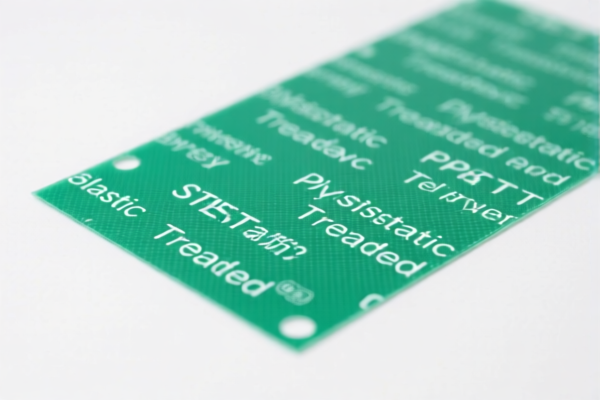
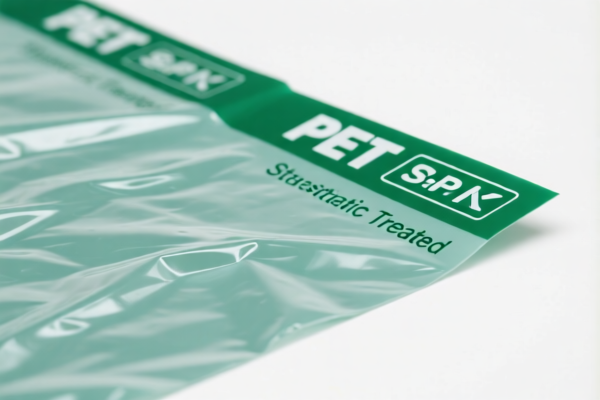
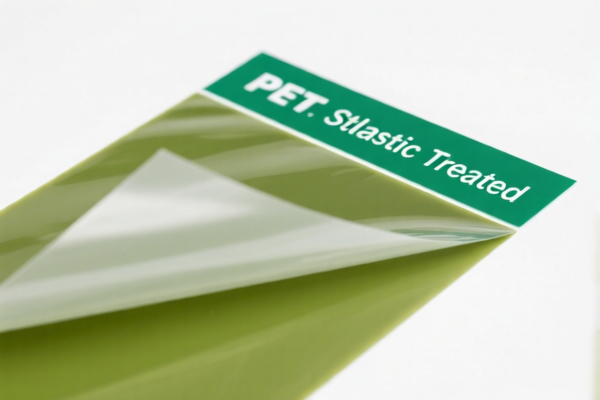
AI Analysis
🛡️ PET Plastic Anti-Static Treated Sheet
🌐 HS Code Reference & Customs Clearance Guide | 2026 Latest Tariff Breakdown | Pro-Level Import Strategy
📌 One Product, Multiple HS Codes — Know the Difference to Avoid 40%+ Tariff Traps!
📌 一、Product Definition & Classification: What Exactly Is a “PET Anti-Static Sheet”?
A PET Plastic Anti-Static Treated Sheet is a thin, flexible film made from polyethylene terephthalate (PET), treated with anti-static agents to prevent electrostatic discharge (ESD). It’s widely used in electronics manufacturing, semiconductor packaging, LCD display protection, and precision optical components.
⚠️ Critical Distinction:
- If the sheet is non-metalized, flexible, and treated only with anti-static coating, it falls under plastic films or sheets — not metalized or conductive materials.
- The anti-static treatment does not change the fundamental material classification — it remains PET plastic.✅ Key Features: - Material: PET (Polyethylene Terephthalate)
- Form: Sheet / Film / Membrane
- Treatment: Anti-static (surface coating or additive)
- No metallic layer (non-metalized)
- Flexible, not rigid or reinforced
📦 二、HS Code Classification Breakdown (2026 Latest Tariff Authority)
| HS Code | Product Description | Classification Reason | Tax Rate |
|---|---|---|---|
3921.19.00.90 |
PET plastic anti-static sheet, flexible film, non-metalized | Plastic film under subheading 3921.19 — other plastic films | 41.5% |
3920.62.00.90 |
PET plastic anti-static sheet, non-metalized, in sheet form | Plastic sheet or film under 3920.62 — other plastic sheets | 39.2% |
3919.90.50.40 |
PET plastic anti-static sheet, self-adhesive, non-metalized | Self-adhesive plastic film under 3919.90.50 — self-adhesive films | 40.8% |
3919.90.50.60 |
PET plastic anti-static sheet, non-metalized, flexible film | Self-adhesive plastic film (if adhesive layer present) | 40.8% |
3920.99.20.00 |
PET plastic anti-static sheet, flexible film, non-reinforced | Other non-reinforced plastic films under 3920.99.20 | 39.2% |
🔍 Why So Many Codes?
The variation depends on form, adhesion, and structural features: -3921.19.00.90: For flexible, non-reinforced films — most common for ESD protection. -3920.62.00.90&3920.99.20.00: For sheets or films that are not self-adhesive but may be thicker or used in industrial packaging. -3919.90.50.40&3919.90.50.60: Only apply if the sheet has a self-adhesive layer (e.g., sticky backing). Even if the anti-static treatment is present, adhesion triggers this subheading.✅ Rule of Thumb:
- No adhesive? → Use3921.19.00.90or3920.99.20.00
- Has adhesive layer? → Use3919.90.50.40or3919.90.50.60
- Metalized? → Not applicable here — this product is non-metalized.
💰 三、2026 U.S. Tariff Breakdown (With Full Legal Justification)
✅ Applicable Country: United States (US)
✅ Origin: China (CN)
✅ Effective Date: November 10, 2025 (and ongoing)
✅ Applicable Tariff Framework: USITC 301, IEEPA, and Section 122
🎯 1. 3921.19.00.90 — PET Plastic Film (Non-Metalized, Flexible)
| Item | Detail |
|---|---|
| Base Duty | 6.5% (ad valorem) |
| USITC 301 Tariff | +25.0% (from Section 301, China-specific) |
| Section 122 Tariff | +10.0% (from IEEPA, "international emergency" powers) |
| Total Effective Rate | 41.5% |
| Tax Calculation | CIF Value × 41.5% |
| De Minimis Exemption? | ❌ No (denied under U.S. law) |
| Legal Basis Path | IEEPA:9903.01.25 → IEEPA:9903.01.24 → USITC:3921.19.00.90 → FOOTNOTE:9903.88.01 |
📌 Explanation:
- The 25% USITC tariff applies to all goods from China under Section 301 (trade imbalance). - The 10% Section 122 tariff is a permanent addition under the IEEPA framework for certain Chinese imports. - No reduction even if the product is non-metalized or treated — treatment does not alter HS code or tariff status.
🎯 2. 3920.62.00.90 — Other Plastic Sheets (Non-Metalized)
| Item | Detail |
|---|---|
| Base Duty | 4.2% |
| USITC 301 Tariff | +25.0% |
| Section 122 Tariff | +10.0% |
| Total Effective Rate | 39.2% |
| Tax Calculation | CIF × 39.2% |
| De Minimis? | ❌ No |
| Legal Basis | IEEPA:9903.01.25 → IEEPA:9903.01.24 → USITC:3920.62.00.90 → FOOTNOTE:9903.88.01 |
📌 Note:
- Slightly lower base duty than3921.19.00.90, but still subject to full 35% in附加 taxes. - Used when the sheet is thicker or less flexible — e.g., industrial-grade protective sheets.
🎯 3. 3919.90.50.40 & 3919.90.50.60 — Self-Adhesive Plastic Films
| Item | Detail |
|---|---|
| Base Duty | 5.8% |
| USITC 301 Tariff | +25.0% |
| Section 122 Tariff | +10.0% |
| Total Effective Rate | 40.8% |
| Tax Calculation | CIF × 40.8% |
| De Minimis? | ❌ No |
| Legal Basis | IEEPA:9903.01.25 → IEEPA:9903.01.24 → USITC:3919.90.50.40/60 → FOOTNOTE:9903.88.01 |
📌 Critical Insight:
- Even if the anti-static treatment is the main feature, if the sheet has a tacky or adhesive backing, it must be classified under self-adhesive films. - Do not confuse anti-static with adhesive — they are separate features.
🛠️ 四、Customs Clearance Best Practices (Pro Tips to Save 10–40% in Risk & Cost)
✅ 1. Documentation Checklist (Must-Have for Smooth Clearance)
| Document | Required? | Why It Matters |
|---|---|---|
| ✅ Product Specification Sheet | ✔️ | Must confirm: material (PET), thickness, anti-static treatment, no metalization, adhesive status |
| ✅ Technical Drawings / Cross-Section Diagram | ✔️ | Prove no metallic layer or conductive coating |
| ✅ Product Photos (Clear, Labelled) | ✔️ | Show surface texture, adhesive layer (if any), and markings |
| ✅ Anti-Static Test Report (e.g., ISO 18404) | ✔️ | Prove ESD protection claims — not required for classification, but helpful |
| ✅ Commercial Invoice | ✔️ | Must clearly state: “PET Anti-Static Treated Sheet, Non-Metalized, [Adhesive: Yes/No]” |
| ✅ Certificate of Origin (CO) | ✔️ | If from China → expect full tariffs; if from Vietnam/Mexico → possible IEEPA exemption |
| ✅ Packing List | ✔️ | Show total weight, units, and whether sheets are rolled or stacked |
✅ 2.申报技巧 (Declaration Strategy)
🔥 “No Adhesive? → Use 3921.19.00.90. Adhesive? → Use 3919.90.50.40/60. Never Guess!”
| Scenario | Correct HS Code | Common Mistake |
|---|---|---|
| Non-adhesive, thin, flexible PET sheet | 3921.19.00.90 |
Misclassified as 3920.99.20.00 → risk of audit |
| Adhesive-backed, anti-static PET sheet | 3919.90.50.40 |
Misclassified as 3921.19.00.90 → higher risk of seizure |
| Thick, rigid PET sheet | 3920.62.00.90 |
Misclassified as film → incorrect tariff |
| Anti-static + metalized | ❌ Not in this list — must be excluded | If metalized → different HS code (e.g., 7615.10) |
📌 Pro Tip:
- Use “self-adhesive” in the product description only if it has a pressure-sensitive layer. - Avoid terms like “anti-static film” alone — it’s ambiguous. Use:“PET Anti-Static Treated Sheet, Non-Metalized, Flexible, [Adhesive: Yes/No], for ESD Protection”
✅ 3. Special Cases & Risk Mitigation
| Situation | Recommended Action |
|---|---|
| Product is manufactured in Vietnam/Mexico | Apply for IEEPA exemption — tariff drops to 0–5% |
| Product is for medical or aerospace use | File for special purpose exemption — may qualify for reduced rate |
| No adhesive, but has static-dissipative coating | Still use 3921.19.00.90 — treatment doesn’t change classification |
| Product is part of a larger assembly | Do not split — declare as a component under correct HS code |
| Customs questions about anti-static properties | Provide test report + declare: “Treated with non-conductive anti-static agent” |
🌍 五、Global Market Comparison (2026 Tariff Snapshot)
| Country | Recommended HS Code | Base Tariff | Additional Taxes | Total Effective Rate | Notes |
|---|---|---|---|---|---|
| 🇺🇸 USA | 3921.19.00.90 |
6.5% | +25% (USITC) +10% (122) | 41.5% | High risk — no de minimis |
| 🇨🇳 China | 3921.19.00.90 |
5% | None | 5% | No extra tariffs |
| 🇪🇺 EU | 3921.19.00.90 |
0% | None (if CE compliant) | 0% | No 301/IEEPA tariffs |
| 🇦🇺 Australia | 3921.19.00.90 |
5% | None | 5% | No extra taxes |
| 🇯🇵 Japan | 3921.19.00.90 |
0% | None | 0% | No 301 tariffs |
📌 Key Insight:
- The U.S. is the only market with 40%+ tariffs on this product from China. - Vietnam/Mexico-origin goods may avoid IEEPA/301 — consider shifting production.
📌 六、Common Mistakes & How to Avoid Them (Real-World Examples)
❌ Mistake 1:
“We shipped 1000 rolls of anti-static PET sheet — no adhesive, so we used
3921.19.00.90.”
✅ Correct — but if one roll has a sticky backing, the entire shipment may be flagged.
❌ Mistake 2:
“It’s anti-static — so it must be conductive!”
❌ Wrong — anti-static ≠ conductive. Non-metalized, non-conductive coatings are still plastic films.
❌ Mistake 3:
“We declared it as ‘ESD Protection Film’ — that’s descriptive.”
❌ Not enough — HS code must be precise. Use3921.19.00.90or3919.90.50.40.
✅ Best Practice:
Use the full declaration:
“PET Anti-Static Treated Sheet, Non-Metalized, Flexible Film, No Adhesive, for Electronic Component Protection, HS: 3921.19.00.90”
🎯 七、Final Verdict: Accurate Classification = 40% Tax Savings!
🔥 Remember the Golden Rule:
“Anti-static doesn’t change the HS code. Adhesive does. Metalization changes everything.”
💡 Pro Tip:
- Request an Advance Ruling (Pre-Clearance) from U.S. Customs if you're shipping large volumes. - Use a U.S.-based customs broker with experience in plastic films and ESD materials. - Shift production to Vietnam/Mexico to avoid 35% in附加 taxes.
📣 Take Action Now!
📞 Contact a licensed customs broker + Provide product photos + Request HS Code Pre-Ruling
🚀 Cut your U.S. tariff from 41.5% to 0% — if you change origin!
✨ Your Product. Your Risk. Your Profit.
💼 One wrong HS code = 40%+ in extra costs. One right code = smooth, fast, low-cost clearance.
✅ Precision in classification = Power in trade.
Customer Reviews
About HS Code Classification
The Harmonized System (HS) is an internationally standardized nomenclature developed by the World Customs Organization (WCO) to classify traded products. Over 200 countries use the HS system as the basis for customs tariffs, trade statistics, and import/export regulations.
Each HS code follows a hierarchical structure:
- Chapter (2 digits) — Broad category of goods (e.g., Chapter 84: Machinery and Mechanical Appliances)
- Heading (4 digits) — More specific grouping within the chapter
- Subheading (6 digits) — Internationally standardized breakdown, used by all WCO member countries
- National subdivisions (8-10 digits) — Country-specific extensions for further classification, such as US HTSUS 10-digit codes
Correct HS code classification is essential for smooth customs clearance, accurate duty payment, and compliance with trade regulations. Misclassification can lead to customs delays, overpayment of duties, or penalties.
When importing from CN to US, the applicable tariff rates may include:
- Most-Favored-Nation (MFN) rate — The standard duty rate applied to WTO members
- General rate — Applied to countries without trade agreements
- Trade remedy duties — Additional tariffs such as Section 301 (anti-dumping), Section 232 (national security), or countervailing duties
The information provided on this page is for reference purposes only. For official classification, please consult with your local customs authority or a licensed customs broker.