Pet Rubber Frisbee Toys
CN → US| HS Code | Tariff Rate | Origin | Destination | Doc |
|---|---|---|---|---|
| 9503000073 | 10.0% | CN | US | Official Doc |
| 9503000090 | 10.0% | CN | US | Official Doc |
| 3926909989 | 22.8% | CN | US | Official Doc |
| 9506696020 | 22.4% | CN | US | Official Doc |
| 9506996080 | 21.5% | CN | US | Official Doc |
| 4016992000 | 14.3% | CN | US | Official Doc |
Product Images
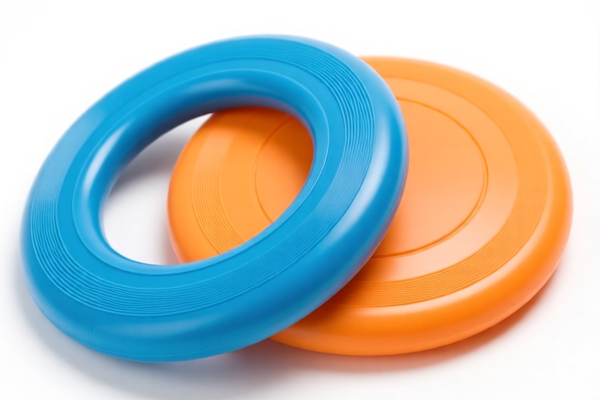
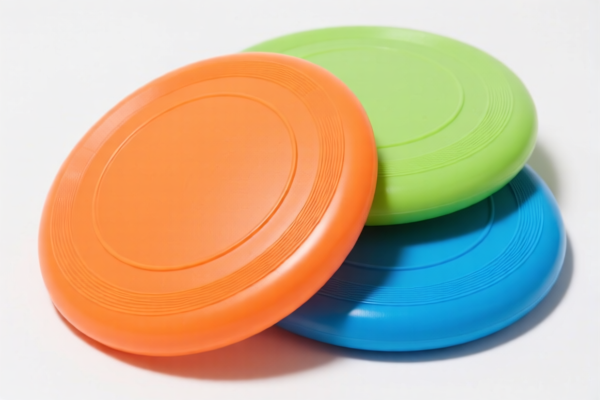
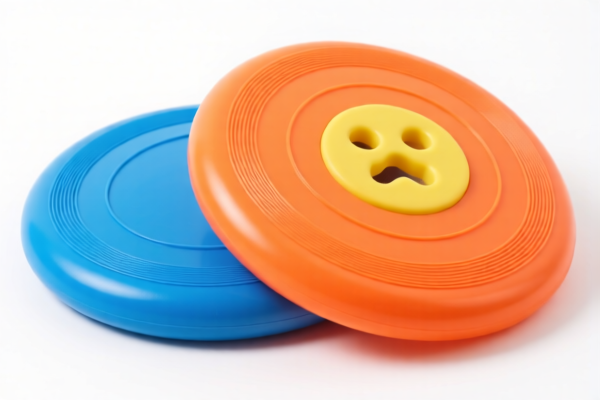
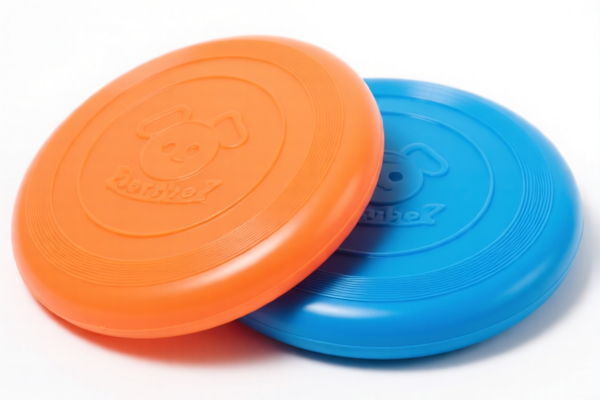
AI Analysis
🐶 Pet Rubber Frisbee Toys: HS Code Classification & Customs Clearance Guide (2026)
🌐 HS Code Reference & Customs Clearance Strategy | Latest Tariff Analysis | Professional Import Strategy
📌 I. Product Definition & Classification: What Exactly is a "Pet Rubber Frisbee"?
Pet rubber frisbees are interactive toys designed for dogs and other pets, typically used for fetch training and exercise. In international trade, their classification is highly dependent on material composition and specific functional attributes. Unlike standard human sports equipment, pet toys can fall under either "Toys" (Chapter 95) or "Plastics/Rubber Articles" (Chapters 39, 40), leading to significantly different tax liabilities.
⚠️ Critical Distinction:
- If the item is primarily recognized as a toy for pets, it may qualify for the lower 0%–10% duty rates under Chapter 95.
- If classified as a general plastic or rubber article, it faces higher 14.3%–22.8% rates due to base tariffs and Section 301/122 tariffs.
- Misclassification Risk: Declaring a plastic frisbee as a "Rubber Toy" or vice versa can lead to customs delays, fines, or retroactive tax assessments.
📦 II. HS Code Classification Details (2026 Latest Tariff Authority Comparison)
Based on the provided data, here are the five possible HS Code classifications for Pet Rubber Frisbee Toys, along with their specific descriptions and tax implications.
| HS Code | Product Description | Material Inference | Total Tax Rate | Key Characteristics |
|---|---|---|---|---|
9503.00.00.73 |
Pet toy frisbee ball classified as a toy; material inferred as plastic or rubber. | Plastic/Rubber | 10.0% | Specific pet toy sub-category. |
9503.00.00.90 |
Pet toy frisbee ball belongs to "Other" toys in Chapter 95; material is plastic or rubber. | Plastic/Rubber | 10.0% | General pet toy category. |
3926.90.99.89 |
Pet toy frisbee inferred as plastic; classified as "Other plastic articles." | Plastic | 22.8% | Classified as industrial/general plastic, not toy. |
9506.69.60.20 |
Pet toy frisbee classified as a sports ball; material is plastic or rubber. | Plastic/Rubber | 22.4% | Classified under sports equipment (Chapter 95). |
9506.99.60.80 |
Pet toy frisbee classified as outdoor game equipment; material is plastic or rubber. | Plastic/Rubber | 21.5% | Classified under general sports/outdoor games. |
4016.99.20.00 |
Pet frisbee inferred as vulcanized rubber; classified as "Other vulcanized rubber articles." | Vulcanized Rubber | 14.3% | Specifically identified as rubber product. |
🔍 Key Observation:
- The lowest tax rate (10.0%) applies if the item is correctly classified under Chapter 95 (Toys).
- The highest tax rate (22.8%) applies if classified under Chapter 39 (Plastics) or specific sports equipment codes without toy designation.
- Section 122 Tariff (10%) is a consistent additional levy on Chinese-origin goods for these categories, on top of base and Section 301 tariffs.
💰 III. 2026 Latest Tariff Rate Breakdown (Including Additional Taxes & Policy Surcharges)
✅ Applicable Country: United States (US)
✅ Origin: China (CN)
✅ Effective Date: Current rates apply for imports from China.
🎯 1. 9503.00.00.73 & 9503.00.00.90 —— Pet Toys (Chapter 95)
Why this is the most economical path? | Item | Content | |------|---------| | Base Tariff | 0.0% | | Section 301 Additional Tariff | 0.0% | | Section 122 Tariff | 10.0% | | Total Tax Rate | 10.0% | | Tax Calculation | CIF Value × 10% | | De Minimis Eligibility | ❌ No (High tax rate usually triggers full declaration) | | Legal Basis | HTSUS 9503.00.00.73/90 → Section 122 (31 U.S.C. 802) |
📌 Explanation:
- These codes fall under "Toys, reduced models, and assembly models... and other reduced-size models and similar recreational models, working or not; puzzles of all kinds; parts and accessories."
- Crucial Point: If the product is marketed and used specifically as a pet toy, customs may accept this classification. However, some customs officers may argue that "pet toys" are not "toys for humans," potentially pushing them to9506or Chapter 39/40. Documentation proving "Pet Toy" status is vital.
🎯 2. 4016.99.20.00 —— Vulcanized Rubber Articles
| Item | Content |
|---|---|
| Base Tariff | 4.3% |
| Section 301 Additional Tariff | 0.0% |
| Section 122 Tariff | 10.0% |
| Total Tax Rate | 14.3% |
| Tax Calculation | CIF Value × 14.3% |
| De Minimis Eligibility | ❌ No |
| Legal Basis | HTSUS 4016.99.20.00 → Section 122 |
📌 Explanation:
- If the frisbee is 100% vulcanized rubber and not marketed as a toy but as a durable outdoor item, this code may apply.
- Note: Even if it's rubber, if it's clearly a toy,9503is preferred for lower taxes.
🎯 3. 9506.69.60.20 & 9506.99.60.80 —— Sports Equipment (Chapter 95)
| Item | Content |
|---|---|
| Base Tariff | 4.9% (for 9506) / 4.0% (for 9506) |
| Section 301 Additional Tariff | 7.5% |
| Section 122 Tariff | 10.0% |
| Total Tax Rate | 22.4% (for 9506) / 21.5% (for 9506) |
| Tax Calculation | CIF Value × ~22% |
| De Minimis Eligibility | ❌ No |
📌 Explanation:
- These codes classify the item as sports equipment (e.g., balls, outdoor games).
- Risk: If customs determines the item is not a "toy" (because it's for animals) nor a "general plastic article," they may default to sports equipment. The 7.5% Section 301 tariff makes this significantly more expensive than the toy classification.
🎯 4. 3926.90.99.89 —— Plastic Articles (Chapter 39)
| Item | Content |
|---|---|
| Base Tariff | 5.3% |
| Section 301 Additional Tariff | 7.5% |
| Section 122 Tariff | 10.0% |
| Total Tax Rate | 22.8% |
| Tax Calculation | CIF Value × 22.8% |
| De Minimis Eligibility | ❌ No |
📌 Explanation:
- If the frisbee is made of plastic and not explicitly classified as a toy or sports item, it falls under "Other articles of plastics."
- This is the highest tax rate among the options and should be avoided if possible.
🛠️ IV. Customs Clearance Practical Advice (Real-World Pitfall Guide)
✅ 1. Documentation Checklist (Mandatory)
| Document | Required | Description |
|---|---|---|
| ✅ Product Description | ✔️ | Must clearly state: "Pet Toy, Rubber Frisbee, for Dogs." Avoid generic terms like "Flying Disc." |
| ✅ Material Composition | ✔️ | Specify % of rubber, plastic, or other materials. If rubber, highlight "Vulcanized Rubber." |
| ✅ Usage Purpose | ✔️ | Provide photos/videos of the product being used by a pet. This supports the "Pet Toy" classification. |
| ✅ Commercial Invoice | ✔️ | Must match HS Code. Do not list as "Sports Equipment" if using 9503. |
| ✅ Packing List | ✔️ | Detail weights and dimensions. |
| ✅ Certifications | ✔️ | CPC (Children's Product Certificate) is NOT required, but ASTM F963 compliance (if marketed as safe) or pet safety standards may be requested. |
✅ 2. Declaration Tips (Key Mantras)
🔥 "Pet Toy is Key, Sports is Expensive, Plastic is Worst!"
| Scenario | Correct Declaration | Incorrect Practice |
|---|---|---|
| Item is clearly for pets | 9503.00.00.73 or 9503.00.00.90 |
Listing as "Sports Ball" → 22.4% |
| Item is 100% Rubber | 4016.99.20.00 |
Listing as "Plastic Toy" → 22.8% |
| Item is Plastic | 9503.00.00.73 (if toy) |
Listing as "Plastic Article" → 22.8% |
| Mixed Material | 9503.00.00.90 |
Vague description → Risk of 22%+ |
📌 Note on
9503vs.9506:
- Customs may reject9503if they believe "Pet Toys" are not covered under "Toys" (which traditionally implies human use).
- Strategy: Submit a Letter of Explanation with customs broker, citing that modern trade includes pet supplies as toys, and provide evidence of pet usage. If rejected,4016(rubber) is the next best option at 14.3%.
✅ 3. Special Cases & Handling
| Situation | Handling Advice |
|---|---|
| OEM Custom Pet Toys | Provide design specs showing pet-specific features (e.g., durability for chewing). |
| Multi-Material (Rubber + Plastic) | Declare primary material. If rubber is dominant, consider 4016. If it's a composite toy, argue for 9503. |
| Packaging Includes Human Toys | Separate shipment. Do not mix human toys and pet toys if it complicates classification. |
| High-Value Frisbees | Even high-value items should use 9503 if they are toys. Value does not change classification. |
🌍 V. Global Market Clearance Comparison (2026 Latest)
| Country/Region | Recommended HS Code | Tariff (China Origin) | Certification Requirements | Remarks |
|---|---|---|---|---|
| 🇺🇸 USA | 9503.00.00.73 |
10.0% | ASTM F963 (if applicable) | Highest risk of reclassification to 22%+ |
| 🇨🇳 China | 9503.00.00.90 |
5.0% | No special certification | Low tax, easy clearance |
| 🇪🇺 EU | 9503.00.00 |
4.9% | CE (if deemed toy) | Pet toys often fall under general toys |
| 🇬🇧 UK | 9503.00.00 |
5.0% | UKCA | Similar to EU post-Brexit |
| 🇯🇵 Japan | 9503.00.00 |
0% | Japan Toy Safety Standards | No additional tariffs |
📌 Conclusion:
- USA is the most challenging market due to Section 122 and potential misclassification risks.
- China Origin goods face a 10% minimum even in the best-case scenario (9503).
- EU/UK may offer slightly lower base rates but require CE/UKCA marking if classified as toys.
📌 VI. Common Errors & Pitfall Guide (Lessons Learned)
❌ Error 1: Classifying Pet Frisbees as Human Sports Toys (9506)
👉 Consequence: 22.4% Tax instead of 10%. Customs may argue "Frisbee" is a sports term, ignoring the "Pet" aspect.
❌ Error 2: Declaring as Generic Plastic Article (3926)
👉 Consequence: 22.8% Tax. This is the worst-case scenario. Avoid vague descriptions like "Plastic Disc."
❌ Error 3: Ignoring Section 122 Tariff
👉 Consequence: Underestimating landed cost. Even 9503 has a 10% Section 122 tariff. Total cost must include this.
❌ Error 4: Mixing Human Toys and Pet Toys in one shipment
👉 Consequence: Customs may apply the highest rate or require full breakdown. Separate shipments or clear distinctions are mandatory.
✅ Correct Practice:
"PET TOY, RUBBER FRISBEE, FOR DOGS, MODEL XYZ, NOT FOR HUMAN USE"
🎯 VII. Conclusion: Professional Declaration Saves Money!
🎯 Remember the Mantra:
🔹 "Pet Toy = 10%, Sports = 22%, Plastic = 23%!"
🔹 "Classify as Toy, Save 12% Tax, Avoid Customs Pain!"
📌 Pro Tip:
- If your product is rubber, consider 4016.99.20.00 (14.3%) as a safe alternative if 9503 is rejected.
- Always provide photos of pets using the product to support the "Pet Toy" classification.
- Consult a licensed customs broker to file an Advance Ruling if the shipment value is high.
📣 Immediate Action:
📞 Contact a customs broker + Provide product photos + Apply for HS Code pre-ruling
🚀 Ensure your Pet Rubber Frisbee Toys clear customs smoothly, efficiently, and profitably!
✨ Professional clearance starts with accurate classification!
💼 Your every dollar of cost deserves precise calculation!
Customer Reviews
About HS Code Classification
The Harmonized System (HS) is an internationally standardized nomenclature developed by the World Customs Organization (WCO) to classify traded products. Over 200 countries use the HS system as the basis for customs tariffs, trade statistics, and import/export regulations.
Each HS code follows a hierarchical structure:
- Chapter (2 digits) — Broad category of goods (e.g., Chapter 84: Machinery and Mechanical Appliances)
- Heading (4 digits) — More specific grouping within the chapter
- Subheading (6 digits) — Internationally standardized breakdown, used by all WCO member countries
- National subdivisions (8-10 digits) — Country-specific extensions for further classification, such as US HTSUS 10-digit codes
Correct HS code classification is essential for smooth customs clearance, accurate duty payment, and compliance with trade regulations. Misclassification can lead to customs delays, overpayment of duties, or penalties.
When importing from CN to US, the applicable tariff rates may include:
- Most-Favored-Nation (MFN) rate — The standard duty rate applied to WTO members
- General rate — Applied to countries without trade agreements
- Trade remedy duties — Additional tariffs such as Section 301 (anti-dumping), Section 232 (national security), or countervailing duties
The information provided on this page is for reference purposes only. For official classification, please consult with your local customs authority or a licensed customs broker.