Pet Wood Shavings
CN → US| HS Code | Tariff Rate | Origin | Destination | Doc |
|---|---|---|---|---|
| 4401220000 | 35.0% | CN | US | Official Doc |
| 4401490020 | 35.0% | CN | US | Official Doc |
| 4421919880 | 38.3% | CN | US | Official Doc |
| 4421999880 | 38.3% | CN | US | Official Doc |
Product Images
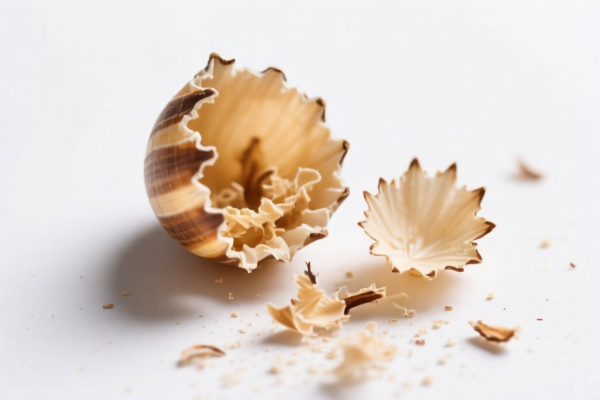
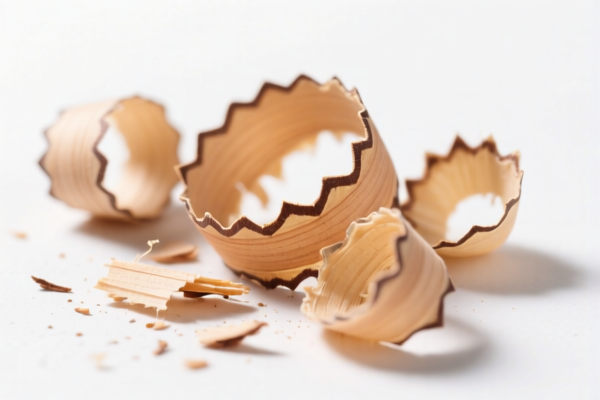
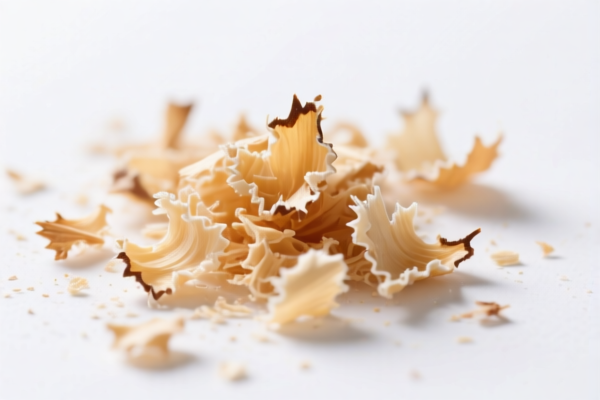
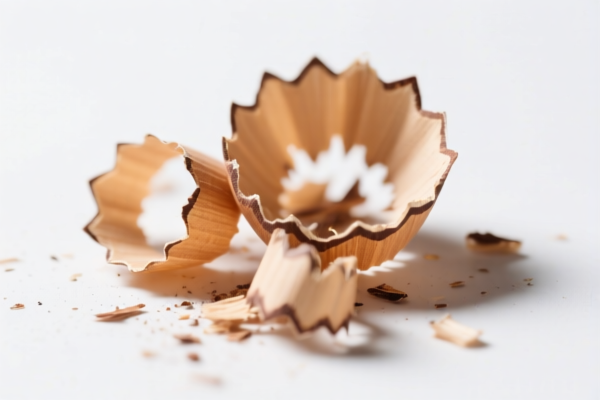
AI Analysis
🪵 Pet Wood Shavings (Bedding & Litter)
🌐 HS Code Reference & Customs Clearance Guide | 2026 Latest Tariff Analysis | Professional Clearance Strategy
📌 I. Product Definition & Classification: Do You Truly Understand "Wood Shavings"?
Pet Wood Shavings are primarily used as bedding for small animals (hamsters, guinea pigs, rabbits) or as litter. In international trade, their classification depends heavily on their physical state (sawdust vs. chips vs. processed pellets) and material composition.
Key Distinction Criteria:
- State: Are they loose particles/sawdust? Or are they formed into pellets/briquettes?
- Processing: Are they simple mechanical shavings, or chemically treated/processed wood products?
- End-Use: While the end-use is "pet care," HS codes generally classify by material form first, not end-use, unless a specific "articles of wood" category applies.
⚠️ Critical Note:
- If the product is loose sawdust/chips, it falls under Chapter 44 (Wood and Articles of Wood), specifically Section 44.01 (Fuel Wood).
- If the product is processed into pellets/briquettes or other finished wood articles, it may fall under Section 44.21 (Other Wood Articles).
- Do not assume "pet product" status changes the classification. Customs focuses on the physical nature of the goods.
📦 II. HS Code Classification Details (2026 Latest Tariff Alignment)
Based on the provided data, here are the four matched HS Codes with their rationale. Note that the tax rates vary significantly between codes due to differences in "Base Tariff."
| HS Code | Product Description | Matching Logic (Based on Provided Data) | Tax Rate |
|---|---|---|---|
4401.22.00.00 |
Non-coniferous wood, in the form of chips or particles | Match Basis: Product form is wood shavings, material is wood, fits the category of non-coniferous wood chips/particles. | 35.0% |
4401.49.00.20 |
Other wood, in the form of sawdust or wood shavings | Match Basis: Product material is wood, form is碎屑/wood shavings, fits the wood shavings category. | 35.0% |
4421.91.98.80 |
Other wood articles, made of wood | Match Basis: Material contains wood components, form/usage belongs to primary wood forms, fits "other" classification under wood articles. | 38.3% |
4421.99.98.80 |
Other wood articles, not specified elsewhere | Match Basis: Material fits wood attributes, form belongs to other wood articles, and does not fall under excluded specific products. | 38.3% |
🔍 Key Observation:
- Codes4401.22.00.00and4401.49.00.20share the same total tax rate (35.0%) because their base tariff is 0.0%.
- Codes4421.91.98.80and4421.99.98.80have a higher total tax rate (38.3%) because their base tariff is 3.3%.
- Choice Strategy: If your product is loose shavings/sawdust,4401codes are more accurate and cheaper. If it is compressed or processed into a specific article,4421may apply but costs more.
💰 III. 2026 Latest Tariff Rate Breakdown (Including Surtaxes & Policy Add-ons)
✅ Applicable Country: United States (US)
✅ Origin: China (CN)
✅ Effective Time: From November 10, 2025 (including subsequent imports)
🎯 1. 4401.22.00.00 & 4401.49.00.20 —— Wood Chips/Shavings (Non-Coniferous/Other)
| Item | Content |
|---|---|
| Base Tariff | 0.0% (ad valorem) |
| USITC Surtax | +25.0% (Under Section 301, USITC Footnote) |
| IEEPA Surtax | +10.0% (Under Section 122, IEEPA, targeting China/HK products) |
| Total Tax Rate | 35.0% |
| Tax Calculation | CIF Value × 35% |
| De Minimis Eligibility | ❌ No (deny_de_minimis) |
| Legal Basis Path | USITC:4401.22.00.00 → FOOTNOTE:9903.88.01 → IEEPA:9903.01.25 |
📌 Explanation:
- The 25% USITC surtax is part of the ongoing Section 301 tariffs on Chinese imports.
- The 10% IEEPA surtax (Section 122) is an additional layer for specific Chinese-origin goods.
- Total 35% is substantial but lower than the4421alternatives due to the 0% base rate.
🎯 2. 4421.91.98.80 & 4421.99.98.80 —— Other Wood Articles
| Item | Content |
|---|---|
| Base Tariff | 3.3% (ad valorem) |
| USITC Surtax | +25.0% |
| IEEPA Surtax | +10.0% |
| Total Tax Rate | 38.3% |
| Tax Calculation | CIF Value × 38.3% |
| De Minimis Eligibility | ❌ No (deny_de_minimis) |
| Legal Basis Path | USITC:4421.91.98.80 → FOOTNOTE:9903.88.01 → IEEPA:9903.01.25 |
📌 Note:
- Even though the surtax percentages are the same (35% on top of base), the 3.3% base tariff makes these codes more expensive overall.
- Only use these if the product is definitively not simple chips/shavings but a processed wood article.
🛠️ IV. Customs Clearance Practical Advice (Real-World Pitfall Guide)
✅ 1. Required Documentation Checklist (Non-Negotiable)
| Document | Must Provide? | Explanation |
|---|---|---|
| ✅ Product Specification Sheet | ✔️ | Must specify: Wood type (coniferous vs. non-coniferous), form (shavings, chips, sawdust, pellets), moisture content. |
| ✅ Material Safety Data Sheet (MSDS) | ✔️ | Essential for wood products to prove no chemical treatments (e.g., pesticides, preservatives) are present. |
| ✅ Product Photos | ✔️ | Clear images of the shavings/chips to show physical form. |
| ✅ Commercial Invoice | ✔️ | Must explicitly state "Wood Shavings" or "Wood Chips for Pet Bedding," not just "Pet Supplies." |
| ✅ Phytosanitary Certificate | ✔️ | Critical! Wood products require ISPM 15 compliance or equivalent to prevent pest introduction. |
| ✅ Packing List | ✔️ | Detail weight, dimensions, and packaging type (bags, boxes). |
✅ 2. Declaration Tips (Key Mantras)
🔥 “Form Determines Code, Species Determine Base, Treatments Determine Certs!”
| Scenario | Correct Declaration | Wrong Practice |
|---|---|---|
| Loose, non-coniferous wood shavings | 4401.22.00.00 |
Misdeclaring as "Plastic" or "Fabric" → 100% Risk |
| Sawdust or fine wood dust | 4401.49.00.20 |
Calling it "Pellets" → Wrong Code, Higher Tax |
| Compressed wood pellets (for heating/pets) | 4401.30.00.00 (if fuel) or 4421 (if article) |
Misdeclaring as "Animal Feed" → Severe Penalty |
| Chemically treated wood (pesticide-infused) | Requires Phytosanitary Cert + Specific Code | Claiming "Organic/Natural" without proof → Confiscation |
✅ 3. Special Situations Handling
| Situation | Handling Advice |
|---|---|
| Is it Coniferous or Non-Coniferous? | - Coniferous (Pine, Fir): 4401.21.00.00- Non-Coniferous (Hardwood, Beech): 4401.22.00.00- Check your supply chain! Misclassification here changes the code entirely. |
| Chemical Treatment? | If shavings are scented or treated with anti-bacterial agents, they may no longer be "simple wood" but "prepared wood." This could push them to 4421 or even Chapter 38 (Chemical Products). Get pre-classification ruling! |
| Pet Bedding vs. Fuel? | If marketed as "Pet Bedding," use 4401 (wood fuel/shavings) but clarify in description. If it's "Wood Pellets" for burning, different sub-codes apply. |
| Origin Marking? | Must clearly state "Made in China" on packaging. Customs will scrutinize origin for 301/122 tariffs. |
🌍 V. Global Market Comparison (2026 Latest)
| Country/Region | Recommended HS Code | Tariff (China Origin) | Certification Requirement | Notes |
|---|---|---|---|---|
| 🇺🇸 USA | 4401.22.00.00 |
35.0% | ISPM 15, MSDS | Highest surtax load. |
| 🇨🇳 China | 4401.22.00.00 |
0% - 5% | FSC (if eco-labeled) | Low tariff, high volume. |
| 🇪🇺 EU | 4401.22.00.00 |
~2.5% | FSC, REACH | No 301/122 surtaxes. |
| 🇬🇧 UK | 4401.22.00.00 |
~2.5% | FSC | Post-Brexit rules apply. |
| 🇦🇺 Australia | 4401.22.00.00 |
~5% - 10% | IPPC, Biosecurity | Strict biosecurity checks. |
📌 Conclusion:
- USA is the most expensive market for wood shavings due to 301 + 122 surtaxes.
- Diversify markets: Consider exporting to EU, UK, or Australia where tariffs are significantly lower.
- Local Sourcing: For the US market, consider sourcing from Vietnam, Thailand, or Malaysia to avoid China-specific surtaxes.
📌 VI. Common Errors & Pitfall Guide (Lessons Learned)
❌ Error 1: Declaring as "Pet Supplies" without specifying material
👉 Consequence: Customs may classify under highest applicable rate or reject for lack of detail.
👉 Solution: Always specify "Wood Shavings" and HS Code.
❌ Error 2: Ignoring Phytosanitary Requirements
👉 Consequence: Quarantine/Rejection/Destruction. Wood is high-risk for pests.
👉 Solution: Obtain Phytosanitary Certificate from origin country. Ensure ISPM 15 compliance.
❌ Error 3: Misidentifying Wood Type (Coniferous vs. Non-Coniferous)
👉 Consequence: Wrong HS Code → Penalty + Back Pay.
👉 Solution: Verify wood species with supplier. Pine = Coniferous; Beech/Oak = Non-Coniferous.
❌ Error 4: Assuming "De Minimis" Applies
👉 Consequence: Packages under $800 are NOT exempt from Section 301/122 tariffs for wood products from China.
👉 Solution: Budget for 35% tax even for small shipments.
🎯 VII. Conclusion: Precise Classification Saves Money!
🎯 Remember the Mantras:
🔹 “Shavings go to 4401, Pellets to 4401/4421, Treatments need Certs.”
🔹 “35% is the US price, 3.3% base is the key.”
🔹 “Phytosanitary is non-negotiable for wood!”
📌 Pro Tip:
- If your wood shavings are from Vietnam, Thailand, or Malaysia, you may exempt from IEEPA 10% surtax, lowering total tax to 25%.
- Consider Advance Ruling from US Customs if your product has chemical treatments or mixed materials.
📣 Immediate Action:
📞 Contact your freight forwarder + Provide Material Spec Sheet + Request Phytosanitary Certificate
🚀 Clear customs smoothly, avoid biosecurity seizures, and maximize profits!
✨ Professional Clearance Starts with Precise Classification!
💼 Every penny saved is pure profit!
Customer Reviews
About HS Code Classification
The Harmonized System (HS) is an internationally standardized nomenclature developed by the World Customs Organization (WCO) to classify traded products. Over 200 countries use the HS system as the basis for customs tariffs, trade statistics, and import/export regulations.
Each HS code follows a hierarchical structure:
- Chapter (2 digits) — Broad category of goods (e.g., Chapter 84: Machinery and Mechanical Appliances)
- Heading (4 digits) — More specific grouping within the chapter
- Subheading (6 digits) — Internationally standardized breakdown, used by all WCO member countries
- National subdivisions (8-10 digits) — Country-specific extensions for further classification, such as US HTSUS 10-digit codes
Correct HS code classification is essential for smooth customs clearance, accurate duty payment, and compliance with trade regulations. Misclassification can lead to customs delays, overpayment of duties, or penalties.
When importing from CN to US, the applicable tariff rates may include:
- Most-Favored-Nation (MFN) rate — The standard duty rate applied to WTO members
- General rate — Applied to countries without trade agreements
- Trade remedy duties — Additional tariffs such as Section 301 (anti-dumping), Section 232 (national security), or countervailing duties
The information provided on this page is for reference purposes only. For official classification, please consult with your local customs authority or a licensed customs broker.