Petrol Cleaner
CN → US| HS Code | Tariff Rate | Origin | Destination | Doc |
|---|---|---|---|---|
| 2901104000 | 35.0% | CN | US | Official Doc |
| 2901291050 | 35.0% | CN | US | Official Doc |
| 3814002000 | 41.5% | CN | US | Official Doc |
| 3814001000 | 41.5% | CN | US | Official Doc |
| 8421230000 | 37.5% | CN | US | Official Doc |
| 8421290005 | 35.0% | CN | US | Official Doc |
Product Images
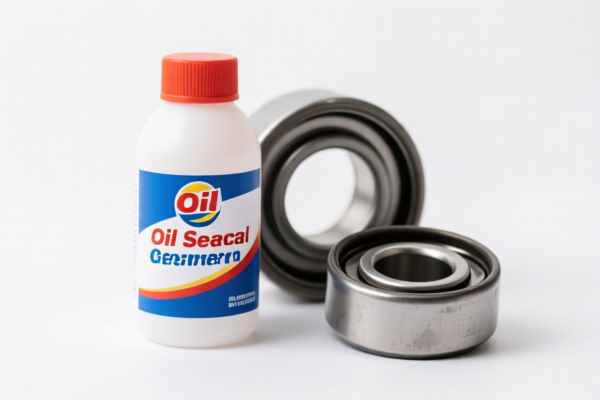
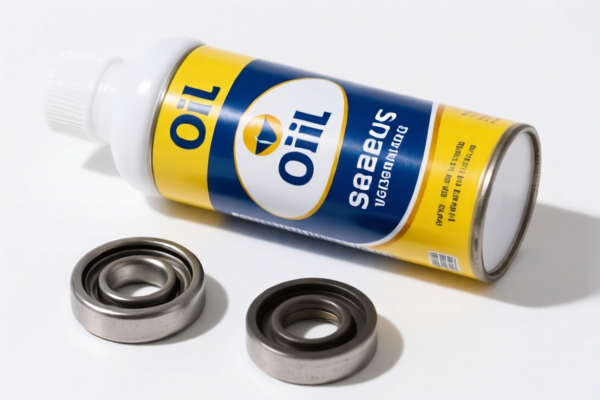
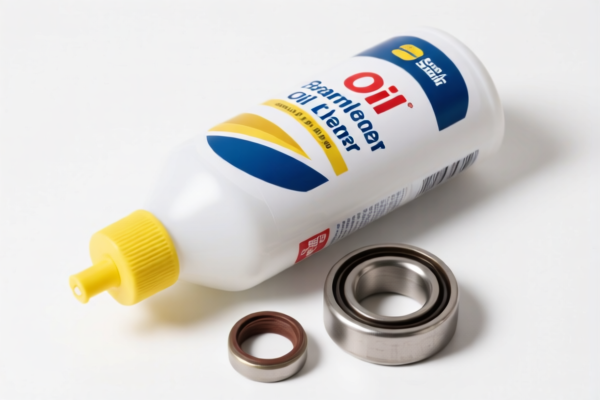
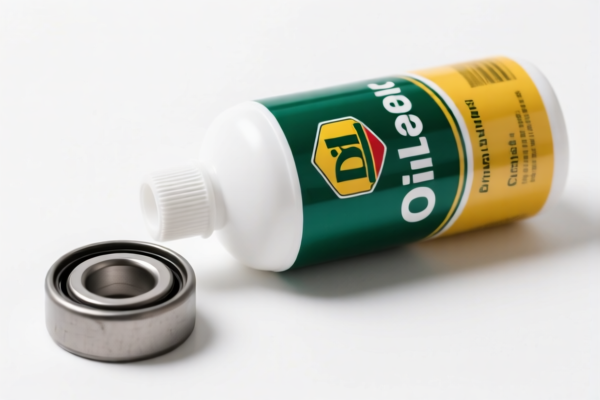
AI Analysis
🧴 Organic Composite Solvents & Paint Removers (Petrol Cleaner)
🌐 HS Code Reference & Customs Clearance Guide | 2026 Latest Tariff Analysis | Professional Strategy
📌 I. Product Definition & Classification: Do You Really Understand "Petrol Cleaner"?
In international trade, "Petrol Cleaner" is a colloquial term for Organic Composite Solvents and Thinners or Prepared Paint or Varnish Removers. These are liquid mixtures used to clean machinery, degrease metal parts, or strip old paint/varnish.
The classification depends entirely on the aromatic content. The US Harmonized Tariff Schedule (HTSUS) makes a sharp distinction based on whether the product contains more than 25% or between 5% and 25% aromatic substances (like benzene, toluene, xylene, or modified aromatics).
⚠️ Critical Distinction Point:
- If Aromatic Content > 25% → HS Code 3814.00.20.00
- If Aromatic Content ≥ 5% but ≤ 25% → HS Code 3814.00.10.00
- If Aromatic Content < 5% (or non-aromatic hydrocarbons) → Not listed in this specific dataset (Note: Other hydrocarbons like 2901.10.40.00 may apply if pure acyclic hydrocarbons, but "Petrol Cleaner" implies a composite/prepared solvent).
📦 II. HS Code Classification Details (2026 Latest Tariff Authority Comparison)
Based strictly on the provided , here are the two relevant HS Codes for "Petrol Cleaner" (Composite Solvents/Paint Removers):
| HS Code | Product Description | Aromatic Content | Key Application |
|---|---|---|---|
3814.00.20.00 |
Organic composite solvents and thinners; prepared paint or varnish removers | More than 25% by weight of aromatic/modified aromatic substances | Heavy-duty industrial degreasers, high-strength paint strippers, high-aromatic solvents |
3814.00.10.00 |
Organic composite solvents and thinners; prepared paint or varnish removers | 5% to 25% by weight of aromatic/modified aromatic substances | Mild paint removers, moderate-strength cleaners, lower-aromatic blends |
🔍 Important Note:
- The dataset also lists pure acyclic hydrocarbons (2901.10.40.00and2901.29.10.50) with 25% tariffs. However, "Petrol Cleaner" is typically defined as a composite/solvent mixture (Chapter 38), not a pure chemical substance (Chapter 29). Therefore, 3814 is the primary classification for "prepared" cleaners. - If your "Petrol Cleaner" is actually a pure derived hydrocarbon (not a mixture), it might fall under2901.10.40.00(Saturated) or2901.29.10.50(Unsaturated), but this is less common for multi-component "cleaners."
💰 III. 2026 Latest Tariff Rate Details (Including Surcharge Policies)
✅ Applicable Country: United States (US)
✅ Origin: China (CN)
✅ Effective Time: 2025/2026 Current Rates
🎯 1. 3814.00.20.00 —— High-Aromatic Solvents/Paint Removers (>25%)
| Item | Content |
|---|---|
| Base Tariff | 0.0% |
| Additional Tariff (Section 301) | 0.0% |
| Total Tariff Rate | 0.0% |
| Tax Detail | "基础关税: 0.0%, 加征关税: 0.0%" |
| Legal Basis | HTSUS 3814.00.20.00 |
📌 Explanation:
- Extremely Favorable: Despite being a chemical solvent, this specific subheading has zero tariff burden. - Risk: Despite the 0% rate, high-aromatic solvents often face strict EPA/OSHA environmental regulations and labeling requirements in the US. Ensure SDS (Safety Data Sheet) compliance.
🎯 2. 3814.00.10.00 —— Low-to-Moderate Aromatic Solvents/Paint Removers (5-25%)
| Item | Content |
|---|---|
| Base Tariff | 6.5% |
| Additional Tariff (Section 301) | 25.0% |
| Total Tariff Rate | 31.5% |
| Tax Detail | "基础关税: 6.5%, 加征关税: 25.0%" |
| Legal Basis | HTSUS 3814.00.10.00 |
📌 Explanation:
- High Burden: The 31.5% total rate is significant. This includes the standard MFN rate (6.5%) plus the heavy Section 301 surcharge (25%). - Cost Impact: For every $10,000 CIF value, you pay $3,150 in duties. - Strategy: If possible, reformulate the product to reduce aromatic content below 5% (if chemically feasible) or ensure it falls under3814.00.20.00(if aromatics >25%) to avoid this tariff. Wait! Check your formulation:
- If you can prove it is >25% aromatic, you pay 0%.
- If it is 5-25% aromatic, you pay 31.5%.
- Strategic Pivot: Some exporters adjust formulations to be >25% aromatic to qualify for the 0% rate, provided the product still functions as a cleaner and meets safety standards. Consult a chemist and customs broker!
🧪 Alternative: Pure Acyclic Hydrocarbons (If "Petrol Cleaner" is Pure)
| HS Code | Product Description | Total Tax |
|---|---|---|
2901.10.40.00 |
Saturated Acyclic Hydrocarbons, derived from petroleum | 25.0% |
2901.29.10.50 |
Unsaturated Acyclic Hydrocarbons, derived from petroleum | 25.0% |
⚠️ Warning: These are for pure substances, not "prepared" cleaners. Do not use if your product is a mixture.
🛠️ IV. Customs Clearance Practical Advice (Pitfall Avoidance Guide)
✅ 1. Preparation Checklist (Must-Have Documents)
| Document | Required | Description |
|---|---|---|
| ✅ Safety Data Sheet (SDS) | ✔️ Critical | Must clearly state aromatic content percentage. This is the #1 determinant for HS Code. |
| ✅ Formula/Composition List | ✔️ Critical | Breakdown of all ingredients by weight percentage. |
| ✅ Product Label | ✔️ | Must show hazardous material warnings (NFPA 704), name, and composition. |
| ✅ Commercial Invoice | ✔️ | Describe as "Organic Composite Solvent" or "Prepared Paint Remover," NOT generic "Petrol." |
| ✅ Certificate of Origin | ✔️ | To prove origin (China) for accurate tariff application. |
| ✅ EPA Registration (if applicable) | ✔️ | For certain paint strippers, EPA registration may be required before entry. |
✅ 2. Declaration Techniques (Key Mantras)
🔥 “Aromatics Determine Tax, Formula is King!”
| Situation | Correct Declaration | Wrong Practice |
|---|---|---|
| Aromatics > 25% | 3814.00.20.00 |
Declare as 3814.00.10.00 → Paying 31.5% unnecessarily! |
| Aromatics 5-25% | 3814.00.10.00 |
Declare as 2901.xx.xx (Pure Hydrocarbon) → Misdeclaration Fraud Risk |
| Pure Hydrocarbon | 2901.10.40.00 |
Declare as "Solvent Mixture" → Wrong Chapter |
💡 Pro Tip:
- If your product is in the 5-25% range (31.5% tax), discuss with your R&D team if you can increase aromatic content above 25% to shift to the 0% tax bracket (3814.00.20.00).
- Conversely, if you want to avoid Section 301 tariffs, check if a different formulation (e.g., water-based or non-aromatic) can be classified under a different chapter entirely (not in this dataset).
✅ 3. Special Cases & Handling
| Case | Handling Advice |
|---|---|
| OEM/Private Label | Provide the same SDS and formula as the original brand. Customs looks at the product, not the label. |
| Mixed Containers | If one container has both >25% and 5-25% products, declare separately. Do not average them. |
| Hazardous Cargo | Solvents are Class 3 Flammable Liquids. Ensure proper UN packaging and MSDS are on board. |
| EPA Compliance | Paint removers may require EPA TSCA certification. Non-compliance leads to detention. |
🌍 V. Global Market Comparison (2026 Latest)
| Country/Region | Recommended HS Code | Tariff (China Origin) | Notes |
|---|---|---|---|
| 🇺🇸 USA | 3814.00.20.00 or 3814.00.10.00 |
0% or 31.5% | Aromatic content is key. |
| 🇨🇳 China | 3814.10.00 |
~6-10% | Import duty + VAT. |
| 🇪🇺 EU | 3814 00 11 / 3814 00 90 |
~6.5% | No Section 301, but VAT applies. |
| 🇬🇧 UK | 3814 00 10 |
~6.5% | Post-Brexit tariff. |
| 🇯🇵 Japan | 3814.00.00 |
~5-6% | Generally lower duties. |
📌 Conclusion:
- The US is unique with its Section 301 Additional Tariffs.
- 0% vs 31.5% is a massive difference. Optimization of aromatic content is the best cost-saving strategy.
📌 VI. Common Errors & Pitfalls (Blood & Tears Lessons)
❌ Error 1: Declaring "Petrol Cleaner" as 2901.10.40.00 (Pure Hydrocarbon) when it is a mixture.
👉 Consequence: Customs may reject the declaration, demand re-classification to 3814.00.10.00, and assess 31.5% + penalties.
❌ Error 2: Failing to disclose aromatic content in the SDS.
👉 Consequence: Customs will assume the higher tax rate or demand a lab test (costly and delays clearance).
❌ Error 3: Using vague descriptions like "Chemical Liquid" on the Invoice.
👉 Consequence: High risk of random inspection, seizure, or rejection.
❌ Error 4: Ignoring EPA/OSHA regulations.
👉 Consequence: Seizure and destruction of goods for non-compliance with hazardous material laws.
✅ Correct Action:
"Organic Composite Solvent, Aromatic Content >25%, Prepared Paint Remover, Model XYZ, SDS Attached"
🎯 VII. Conclusion: Professional Declaration, Time-Saving, Cost-Efficient!
🎯 Remember the Mantra:
🔹 "Aromatics >25% = 0% Tax; 5-25% = 31.5% Tax!"
🔹 "Formula is the Key, SDS is the Proof, Classification is the Law!"
📌 Small Tip:
If your product is exactly 25% aromatic, it falls into the <25% bracket (
3814.00.10.00→ 31.5%). Always aim for >25% if you want the 0% rate, provided the product performance isn't compromised.
📣 Immediate Action:
📞 Contact your Customs Broker + Provide Detailed Formula + Request Advance Ruling (if high value)
🚀 Let your "Petrol Cleaner" pass through customs smoothly, save money, and maximize profits!
✨ Professional Customs Clearance Starts with Accurate Classification!
💼 Every cent of your cost deserves precise calculation!
Customer Reviews
About HS Code Classification
The Harmonized System (HS) is an internationally standardized nomenclature developed by the World Customs Organization (WCO) to classify traded products. Over 200 countries use the HS system as the basis for customs tariffs, trade statistics, and import/export regulations.
Each HS code follows a hierarchical structure:
- Chapter (2 digits) — Broad category of goods (e.g., Chapter 84: Machinery and Mechanical Appliances)
- Heading (4 digits) — More specific grouping within the chapter
- Subheading (6 digits) — Internationally standardized breakdown, used by all WCO member countries
- National subdivisions (8-10 digits) — Country-specific extensions for further classification, such as US HTSUS 10-digit codes
Correct HS code classification is essential for smooth customs clearance, accurate duty payment, and compliance with trade regulations. Misclassification can lead to customs delays, overpayment of duties, or penalties.
When importing from CN to US, the applicable tariff rates may include:
- Most-Favored-Nation (MFN) rate — The standard duty rate applied to WTO members
- General rate — Applied to countries without trade agreements
- Trade remedy duties — Additional tariffs such as Section 301 (anti-dumping), Section 232 (national security), or countervailing duties
The information provided on this page is for reference purposes only. For official classification, please consult with your local customs authority or a licensed customs broker.