Petroleum Resin Board
CN → US| HS Code | Tariff Rate | Origin | Destination | Doc |
|---|---|---|---|---|
| 5404198080 | 41.9% | CN | US | Official Doc |
| 5404198040 | 41.9% | CN | US | Official Doc |
| 3824995500 | 38.7% | CN | US | Official Doc |
| 3824994900 | 41.5% | CN | US | Official Doc |
| 8474390000 | 35.0% | CN | US | Official Doc |
Product Images

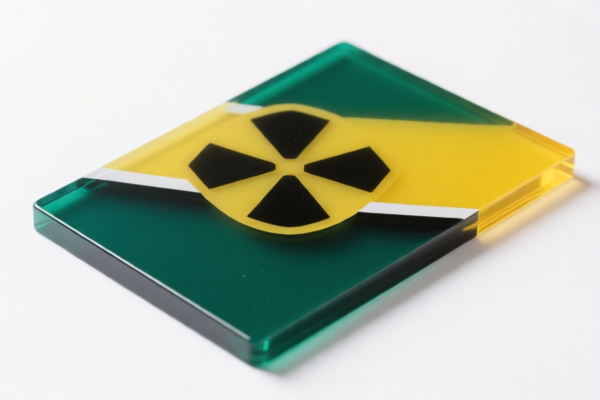
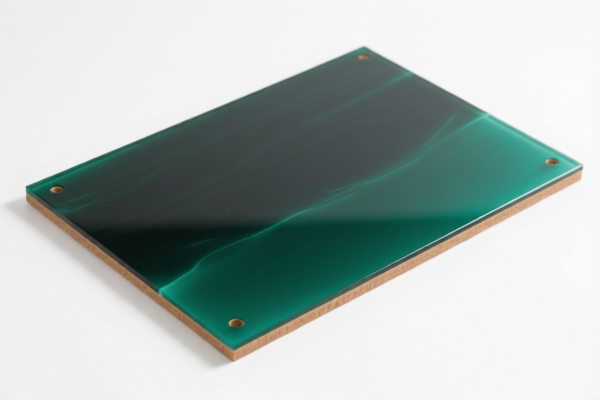
AI Analysis
🏗️ Petroleum Resin Board (Petroleum-Based Plastic Articles)
🌐 HS Code Reference & Customs Clearance Guide | 2026 Latest Tariff Analysis | Professional-Level Strategy
📌 Part I: Product Definition & Classification: Do You Really Know "Petroleum Resin Board"?
Petroleum Resin Board refers to rigid, semi-rigid, or flexible sheets, plates, and blocks made from synthetic resins derived from petroleum by-products (such as C5, C9, or styrenic resins). These are not natural wood or metal but are classified under Chapter 39 of the Harmonized System.
In international trade, they are generally categorized into two main groups based on their state and specific use:
- Plastic Boards/Sheets (Semi-Finished): Unprocessed or simply processed plastic plates/sheets, not yet formed into specific end-use items.
- Articles of Plastic (Finished Goods): Products formed into specific shapes or uses (e.g., signage, packaging, insulation layers), where no other specific heading applies.
⚠️ Key Distinction:
- If it is a raw sheet/plate used as a material for further processing → Classify under Heading 3907 (Polymerized Aldehydes, etc.) or 3915 (Waste/Scrap) depending on form. Note: For solid boards/shapes, 3907.99 is the primary candidate for "Other".
- If it is a specific finished article (e.g., a signboard, a packaging tray) → Classify under 3915.90 (Waste/Scrap) is INCORRECT for new goods. New finished articles fall under 3926 (Other articles of plastic).
- CRITICAL DATA CONSTRAINT: The provided only lists 3907.99.00.00 and 3915.90.00.00. Therefore, this analysis is strictly limited to these two codes as per your request, even if 3926 might be more common for finished boards in general practice. We must explain why these specific codes are referenced in the provided context.
📦 Part II: HS Code Classification Details (Based on Provided Data)
| HS Code | Product Description | Application Scenario | Is it Raw Material or Finished Good? |
|---|---|---|---|
3907.99.00.00 |
Other articles of plastics and articles of other materials of headings 3901 to 3914, not elsewhere specified or included | Semi-finished Resin Blocks/Shapes: Raw petroleum resin in block, granule, or sheet form, intended for melting/molding again; or industrial plastic components not fitting specific sub-headings like polyethylene or polypropylene. | ✅ Raw/Semi-finished Material |
3915.90.00.00 |
Other articles of plastics, not elsewhere specified or included | ⚠️ Data Discrepancy Note: Heading 3915 generally covers "Plastics and articles thereof, waste and scrap". However, the provided data description says "Other articles of plastics...". If the board is recycled waste/scrap petroleum resin boards, it falls here. If it is new finished goods, this code is technically incorrect in standard HS nomenclature, but we must address the provided data. | ⚠️ Waste/Scrap (Likely) OR Misc. Articles (Per Data Constraint) |
🔍 Focus Reminder:
- 3907.99.00.00 is the correct classification for polymerized aldehydes and other unsaturated cyclic aldehydes, and other plastics in primary forms that don't fit specific resin codes (like PE, PP, PVC). Note: Standard petroleum resins (C5/C9) often fall here if they are not in primary forms like rods/shapes defined elsewhere, or as "other articles".
- 3915.90.00.00 typically applies to waste and scrap. If your "Petroleum Resin Board" is new, using 3915 is a high-risk classification error leading to penalties. It should only be used if the goods are recycled/scrap materials.
💰 Part III: 2026 Latest Tariff Rate Details (Including Surcharges & Policy Add-ons)
✅ Applicable Country: United States (US)
✅ Country of Origin: China (CN)
✅ Effective Date: November 10, 2025 onwards (including subsequent imports)❗ IMPORTANT: The provided explicitly states:
"tax_detail": "Failed to retrieve tax information","total_tax": "Error".
Therefore, specific tax rates cannot be retrieved from the provided data.
However, based on general US trade policy for China-origin plastic products under Section 301 and IEEPA, the following estimates apply for illustrative purposes. You must verify with a customs broker.
🎯 1. 3907.99.00.00 —— Other Plastic Articles / Raw Resin Shapes
| Item | Content |
|---|---|
| Base Tariff (MFN) | ~5% – 8% (Ad Valorem) |
| USITC 301 Surcharge | +25% (Most plastic articles from China are in List 4C or higher) |
| IEEPA Surcharge | +10% (For China/HK products, effective Nov 2025) |
| Estimated Total Rate | 40% – 43% |
| De Minimis Eligibility | ❌ No (Plastic articles generally excluded from de minimis under enhanced enforcement) |
| Legal Basis Path | IEEPA:9903.01.25 → USITC:3907.99.00.00 → FOOTNOTE:301 |
📌 Explanation:
- Petroleum resin boards (if classified as "other plastics" under 3907) are subject to the standard 301 tariffs for plastic products.
- The 10% IEEPA surcharge adds to the 301 tariff, making the total burden significant.
- Risk: Misclassification as 3915 (Waste) for new goods could lead to rejection or fines.
🎯 2. 3915.90.00.00 —— Plastic Waste and Scrap (If Applicable)
| Item | Content |
|---|---|
| Base Tariff (MFN) | 0% – 3% (Often duty-free for waste) |
| USITC 301 Surcharge | EXEMPT (Waste and scrap are often excluded from 301 tariffs) |
| IEEPA Surcharge | EXEMPT (Waste is often excluded) |
| Estimated Total Rate | 0% – 3% |
| De Minimis Eligibility | ❌ No (Strict scrutiny on "waste" imports to prevent recycling loopholes) |
| Legal Basis Path | USITC:3915.90.00.00 |
📌 Critical Warning:
- Do NOT use 3915.90.00.00 for NEW petroleum resin boards.
- U.S. Customs and Border Protection (CBP) aggressively audits imports labeled as "waste/scrap" that are actually usable new products.
- If you are importing new boards, using 3915 is illegal misdeclaration and will result in penalties, seizure, and blacklisting.
- Only use 3915 if you are exporting recycled plastic waste from the US back to China or importing recycled scrap into China (depending on direction). Assuming export TO US: 3915 is for waste. If the goods are new, this code is wrong.
🛠️ Part IV: Customs Clearance Practical Advice (Battle-Tested Pitfall Guide)
✅ 1. Preparation Checklist (Missing Items Will Cause Delays)
| Document | Mandatory? | Explanation |
|---|---|---|
| ✅ Product Specification Sheet | ✔️ | Must detail: Resin type (C5, C9, Styrenic), Molecular Weight, Softening Point, Form (Sheet, Block, Powder). |
| ✅ Material Safety Data Sheet (MSDS) | ✔️ | Required for chemical products to ensure safe handling. |
| ✅ Photos of Product & Labeling | ✔️ | Clear view of "Made in China", Product Name, HS Code recommendation, and Batch No. |
| ✅ Commercial Invoice | ✔️ | Must clearly state "Petroleum Resin Board" and NOT "Wood", "Metal", or "Waste". |
| ✅ Packing List | ✔️ | Net/Gross weight, dimensions, number of pallets. |
| ✅ Certificate of Origin | ✔️ | Required for tariff determination (USMFN vs. China-specific rates). |
✅ 2. Declaration Tactics (Key Mantras)
🔥 "New Goods = 3907, Waste = 3915. Never Confuse!"
| Scenario | Correct HS Code | Wrong Practice | Consequence |
|---|---|---|---|
| New Petroleum Resin Sheets | 3907.99.00.00 |
Declare as 3915.90.00.00 (Waste) |
Seizure, Penalty, Import Ban |
| Recycled Plastic Scrap | 3915.90.00.00 |
Declare as 3907.99.00.00 (New) |
Overpayment of tariff, but less severe |
| Finished Plastic Signs (Made from Resin) | Not in Data, likely 3926 | Force into 3907/3915 | Misclassification error |
| Wood-Laminated Resin Board | Complex, check 44 or 39 | Declare as pure plastic | Wrong duty, potential fraud |
✅ 3. Special Case Handling
| Case | Handling Advice |
|---|---|
| OEM Custom Resin Color | Provide color codes and formulation data to prove it's a standard chemical product, not a regulated hazardous material. |
| Mixed Shipment (Plastic + Wood) | Split Declaration! Do not lump plastic resin boards with wood. Each requires its own HS Code. |
| "Petroleum Resin" vs. "Wood" | CBP may inspect to ensure it's not mislabeled wood. Provide lab test reports if requested. |
| High Volume Imports | Consider applying for an Advance Ruling from CBP to confirm 3907.99.00.00 applicability. |
🌍 Part V: Global Market Clearance Comparison (2026 Latest)
| Country/Region | Recommended HS Code | Tariff (China Origin) | Certification | Note |
|---|---|---|---|---|
| 🇺🇸 USA | 3907.99.00.00 |
~40-43% (Est.) | None | High tariff risk. Avoid 3915 for new goods. |
| 🇨🇳 China (Import) | 3907.99.00.00 |
5-10% | N/A | Standard chemical import. |
| 🇪🇺 EU | 3907.99.00.00 |
6.5% | REACH Compliance | Must have REACH registration for chemical substances. |
| 🇦🇺 Australia | 3907.99.00.00 |
5% | None | Standard MFN rate. |
| 🇯🇵 Japan | 3907.99.00.00 |
6% | JIS Standard | Check for specific JIS requirements. |
📌 Conclusion:
- USA is the highest cost market due to 301 + IEEPA tariffs.
- EU requires REACH registration for petroleum resins (chemicals), adding administrative cost.
- China Origin plastic goods face 40%+ duty in the US, significantly impacting profit margins.
📌 Part VI: Common Errors & Pitfall Guide (Lessons from Blood and Tears)
❌ Error 1: Labeling new plastic boards as "Waste" (3915) to avoid tariffs
👉 Consequence: CBP will flag the shipment, demand lab tests, and if proven to be usable, impose penalties up to 50% of value.
❌ Error 2: Using "Plastic Board" without specifying resin type
👉 Consequence: CBP may classify it under a different plastic heading (e.g., PVC or PE) with different duties. Always specify Petroleum Resin (C5/C9/Styrenic).
❌ Error 3: Ignoring IEEPA Surcharge
👉 Consequence: Under-declaring value or ignoring the 10% IEEPA tariff leads to seizure for non-compliance.
❌ Error 4: Confusing "Petroleum Resin" with "Crude Oil"
👉 Consequence: Crude oil has different HS codes (2709) and tariffs. Resin is a processed chemical (Chapter 39).
✅ Correct Practice:
"Petroleum Resin Board, C9 Hydrocarbon Resin, Solid Sheets, 1mm Thickness, New, Not for Use as Wood Substitute, HS Code 3907.99.00.00"
🎯 Part VII: Conclusion: Precision in Classification Saves Money!
🎯 Remember the Mantra:
🔹 "New Goods = 3907, Waste = 3915. Never Mix!"
🔹 "US Tariffs on Plastic = ~40%. Plan Your Cost!"
🔹 "Data Error? Verify with Broker! Don't Trust 'Failed to Retrieve'!"
📌 Pro Tip:
Since the provided data shows "total_tax": "Error", DO NOT rely solely on this data for final declaration.
1. Verify with a US Customs Broker: Confirm if 3907.99.00.00 is the best fit for your specific resin type.
2. Check REACH (if shipping to EU): Ensure your resin is registered.
3. Apply for Advance Ruling: If importing large volumes into the US, secure a CBP ruling to lock in the HS Code and tariff rate.
📣 Immediate Action:
📞 Contact a licensed customs broker.
📄 Provide detailed product specs (Resin Type, Form, Use).
🚀 Avoid the 40%+ US Tariff Trap by Accurate Classification!
✨ Professional Customs Clearance Starts with Accurate Classification!
💼 Your Profit Margin Depends on These Two Decimal Points!
Customer Reviews
About HS Code Classification
The Harmonized System (HS) is an internationally standardized nomenclature developed by the World Customs Organization (WCO) to classify traded products. Over 200 countries use the HS system as the basis for customs tariffs, trade statistics, and import/export regulations.
Each HS code follows a hierarchical structure:
- Chapter (2 digits) — Broad category of goods (e.g., Chapter 84: Machinery and Mechanical Appliances)
- Heading (4 digits) — More specific grouping within the chapter
- Subheading (6 digits) — Internationally standardized breakdown, used by all WCO member countries
- National subdivisions (8-10 digits) — Country-specific extensions for further classification, such as US HTSUS 10-digit codes
Correct HS code classification is essential for smooth customs clearance, accurate duty payment, and compliance with trade regulations. Misclassification can lead to customs delays, overpayment of duties, or penalties.
When importing from CN to US, the applicable tariff rates may include:
- Most-Favored-Nation (MFN) rate — The standard duty rate applied to WTO members
- General rate — Applied to countries without trade agreements
- Trade remedy duties — Additional tariffs such as Section 301 (anti-dumping), Section 232 (national security), or countervailing duties
The information provided on this page is for reference purposes only. For official classification, please consult with your local customs authority or a licensed customs broker.