Petroleum Resin Filler
CN → US| HS Code | Tariff Rate | Origin | Destination | Doc |
|---|---|---|---|---|
| 3824995500 | 38.7% | CN | US | Official Doc |
| 3824994900 | 41.5% | CN | US | Official Doc |
| 8474390000 | 35.0% | CN | US | Official Doc |
Product Images

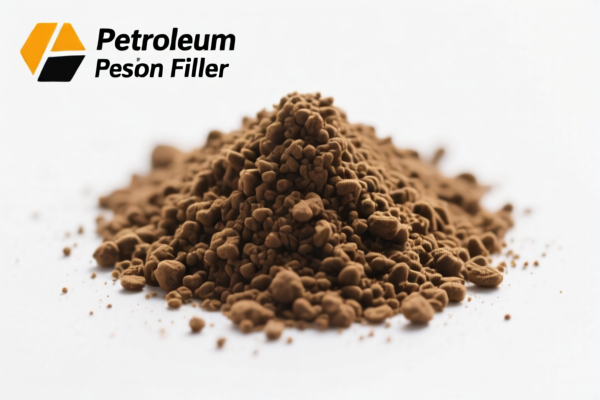
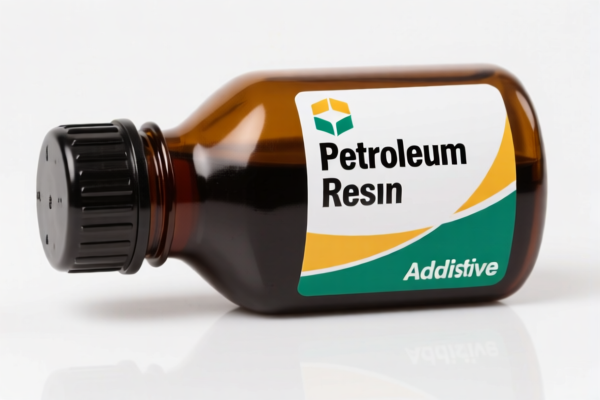

AI Analysis
🧪 Petroleum Resin Filler (石油树脂填料)
🌐 HS Code Reference & Customs Clearance Guide | 2026 Latest Tariff Analysis | Professional Clearance Strategy
📌 I. Product Definition & Classification: What Exactly is "Petroleum Resin Filler"?
Petroleum Resin Filler is a chemical additive or filler derived from hydrocarbon compounds. In international trade, it falls under the category of Chemical Products and Preparations. Its classification hinges on its specific composition (hydrocarbon mixture) and its physical/functional state (additive/filler).
⚠️ Key Distinction Point:
- If classified strictly as a chemical mixture/additive → Fits 3824.99 series.
- If classified as a mineral/hydrocarbon processing material for machinery → Fits 8474.39 series.
- Note: The specific sub-code depends on the exact HS code selected, which dictates the tariff rate significantly.
📦 II. HS Code Classification Details (2026 Latest Tariff Authority Comparison)
Based on the provided data, there are three potential HS Codes for Petroleum Resin Filler. Each implies a different regulatory and tax reality.
| HS Code | Product Description (Based on Data) | Applicable Scenario | Material Category |
|---|---|---|---|
3824.99.55.00 |
Petroleum resin filler as hydrocarbon compound; classified as additive/filler under other chemical products/preparations. | Chemical industry products; hydrocarbon mixtures; additives. | ✅ Chemical Product / Additive |
3824.99.49.00 |
Material is petroleum resin (hydrocarbon); belongs to chemical industrial products/preparations; fits definition of hydrocarbon mixtures. | General chemical industrial use; hydrocarbon mixtures. | ✅ Chemical Product / Mixture |
8474.39.00.00 |
Petroleum resin as mineral/hydrocarbon resin; fits powder/paste mineral material mixing/processing scope; filler form as raw material/intermediate for machine processing. | Machinery processing; mineral/hydrocarbon resin mixing; intermediate raw material. | ⚠️ Processing Material / Intermediate |
🔍 Critical Reminder:
- Codes3824view the product as a chemical good.
- Code8474views the product as a processing material for machinery.
- The choice dramatically affects the duty rate (35% vs 38.7% vs 41.5%). Misclassification can lead to severe penalties or delayed clearance.
💰 III. 2026 Latest Tariff Rate Details (Including Additional Taxes & Policy Surcharges)
✅ Applicable Country: United States (US)
✅ Country of Origin: China (CN)
✅ Effective Time: Current applicable rates as per 122 Clause & Section 301/IEEPA provisions.
🎯 1. 3824.99.55.00 —— Chemical Product / Additive (Lower Base Duty)
| Item | Content |
|---|---|
| Base Tariff | 3.7% (Ad Valorem) |
| Section 301 Surcharge | +25.0% (Add-on Tariff) |
| 122 Clause Tariff | +10.0% (Specific Clause for Chemicals) |
| Total Effective Rate | 38.7% |
| Tax Calculation | CIF Value × 38.7% |
| De Minimis Eligibility | ❌ Not Eligible (High duty rate exceeds threshold benefits) |
| Legal Basis Path | Base:3824.99.55.00 → Sec301:25% → 122Clause:10% |
📌 Explanation:
- This code has the lowest base duty (3.7%), but still incurs the full 25% Section 301 and 10% 122 Clause surcharges.
- Total: 38.7%. This is the most favorable option among the three if the product can be legally justified as this specific sub-category.
🎯 2. 3824.99.49.00 —— Chemical Mixture (Higher Base Duty)
| Item | Content |
|---|---|
| Base Tariff | 6.5% (Ad Valorem) |
| Section 301 Surcharge | +25.0% (Add-on Tariff) |
| 122 Clause Tariff | +10.0% (Specific Clause for Chemicals) |
| Total Effective Rate | 41.5% |
| Tax Calculation | CIF Value × 41.5% |
| De Minimis Eligibility | ❌ Not Eligible |
| Legal Basis Path | Base:3824.99.49.00 → Sec301:25% → 122Clause:10% |
📌 Note:
- This code has a higher base duty (6.5%) compared to.55.
- The surcharges remain the same (25% + 10%).
- Total: 41.5%. Only use this if.55is not technically applicable to your specific formulation.
🎯 3. 8474.39.00.00 —— Processing Material / Intermediate (Lowest Base, Same Surcharges)
| Item | Content |
|---|---|
| Base Tariff | 0.0% (Ad Valorem) |
| Section 301 Surcharge | +25.0% (Add-on Tariff) |
| 122 Clause Tariff | +10.0% (Specific Clause for Chemicals) |
| Total Effective Rate | 35.0% |
| Tax Calculation | CIF Value × 35.0% |
| De Minimis Eligibility | ❌ Not Eligible |
| Legal Basis Path | Base:8474.39.00.00 → Sec301:25% → 122Clause:10% |
📌 Critical Insight:
- This code has a 0% base duty, making it the cheapest option at 35% total.
- HOWEVER, the justification is strict: The product must be viewed as a mineral/hydrocarbon resin for machine processing (powder/paste form).
- Risk: If US Customs determines the product is primarily a "chemical additive" rather than a "processing material for machinery," they will reclassify it to3824, increasing the tax to 38.7% or 41.5% + potential penalties.
- Use this code only if you can strongly prove the "processing material for machinery" intent.
🛠️ IV. Customs Clearance Practical Advice (Real-World Pitfall Avoidance Guide)
✅ 1. Required Documentation Checklist (None Can Be Missing)
| Document | Mandatory? | Description |
|---|---|---|
| ✅ Technical Data Sheet (TDS) | ✔️ | Must specify chemical composition (hydrocarbon content), physical state (powder/paste), and intended use (filler/additive). |
| ✅ Certificate of Analysis (COA) | ✔️ | Proves the product is indeed a "Petroleum Resin" and not a pure chemical or other mineral. |
| ✅ Product Photos (Labeled) | ✔️ | Show packaging, labeling, and physical form (powder/granules). |
| ✅ Commercial Invoice | ✔️ | Clearly state "Petroleum Resin Filler" and describe its function (e.g., "Used as filler in plastics manufacturing"). |
| ✅ Packing List | ✔️ | Detailed weight and quantity breakdown. |
| ✅ Origin Certificate | ✔️ | To confirm Chinese origin (triggering the 35-41.5% duties). |
✅ 2. Declaration Strategy (Key Mantra)
🔥 “Form Dictates Function, Function Dictates Code”
| Scenario | Correct Declaration Approach | Risk if Incorrect |
|---|---|---|
| Primary Use: Chemical Additive | Use 3824.99.55.00 or 3824.99.49.00. Emphasize "Chemical Product." |
If declared as 8474, risk of reclassification to 3824 → Higher Duty + Penalty. |
| Primary Use: Machinery Feedstock | Use 8474.39.00.00. Emphasize "Mineral/Hydrocarbon Resin for Processing." |
If declared as 8474 but acts as simple additive, risk of reclassification → Higher Duty + Penalty. |
| Ambiguous Use | Provide detailed TDS. Lean towards 3824 for safety unless "machinery processing" is clear. |
Guessing 8474 without proof is high-risk. |
📌 Advice:
- If the petroleum resin is simply mixed into plastics as a filler,3824is safer.
- If it is part of a specialized mineral processing mix for industrial equipment,8474might be justifiable but requires strong evidence.
✅ 3. Special Handling Notes
| Situation | Handling Suggestion |
|---|---|
| OEM/Custom Blend | Provide formulation details. If it’s a proprietary mix, emphasize its "chemical preparation" nature (3824). |
| Powder vs. Paste | The description for 8474 mentions "powder or paste." Ensure physical form matches the code description. |
| Pre-Ruling Request | Highly Recommended. Submit an Advance Ruling request to US CBP before shipping. The difference between 35% and 41.5% is significant. |
| HS Code Selection | Do not arbitrarily choose 8474 to save 3.7%. Only use it if the technical definition fits. Customs audits often flag 8474 for chemical substances. |
🌍 V. Global Market Comparison (2026 Overview)
| Country/Region | Recommended HS Code | Approx. Duty | Key Certification | Remarks |
|---|---|---|---|---|
| 🇺🇸 USA | 3824.99.55.00 or 8474.39.00.00 |
35% - 41.5% | No specific (but TDS crucial) | High due to Sec 301 + 122 Clause. |
| 🇨🇳 China | 3824.99.00.00 (General) |
~6-8% | None typically for export | Base duty is lower, no US surcharges. |
| 🇪🇺 EU | 3824.99.90 (General) |
~0-6.5% | REACH Registration | No "Section 301" equivalent. |
| 🇬🇧 UK | 3824.99.90 |
~0-6.5% | UK REACH | Post-Brexit rules apply. |
| 🇻🇳 Vietnam | 3824.99.99 |
~0-5% | None | Potential for lower duties if re-exported. |
📌 Conclusion:
- USA is the most expensive market due to layered surcharges (25% + 10%).
- EU/UK have lower base duties but require REACH registration for chemical imports.
- Diversify supply chain: Consider sourcing from Vietnam or Mexico to mitigate US tariffs, if feasible.
📌 VI. Common Mistakes & Pitfall Guide (Blood-Teaching Lessons)
❌ Mistake 1: Claiming 8474.39.00.00 (35%) without proof of "machinery processing" use.
👉 Consequence: CBP reclassifies to 3824.99.55.00 (38.7%) → Back taxes + Interest + Penalty.
❌ Mistake 2: Ignoring the "122 Clause" (10%).
👉 Consequence: Underpayment by 10% → Severe Penalties. This clause applies to many Chinese chemical imports.
❌ Mistake 3: Mixing up 3824.99.55.00 and 3824.99.49.00.
👉 Consequence: While both are ~38-41%, using the wrong sub-code can trigger manual examination. Ensure your TDS matches the "hydrocarbon mixture" definition of .49 or the specific "other chemical products" of .55.
❌ Mistake 4: Using generic names like "Plastic Filler" without chemical detail.
👉 Consequence: Customs may assign a different, potentially higher, duty code. Be specific: "Petroleum Resin Filler (Hydrocarbon)."
✅ Correct Approach:
"Petroleum Resin Filler, Hydrocarbon-based, Powder Form, Used as Additive in Plastics Processing, Model XYZ, TDS Available, Origin: China."
🎯 VII. Conclusion: Precision Classification, Cost Optimization!
🎯 Remember the Mantra:
🔹 "Chemical = 3824 (38.7-41.5%), Machinery Material = 8474 (35%). Prove it!"
🔹 "3.7% base vs 0% base is worth fighting for, but only if truthful!"
🔹 "122 Clause 10% is non-negotiable for Chinese Chemicals to US!"
📌 Pro Tip:
If your Petroleum Resin Filler is re-exported from a third country (e.g., Malaysia, Thailand) and undergoes substantial transformation, you might qualify for different tariff treatment. However, simple repacking does not change origin.
Recommendation: File for an Advance Ruling with US CBP. The cost of a ruling is far less than the risk of a 35% vs 41.5% discrepancy + penalties.
📣 Immediate Action:
📞 Consult a Customs Broker + Provide TDS + Request Advance Ruling
🚀 Ensure accurate classification, minimize duty leakage, and ensure smooth clearance!
✨ Professional Clearance Starts with Precise Classification!
💼 Every Percent Counts in International Trade!
Customer Reviews
About HS Code Classification
The Harmonized System (HS) is an internationally standardized nomenclature developed by the World Customs Organization (WCO) to classify traded products. Over 200 countries use the HS system as the basis for customs tariffs, trade statistics, and import/export regulations.
Each HS code follows a hierarchical structure:
- Chapter (2 digits) — Broad category of goods (e.g., Chapter 84: Machinery and Mechanical Appliances)
- Heading (4 digits) — More specific grouping within the chapter
- Subheading (6 digits) — Internationally standardized breakdown, used by all WCO member countries
- National subdivisions (8-10 digits) — Country-specific extensions for further classification, such as US HTSUS 10-digit codes
Correct HS code classification is essential for smooth customs clearance, accurate duty payment, and compliance with trade regulations. Misclassification can lead to customs delays, overpayment of duties, or penalties.
When importing from CN to US, the applicable tariff rates may include:
- Most-Favored-Nation (MFN) rate — The standard duty rate applied to WTO members
- General rate — Applied to countries without trade agreements
- Trade remedy duties — Additional tariffs such as Section 301 (anti-dumping), Section 232 (national security), or countervailing duties
The information provided on this page is for reference purposes only. For official classification, please consult with your local customs authority or a licensed customs broker.